
Bruschetta Dip brings the best part of bruschetta into one bowl: juicy tomatoes, fragrant basil, and a creamy base that catches every drop of the juices. The contrast is what makes it work. You get cool, whipped ricotta underneath, then the tomato mixture softens into it just enough that every scoop tastes bright, rich, and a little messy in the best way.
The trick is treating the tomato layer like its own small salad. Let it sit long enough for the garlic, basil, olive oil, and balsamic glaze to mingle, but don’t let it turn watery before serving. The ricotta base matters too. Whipping it with cream cheese and olive oil gives it a smoother, more stable texture than plain ricotta alone, so it spreads like a dip instead of clumping like a cheese spread.
Below, you’ll find the one step that keeps this from getting soggy, plus a few smart variations if you want to make it lighter, richer, or dairy-free. It’s the kind of appetizer that looks special without asking much from you.
The tomatoes stayed juicy without making the ricotta runny, and the balsamic glaze on top made it taste like a real bruschetta topping instead of just chopped tomatoes. I served it with toasted baguette and people kept going back for more.
Save this Bruschetta Dip for the nights when you need a fresh, no-cook appetizer with creamy ricotta and juicy tomato topping.
The Tomato Juices Are the Whole Point — Don’t Drain Them Away
Most bruschetta-style toppings get overhandled because people panic when they see liquid in the bowl. That juice is not the enemy here. It carries the garlic, basil, olive oil, and balsamic glaze right into the ricotta layer, and that’s what turns a pile of chopped tomatoes into a dip with depth.
The failure point is usually the opposite problem: tomatoes that are bland and watery because they weren’t seeded, or a tomato mix that sits too long and turns soft before serving. Seeded Roma tomatoes give you the meaty texture you want, and a short rest of about 10 minutes is enough to draw out flavor without collapsing the whole thing.
- Roma tomatoes — They hold their shape better than juicier slicing tomatoes, which keeps the topping scoopable instead of soupy.
- Balsamic glaze — This gives you sweetness and a thicker finish than regular balsamic vinegar. If you only have vinegar, use a lighter hand and expect a sharper bite.
- Fresh basil — Dried basil won’t give you the same clean, peppery freshness. Chiffonade it just before mixing so it doesn’t darken or bruise.
- Ricotta and cream cheese — Ricotta brings the light, milky base; cream cheese adds body so the layer stays fluffy and spreadable. If you skip the cream cheese, the dip will taste looser and less stable.
What Each Layer Is Doing in the Bowl
The tomato layer should taste like bruschetta before it hits the bread. Garlic, basil, olive oil, and balsamic glaze all have a job here, but the balance matters more than the exact measurement. Too much garlic and the dip turns harsh. Too much glaze and it reads sweet instead of bright.
For the base, whole milk ricotta gives the richest texture. Part-skim ricotta works in a pinch, but it tends to be grainier and less creamy, so the finished dip won’t feel as lush. Softened cream cheese helps everything whip together smoothly; cold cream cheese leaves little lumps that are hard to beat out without overmixing.
- Whole milk ricotta — Best texture and flavor. Part-skim works, but drain it first if it looks loose.
- Cream cheese — This gives the dip structure. Let it soften fully so it blends without streaks.
- Extra virgin olive oil — Use a good one here because you taste it twice, once in the tomatoes and once in the base.
- Flaky sea salt — Add this at the end. It gives the top a clean crunch that table salt can’t match.
How to Build the Dip So the Layers Stay Distinct
Mix the Tomato Topping First
Combine the diced tomatoes, garlic, basil, olive oil, balsamic glaze, salt, black pepper, and red pepper flakes in a bowl, then let everything sit for at least 10 minutes. That resting time pulls the juices out of the tomatoes and gives the garlic a chance to mellow. If you rush this, the topping still tastes raw and disconnected instead of blended.
Whip the Creamy Base Until It Fluffs Up
Stir the ricotta, softened cream cheese, olive oil, garlic, and salt until the mixture turns smooth and spreadable. Use a fork or spatula and work it harder than you think at first; the texture should look thick but airy, not stiff. If it still looks grainy, the cream cheese was too cold or the ricotta was dry and needed a longer mix.
Assemble Without Flattening the Texture
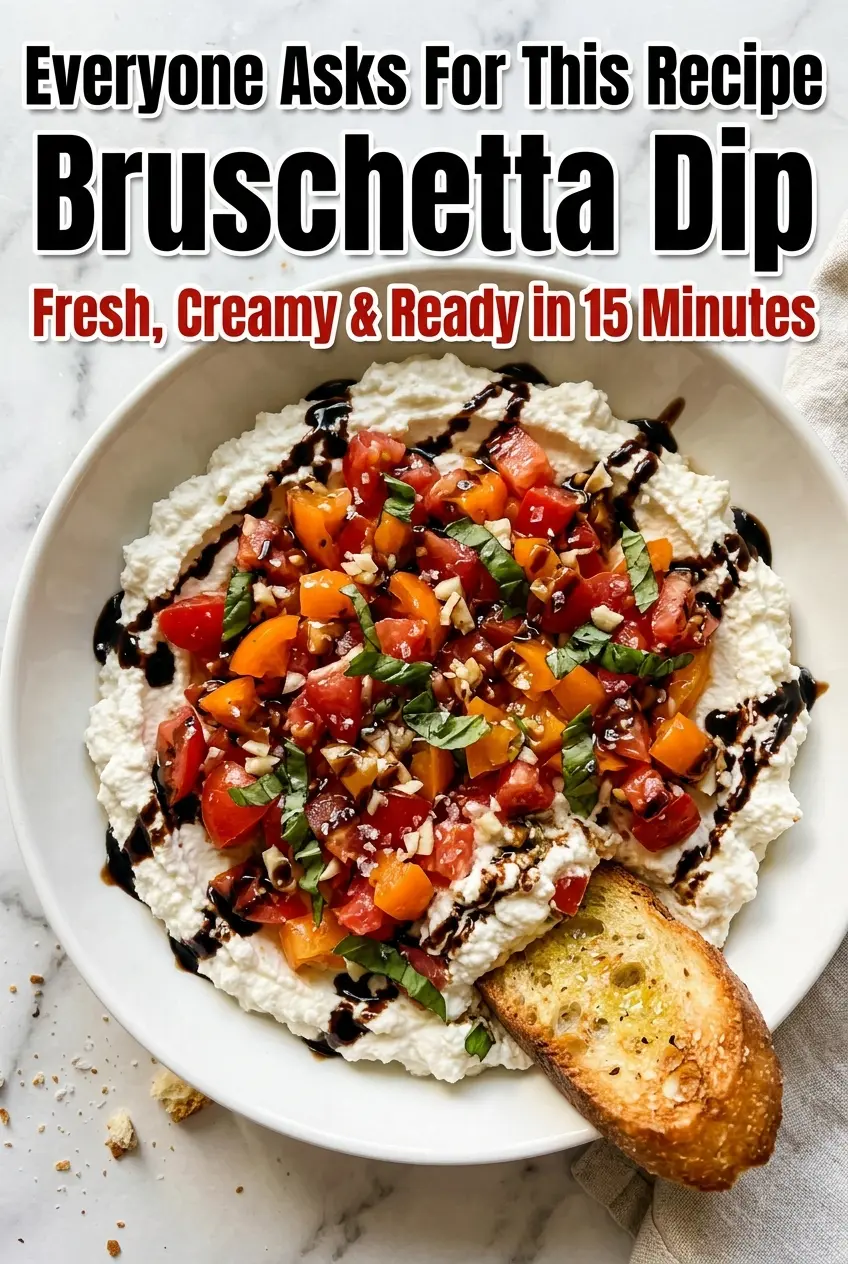
Spread the ricotta mixture into a wide shallow bowl, pushing it to the edges so it holds the tomato layer in place. Spoon the tomato mixture over the top with a slotted spoon so you control the amount of liquid. Let a little of the juice pool around the edges. That’s where the flavor lives, and it makes the dip taste like more than tomatoes on cheese.
Finish at the Table-Level
Drizzle on extra balsamic glaze, add fresh basil leaves, and finish with flaky sea salt right before serving. Serve it immediately with toasted baguette slices or crostini so the bread stays crisp against the creamy base. If you let it sit too long, the tomatoes will soften the bread and the whole thing loses the contrast that makes it work.
Three Ways to Make Bruschetta Dip Fit the Table
Dairy-Free Version
Swap the ricotta and cream cheese for a thick dairy-free spread made from cashews or almond-based cream cheese. The result is less milky and a little tangier, but it still gives you the same cool base under the tomatoes. Choose a brand that’s firm enough to whip, or the topping will slide around.
Extra-Creamy Party Version
Add another 2 tablespoons of cream cheese and whip the base a little longer for a denser, more spreadable dip. This version holds up better on a buffet table and feels richer with toasted bread. It’s the one I use when the dip will sit out for a while.
Low-Carb Serving Idea
Serve it with cucumber rounds, endive leaves, or bell pepper strips instead of baguette slices. You keep the same bruschetta flavor, just without the bread. This is the easiest way to turn the appetizer into something lighter without changing the dip itself.
Storage and Reheating
- Refrigerator: Store the tomato topping and ricotta base separately for up to 2 days. If they sit together, the tomatoes will weep and loosen the base.
- Freezer: Don’t freeze this dip. Ricotta and cream cheese both change texture after thawing and turn grainy.
- Reheating: This dip is meant to be served cold or cool. If the base has been refrigerated, let it sit at room temperature for 15 to 20 minutes so it softens slightly before assembling.
Questions I Get Asked About This Recipe
Bruschetta Dip
Ingredients
Method
- Dice the seeded Roma tomatoes into small, even pieces and place them in a bowl. Add minced garlic, basil chiffonade, olive oil, balsamic glaze, salt, black pepper, and red pepper flakes if using, then toss well.
- Let the tomato mixture rest for at least 10 minutes so the flavors meld. Keep it at room temperature while it rests.
- Combine ricotta, softened cream cheese, olive oil, minced garlic, and salt in a separate bowl. Mix vigorously until smooth, fluffy, and spreadable.
- Spread the creamy ricotta base into a wide, shallow serving bowl, pushing it to the edges with the back of a spoon for a thick, uneven layer.
- Using a slotted spoon, pile the tomato mixture over the ricotta, letting the juices pool slightly at the edges without draining them completely.
- Drizzle extra balsamic glaze over the top in a loose zigzag. Scatter fresh basil leaves and finish with a pinch of flaky sea salt.
- Serve immediately with toasted baguette slices or crostini.
