
Sticky, smoky Grilled Huli Huli Chicken earns its place in the rotation because it hits the sweet spot between backyard grill flavor and weeknight practicality. The chicken comes off juicy and lacquered, with caramelized edges that cling to the meat instead of sliding off the grill. That pineapple-soy glaze tastes bold without being cloying, and it’s the kind of finish that makes people hover near the platter before dinner is even called.
The trick is splitting the marinade into two jobs: one part seasons the chicken, and the reserved portion gets simmered into a glaze so you’re not brushing raw marinade onto cooked meat. Pineapple juice brings brightness and helps the chicken taste lively, while brown sugar, honey, and ketchup build that sticky, glossy coating Huli Huli is known for. A little sesame oil and ginger keep it from tasting one-note.
Below, I’ve laid out the exact grilling rhythm that gives you char without drying out the thighs, plus a few smart swaps for when you want to work around what’s in the fridge.
The glaze thickened up perfectly and didn’t burn on the grill. I used the pineapple slices too, and the chicken came out juicy with those sticky charred edges my husband kept picking at before dinner.
Grilled Huli Huli Chicken with that sweet pineapple glaze is one to pin for smoky summer dinners and easy backyard grilling.
The Grill Marks That Matter More Than the Glaze
Huli Huli chicken can go wrong in a very specific way: the outside gets dark before the inside is cooked, or the glaze burns before it has time to turn sticky. The fix is simple. Start with medium-high heat, not screaming hot coals, and keep the chicken thighs moving only after they’ve had time to sear and release cleanly from the grates.
The other common mistake is basting too early and too often. Brush on the glaze after the first side has developed color, then keep layering it during the last few minutes of cooking. That gives you a lacquered finish instead of a bitter, scorched coating. Chicken thighs are the right cut here because they stay juicy even after repeated glazing.
- Patience on the first side — Leave the chicken alone for the full 5 to 6 minutes so the sugars can caramelize and the meat can lift off the grill without tearing.
- Reserved glaze only — The part you simmer separately becomes your finishing sauce. Don’t brush raw marinade onto cooked chicken.
- Thighs over breasts — Boneless thighs handle this style of grilling better because they forgive a little extra heat and still stay tender.
What Each Ingredient Is Actually Doing in This Huli Huli Chicken
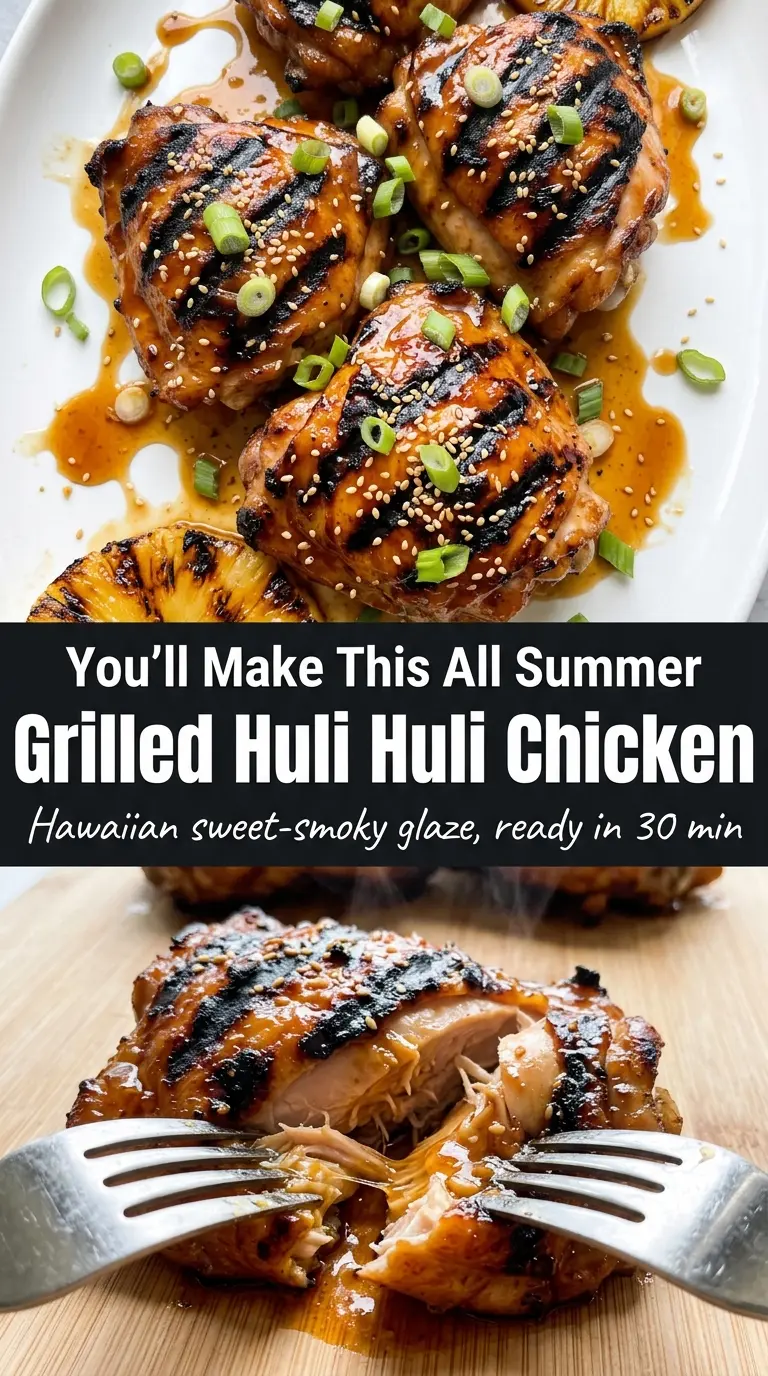
- Pineapple juice — This gives the marinade its bright, classic Huli Huli character. Use real pineapple juice, not a heavily sweetened cocktail blend, because you want acidity and fruit flavor, not just sugar.
- Low-sodium soy sauce — This seasons the chicken and balances the sweet ingredients. Low-sodium matters here because the glaze reduces on the grill and can get salty fast.
- Ketchup, brown sugar, and honey — These three build the sticky glaze and help it cling to the chicken. Brown sugar gives depth, honey adds shine, and ketchup gives body and a little tang.
- Fresh garlic and ginger — Fresh is worth it here. Dried versions won’t give the same sharp, clean edge, and the glaze depends on those aromatics to keep the sweetness in check.
- Rice vinegar and sesame oil — Vinegar keeps the sauce from tasting flat, and sesame oil adds the toasty note that makes the whole marinade taste rounded and complete. A little goes a long way with sesame oil.
- Chicken thighs — Boneless, skinless thighs are the right cut because they stay tender while the glaze caramelizes. If you swap in breasts, cut the grill time down and pull them as soon as they hit 165°F, or they’ll dry out.
How to Get the Chicken Charred Without Burning the Glaze
Mixing and Reserving the Sauce
Whisk the marinade until the brown sugar disappears and the mixture looks glossy, not grainy. Reserve half a cup before the chicken goes in, because that portion will be simmered into the glaze. If you skip that step and use the same marinade on cooked chicken, you’ll either waste it or risk serving undercooked sauce.
Marinating for Flavor That Reaches the Center
Coat the chicken thighs in the remaining marinade and refrigerate them for at least 2 hours. Overnight gives the deepest flavor, but even a short soak helps the soy, ginger, and pineapple work their way into the meat. Pull the chicken out, let the excess drip off, and pat it lightly dry so the grill can do its job instead of steaming the surface.
Simmering the Glaze to the Right Thickness
Bring the reserved marinade to a gentle simmer over medium heat and cook it until it thickens enough to coat a spoon. You’re not making a hard candy glaze here; you want something brushable that will cling and caramelize. If it boils aggressively, the sugars can tighten up too fast and turn bitter.
Grilling and Basting at the End
Oil the grates, then place the chicken on the grill and leave it alone long enough to pick up color. Flip once, then brush the glaze on during the last few minutes so it can set instead of burning. The chicken is done when the thickest piece reads 165°F and the edges look deeply bronzed with little charred spots.
How to Adapt This for Different Grills and Diets
Gluten-Free Version
Use a gluten-free soy sauce or tamari in place of standard soy sauce. The flavor stays close to the original, and the glaze still caramelizes the same way because the sweetness and acidity are doing most of the texture work.
Dairy-Free and Naturally Dairy-Free
This recipe already fits a dairy-free menu as written. That matters because you can serve it with rice, grilled vegetables, or a simple slaw without changing the chicken itself.
Making It With Chicken Breasts
Chicken breasts work if that’s what you have, but they dry out faster and need closer attention. Grill them over medium heat and pull them the moment they reach 165°F, then let them rest before slicing so the juices stay in the meat.
Oven or Grill Pan Backup
If you can’t grill outside, use a hot grill pan or broil the chicken on a lined sheet pan. You’ll lose some smoke, but you’ll still get the sticky glaze and caramelized edges if you keep the sauce for the final minutes only.
Storage and Reheating
- Refrigerator: Store leftovers in an airtight container for up to 4 days. The glaze may thicken as it chills, but the flavor holds up well.
- Freezer: It freezes well for up to 2 months. Wrap portions tightly and thaw in the refrigerator so the sauce doesn’t separate from the chicken.
- Reheating: Rewarm gently in a covered skillet over low heat or in the oven at 325°F with a splash of water to loosen the glaze. High heat will dry out the thighs and can harden the sugar on the surface.
Answers to the Questions Worth Asking
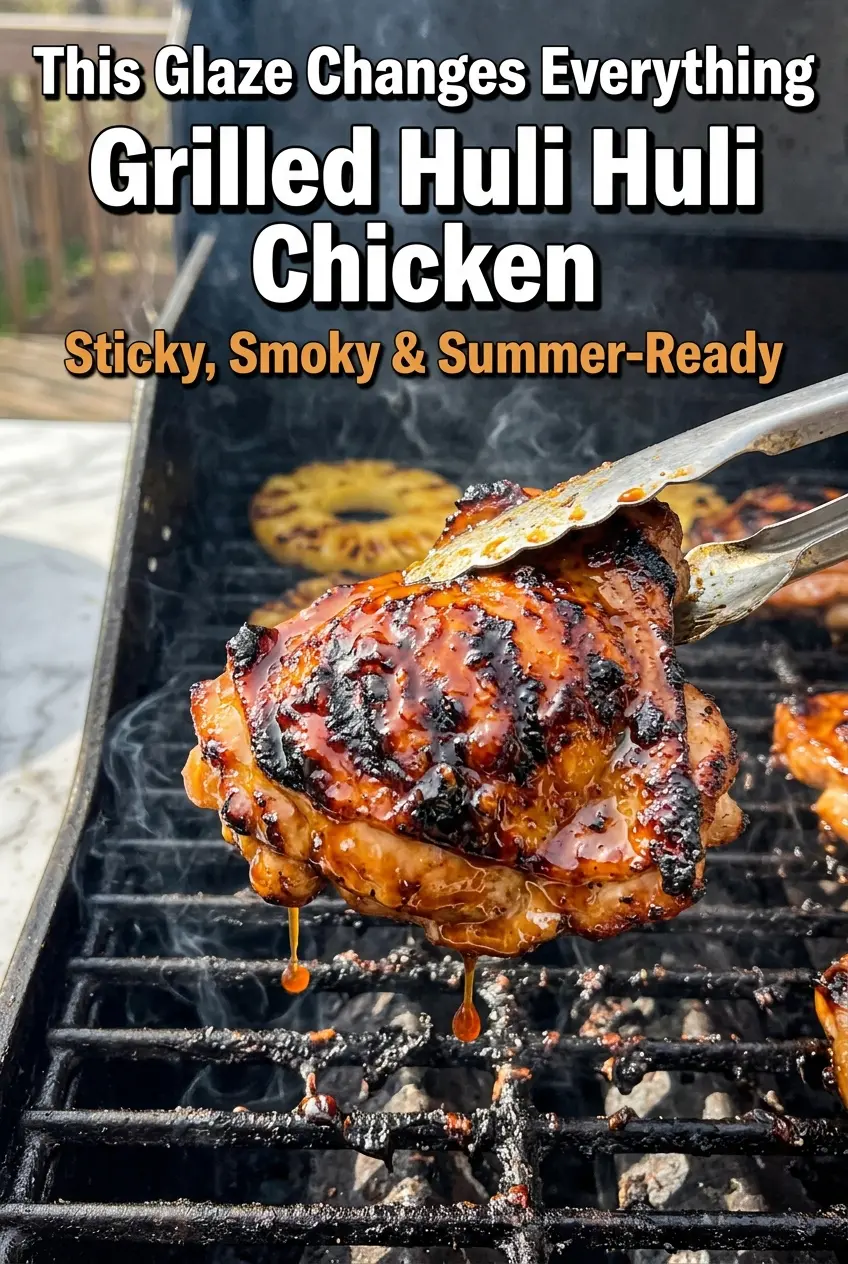
Grilled Huli Huli Chicken
Ingredients
Equipment
Method
- Whisk together pineapple juice, low-sodium soy sauce, ketchup, brown sugar, honey, garlic, ginger, rice vinegar, sesame oil, and red pepper flakes until the sugar dissolves.
- Reserve 1/2 cup of the marinade in a small saucepan for the glaze, then set it aside.
- Place chicken thighs in a zip-lock bag or shallow dish, pour in the remaining marinade, seal, and refrigerate for at least 2 hours or overnight.
- Bring the reserved glaze to a gentle simmer over medium heat and cook for 5–7 minutes, stirring frequently, until it thickens slightly and coats the back of a spoon.
- Remove from heat and keep the glaze ready for brushing.
- Remove chicken from the marinade and pat lightly with paper towels, then season with a pinch of salt and black pepper.
- Heat your grill to medium-high heat (around 400°F) and brush the grates with neutral oil to prevent sticking.
- Place chicken thighs on the grill and cook 5–6 minutes on the first side without moving to build grill marks and caramelization.
- Flip the chicken and brush generously with the glaze.
- Continue grilling 4–5 minutes more, brushing with glaze every 1–2 minutes, until cooked through to 165°F and deeply glazed with charred edges.
- Grill pineapple slices alongside the chicken for 2–3 minutes per side until caramelized (optional).
- Transfer chicken to a serving platter, brush one final coat of glaze over the top, and garnish with sliced green onions and toasted sesame seeds.
