
Juicy Greek chicken kabobs earn their place in the rotation because the chicken stays tender, the edges pick up a clean char, and every bite carries lemon, garlic, and oregano without tasting heavy. The vegetables cook alongside the meat instead of sitting off to the side, so the whole skewer comes off the grill with a little smoke, sweetness, and enough color to make the platter look as good as it tastes.
The marinade does the real work here. Lemon juice and zest wake up the oregano and garlic, while olive oil carries the spices across the chicken and helps the surface brown instead of drying out. Chicken thighs give you more forgiveness on the grill, but breasts work well too as long as you keep the cubes even and pull them the moment they hit 165°F. A short marinating window gives you a fresh, bright result; a longer one deepens the flavor, but past 8 hours the acid can start to change the texture.
Below you’ll find the reason these kabobs cook evenly, what to do if you’re using wooden skewers, and a few smart swaps for meal prep, dairy-free serving, and weeknight shortcuts.
The chicken stayed juicy even on the grill, and the lemon-garlic marinade charred up in the best way. I also loved that the zucchini and peppers cooked right on the skewers without turning mushy.
Save these Greek Chicken Kabobs for the nights when you want a grilled dinner with bright lemon, smoky char, and creamy tzatziki.
The Marinade Timing That Keeps the Chicken Juicy Instead of Dry
The biggest mistake with kabobs is treating the marinade like it can fix everything. It can’t. You still need evenly cut chicken, a hot grill, and a watchful eye at the end, because the difference between juicy and dry is often just a minute or two. The acid in the lemon brightens the meat, but it also starts working on the texture if you leave the chicken in it too long.
That means the sweet spot is at least 1 hour and no more than 8 hours. Thighs handle the marinade with more grace than breasts, but both benefit from the olive oil and spices clinging to the surface. If your skewers are crowded, the chicken steams before it browns, so leave a little space between pieces and don’t pack the vegetables too tightly either.
What Each Ingredient Is Actually Doing in These Kabobs
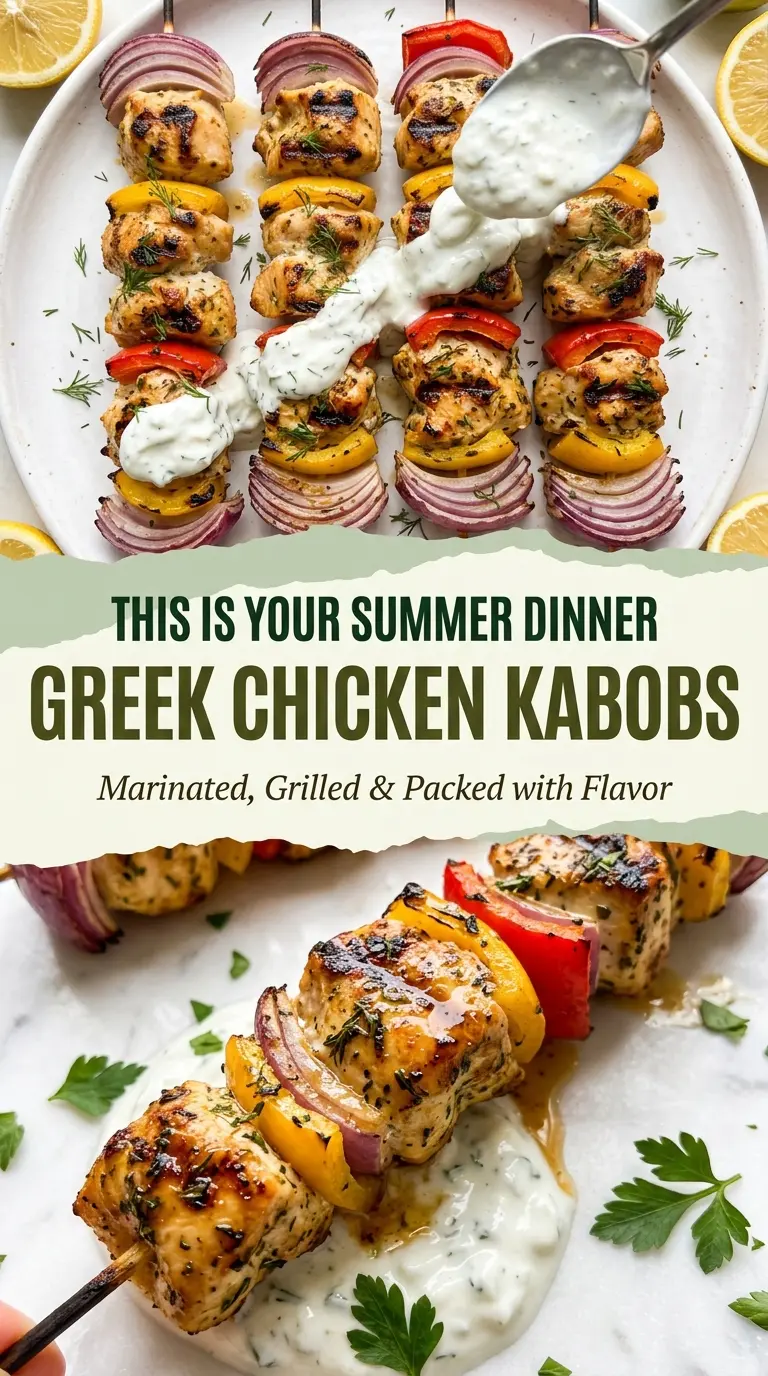
- Chicken thighs or breasts — Thighs stay juicier and are more forgiving over high heat, while breasts give you a leaner kabob if you cut them into even cubes and don’t overcook them. Either way, the pieces need to be similar in size so the skewer finishes at the same time.
- Olive oil — This carries the lemon and spices across the chicken and helps the surface brown instead of tightening up. Use a decent olive oil here; it doesn’t need to be the most expensive bottle, but stale oil will dull the whole marinade.
- Fresh lemon juice and zest — Juice brings the brightness, and zest adds the part of the lemon you can actually smell. Bottled juice works in a pinch, but fresh lemon gives the marinade a cleaner, sharper edge.
- Dried oregano and thyme — These herbs bring the Greek profile that makes the kabobs taste intentional instead of just grilled chicken on a stick. Dried herbs are the right choice here because they cling better in a marinade than fresh herbs would.
- Greek yogurt for tzatziki — Thick yogurt is what gives the sauce its body. Regular yogurt can work if you strain it first, but thin yogurt turns the sauce watery fast.
- Cucumber — Grate it, then squeeze it dry until it stops dripping. Skip that step and your tzatziki thins out and slides off the pita instead of coating the chicken.
Thread, Grill, and Pull Them Before the Chicken Tightens Up
Building the Skewers Evenly
Thread the chicken and vegetables with enough space that heat can move around each piece. If the cubes are pressed together, the outside chars before the center is ready and the vegetables turn soft before they pick up color. Wooden skewers need a 30-minute soak so they don’t scorch the second they hit the grill. Metal skewers are easier here because they conduct heat and help the chicken cook from the inside out.
Getting the Grill Hot Enough to Mark the Meat
Preheat the grill or grill pan to medium-high, around 400°F, and lightly oil the grates. If the surface isn’t hot enough, the chicken sticks and steams instead of forming those clean grill marks. You want an immediate sizzle when the skewers go down. That first sound tells you the pan is ready.
Turning for Color, Not for Convenience
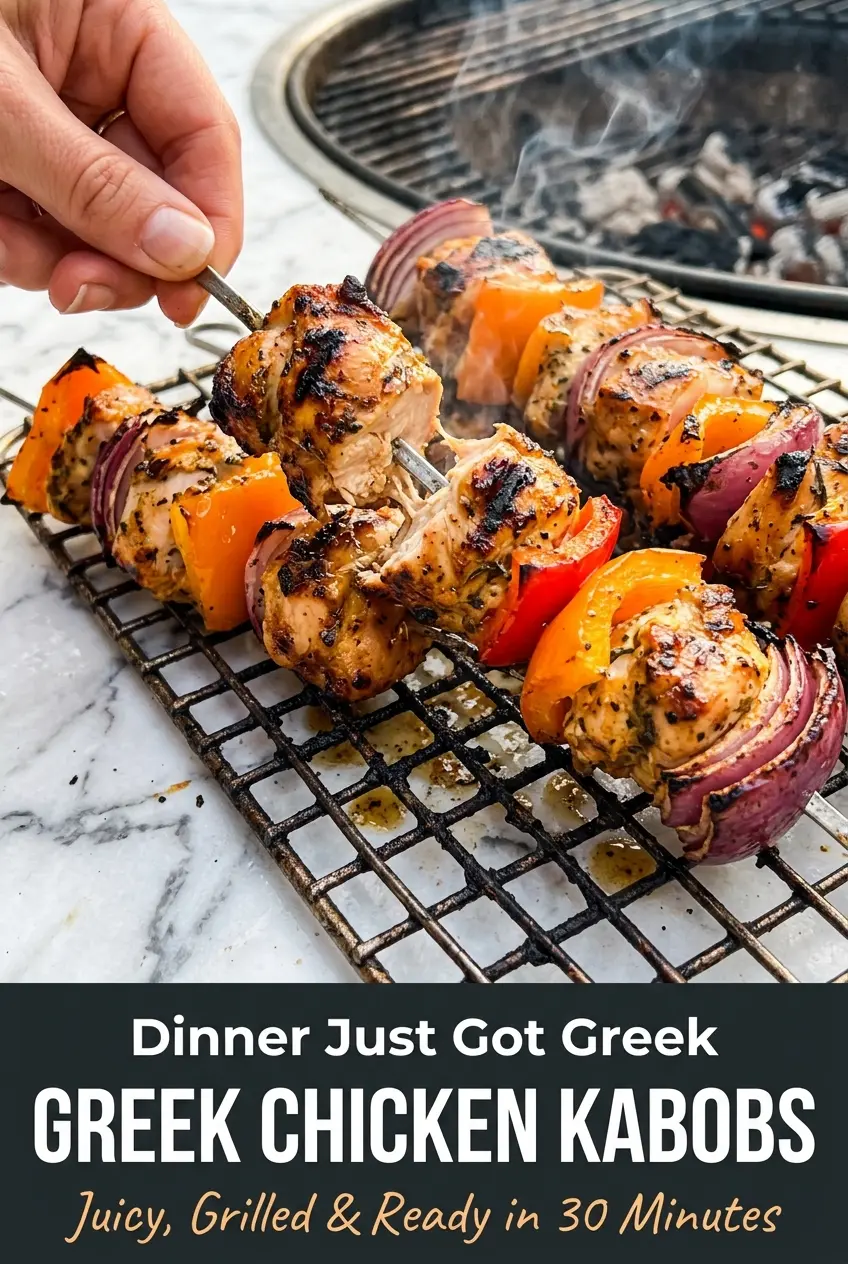
Cook the kabobs for 10 to 14 minutes total, turning every 3 to 4 minutes so the chicken browns on more than one side. Don’t keep poking and moving them around every 30 seconds; that interrupts browning and makes them tear when you try to lift them. Pull them when the chicken reaches 165°F and the edges look lightly charred, then rest them for 2 to 3 minutes so the juices settle back into the meat.
Three Ways to Make These Greek Chicken Kabobs Fit Your Table
Dairy-Free Serving Without Losing the Creamy Element
Skip the tzatziki or use a dairy-free Greek-style yogurt. The key is choosing one with enough body to hold the grated cucumber without turning thin. You’ll lose a little tang and richness, but the lemon, garlic, and herbs on the kabobs still carry the meal.
Chicken Thighs for the Juiciest Grilled Result
Use thighs if you want the most forgiving version of this recipe. They stay tender even if the grill runs hot for a minute too long, and they take on a deeper, richer flavor from the marinade. Breasts still work, but they need tighter timing and more attention near the end.
Meal Prep for Pitas, Bowls, or Leftover Lunches
Grill the kabobs ahead, then pull the chicken and vegetables off the skewers for bowls, wraps, or salads. The flavor holds up well for a few days, and the lemon-garlic marinade tastes even better after the chicken rests overnight. Warm the meat gently so it doesn’t dry out.
Storage and Reheating
- Refrigerator: Store the cooked chicken and vegetables in an airtight container for up to 4 days. The herbs stay bright, but the zucchini softens a bit as it sits.
- Freezer: The cooked chicken freezes well for up to 2 months, though the vegetables lose their texture. Freeze the chicken separately if you want the best result later.
- Reheating: Rewarm gently in a skillet over medium-low heat or in a 300°F oven until just hot. High heat dries out the chicken fast, and the best way to ruin kabobs is to blast them until the edges turn tough.
Answers to the Questions Worth Asking
Greek Chicken Kabobs
Ingredients
Equipment
Method
- In a large bowl, whisk together olive oil, lemon juice, lemon zest, minced garlic, oregano, thyme, smoked paprika, cumin, salt, pepper, and red pepper flakes to make the marinade.
- Add the chicken cubes to the bowl and toss well to coat.
- Cover and refrigerate the chicken for at least 1 hour, up to 8 hours, for deeper flavor.
- If using wooden skewers, soak them in water for 30 minutes before grilling to prevent burning.
- Preheat the grill or grill pan to medium-high heat (about 400°F / 200°C) and lightly oil the grates.
- Thread the marinated chicken onto skewers, alternating with red bell pepper chunks, yellow bell pepper chunks, red onion wedges, and zucchini rounds.
- Place skewers on the grill and cook for 10–14 minutes total, turning every 3–4 minutes, until the chicken is cooked through and the edges are lightly charred.
- Check for doneness: the internal temperature of the chicken should reach 165°F (74°C).
- Remove from the grill and rest for 2–3 minutes.
- In a bowl, combine Greek yogurt, grated cucumber (squeezed dry), garlic, lemon juice, and dill, then season with salt and pepper to taste.
- Refrigerate the tzatziki until serving.
- Serve the kabobs immediately with warm pita bread, tzatziki, fresh lemon wedges, and a sprinkle of chopped parsley.
