
Strawberry watermelon sorbet tastes like the best part of a fruit stand in peak season: bright, cold, and clean on the finish, with enough natural sweetness to feel like a treat without turning heavy. The texture lands somewhere between silky and slushy when you blend it right, then firms up into a scoopable sorbet after a short freeze. It disappears fast because it feels refreshing instead of rich, which makes it the dessert people reach for when the weather is hot and nobody wants anything fussy.
The key is freezing the fruit in advance and blending it fast enough to keep the mixture from warming up and turning icy. Watermelon brings juiciness and a light, almost floral sweetness, while strawberries add body and a deeper berry flavor. Lime wakes everything up and keeps the sorbet from tasting flat, and a pinch of salt makes the fruit taste more vivid instead of just sweeter.
Below you’ll find the small details that matter most: how to get a smooth blend from frozen fruit, when to serve it right away, and how long to freeze it if you want firmer scoops. A few simple choices change the texture more than you might expect.
The sorbet blended into a smooth, scoopable texture and the lime kept the strawberry-watermelon combo from tasting too sweet. I froze it for an hour after blending and it held its shape beautifully.
Save this strawberry watermelon sorbet for the days when you want a frozen dessert that blends smooth, tastes bright, and needs no ice cream machine.
The Trick to Smooth Sorbet When the Fruit Starts Frozen
Frozen fruit makes this sorbet possible without an ice cream maker, but it also creates the main failure point: if the blender can’t catch the fruit, you end up with icy rubble instead of a creamy spoonable dessert. The fix is to use a strong blender or food processor and stop often to scrape the sides so the blades can keep pulling the mixture down. A small splash of lime juice helps the blades move, but too much liquid turns the sorbet soft and slushy.
The other piece people miss is flavor balance. Cold dulls sweetness, so the mixture should taste a touch sharper and sweeter than you think it needs before it goes into the freezer. That extra bump from honey, lime, and salt keeps the finished sorbet tasting bright after it firms up.
What Each Ingredient Is Doing in the Bowl
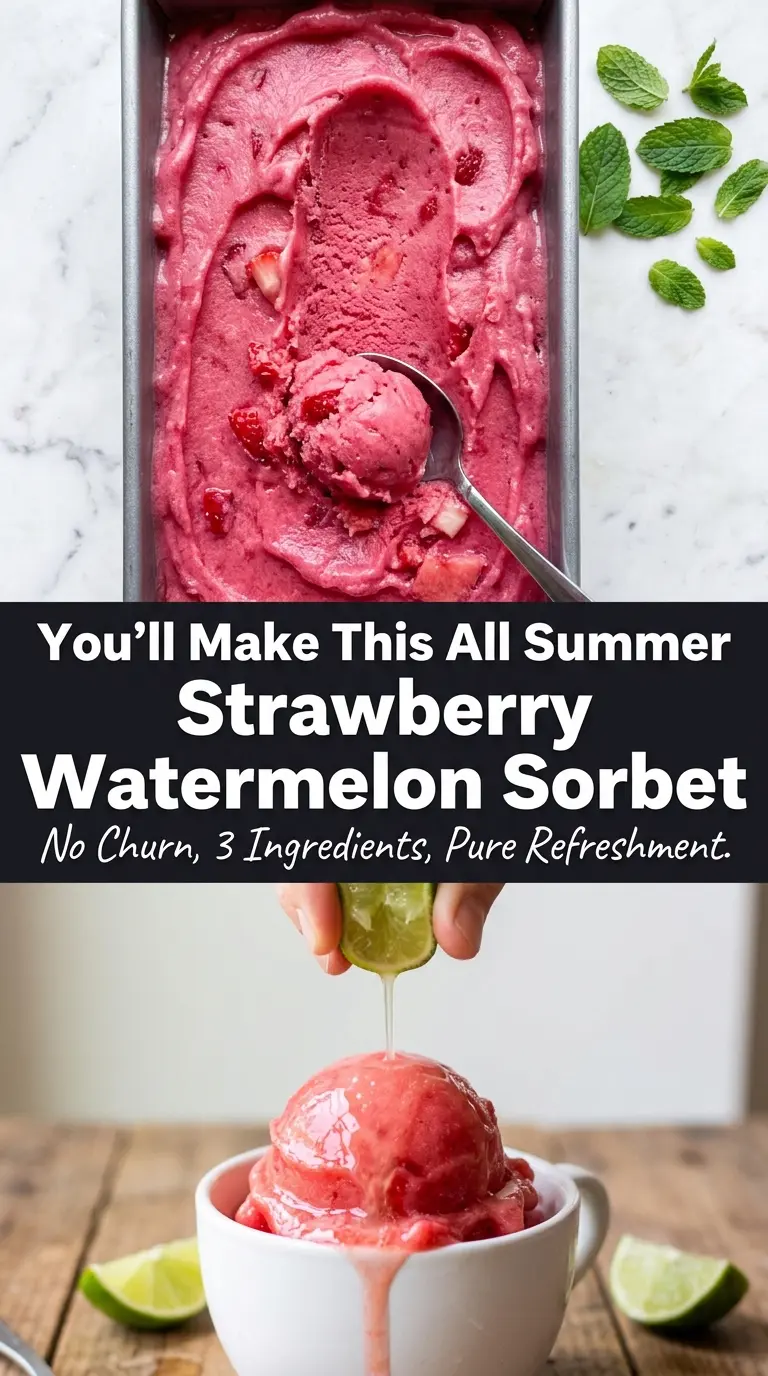
- Frozen seedless watermelon — Watermelon brings the juicy, refreshing base and keeps the sorbet from tasting dense. Seedless matters here because any hard bits interrupt the smooth texture. Cut it into even cubes so it freezes fast and blends evenly.
- Frozen strawberries — Strawberries add color, body, and a fuller berry flavor that watermelon alone can’t give. Fresh berries that you freeze yourself work best because you control the ripeness. If yours are a little tart, that’s fine; the honey balances them.
- Honey or agave — This is more than sweetness. It softens the frozen fruit just enough to help the blender work and keeps the sorbet from freezing into a hard block. Agave gives a cleaner neutral sweetness, while honey adds a faint floral note.
- Fresh lime juice and zest — Lime keeps the fruit tasting lively instead of one-note sweet. The zest carries the brightest aroma, so don’t skip it if you want the sorbet to taste fresh from the first spoonful to the last.
- Sea salt — A tiny pinch sharpens the fruit and makes the strawberry flavor read more clearly. This isn’t enough to taste salty; it just keeps the sorbet from falling flat once it’s frozen.
How to Blend, Taste, and Freeze It for the Right Texture
Loading the Blender Without Jamming the Blade
Start with the frozen fruit, then add the honey, lime juice, zest, and salt on top. If your blender tends to struggle, let the fruit sit for 2 to 3 minutes so the edges soften just a little before blending. The mixture should look crumbly at first, then catch and turn thick and glossy as the blades work. If it just spins in place, stop and scrape down the sides instead of adding a lot more liquid.
Blending Until It Turns Creamy, Not Watery
Blend on high in short bursts, especially at the beginning, so the fruit breaks down evenly. You’re looking for a texture that moves like very thick soft serve and holds its shape for a second when you stop the blender. If it starts sounding thin and loose, you’ve gone too far on liquid or warmed the fruit too much. A good sorbet should taste bold and cold, not diluted.
The Freeze That Turns Soft Serve Into Scoops
Serve it straight from the blender if you want a soft-serve texture. For firmer scoops, transfer it to a freezer-safe container and smooth the top so it freezes evenly. One to two hours is usually enough; longer than that can make it hard, especially in a deep freezer. Let it sit at room temperature for a few minutes before scooping so the texture loosens instead of cracking off the spoon.
How to Adapt This for Different Sweeteners, Diets, and Serving Styles
Make It With Honey or Keep It Vegan
Honey gives a rounder sweetness and a slightly softer freeze, while agave keeps the flavor more neutral and makes the sorbet fully vegan. Either one works at the same amount. If you use a dry sweetener instead, the texture won’t stay as smooth because the syrup helps the blended fruit stay supple.
Swap the Lime for Lemon When That’s What You Have
Lemon works in place of lime, but the result tastes a little brighter and less tropical. Use the same amount and keep the zest in the mix so the fruit still has a fresh, aromatic edge. If your strawberries are very sweet, lemon can actually sharpen the balance nicely.
Turn It Into a Fuller Fruit Sorbet
A handful of frozen raspberries or mango can be added for a different fruit balance, but keep the total frozen fruit amount about the same. Raspberries make it tarter and deeper in color; mango makes it softer and a little sweeter. Too many add-ins can make the flavor muddy, so change one note at a time.
Storage and Reheating
- Refrigerator: Not a good storage option. It melts fast and turns loose and watery within minutes.
- Freezer: Store in a shallow freezer-safe container for up to 1 week. After that, the texture starts getting icier and the fruit flavor flattens.
- Reheating: This doesn’t need reheating, but it does need a short rest before serving. Let it sit 3 to 5 minutes at room temperature so the edges soften; if you try to scoop it straight from a hard freeze, it will crack and turn uneven.
Questions I Get Asked About This Recipe
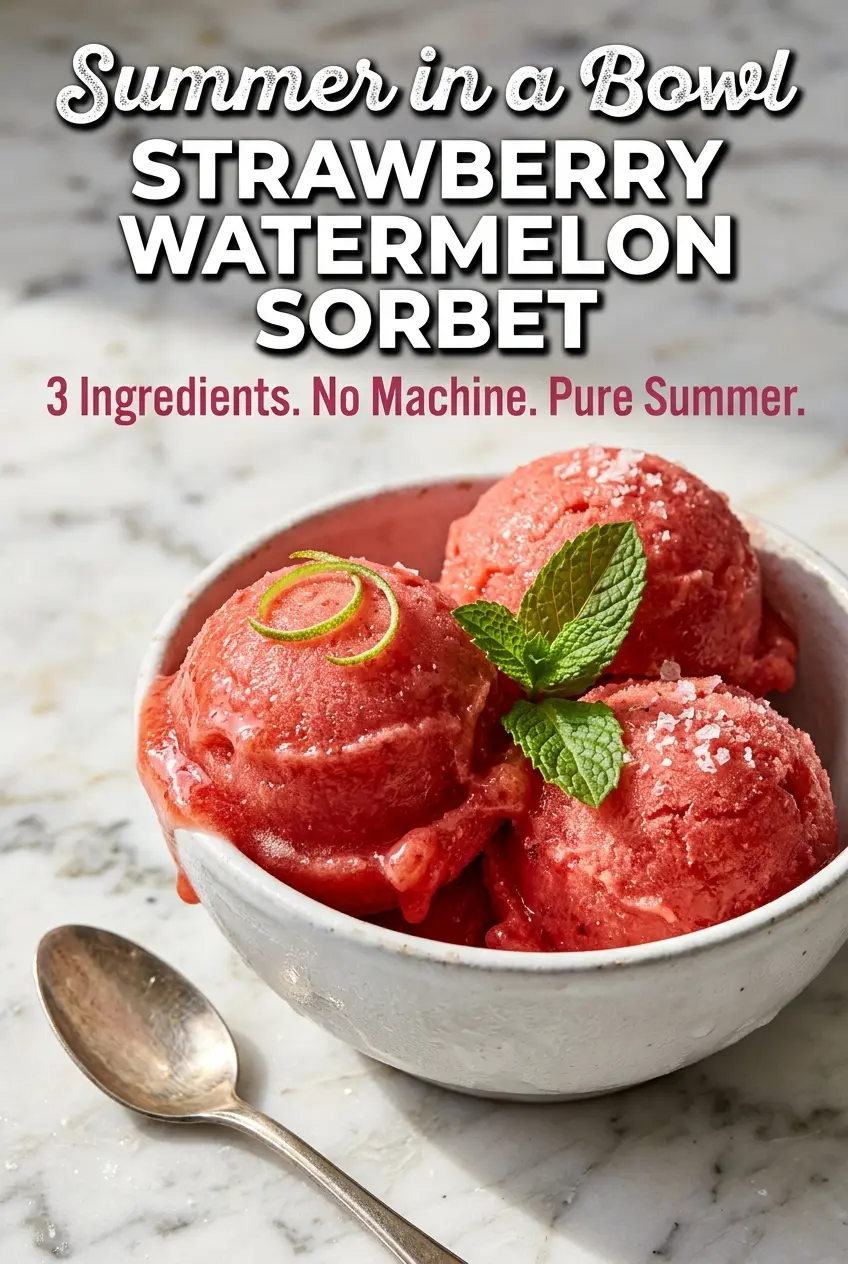
Strawberry Watermelon Sorbet
Ingredients
Equipment
Method
- Cube the watermelon into 1-inch pieces and hull the strawberries, then spread both in a single layer on a parchment-lined baking sheet. Freeze at 0°F for at least 4 hours or overnight until completely solid, with a clearly firm, frozen surface.
- Transfer the frozen watermelon and strawberries into a high-powered blender or food processor. Blend on high, stopping to scrape down the sides as needed, until the mixture is completely smooth and creamy for about 60–90 seconds, with no visible ice chunks.
- Add honey (or agave), fresh lime juice, lime zest, and a pinch of sea salt to the blender. Blend again briefly until fully incorporated, then taste and adjust sweetness or lime so it tastes slightly bolder than the final sorbet.
- For a soft-serve consistency, scoop immediately into chilled bowls or glasses. Serve right away for a creamy texture that holds shape on the spoon.
- For a firmer sorbet, transfer to a freezer-safe container, smooth the top, and freeze for 1–2 hours until scoopable. Before serving, let sit at room temperature for 3–5 minutes to soften slightly, then scoop and garnish with fresh mint, a squeeze of lime, and optional flaky sea salt.
