
Watermelon lemonade punch tastes like the first cold drink people reach for after a hot afternoon in the yard. The watermelon brings a soft, juicy sweetness, the lemon keeps it sharp and bright, and the fizz at the end gives it that lively finish that keeps people coming back for another glass. It’s the kind of pitcher that disappears fast because it lands right between refreshing and festive.
The part that makes this version work is balance. Fresh watermelon alone can taste flat once it’s diluted, so the lemon juice wakes it up and the sugar is there to round the edges, not turn it into syrup. Straining the watermelon is worth the extra minute because it keeps the punch smooth instead of pulpy, and adding the sparkling element at the very end keeps the bubbles from going dull before the first pour.
Below, I’ve included the small details that keep this punch crisp instead of watered down, plus a few easy ways to adjust the sweetness or make it fit a crowd. Once you’ve made it once, the formula is easy to remember and even easier to tweak.
The watermelon juice was smooth and the lemon kept it from tasting too sweet. I chilled everything ahead of time, added the soda at the end, and it stayed fizzy through the whole cookout.
Pin this watermelon lemonade punch for the days when you need a pink pitcher drink that stays bright, fizzy, and cold.
Why This Punch Stays Bright Instead of Turning Flat
The biggest mistake with fruit punch is building everything too far in advance and letting the carbonation die before anyone drinks it. Watermelon and lemonade both hold up well, but the sparkling part doesn’t. If you stir the soda in early, you lose the lively edge that makes the drink feel special.
The second trap is sweetness. Watermelon varies a lot, especially if it’s been sitting in the fridge and lost some perfume. The lemon juice keeps the punch from tasting one-note, and the simple syrup lets you tune the balance without guessing. Start with the recipe amounts, then taste once the watermelon and lemonade are combined.
Straining matters more than people expect. A blender gets the fruit smooth, but it also leaves behind enough fiber to make the punch cloudy and heavy. Pressing the juice through a fine-mesh strainer gives you a clean, drinkable base that feels light in the glass.
What Each Ingredient Is Actually Doing in This Punch
- Fresh watermelon — This is the body of the drink, so ripe fruit matters more than anything else here. You want watermelon that smells sweet and feels heavy for its size; pale, bland melon makes a punch that tastes diluted even before the ice goes in.
- Fresh lemon juice — Bottled lemon juice won’t give you the same sharp, clean lift. Fresh lemons keep the punch bright and prevent the watermelon from tasting dull or syrupy.
- Granulated sugar — The sugar doesn’t just sweeten; it smooths out the tart lemon and helps the watermelon taste fuller. If your melon is very ripe, you can cut the sugar back a little. If it’s underwhelming, a touch more sugar brings it back into balance.
- Lemon-lime soda or sparkling water — Soda gives you extra sweetness and a softer finish, while sparkling water keeps the punch cleaner and less sugary. Both work, but they change the drink in a real way, so choose based on how sweet your watermelon is and how light you want the final glass.
- Mint and lemon slices — These are garnish, but they do real work. Mint adds a fresh aroma the second the glass hits the table, and thin lemon slices make the pitcher look crisp and cold even before anyone pours.
Building the Watermelon Lemonade Punch in the Right Order
Blend and strain the watermelon first
Blend the watermelon until it’s completely smooth, then push it through a fine-mesh strainer. Don’t rush this part. Any bits of pulp left behind will settle in the pitcher and make the punch feel thick instead of refreshing. You’re after a clean, bright juice that pours easily.
Sweeten the watermelon while it’s concentrated
Stir the sugar and lemon juice into the watermelon juice before you combine everything else. That’s the easiest moment to taste and adjust, because the melon still has enough body to tell you what it needs. If the sugar won’t dissolve fully, the juice is too cold and thick; give it a good stir and let it sit a minute.
Cool the lemonade base completely
Dissolve the sugar in a bit of water on the stove to make a simple syrup, then let it cool all the way down before mixing it with the lemon juice and the rest of the water. Hot syrup will warm the whole pitcher and flatten the flavor. If you’re short on time, chill the syrup in a shallow bowl so it cools faster.
Add the fizz at the last possible second
Pour in the sparkling water or lemon-lime soda only when the punch is ready to serve. Stir gently, just enough to combine. Aggressive stirring knocks out the bubbles, and that’s the difference between a punch that feels lively and one that tastes like juice with a flat top.
Make It Less Sweet
Use sparkling water instead of lemon-lime soda and reduce the sugar in the watermelon base by a couple tablespoons. You’ll get a sharper, cleaner punch that tastes more like fresh fruit and less like a soft drink.
Make It Vegan and Naturally Gluten-Free
This punch already fits both of those needs as written, as long as you choose a gluten-free soda or sparkling water. It’s one of those rare party drinks that doesn’t need any special ingredient swaps to work for a mixed crowd.
Turn It Into an Adult Punch
A splash of vodka, white rum, or sparkling wine blends nicely with the watermelon and lemon. Add alcohol after the punch is chilled and just before serving so the flavor stays crisp and the carbonation doesn’t go flat.
Make It Ahead for a Crowd
Blend, strain, and mix the watermelon and lemonade base up to a day ahead, then chill it well. Hold the sparkling water, ice, and garnish until the last minute so the punch stays cold without turning diluted.
Storage and Reheating
- Refrigerator: Store the watermelon lemonade base for up to 2 days. The flavor stays good, but the fresh fruit aroma softens a bit after the first day.
- Freezer: The base can be frozen in a sealed container, but the texture won’t be the same after thawing. Freeze it only if you plan to use it as a slushy-style base or don’t mind a slightly softer fruit flavor.
- Reheating: No reheating needed. Keep it cold and add the sparkling water right before serving. If the punch has been sitting, stir in a few fresh ice cubes and a splash of chilled sparkling water to bring it back to life.
Answers to the Questions Worth Asking
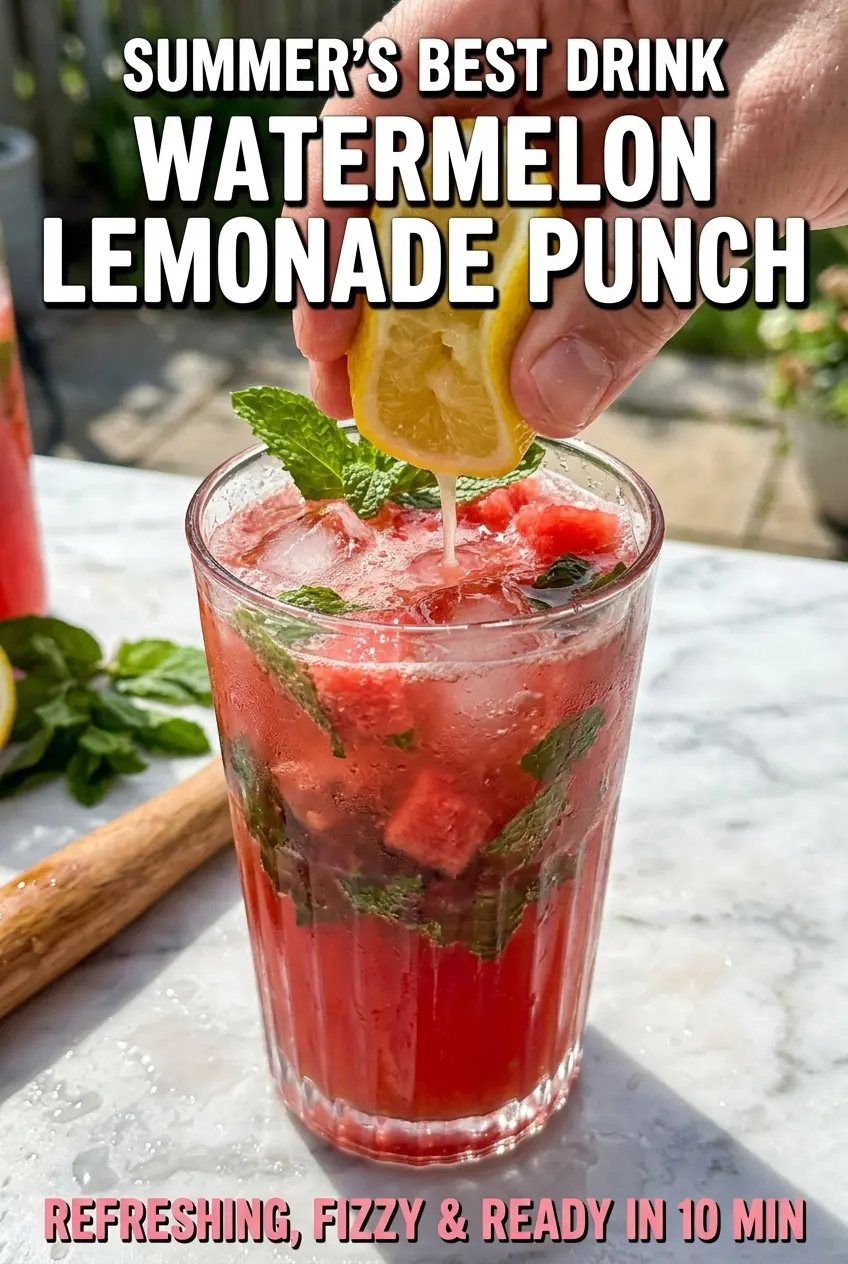
Watermelon Lemonade Punch
Ingredients
Equipment
Method
- Add the fresh watermelon cubes to a blender and blend on high until completely smooth, about 30–45 seconds. Blend should look like bright juice with no visible chunks.
- Pour the blended watermelon through a fine-mesh strainer into a large bowl or pitcher, pressing the pulp with a spoon to extract juice. Discard the pulp and stop when you’ve collected about 2½–3 cups of watermelon juice.
- Stir in the granulated sugar and the 1/4 cup fresh lemon juice into the watermelon juice until the sugar fully dissolves. Taste and adjust sweetness, then refrigerate until ready to use.
- In a small saucepan over medium heat, combine 3/4 cup granulated sugar with 1 cup water and stir until the sugar dissolves, about 2–3 minutes. The syrup should look clear with no sugar grains.
- Remove the saucepan from the heat and cool the simple syrup completely. Let it cool until it’s not warm to the touch before combining.
- In a large pitcher, combine the remaining 3 cups cold water, 1 cup fresh lemon juice, and the cooled simple syrup. Stir well so the lemonade looks evenly bright.
- Pour the chilled watermelon juice into the lemonade pitcher and stir gently to combine. You should see a beautiful pink-yellow swirl.
- Add the lemon-lime soda or sparkling water and stir lightly to preserve the bubbles. Stop mixing as soon as the fizz is evenly distributed.
- Fill glasses with ice cubes and pour the punch over. Serve immediately for the coldest, most refreshing sips.
- Garnish each glass with a thin lemon slice, a few small watermelon cubes, and a sprig of fresh mint. Arrange the garnish on top so it’s easy to grab.
