
Slow-cooked brisket should taste like you worked on it all day, even when the crockpot did most of the heavy lifting. This version gives you a deep, smoky bark, a tender slice that holds together just enough to cut cleanly, and a braising liquid that turns into a glossy, beefy sauce instead of a thin puddle at the bottom of the pot. The payoff is big enough for a crowd, but the method stays calm and practical from start to finish.
The trick is keeping the rub on the surface where it can build flavor while the brisket cooks, instead of washing it away with liquid poured over the top. A dry brisket takes the spice mix better, and the onion bed underneath keeps the meat lifted so it braises gently instead of sitting flat and soggy. The tomato paste, Worcestershire, and apple cider vinegar give the liquid backbone, while the liquid smoke adds just enough Texas-style depth without turning the whole thing harsh.
Below, I’ll walk through the part that matters most: how to season and load the crockpot so the brisket cooks tender without losing its bark. I’ve also included the substitutions that actually work, plus the storage notes you’ll want if you’re planning to slice this for sandwiches or meal prep later in the week.
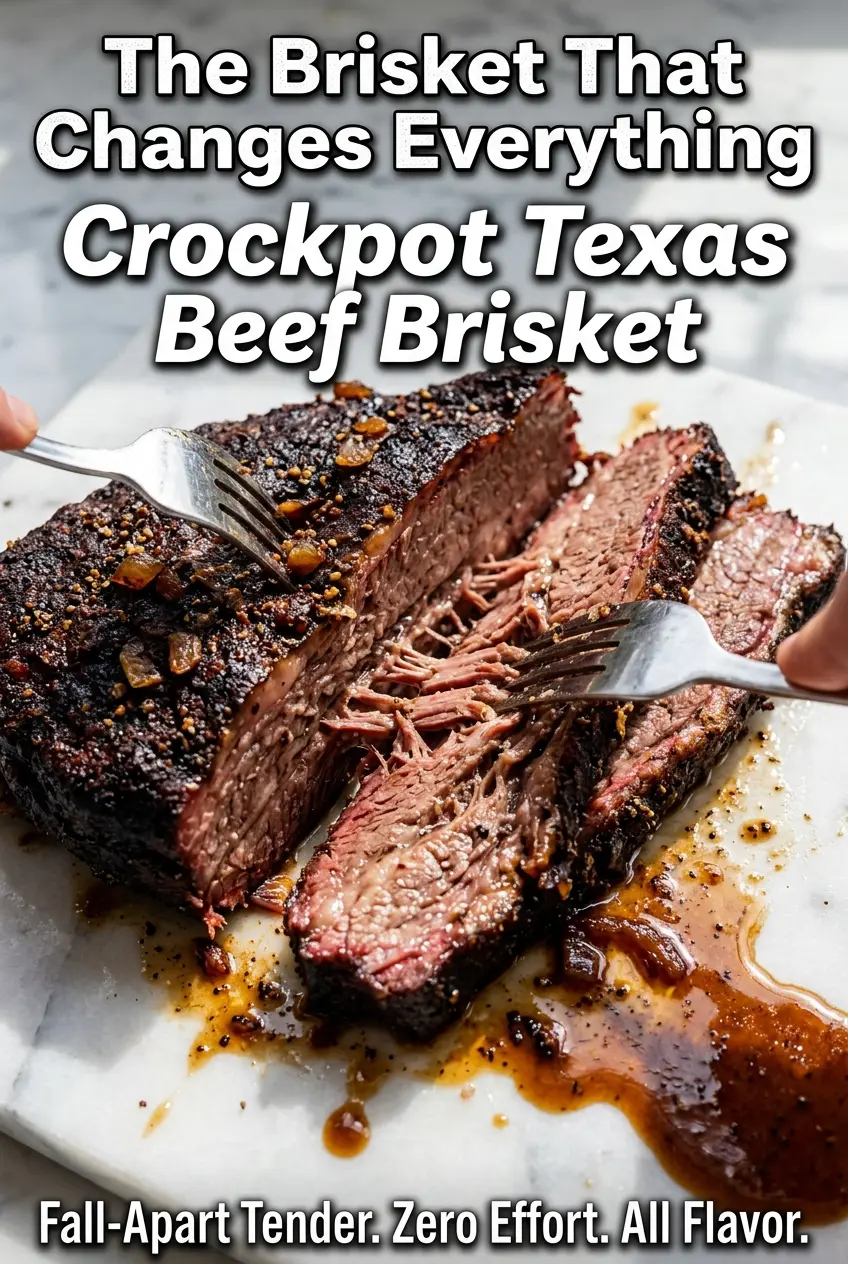
The brisket came out sliceable but still fall-apart tender, and the sauce reduced down beautifully after I simmered it for a few minutes. The onions underneath kept it from sticking, and the smoky rub had a great crust even after hours in the crockpot.
Pin this smoky-sweet Crockpot Texas Beef Brisket for a tender, crowd-feeding dinner with almost no hands-on work.
The Rub Needs a Dry Surface, Not a Wet One
Brisket can take a long time to build flavor, which is why people sometimes try to compensate by drowning it in liquid. That’s the wrong move here. The rub is where the bark starts, and bark needs contact with a dry surface to stick and darken instead of dissolving into the braise. If the brisket goes into the crockpot damp, the spices slip off and the finish tastes flatter than it should.
The second mistake is pouring the braising liquid directly over the top. That washes the seasoning off the meat before it has a chance to set. Pour it down the side of the insert, let the onion bed carry the brisket, and the rub stays where it belongs while the sauce cooks underneath.
- Smoked paprika — This gives the brisket its smoky backbone without needing a smoker. Regular paprika won’t give the same depth, so this is one ingredient worth using as written.
- Brown sugar — It doesn’t make the brisket sweet; it helps the rub caramelize and balances the vinegar in the braising liquid. You can cut it slightly if you want a sharper, more savory result, but don’t skip it entirely.
- Liquid smoke — A little goes a long way here. It adds the campfire note people expect from Texas-style brisket, but too much can turn bitter fast, so measure it carefully.
- Apple cider vinegar — This keeps the sauce from tasting heavy and helps the final brisket cut through all that richness. White vinegar works in a pinch, but the flavor will be cleaner and less rounded.
The 8 Hours That Matter More Than the Recipe Card
Building the Spice Crust
Mix the rub until the spices are evenly distributed and there are no pockets of brown sugar hiding in one spot. Pat the brisket dry first, then drizzle it with olive oil and press the rub on every side with your hands. If the surface still looks shiny with moisture, the spices will slide instead of cling. That first dry contact is what gives you a bark-like finish in a slow cooker.
Laying the Onion Bed
Sliced onions and smashed garlic go on the bottom of the crockpot before the brisket. This keeps the meat lifted so it braises in steam and juices instead of sitting directly on the hot ceramic, which can overcook the bottom edge. The onions soften into the sauce and pick up the spice drippings, so don’t skip them unless you’re willing to lose some of the pan sauce’s body.
Cooking Until It Gives, Not Until It Shreds Too Early
Cook on low if you have the time. The brisket is ready when a fork slides in with almost no resistance and the meat starts to separate at the edges when you lift it. If it’s still tight and chewy, it hasn’t broken down enough yet. If you rush this part, you get sliced brisket that feels firm in the center instead of tender all the way through.
Resting and Reducing the Sauce
Let the brisket rest before slicing so the juices stay in the meat instead of pouring onto the cutting board. Then skim the excess fat from the cooking liquid and simmer it down if you want a thicker sauce. You’re looking for a glossy finish that coats the back of a spoon. If it still tastes thin, it needs a few more minutes on the stove, not more salt.
How to Adapt This for Different Tables and Different Leftovers
For a leaner slice
Use the flat cut as written and slice it against the grain after resting. The flat is leaner than the point, so it gives you neat slices for sandwiches or plates, though it won’t be quite as rich as a fattier cut. If it starts to feel dry, spoon the reduced sauce over the top right before serving.
Dairy-free and gluten-free without losing the point
This recipe is already dairy-free, and it can be gluten-free if you use a gluten-free Worcestershire sauce and soy sauce. The flavor stays bold because the real work is coming from the paprika, vinegar, tomato paste, and slow cooking. That swap matters if you’re serving guests with restrictions, but it doesn’t change the texture of the brisket.
For pulled brisket instead of slices
Cook it until a fork twists cleanly through the thickest part, then shred or chunk it after the rest. This gives you a softer texture that works well for sandwiches, loaded baked potatoes, or sliders. If you want it to hold together in chunks, stop cooking the moment it becomes tender and don’t let it go past that point.
Storage and Reheating
- Refrigerator: Store in an airtight container for up to 4 days. The flavor deepens overnight, and the sauce usually thickens as it chills.
- Freezer: It freezes well for up to 3 months. Slice or shred it first, then freeze with some sauce so the meat doesn’t dry out when reheated.
- Reheating: Reheat gently on the stove or in the oven with a splash of broth. High heat can toughen the brisket, so warm it slowly until it’s hot through and the sauce loosens again.
Questions I Get Asked About This Recipe
Crockpot Texas Beef Brisket
Ingredients
Equipment
Method
- In a small bowl, combine smoked paprika, garlic powder, onion powder, brown sugar, cumin, black pepper, kosher salt, and cayenne pepper, then mix until fully combined.
- Pat the beef brisket completely dry with paper towels, drizzle with olive oil, and rub the spice blend all over every surface, pressing firmly so it adheres.
- In a small bowl, whisk together beef broth, Worcestershire sauce, apple cider vinegar, tomato paste, soy sauce, and liquid smoke until smooth.
- Layer the sliced thick onion rings and smashed garlic across the bottom of the crockpot insert.
- Place the seasoned brisket fat-side up on top of the onion bed.
- Pour the braising liquid down the sides of the pot, not over the brisket, to preserve the rub.
- Cover and cook on LOW for 8–10 hours, or HIGH for 5–6 hours, until the brisket is fork-tender and pulls apart with gentle pressure.
- Carefully transfer the brisket to a cutting board and rest for 15 minutes.
- Skim any excess fat from the cooking liquid.
- For a thicker sauce, pour the liquid into a small saucepan and simmer over medium heat for 10–12 minutes until reduced and glossy.
- Slice the brisket against the grain into 1/2-inch slices, or pull it apart into chunks, then spoon the pan sauce generously over the top and serve immediately.
