
Glossy linguine tangled with shrimp, calamari, clams, and mussels is the kind of dinner that looks like you spent all evening on it, even though the pot does most of the work. The broth turns silky as the pasta cooks right in it, and the cherry tomatoes break down just enough to give the sauce sweetness without turning it heavy. What you get is briny, garlicky, and bright with lemon — the sort of meal that tastes clean but still feels generous.
The trick here is using a wide pot and enough liquid to keep the pasta moving while it cooks. That keeps the noodles from clumping and gives the clams and mussels room to open without steaming into rubbery shells. I also like adding the seafood in stages: the clams and mussels first, then the shrimp and calamari near the end. That timing is what keeps everything tender instead of overcooked.
Below you’ll find the timing that matters most, the ingredient swaps worth making, and the little cues I use to know when the pasta has hit that perfect point where the sauce is glossy and the seafood is just done.
The broth soaked right into the linguine and the sauce turned glossy at the end without needing cream. I was nervous about the clams, but they all opened in the time listed and the shrimp stayed tender.
Save this one-pot seafood pasta for the night you want linguine, clams, shrimp, and a garlicky white wine broth all in one pan.
The Part That Keeps the Seafood Tender Instead of Chewy
Seafood pasta goes wrong when everything enters the pot at once. Shrimp turn firm, calamari gets tight, and shellfish can overcook before the noodles are even close. The fix is simple: let the pasta do some of the work first, then add the shellfish when the pot still has enough liquid to finish everything evenly.
The other thing worth watching is the heat. Once the wine goes in, the pot should bubble enough to cook off the alcohol, but not so hard that the liquid reduces too fast. You want a steady simmer that keeps the linguine moving and leaves you with enough broth to become sauce at the end.
- Linguine or spaghetti — Long pasta holds onto the broth better than short shapes. If you use a thicker noodle, give it an extra minute or two and add a splash more broth if the pot looks dry.
- Dry white wine — This is where the brightness comes from. Use something you’d drink; a sharp or overly sweet wine will show up in the final sauce.
- Clams and mussels — Fresh, scrubbed shellfish matter here because their liquor seasons the broth as they open. If you can’t find both, use one or the other and add a little more broth to keep the pan saucy.
- Calamari rings — They cook fast and need to go in near the end. Frozen calamari works if it’s thawed completely and patted dry, which keeps the pot from turning watery.
Building the Broth, Then Letting the Pasta Finish It
Wake Up the Garlic and Pepper Flakes
Start the garlic in olive oil over medium heat and watch for the edges to turn pale gold and fragrant. That takes only a minute or two. If the garlic browns, it turns bitter and will hang over the whole dish, so pull the pan off the heat if it starts coloring too fast. The red pepper flakes bloom in the oil and give the sauce a gentle heat that sits in the background instead of burning on the tongue.
Reduce the Wine Before Anything Else
Pour in the white wine and let it bubble before the broth goes in. This is where the sharp edge cooks off and the flavor deepens. Scrape the bottom of the pot while it simmers, because those stuck bits dissolve into the sauce and give you more than just liquid. If you skip this reduction, the pasta can taste thin and boozy instead of clean and savory.
Cook the Pasta in the Liquid
Add the dry linguine straight into the pot and press it down so it starts softening evenly. Stir often enough to keep the strands from sticking together, especially in the first few minutes. The pot should stay at a lively simmer, not a hard boil, or the liquid will disappear before the noodles are tender. When the pasta still has a faint bite, the shellfish can go in.
Finish the Shellfish at the Last Minute
Nestle the clams and mussels in first and cover the pot so they can steam open. As soon as the shells start to pop open, add the shrimp and calamari. Shrimp are done when they curl into loose C-shapes and turn pink; if they tighten into tight little O’s, they’ve gone too far. Toss in the butter and lemon zest off the heat so the sauce turns glossy without splitting.
Three Useful Ways to Work This Into Your Kitchen
Dairy-Free Without Losing the Gloss
Skip the butter and finish with an extra drizzle of olive oil plus the lemon zest. You won’t get the same rich sheen, but the sauce still turns silky from the starch in the pasta and the oil carries the garlic and seafood flavors just fine.
Gluten-Free With the Right Pasta Shape
Use a sturdy gluten-free spaghetti or linguine, not a delicate rice noodle that breaks apart under stirring. Add the pasta a little at a time and watch the liquid closely, since gluten-free noodles can drink up broth faster and go from al dente to soft in a narrow window.
Making It Without Clams or Mussels
If shellfish isn’t available, build the same broth with shrimp and a few extra cherry tomatoes, then finish with a small splash of broth and lemon to keep it lively. You lose the salty liquor that comes from opened shells, so the final dish needs a little more seasoning and acid to wake it up.
Storage and Reheating
- Refrigerator: Store leftovers in an airtight container for up to 2 days. The pasta will absorb more of the broth as it sits, so expect a looser sauce on day one and a drier one later.
- Freezer: I don’t recommend freezing this dish. The seafood turns tough and the pasta loses its texture after thawing.
- Reheating: Rewarm gently in a skillet over low heat with a splash of broth or water. High heat tightens the shrimp and calamari fast, which is the main reason leftovers go rubbery.
Answers to the Questions Worth Asking
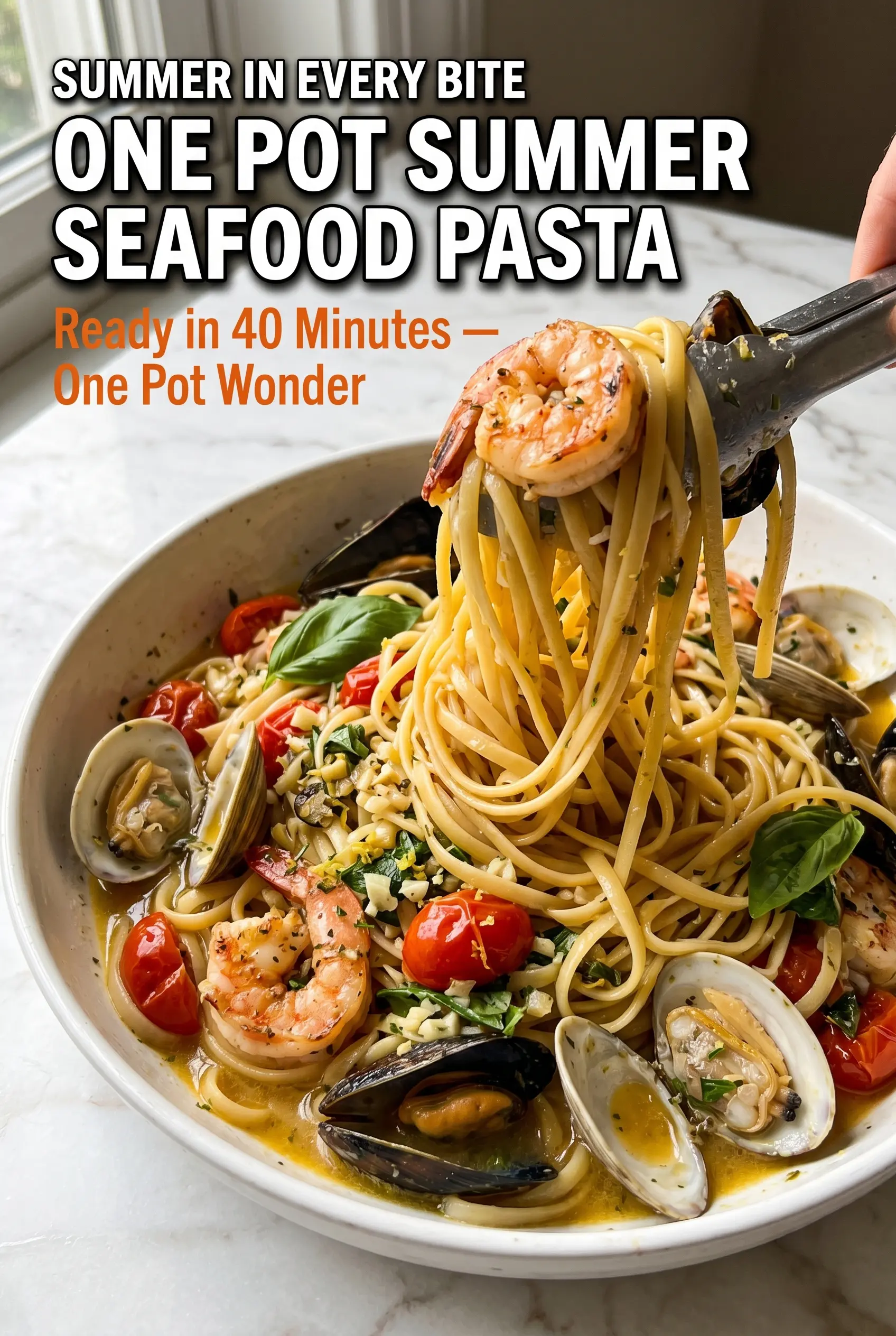
One Pot Summer Seafood Pasta
Ingredients
Equipment
Method
- Heat the olive oil in a large wide pot or deep skillet over medium heat. Add the sliced garlic and red pepper flakes and sauté for 1–2 minutes until the garlic is lightly golden and fragrant, without letting it brown.
- Pour in the white wine and let it bubble for 2 minutes, scraping up any browned bits from the bottom of the pot. This concentrates flavor into a glossy base.
- Add the broth, cherry tomatoes, salt, and black pepper, then bring everything to a boil. Keep the liquid actively simmering so the pasta cooks evenly.
- Add the dry linguine, pressing it down into the liquid, then reduce heat to medium. Cook uncovered, stirring frequently, for 8 minutes so the strands start to absorb the broth.
- Nestle the clams and mussels into the pasta, cover with a lid, and cook for 3 minutes until the shells begin to open. If any shells open earlier, keep them covered so they stay tender.
- Add the shrimp and calamari rings, stir gently, and cook uncovered for 3–4 minutes until the shrimp are pink and curled and the pasta is al dente. Discard any clams or mussels that haven't opened.
- Remove the pot from heat and stir in the butter and lemon zest until the butter melts into a glossy sauce. This turns the broth into a silky coating for the pasta.
- Scatter the torn basil and chopped parsley over the top, drizzle with extra olive oil, and serve straight from the pot with lemon wedges on the side.
