
The oil surges and bubbles when the turkey goes in, which is exactly why I take the water-line test seriously before the burner is ever lit. A 12- to 14-pound bird displaces a surprising amount of oil, and guessing at the fill level can leave you with oil spilling over a hot pot. I set the level outdoors, with the burner off, then dry the pot and turkey completely before moving on.
For this Cajun deep fried turkey with Creole butter injection, I use the butter mixture inside the meat and keep the Cajun rub on the skin and just inside the cavity. The injection gives the breast and dark meat seasoning from within, while the dry surface helps the skin fry instead of sputter. Straining the warm butter mixture also keeps the injector from clogging halfway through.
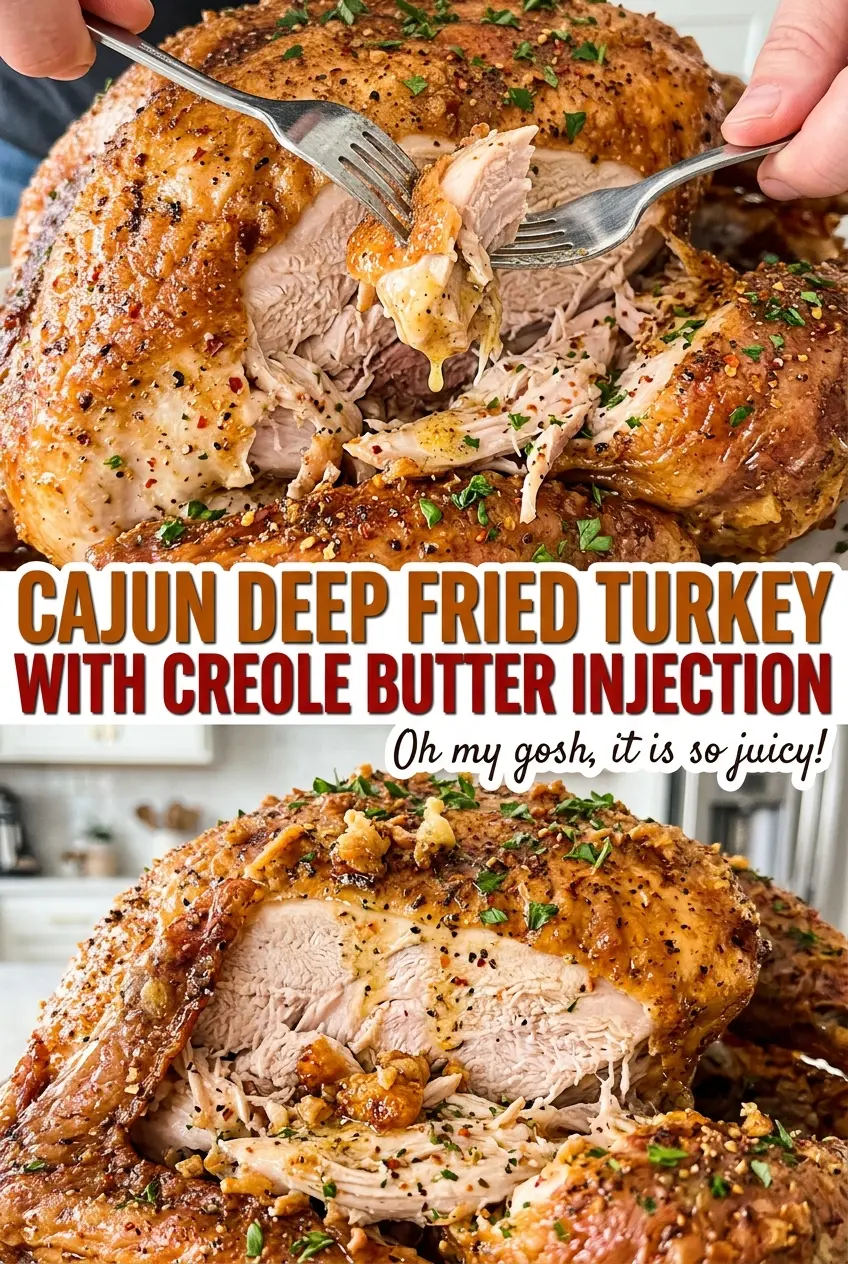
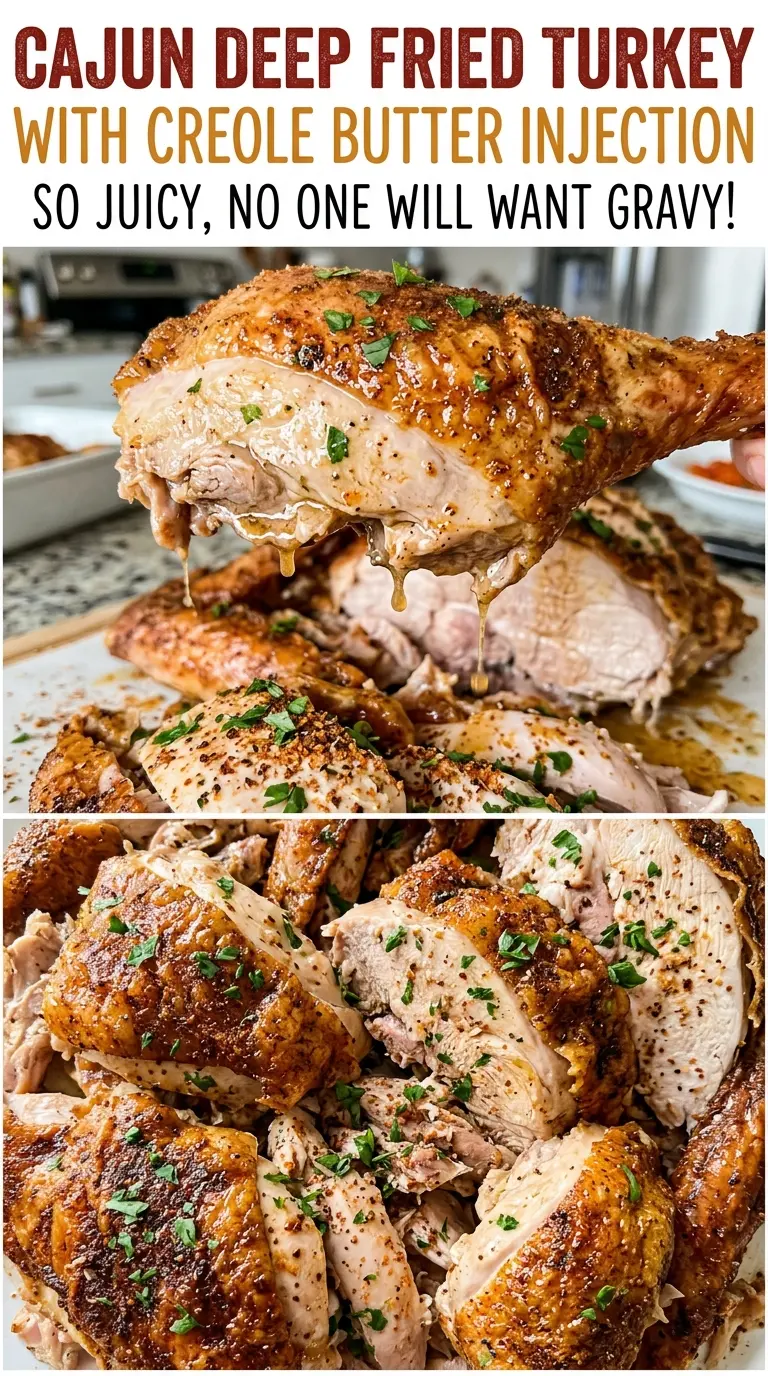
Once the turkey is lowered slowly into properly heated peanut oil, the bubbling settles into a steady fry. The finished bird has deeply seasoned meat and crisp, browned skin, ready to rest before carving.
Kitchen Note
Keep the injection warm enough to stay liquid, then strain it before it goes into the injector. If the butter cools and thickens, it’s harder to distribute in small amounts across the turkey.
Save this Cajun deep fried turkey for a crisp-skinned bird with Creole butter seasoned through the breast and thighs.
Why the Butter Goes Inside Instead of on the Skin
Butter on the outside of a turkey would melt into the hot oil before it could season the meat, and any wet coating on the skin can make the fryer spit more aggressively. Here, the butter, broth, Worcestershire sauce, hot sauce, and Creole seasoning go into the meat in small injections. The rub stays on the surface, where it seasons the skin as it browns.
That division of jobs matters. The skin needs to be thoroughly dry before it meets the oil; the butter mixture belongs inside the breasts, thighs, and drumsticks. Injecting in small amounts at several points gives the seasoning a better chance to spread instead of pooling in one pocket. If a little mixture leaks back out, blot it from the skin rather than rubbing it around.
Leaving the seasoned turkey uncovered in the refrigerator also gives the surface time to dry. That dry exterior is what helps the skin turn crisp, while the injection brings a savory, buttery note to the meat underneath. Neither step replaces the other, and the contrast is what makes each bite taste properly seasoned.
What the Butter Injection, Cajun Rub, and Frying Oil Each Bring
- Whole turkey — A bird in the specified 12- to 14-pound range fits the intended cooking time, but the fryer’s maximum-fill line takes priority. It must be fully thawed; a partly frozen bird can make hot oil surge dangerously.
- Butter and chicken broth — Unsalted butter brings richness, while broth loosens it into an injectable mixture. Use unsalted butter so the rub’s measured kosher salt stays in control; ordinary broth is fine, since it’s seasoned alongside the other ingredients.
- Worcestershire sauce, hot sauce, and Creole seasoning — These season the injection with savory depth and heat. Choose a Creole seasoning you like, since its salt and spice balance varies by brand; the listed amount is part of the overall seasoning.
- Paprika, garlic powder, and onion powder — These give the surface rub its warm color and savory backbone. Freshness matters more than an expensive brand here; spices that have been open for years will taste muted.
- Kosher salt, black pepper, and cayenne — Salt seasons the turkey, black pepper adds a peppery edge, and cayenne brings the sharper heat. Keep the kosher salt type consistent when measuring, since crystal size differs from fine table salt.
- Peanut oil — This is the frying oil for the recipe, heated to a high temperature. Don’t substitute an oil that isn’t intended for high-heat deep frying, and don’t exceed the measured fill line.
How to Prep, Lower, and Fry the Turkey Without Guesswork
Clear the Bird and Mark the Oil Line
Remove the neck, giblets, plastic truss, and any pop-up thermometer, then keep the turkey refrigerated until you’re ready to prepare it. With the burner off, set the bird in the 30-quart fryer pot and add cold water until it covers the turkey by 1 inch. If that level reaches above the pot’s maximum-fill line, choose a smaller turkey rather than risking an overflow. Mark the water level, discard the water, dry the pot completely, and pat the turkey thoroughly dry.
Make the Injection and Season the Meat
Melt the butter, then whisk in the chicken broth, Worcestershire sauce, hot sauce, and Creole seasoning. Let the mixture cool until it’s warm but still liquid, then strain it through a fine-mesh sieve. Inject small amounts at multiple points in both breasts, thighs, and drumsticks, distributing the mixture evenly. Blot any leakage from the skin so it doesn’t leave damp patches.
Rub the Turkey and Chill It Uncovered
Mix the paprika, kosher salt, garlic powder, onion powder, black pepper, and cayenne until the seasoning looks evenly blended. Rub it over the skin and lightly inside the cavity, working over the whole bird rather than piling seasoning in one spot. Refrigerate the turkey uncovered for at least 1 hour. Keep it cold while the oil heats; don’t set it on the counter to warm up.
Heat the Oil Outdoors and Lower the Bird
Set the fryer outdoors on level, noncombustible ground at least 10 feet from buildings, decks, and overhangs. Add peanut oil to the marked line without going above the maximum-fill line, then heat it to 350°F; this takes about 30 to 45 minutes. Monitor the fryer continuously and keep a grease-fire-rated extinguisher nearby. Bring the turkey outside, turn off the burner, and lower the bird slowly into the oil. Once it’s submerged and the bubbling settles, relight the burner.
Hold the Fry Temperature, Then Rest Before Carving
Maintain the oil between 325 and 350°F while the turkey fries. Plan on about 3 to 3 1/2 minutes per pound, or roughly 42 to 49 minutes for this bird. Check the thickest part of the breast and the innermost thigh with a thermometer, avoiding bone; both need to reach 165°F. Lift the turkey from the oil, let it drain over the pot, and rest it on a rack for 20 minutes before carving.
Two Useful Ways to Adjust the Heat or Skip the Dairy
A Milder Cajun Turkey
For less heat, leave the cayenne out of the rub and omit the hot sauce from the injection. The turkey will keep its paprika, garlic, onion, and Creole seasoning, but lose the sharper pepper bite; the Creole blend itself may still bring some heat.
A Dairy-Free Version Without Butter Injection
Skip the entire butter injection and use the Cajun rub on the turkey as described. The turkey will be dairy-free without the butter, but the meat won’t have the same rich, buttery seasoning inside. Keep the same careful outdoor frying setup.
Storage and Reheating
- Refrigerator: Refrigerate carved leftovers within 2 hours and use them within 3 to 4 days. The skin softens as it sits, though the meat stays flavorful.
- Freezer: Freeze carved turkey in airtight, freezer-safe packaging for 2 to 6 months for best quality. Thaw it in the refrigerator before reheating.
- Reheating: Reheat sliced portions covered until hot throughout, checking that the center reaches the same safe temperature used to check the freshly fried turkey. Avoid reheating the whole bird; the outside can dry before the middle warms through.
Questions That Come Up When Frying a Whole Turkey
Cajun Deep Fried Turkey with Creole Butter Injection
Ingredients
Equipment
Method
- Remove the neck, giblets, plastic truss, and any pop-up thermometer.
- Keep the turkey refrigerated until ready to prepare.
- With the burner off, place the turkey in a 30-quart turkey fryer pot and add cold water to cover it by 1 inch.
- If this level exceeds the pot’s maximum-fill line, use a smaller turkey.
- Remove the turkey, mark the water level, and discard the water.
- Dry the pot completely and pat the turkey thoroughly dry.
- Melt the butter.
- Whisk in the chicken broth, Worcestershire sauce, hot sauce, and Creole seasoning.
- Cool the mixture until warm but still liquid.
- Strain the mixture through a fine-mesh sieve.
- Inject the mixture in small amounts at multiple points in both breasts, thighs, and drumsticks, distributing all of it evenly.
- Blot any leakage from the skin.
- Mix the paprika, kosher salt, garlic powder, onion powder, black pepper, and cayenne.
- Rub the mixture over the turkey skin and lightly inside the cavity.
- Refrigerate the turkey uncovered for at least 1 hour.
- Set the fryer outdoors on level, noncombustible ground at least 10 feet from buildings, decks, and overhangs.
- Add peanut oil to the marked line without exceeding the maximum-fill line.
- Heat to 350°F, about 30 to 45 minutes, monitoring continuously and keeping the turkey refrigerated; keep a grease-fire-rated extinguisher nearby.
- Bring the turkey outside, turn off the burner, and lower the turkey slowly into the oil.
- Once it is submerged and bubbling settles, relight the burner and maintain the oil at 325 to 350°F.
- Fry about 3 to 3 1/2 minutes per pound (roughly 42 to 49 minutes), until a thermometer reads 165°F in the thickest breast and innermost thigh, avoiding bone.
- Lift the turkey from the oil and let it drain over the pot.
- Rest it on a rack for 20 minutes before carving.
