
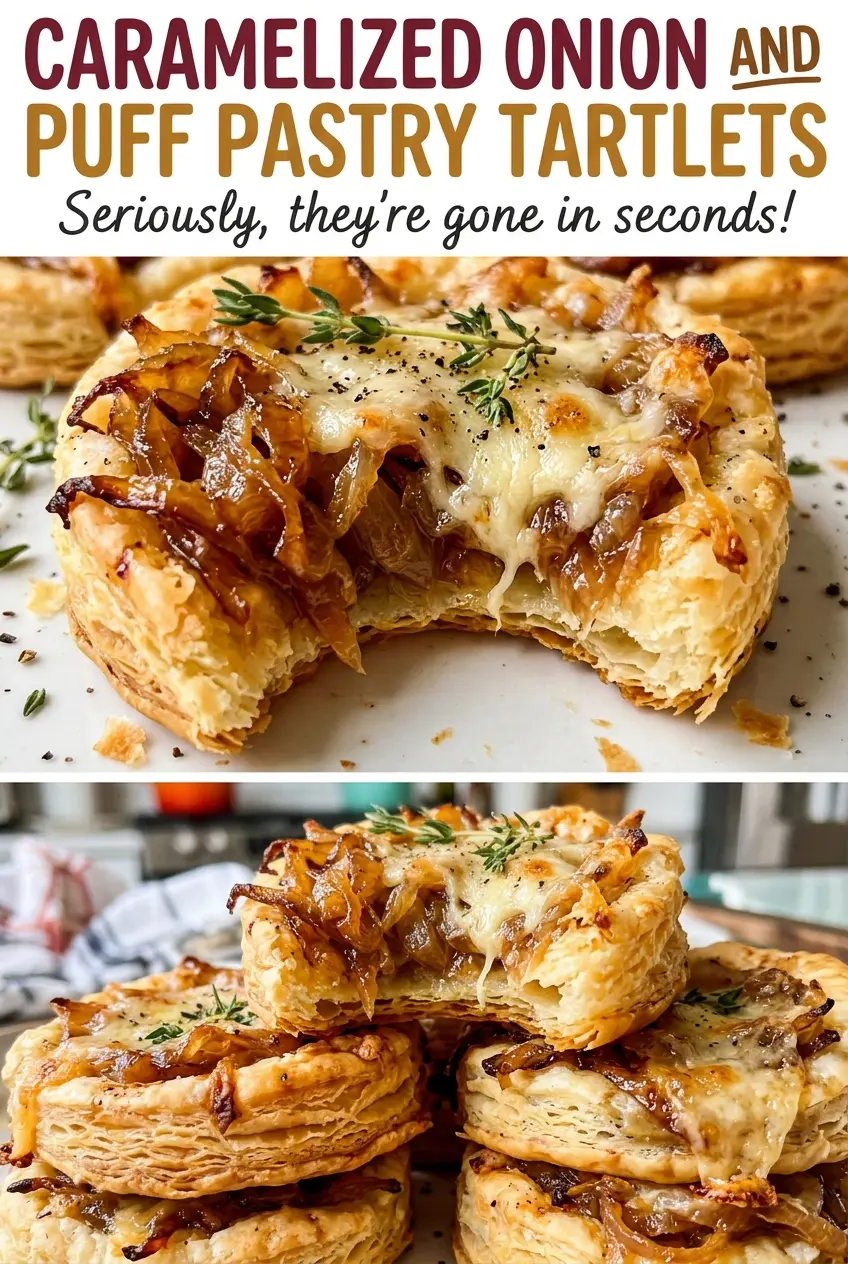
The onions start out filling the skillet, then slowly shrink into a dark, soft pile that smells sweet and savory at once. That long stretch over medium-low heat is what makes these caramelized onion and Gruyere puff pastry tartlets taste like more than cheese on pastry. I used to turn the heat up when the onions seemed to take forever; they browned on the edges before they had time to soften all the way through.
Now I let the onions cook gently, stirring often, until they’re deeply golden and jammy. The Gruyere melts into the pastry centers while the scored edges puff into crisp, buttery borders. Keep the pastry cold as you work, and cool the onions before they go on top; that way, the squares are easier to handle and the filling doesn’t start out warm. Each tartlet comes out with a crisp base, a savory cheese layer, and enough sweet onion to make every bite count.
Kitchen Note
Keep the puff pastry thawed but cold when you cut and score it. If it gets soft and sticky on the board, return it to the refrigerator briefly before continuing; cold pastry is much easier to move without stretching the squares.
Save these caramelized onion and Gruyere tartlets for a gathering when you want flaky pastry, sweet slow-cooked onions, and a savory cheese center in easy-to-share portions.
Why Rushing the Onions Leaves the Tartlets Tasting Flat
Softened onions and caramelized onions aren’t quite the same thing. In the first few minutes, the slices lose their firm, raw bite, but they still taste sharp and carry plenty of moisture. The slower cook gives that moisture time to evaporate and the onions time to turn deeply golden. When they’re ready, they’re tender and jammy rather than browned in a few spots with firm centers.
That difference matters in a small pastry tart. Gruyere brings a rich, nutty note, and the onions need enough sweetness and depth to stand alongside it. If you stop when the onions are merely translucent, the filling can taste more like cooked onion than the mellow, savory-sweet topping these tartlets need. Stirring frequently helps the slices cook evenly and keeps the ones at the bottom from scorching while the rest catch up. The full, slow cook takes patience, but it’s the part that gives the filling its character.
Letting the onions cool before assembly also makes the filling easier to portion. Hot onions can soften the pastry before the baking even begins, so spread them out on a plate while the oven heats. You’ll get a better contrast between the crisp pastry and the tender topping.
What Gruyere and Cold Puff Pastry Bring to Every Bite

- Yellow onions — Their mild sweetness deepens as they cook, which balances the savory cheese. Slice them thinly and as evenly as you can; thick pieces take longer to soften, while very uneven slices finish at different times. The onions are the heart of the topping, so give them room to cook rather than trying to rush them.
- Gruyere — This cheese melts smoothly and has a distinctly nutty, savory taste that holds its own against the onions. Finely grating it helps cover the pastry centers in an even layer. A pre-grated cheese is convenient, but freshly grated Gruyere tends to melt more evenly and gives you better control over the layer.
- Puff pastry — The layers in the pastry create the flaky, raised edges, so handle the sheet gently and keep it cold. Frozen pastry is a practical choice here; thaw it until it unfolds without cracking, but don’t let it become warm or floppy. If the sheet tears while unfolding, press the seam back together gently before cutting.
- Butter and olive oil — Together they coat the onions as they soften and cook, with the butter adding richness and the oil helping the mixture cook smoothly. Use fresh butter and a regular olive oil you enjoy cooking with; there’s no need to reach for a prized finishing oil.
- Fresh thyme — Its herbal, woodsy note keeps the sweet onions from tasting one-dimensional. The leaves go in near the end of cooking so their fragrance stays present instead of fading through the long onion cook. Strip the leaves from the stems before measuring them.
- Egg and water — Whisked together, they make an egg wash for the pastry borders. Brush the edges lightly so they turn glossy and deep golden without leaving puddles around the squares.
Scoring the Borders and Keeping the Centers Flat
Cook the onions until they turn jammy
Melt the butter and olive oil in a 12-inch skillet over medium heat, then add the thinly sliced onions and kosher salt. Stir frequently for 8 to 10 minutes, until the onions have softened. Lower the heat to medium-low and continue cooking for 30 to 40 minutes, stirring frequently. They should become deeply golden and jammy; stir in the black pepper and fresh thyme leaves during the final 2 minutes.
Cool the filling while the oven heats
Transfer the onions to a plate and let them cool for 10 minutes. Heat the oven to 400°F and line an 18×13-inch rimmed baking sheet with parchment paper. The onions should no longer be steaming hot when you top the pastry. This pause also gives you a chance to prepare the squares without rushing the filling onto them.
Score a border without cutting through
Unfold the thawed, cold puff pastry on a cutting board and cut it into 9 equal squares. Move the squares to the baking sheet, leaving space between them so the edges have room to puff. Score a 1/2-inch border on each square without cutting all the way through, then prick the centers several times with a fork. If the knife goes through the pastry, the border may not lift as a connected frame around the filling.
Fill the centers and bake until crisp
Divide the finely grated Gruyere among the pastry centers, then add the cooled onions on top. Whisk the egg and water together in a small bowl and brush the pastry borders with the egg wash. Bake for 18 to 22 minutes, until the pastry is puffed and deep golden and the bottoms are crisp. Let the tartlets rest on the baking sheet for 5 minutes before serving; moving them straight away can make the hot pastry more likely to bend.
Small Changes for Different Tastes at the Table
Make a pepper-free portion
Leave the black pepper out of the onion mixture if you prefer a gentler, sweeter filling. The onions, thyme, and Gruyere still give the tartlets plenty of savory depth; the result just has less of the pepper’s warm bite.
Vary the cheese-to-onion balance
Keep the same overall amounts, but distribute the Gruyere and onions unevenly across the nine squares: some can be more cheese-forward, while others carry a thicker layer of onions. It’s an easy way to give a platter a little variety without changing the ingredients or making a second filling.
Storage and Reheating
- Refrigerator: Store cooled tartlets in an airtight container for up to 3 days. The pastry softens in the refrigerator, but the filling keeps well.
- Freezer: Freeze the cooled tartlets in a single layer until firm, then transfer them to a freezer-safe container for up to 1 month. Thaw them in the refrigerator before reheating for the most even result.
- Reheating: Warm them on a baking sheet in a 350°F oven until heated through and crisp again, about 8 to 10 minutes. The microwave warms them quickly but leaves the pastry soft, so use it only if crisp edges aren’t a priority.
Questions I Get Asked About These Puff Pastry Tartlets
Caramelized Onion and Gruyere Puff Pastry Tartlets
Ingredients
Equipment
Method
- Melt the butter and olive oil in a 12-inch skillet over medium heat.
- Add the onions and salt and cook, stirring frequently, for 8 to 10 minutes, until softened.
- Reduce the heat to medium-low and cook the onions for 30 to 40 minutes, stirring frequently, until deeply golden and jammy.
- Stir in the black pepper and thyme for the final 2 minutes.
- Transfer the onions to a plate and let them cool for 10 minutes.
- Heat the oven to 400°F.
- Line an 18x13-inch rimmed baking sheet with parchment paper.
- Unfold the puff pastry on a cutting board and cut it into 9 equal squares.
- Transfer the squares to the prepared baking sheet, leaving space between them.
- Score a 1/2-inch border on each square without cutting through.
- Prick the centers several times with a fork.
- Divide the Gruyere among the pastry centers.
- Top the pastry centers with the cooled onions.
- Whisk the egg and water together in a small bowl.
- Brush the pastry borders with the egg wash.
- Bake for 18 to 22 minutes, until the pastry is puffed and deep golden and the bottoms are crisp.
- Let the tartlets rest on the baking sheet for 5 minutes before serving.
