
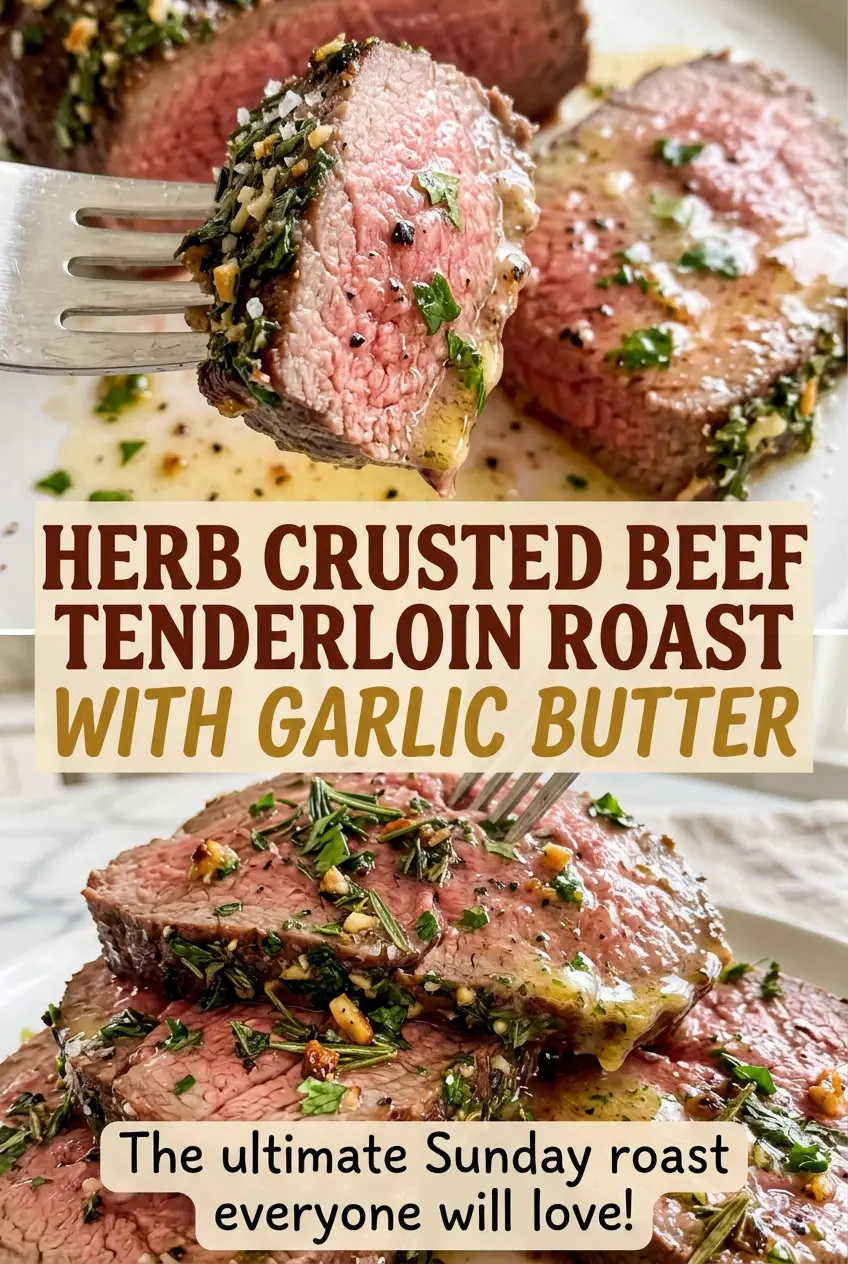
The skillet starts to sizzle as the tenderloin browns, and the smell of rosemary and garlic butter soon fills the kitchen. That quick sear gives this herb crusted beef tenderloin roast with garlic butter a browned exterior before the oven gently finishes the center. The roast is an elegant centerpiece, but the steps are straightforward: season the beef, brown it on all sides, and let the oven do the rest.
I spread the softened garlic butter over the roast after searing, not before. That keeps the herbs and garlic from scorching in the skillet while giving them time to perfume the beef in the oven. A thermometer, rather than the clock alone, tells you when the thickest part has reached the target temperature. After a brief rest, the slices are tender with a savory, herb-flecked finish.
Kitchen Note
Softened butter makes a noticeable difference here. It stirs smoothly with the finely grated garlic and chopped herbs, then spreads over the roast without tearing at the browned surface.
Save this herb crusted beef tenderloin roast for a special dinner—the garlic butter, rosemary, and thyme make every slice taste like the centerpiece it is.
Why the Tied Center-Cut Shape Makes the Timing More Predictable
Beef tenderloin is prized for tenderness, but the roast’s shape matters when you’re trying to cook it evenly. A center-cut roast has a more consistent thickness than a piece that narrows sharply at one end. Tying helps keep that shape compact while it sears and roasts, so you’re not dealing with a loose flap that cooks faster than the middle.
That’s also why the cooking time is a range, not a promise to pull the roast at one exact minute. Two roasts can weigh the same and still differ in thickness, and ovens don’t all heat in precisely the same way. The tied shape gives you a more consistent starting point, while checking the thickest part gives you the useful answer. Choose a roast that’s already trimmed and tied, and keep it intact through cooking; cutting it into smaller pieces changes the shape this timing is built around.
What the Tenderloin, Garlic Butter, and Herbs Each Bring
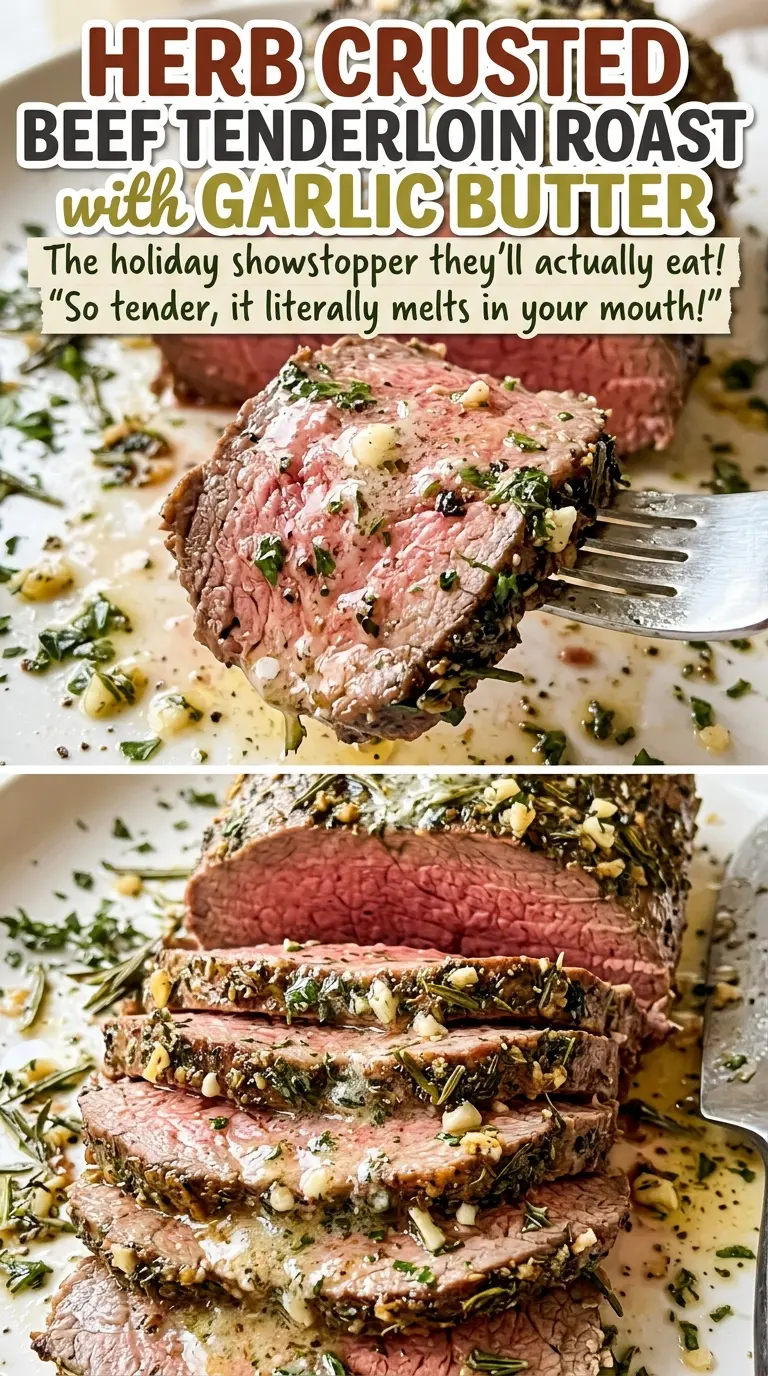
- Center-cut beef tenderloin — This is the main event: naturally tender and mild enough to let the garlic and herbs come through. Ask the butcher for a trimmed, tied center-cut roast if it isn’t already prepared. Another cut of beef won’t cook on the same schedule or have the same texture, so I wouldn’t treat it as a direct substitute.
- Unsalted butter — Butter carries the grated garlic and chopped herbs across the roast, adding a rich coating as it melts in the oven. A basic grocery-store butter works well; the important detail is that it’s softened enough to mix and spread. For a dairy-free version, use a block-style plant butter instead, as described below.
- Garlic and fresh herbs — Finely grated garlic disperses more evenly through the butter than roughly chopped pieces. Fresh rosemary and thyme bring a fragrant, savory character, while parsley keeps the mixture tasting fresh rather than heavy. Use herbs with lively color and no wilted or slimy leaves. If fresh herbs aren’t available, dried rosemary and thyme can stand in; use less than you would of the fresh herbs, and expect a more concentrated, less bright flavor.
- Olive oil — The oil coats the skillet and helps the beef brown during the sear. There’s no need to use a special finishing oil here; an everyday olive oil is fine. A neutral cooking oil can replace it if that’s what you keep on hand.
The Sear, Butter Coating, and Oven Finish in the Right Order
Stir the Garlic and Herbs Into Soft Butter
Stir the softened butter with the finely grated garlic, chopped rosemary, thyme leaves, and parsley in a small bowl. Keep mixing until the herbs are distributed through the butter rather than clumped in one spot. If the butter is still firm, it will be harder to spread evenly later. Set the bowl aside while you prepare the beef.
Dry and Season Before the Skillet
Preheat the oven to 400°F. Pat the tenderloin dry, then season all over with kosher salt and black pepper; a dry surface browns more readily than a damp one. Heat the olive oil in a 12-inch ovenproof skillet over medium-high heat. Add the roast and turn it as needed so every side gets color, about 8 minutes total.
Coat the Roast and Let the Oven Finish It
Once the beef is browned, spread the garlic butter over the top and sides of the roast. The skillet and roast will be hot, so work carefully and use a utensil or the back of a spoon to guide the butter into an even coating. Place the skillet in the oven and roast for about 25–35 minutes. Check the thickest part with a meat thermometer; take the roast out when it reaches 145°F rather than relying on appearance alone.
Rest Before Removing the Twine
Transfer the roast to a cutting board and leave it undisturbed for 15 minutes. Resting gives the hot juices time to settle, which helps keep them from running out as soon as you slice. Remove the twine after the rest, not while the roast is still in the skillet. Then slice and serve while the herb butter is still fragrant on the surface.
How to Adapt the Herb Crust Without Changing the Roast
Make the Garlic Butter Dairy-Free
Replace the butter with softened block-style plant butter and mix in the garlic and herbs the same way. It will still coat the roast and carry the aromatics, though the finish won’t have quite the same buttery richness. Choose a firm block rather than a soft tub spread so the mixture is easy to handle.
Give the Crust a Coarser Pepper Bite
Use coarsely cracked black pepper in place of finely ground pepper when seasoning the beef. The larger flecks make the pepper more noticeable alongside the rosemary and garlic, with a little extra texture on the outside. Keep the roast, sear, and oven method the same.
Storage and Reheating
- Refrigerator: Refrigerate leftover beef in a covered, airtight container within 2 hours and use it within 3 to 4 days. The chilled slices will feel firmer than freshly carved beef.
- Freezer: Freeze tightly wrapped slices in an airtight container for up to 2 to 3 months for best quality. Thaw them in the refrigerator before reheating.
- Reheating: Reheat only the slices you plan to eat, covered in the microwave at medium power in short bursts, until they reach 165°F. Long, high-power reheating can make tenderloin dry and chewy.
Questions That Come Up While Roasting Beef Tenderloin
Herb Crusted Beef Tenderloin Roast with Garlic Butter
Ingredients
Equipment
Method
- Stir the butter, garlic, rosemary, thyme, and parsley together in a small bowl.
- Preheat the oven to 400°F.
- Pat the beef dry and season all over with the salt and pepper.
- Heat the olive oil in a 12-inch ovenproof skillet over medium-high heat, then sear the beef, turning to brown all sides, about 8 minutes total.
- Spread the garlic butter over the top and sides of the roast.
- Place the skillet in the oven and roast until the thickest part reaches 145°F, about 25–35 minutes.
- Transfer the roast to a cutting board and rest for 15 minutes.
- Remove the twine and slice.
