
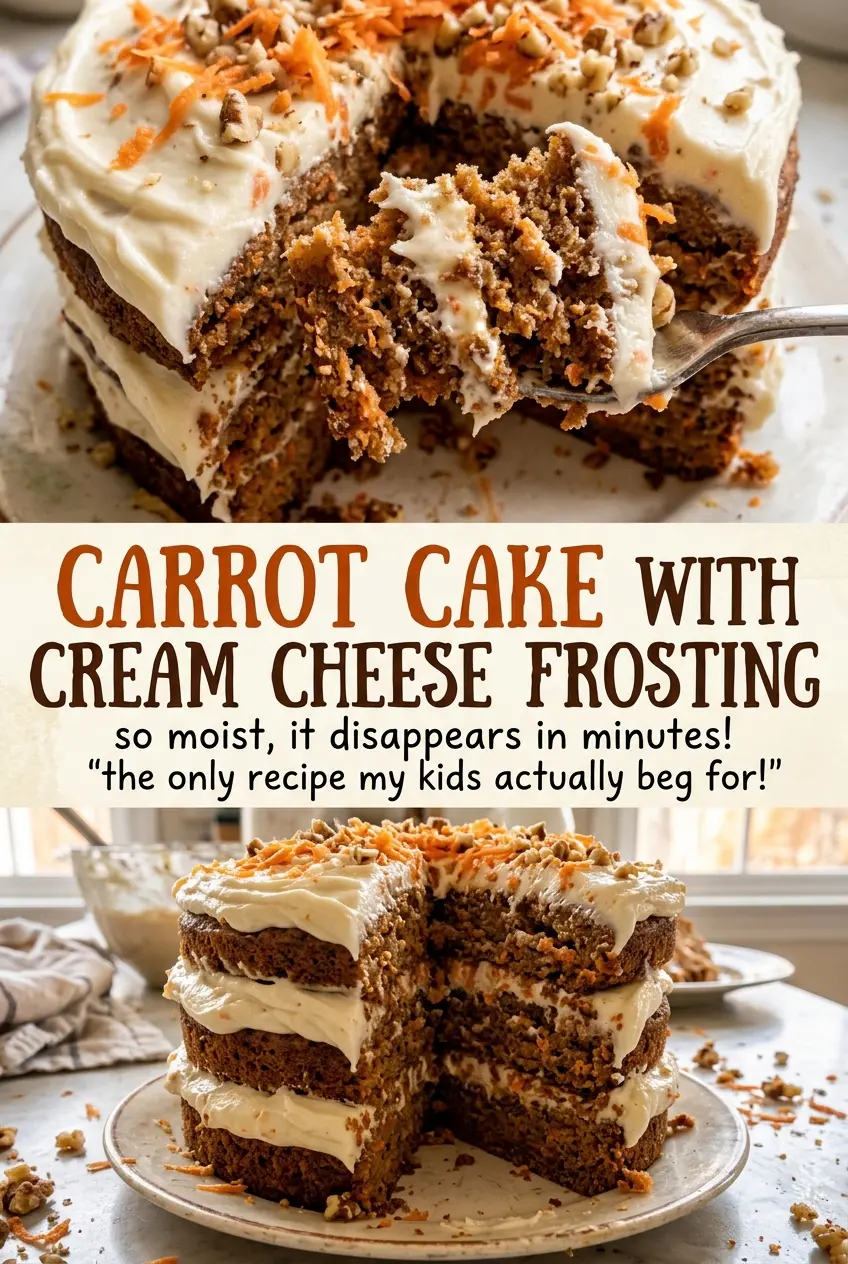
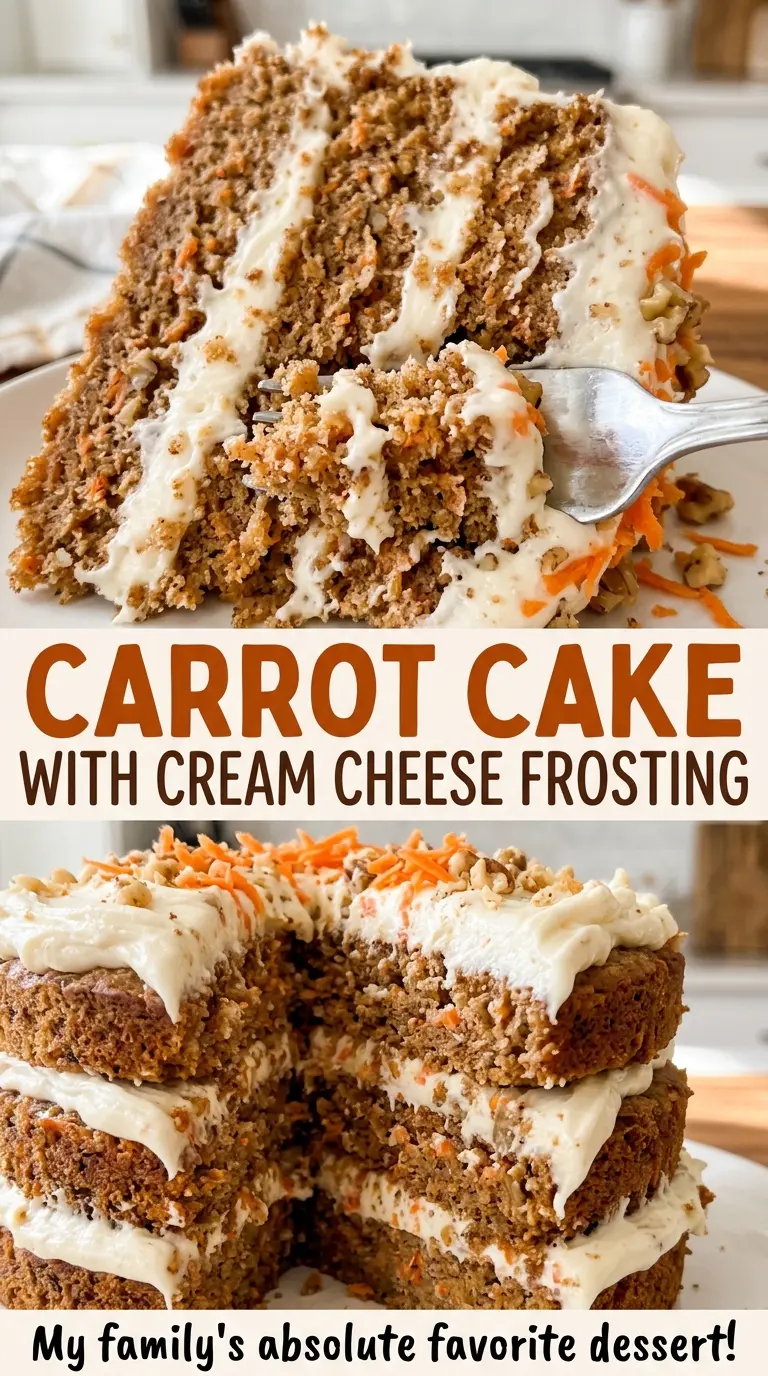
The cinnamon reaches the kitchen before the cake has even finished baking, and the edges turn a deeper gold while the center stays tender. I like this carrot cake for its simple 9×13-inch shape: there’s plenty of cream cheese frosting across the top, and the squares are easy to cut when it’s time to serve. The carrots keep the crumb moist without making the cake feel heavy.
Vegetable oil is a good fit here because it keeps the cake tender without asking you to cream butter and sugar first. Whisking the eggs, sugar, oil, and vanilla until smooth gives the batter a straightforward start, and a gentle hand once the flour goes in helps keep the crumb soft. The cream cheese frosting brings a little tang against the cinnamon-sweet cake, so each bite tastes balanced rather than sugary.
Kitchen Note
Wait until the cake is completely cool before frosting it. I give it about 2 hours in the pan on a wire rack; frosting a warm cake makes the topping soft and difficult to spread evenly.
Save this carrot cake with cream cheese frosting for a bake that gives you a soft cinnamon crumb and a generous, tangy topping.
Why finely grated carrots belong in this cake
Carrots do more here than lend their familiar flavor. They bring moisture to the batter, and grating them finely spreads that moisture through the cake instead of leaving distinct, chewy strands in every slice. It also helps the carrots bake at the same pace as the surrounding crumb. Coarse shreds can stay firm even when the cake around them is tender, which makes the texture feel uneven.
Take a moment to grate the carrots finely before you start mixing. The pieces should be small enough to fold through the batter without clumping together. Once they’re in the bowl, fold rather than beat; you want them distributed throughout, not mashed into the batter. That simple prep choice is what gives each square a consistent, soft bite while keeping the cake recognizably full of carrot.
What the oil, carrots, and cream cheese each bring
- All-purpose flour and baking soda — The flour gives the cake its structure, while baking soda helps it rise. Measure the flour without packing it down, and check that the baking soda is fresh; old leavener can leave the cake flatter than expected. I wouldn’t swap in a different flour here without a recipe developed for it.
- Ground cinnamon — Cinnamon gives the cake its warm, familiar aroma and carries through the sweet crumb. Use a jar that smells fragrant when you open it; if the scent is faint, the baked cake will be less aromatic too.
- Eggs, granulated sugar, and vegetable oil — The eggs help hold the batter together, sugar sweetens it, and oil keeps the crumb tender. Use a neutral vegetable oil so it doesn’t compete with the cinnamon. There isn’t a direct fat swap I recommend for this batter; butter would change both the mixing method and the texture.
- Carrots — Choose firm carrots and grate them finely just before mixing for the best texture. The finely grated texture matters more than whether the carrots are large or small.
- Cream cheese and unsalted butter — These make the frosting tangy, rich, and spreadable. Let both soften before mixing so they blend smoothly. Cream cheese gives the topping its characteristic tang, so it doesn’t have a close substitute in this frosting.
- Powdered sugar and vanilla — Powdered sugar thickens the frosting without a gritty finish, and vanilla rounds out its sweetness. Add the sugar gradually rather than dumping it all into the bowl at once.
The mixing and baking cues that make this cake tender
Get the pan and dry ingredients ready
Heat the oven to 350°F and coat a 9×13-inch baking pan with nonstick cooking spray. Whisk the flour, baking soda, cinnamon, and salt together in a medium bowl so the leavener and spice are spread through the flour. This takes only a moment, but it helps prevent a concentrated pocket of baking soda in a slice. Set the bowl aside while you mix the wet ingredients.
Whisk the wet mixture, then fold in the carrots
In a large bowl, whisk the eggs, granulated sugar, oil, and vanilla until the mixture looks smooth. Add the flour mixture and stir just until no dry streaks remain; continuing to beat after that point can make the crumb less tender. Fold in the finely grated carrots until they’re distributed throughout. The batter should look evenly speckled rather than streaked with flour or piled with carrots in one spot.
Bake until the center gives the right signal
Spread the batter evenly in the prepared pan and bake for 35–45 minutes. Start checking near the shorter end of that range, since ovens can differ. A toothpick inserted in the center should come out with a few moist crumbs, and the edges should begin to pull away from the pan. A toothpick covered in wet batter means the center needs more time; don’t wait for it to come out completely dry.
Beat and spread the cream cheese frosting
Once the cake has cooled completely, beat the softened cream cheese and butter with an electric mixer until smooth, about 2 minutes. Beat in the powdered sugar one cup at a time, then add the vanilla and salt. Stop when the frosting is smooth and spreadable; if sugar is still visible around the bowl, scrape the sides and beat briefly again. Spread it evenly over the cooled cake.
Two ways to change the finish without changing the cake
Leave it unfrosted for a simpler snack cake
Skip the cream cheese frosting and serve the cooled carrot cake on its own. The cake will taste less sweet and feel lighter, while keeping its cinnamon flavor and moist crumb. This is the simplest option if you want a cake without a dairy-based topping.
Make neat frosted square bites
Cut the cooled cake into small squares and spread frosting over each piece instead of frosting the whole top at once. This takes a little more time, but gives each portion its own layer of topping and leaves the cut edges visible. Keep the pieces covered and refrigerated once they’re frosted.
Storage and Reheating
- Refrigerator: Cover leftover cake and refrigerate it for up to 5 days. The cake will become firmer when chilled, so the frosting may feel less soft straight from the refrigerator.
- Freezer: Freeze frosted slices in an airtight container for up to 2 months. Thaw them in the refrigerator; the frosting may soften slightly after thawing.
- Reheating: This cake is best served chilled or cool, so it doesn’t need reheating. Microwaving a frosted slice can melt the topping before the cake warms evenly.
Questions that come up while making carrot cake
Carrot Cake with Cream Cheese Frosting
Ingredients
Equipment
Method
- Heat the oven to 350°F.
- Coat a 9x13-inch baking pan with nonstick cooking spray.
- Whisk the flour, baking soda, cinnamon, and salt together in a medium bowl.
- In a large bowl, whisk the eggs, granulated sugar, oil, and vanilla until smooth.
- Add the flour mixture to the egg mixture and stir just until no dry streaks remain.
- Fold in the carrots.
- Spread the batter evenly in the prepared pan.
- Bake for 35–45 minutes, until a toothpick inserted in the center comes out with a few moist crumbs and the edges begin to pull away from the pan.
- Cool the cake completely in the pan on a wire rack, about 2 hours.
- Beat the cream cheese and butter in a large bowl with an electric mixer until smooth, about 2 minutes.
- Beat in the powdered sugar, 1 cup at a time.
- Add the vanilla and salt and beat until smooth and spreadable.
- Spread the frosting evenly over the cooled cake.
- Cover and refrigerate leftover cake for up to 5 days.
