
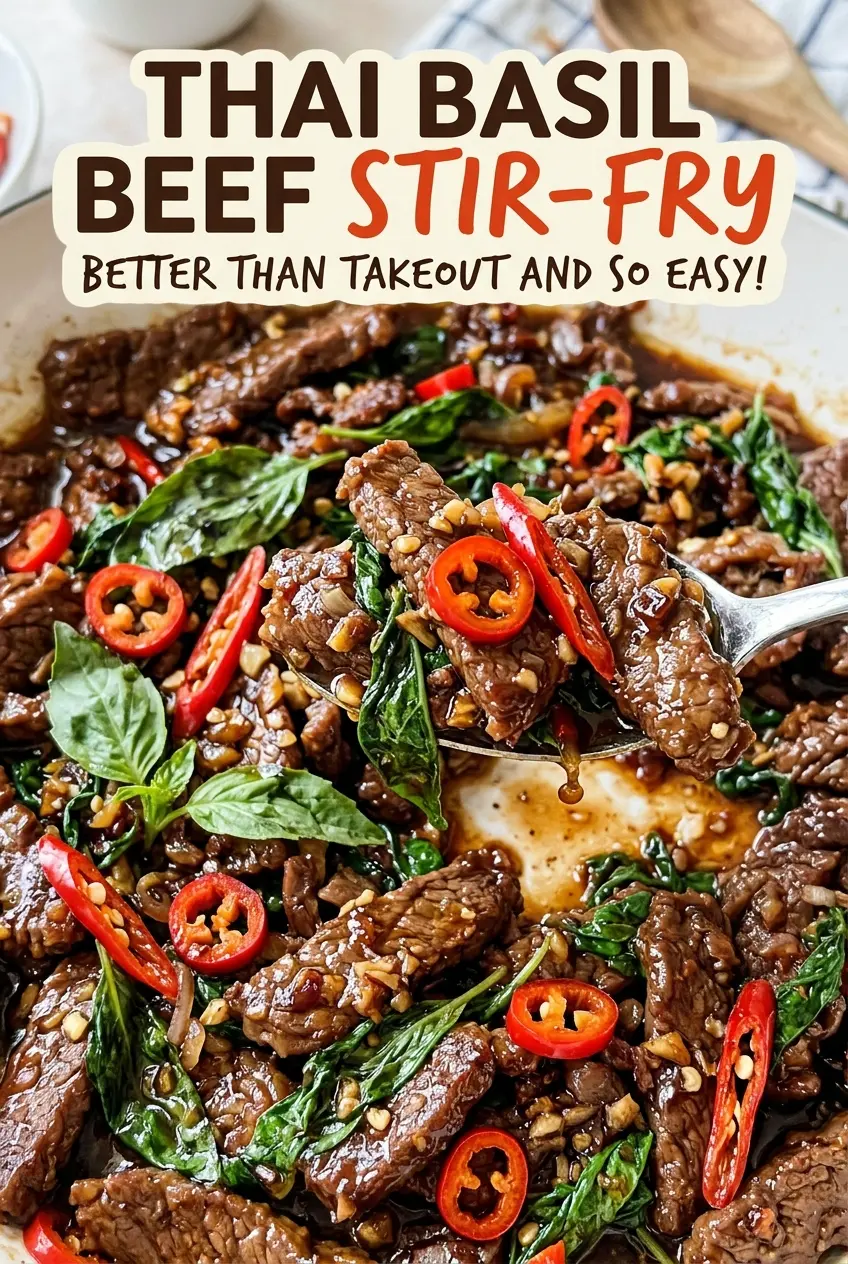
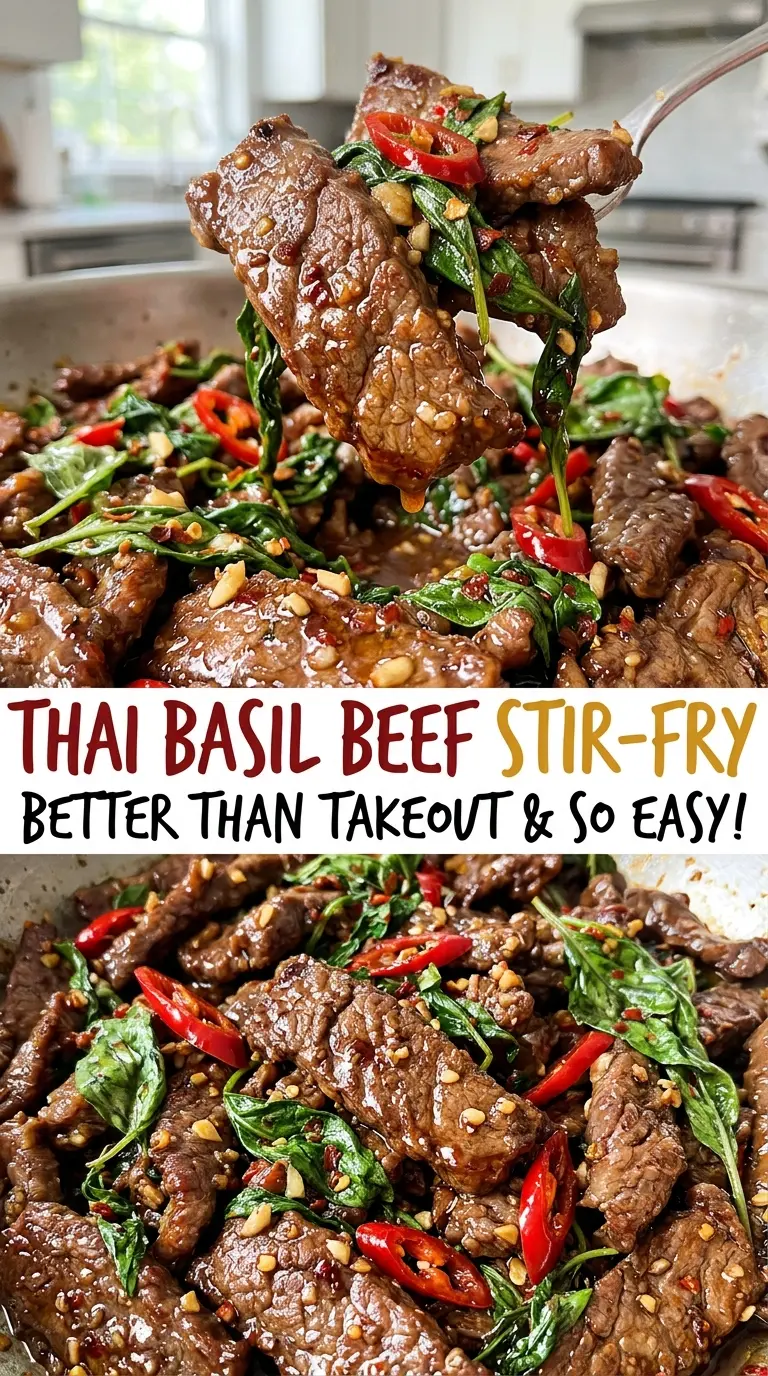
The beef should hit the skillet with a sharp sizzle, not sit quietly in a puddle of liquid. Ground beef needs room to brown, even in a quick dinner, and breaking it into small pieces gives the edges time to take on color before the sauces go in. That’s the part I pay attention to first when I make Thai Basil Beef Stir-Fry.
Fish sauce, oyster sauce, and soy sauce bring plenty of savory depth, so the browned beef does the heavy lifting before they join the pan. Then I take the skillet off the heat before stirring in the Thai basil. The leaves soften in the leftover warmth without losing the fresh, peppery aroma that makes this dish taste like Thai basil beef instead of just saucy ground beef.
Kitchen Note
Take the skillet completely off the heat before the Thai basil goes in. It only needs the pan’s leftover warmth to relax, so stir just until the leaves wilt rather than leaving them over the burner.
Save this Thai Basil Beef Stir-Fry for a quick skillet dinner with savory browned beef and Thai basil stirred in at the finish.
Why Thai Basil Beef Needs a Browned Base Before the Fish Sauce
Ground beef can turn gray and soft if liquid hits the pan before the meat has browned. Fish sauce, oyster sauce, and soy sauce all bring moisture along with their savory flavor, so I wait until the beef has developed color before adding them. That order gives the meat a chance to brown directly against the hot skillet instead of simmering in the sauce.
It also keeps the seasonings from getting lost in a long cook. The sauces only need a short time to coat the beef; they aren’t there to braise it. If the skillet looks crowded or the meat is releasing a lot of liquid, keep breaking it into small pieces and give that moisture time to cook away before you add the sauce mixture. You’re looking for browned bits throughout, not a dry crust on every piece. Once the sauces go in, the beef should look evenly glossy and savory, with no need to reduce the mixture for several minutes.
Fish Sauce, Oyster Sauce, and Thai Basil Each Have a Different Job
- Ground beef — The 85% lean blend gives the finished dish enough fat to feel satisfying without making the sauce heavy. A leaner grind works, but the beef will taste a little less rich and can seem drier.
- Neutral oil — A neutral-tasting oil lets the beef and aromatics lead. Canola, vegetable, or grapeseed oil are all sensible choices; a strongly flavored oil can compete with the basil.
- Garlic and Thai chiles — Freshly minced garlic gives the sauce its sharp aroma, and thinly sliced Thai chiles spread their heat through the beef. Fresh chiles vary in intensity, so the finished dish can taste hotter or milder from one batch to another.
- Fish sauce — It brings a deep, fermented savoriness that soy sauce alone won’t quite reproduce. A standard bottle is fine; the other sauces round out its assertive edge, so there’s no need to seek out a specialty variety.
- Oyster sauce — This adds a thicker, slightly sweet savory note that helps the sauce cling to the small pieces of beef. It’s worth keeping in the mix rather than replacing it with more soy sauce, which would make the result saltier and thinner.
- Soy sauce — This adds a familiar salty, savory note alongside the fish and oyster sauces. A regular bottle works well here; the three sauces contribute different things, so don’t treat them as interchangeable.
- Granulated sugar — A small touch balances the saltiness of the sauces without making the beef taste sweet. Keep it in the mixture; leaving it out can make the savory flavors feel sharper.
- Thai basil — Its peppery, lightly anise-like aroma is the defining fresh note in the dish. Choose leaves that look perky rather than bruised, and pat them dry after washing so extra water doesn’t dilute the sauce when they wilt.
The Fast Skillet Sequence That Keeps the Beef Savory
Brown the Beef in the Hot Skillet
Heat the neutral oil in a 12-inch skillet over medium-high heat. Add the ground beef and break it into small pieces as it cooks; leave the pieces in contact with the pan long enough to brown rather than stirring constantly. Cook for 6 to 8 minutes, until the beef is browned and reaches 160°F. If you see liquid pooling, let it cook off before moving on so the meat browns instead of steams.
Let the Garlic and Chiles Turn Fragrant
Stir the minced garlic and thinly sliced Thai chiles into the browned beef. Give them 30 seconds in the skillet, stirring so the garlic doesn’t sit in one hot spot. The cue is an immediate, fragrant garlic-and-chile aroma; the garlic shouldn’t need to brown. If it starts to darken, move straight to the sauces rather than letting it scorch.
Coat the Beef with the Three Sauces
Add the fish sauce, oyster sauce, soy sauce, and granulated sugar. Stir for 1 minute, lifting and turning the beef so the seasonings reach the small pieces throughout the skillet. The mixture should look glossy and evenly distributed, not like a pot of liquid sauce. Scrape the bottom as you stir so browned bits join the coating.
Wilt the Basil Away from the Burner
Remove the skillet from the heat, then stir in the Thai basil leaves. Keep stirring just until they soften and collapse against the warm beef; they don’t need to cook until dark. The pan’s remaining heat is enough to wilt them while keeping their fresh aroma noticeable. Serve the beef hot once the leaves have just relaxed.
Two Easy Ways to Adapt the Beef and Sauce
Make the sauce gluten-free
Use gluten-free tamari in place of the soy sauce, keeping the same amount, and choose gluten-free fish sauce and oyster sauce. The tamari gives the sauce a slightly rounder, less sharp edge, while the beef, basil, and chile flavors stay at the center.
Leave out the Thai chiles for a milder pan
Skip the chiles and keep the rest of the ingredients and cooking sequence the same. You’ll still get the savory sauce and fragrant basil, but without the direct chile heat; this is a good option when you want the beef’s seasoning to feel gentler.
Storage and Reheating
- Refrigerator: Keep leftovers covered for 3 to 4 days. The basil will darken and soften, though the beef will still be savory.
- Freezer: Freeze in an airtight container for up to 2 to 3 months for best quality. Thaw overnight in the refrigerator; the basil will lose some of its fresh color and texture.
- Reheating: Warm in a skillet over medium-low heat, stirring often, or microwave covered in short bursts, stirring between them, until the leftovers reach 165°F. High heat can dry out the beef before the center warms through.
Questions That Come Up When Making Thai Basil Beef
Thai Basil Beef Stir-Fry
Ingredients
Equipment
Method
- Heat the oil in a 12-inch skillet over medium-high heat.
- Add the ground beef and cook for 6 to 8 minutes, breaking it into small pieces, until browned and it reaches 160°F.
- Stir in the garlic and chiles and cook for 30 seconds, until fragrant.
- Add the fish sauce, oyster sauce, soy sauce, and sugar, and stir for 1 minute to coat the beef.
- Remove the skillet from the heat, stir in the Thai basil until just wilted, and serve hot.
