
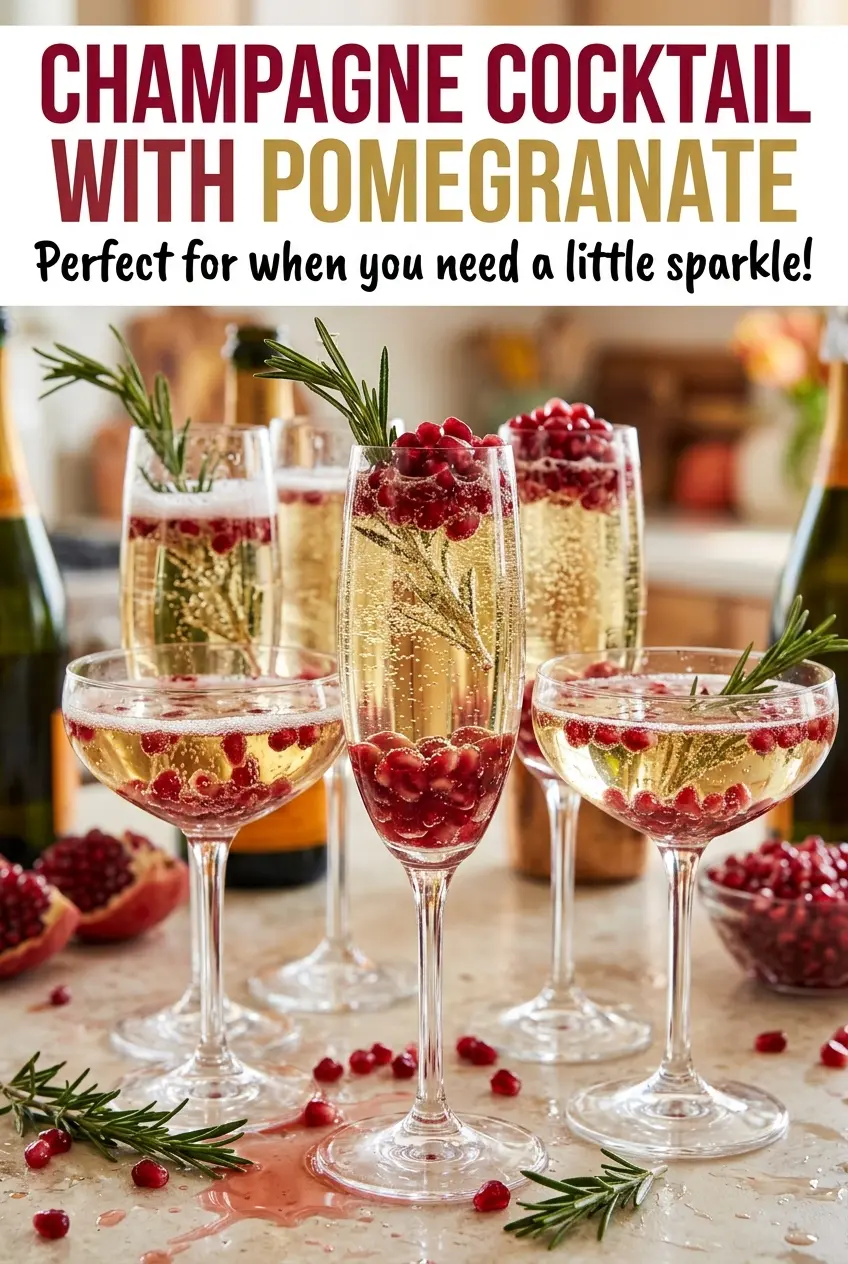
The first splash of Champagne turns ruby pomegranate juice pale and foamy at the edges, so I pour slowly and let the bubbles settle before adding more. That little pause keeps the drink lively instead of leaving each flute with a thick cap of foam. In this Champagne Cocktail with Pomegranate, chilled juice and orange liqueur go into the glasses first, then brut Champagne finishes each pour.
The balance comes from keeping the pomegranate and orange flavors underneath the dry sparkle of the Champagne. I divide the juice and liqueur among all six flutes before opening the bottle, which keeps the base consistent from glass to glass. A few pomegranate arils go in last, just before serving, for a jewel-like finish and a tart bite at the bottom of each flute.
Kitchen Note
I divide the pomegranate juice and orange liqueur among all six flutes before pouring any Champagne. That gives every glass the same starting point, rather than leaving the last one with a noticeably stronger or weaker base.
Save this Champagne Cocktail with Pomegranate for its tart ruby base, orange note, and brisk brut finish.
Why Brut Champagne Keeps the Pomegranate From Tasting Too Sweet
Pomegranate juice brings a concentrated fruitiness, and orange liqueur adds sweetness along with a clear citrus note. If the sparkling wine were sweet as well, those flavors could crowd each other and make the glass feel heavy. Brut Champagne gives the drink a drier finish, so the fruit stays noticeable without taking over.
That balance is also why I keep the Champagne chilled and pour it gently over the juice mixture. A slow pour protects the bubbles, while the juice and liqueur are already waiting at the bottom of the glass. You get the contrast in each sip: tart pomegranate first, orange through the middle, and crisp sparkling wine around it. Use a brut Champagne you enjoy drinking, but there’s no need to reach for an expensive bottle when it’s being mixed with fruit and liqueur.
What the Juice, Liqueur, and Brut Each Bring to the Glass
- Pomegranate juice — This is the drink’s fruit base and gives it its deep color. A juice that tastes tart and distinctly like pomegranate keeps the cocktail from leaning too sweet; a sweetened pomegranate drink will shift the balance. Choose juice you like on its own, since the flavor is not hidden by the Champagne.
- Orange liqueur — It brings the citrus note and a touch of sweetness that rounds out the pomegranate. Use an orange liqueur with a clean orange aroma; an overly faint one can get lost once the sparkling wine is added. There isn’t a direct nonalcoholic swap in this formula that keeps the same flavor and balance.
- Brut Champagne — The bubbles lift the fruit, and the dry style keeps the finished drink crisp. A bottle you’d happily sip on its own is a sound choice; the juice and liqueur contribute plenty of character, so a special-occasion-priced bottle isn’t necessary.
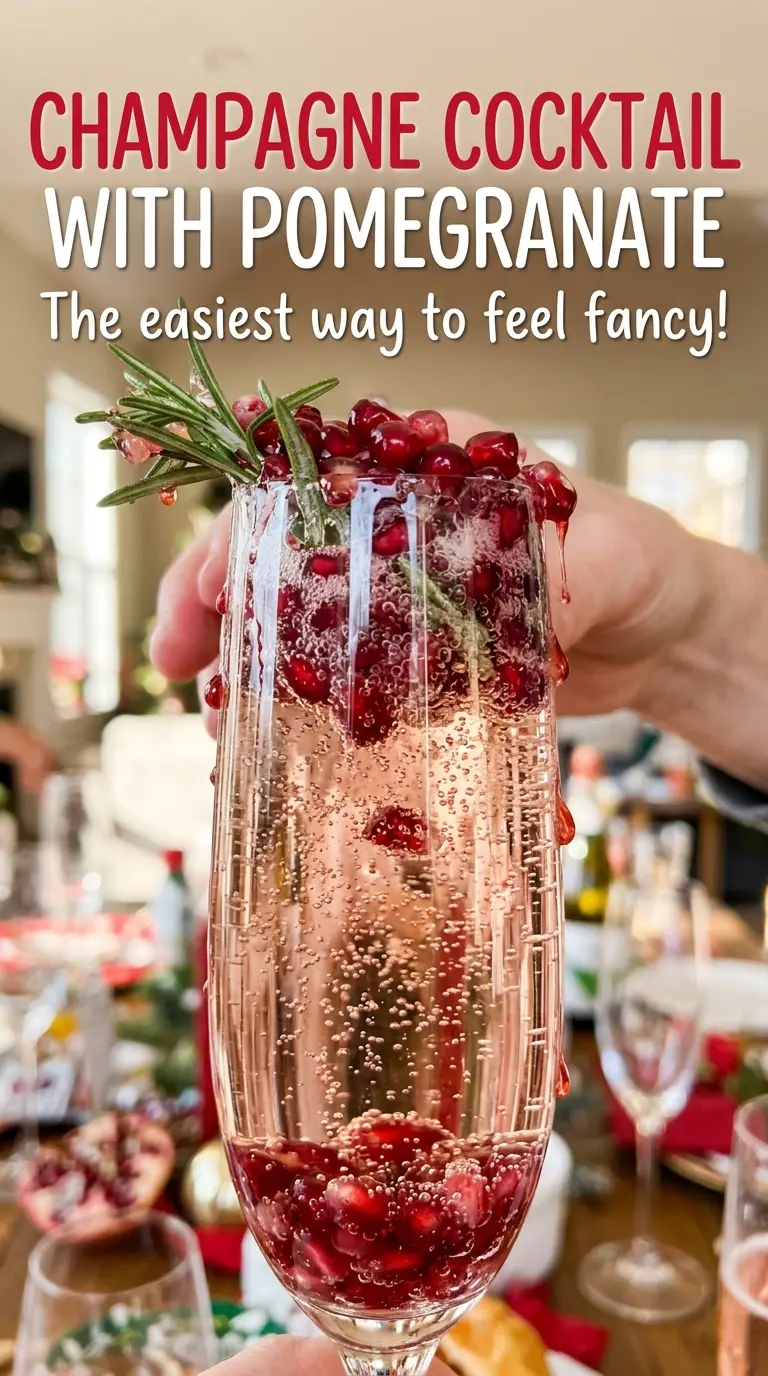
- Pomegranate arils — These add a bright, tart burst and make the glasses look finished. Choose arils that look plump and fresh, and distribute them among the flutes so each serving gets some of the garnish.
Build Each Flute in This Order to Keep the Bubbles
Divide the Pomegranate Base
Pour the chilled pomegranate juice and orange liqueur evenly among six Champagne flutes. Keep the portions as even as you can so the fruit and orange notes have the same strength in every glass. Doing this before opening and pouring the Champagne keeps the bubbles out of the measuring step. Each flute should have its juice-and-liqueur base ready before you move on.
Top Slowly with Brut Champagne
Pour the chilled Champagne gently into each flute. A fast pour can send bubbles rushing up and over the rim, so slow down as the glass fills. Pause briefly if the foam rises, then continue with a lighter stream. The aim is to top each drink while keeping as much sparkle in the glass as possible.
Add the Arils at the End
Drop pomegranate arils into each finished flute after the Champagne is in. Adding them at the end keeps the garnish distinct and avoids stirring the drink after it has been topped. Serve the cocktails immediately, while the Champagne is still lively. The arils give each glass a final pop of tart fruit.
Three Ingredient Choices That Shift the Flavor Without Changing the Formula
Choose a More Tart Pomegranate Juice
For a fruit-forward but less sweet glass, choose pomegranate juice with a sharper, more tart taste rather than a sweetened pomegranate drink. The juice remains the same ingredient in the cocktail, but its sweetness changes how clearly the brut finish comes through.
Let the Orange Note Lead
Pick an orange liqueur with a more pronounced orange aroma when you want the citrus to stand out beside the pomegranate. A subtler orange liqueur leaves the fruitier impression in front. Keep it within the orange-liqueur category so the cocktail keeps its intended citrus-and-fruit pairing.
Pick a Leaner-Tasting Brut
Brut Champagnes can vary in how crisp or rounded they taste. Choosing one with a lean, dry finish makes the pomegranate seem brighter, while a rounder-tasting brut gives the cocktail a softer impression. Either way, keep the Champagne brut so the drink stays balanced against the juice and liqueur.
Make-Ahead and Serving
- Before serving: Keep the pomegranate juice and Champagne chilled. Set out the flutes, but wait to top the drinks until you’re ready to serve.
- After assembling: Serve immediately. The Champagne’s bubbles fade once it’s mixed with the juice and liqueur, so finished cocktails don’t hold well.
- Leftovers: An assembled cocktail won’t regain its sparkle later. Pour only what you’re ready to serve rather than saving finished glasses for another time.
Questions That Come Up Before You Pour
Champagne Cocktail with Pomegranate
Ingredients
Equipment
Method
- Divide the pomegranate juice and orange liqueur evenly among 6 champagne flutes.
- Slowly top each flute with Champagne, pouring gently to preserve the bubbles.
- Add pomegranate arils to each glass.
- Serve immediately.
