
Chicken bacon ranch casserole hits that sweet spot between comforting and practical: creamy pasta, smoky bacon, tender chicken, and a cheesy top that bakes into a bubbling, golden lid. The kind of pan that disappears fast. What makes this version worth keeping is that the sauce stays smooth and coats the pasta instead of turning gluey, so every bite tastes rich without feeling heavy.
The trick is giving the pasta a head start and building the ranch sauce on the stove before it ever goes into the oven. Underbaked pasta turns mushy in a casserole, but pasta pulled a couple minutes early finishes in the sauce and keeps a little bite. The flour, milk, and cream base gives you a thicker finish than a straight dump-and-bake version, and the cheddar goes in two stages so the filling tastes cheesy all the way through, not just on top.
You’ll also find a few practical notes below on what to swap if you’re short on an ingredient, how to keep the sauce from breaking, and how to reheat leftovers without drying out the pasta.
The sauce thickened up perfectly and stayed creamy after baking, and the bacon on top kept its crunch. I used rotini like suggested and every piece was coated instead of sitting in a puddle at the bottom.
Creamy chicken bacon ranch casserole for nights when you want a bubbling, cheesy pan dinner with almost no fuss.
The sauce breaks when the heat is too high
Most casserole sauces split because the milk or cream gets whisked into butter and flour too aggressively over too much heat, then pushed along until it boils hard. That leaves you with a grainy, greasy sauce instead of a smooth one. Keep the burner at medium when you build the base, then drop it a little once the dairy goes in so the sauce thickens gently.
The other place this recipe can go wrong is after the pasta goes in. If the sauce looks thin in the skillet, that’s fine; it should be able to coat the back of a spoon, not stand up like gravy. It finishes thickening in the oven, and the cheese on top helps lock everything together without drying out the filling.
What the bacon, cheese, and pasta each bring to the pan
- Rotini pasta — The ridges and spirals hold onto the ranch sauce better than smooth noodles. Penne works too, but rotini gives you more sauce in every bite.
- Ranch seasoning mix — This is where the casserole gets its signature tang and herb flavor. Homemade ranch seasoning can work, but the packet gives a steady, salty punch that stands up to the cream and cheese.
- Heavy cream and whole milk — The milk keeps the sauce from feeling too rich, while the cream gives it body. Using all milk makes the sauce lighter but less plush; using all cream can make it taste heavy and a little flat.
- Cheddar and mozzarella — Cheddar adds sharpness inside the casserole, and mozzarella gives you that stretchy top layer. Pre-shredded cheese melts fine here, though freshly shredded cheese gives a smoother finish if you have the extra minute.
- Cooked chicken breast — Leftover roast chicken, rotisserie chicken, or meal-prepped chicken all work. The chicken just needs to be already cooked and cut into bite-size pieces so it warms through without drying out in the oven.
- Bacon — Cook it until crisp, then crumble it after it cools a little. If you add limp bacon, it softens in the bake instead of staying smoky and snappy on top.
Building the casserole so the sauce stays creamy after baking
Start with the pasta before anything else
Boil the rotini until it’s still firm in the center, about two minutes shy of done. That undercooking matters because the pasta keeps absorbing liquid in the oven, and fully cooked pasta turns soft fast in a casserole. Drain it well so extra water doesn’t thin the sauce.
Cook the flour long enough to lose the raw taste
When the butter, garlic, and flour go into the skillet, stir until the mixture smells nutty and the flour no longer looks wet and pasty. One minute is enough here. If you rush this step, the casserole can taste faintly floury after baking.
Let the sauce thicken on the stove, not in the oven
Whisk in the milk and cream gradually so the roux stays smooth, then simmer until the sauce lightly coats a spoon. You don’t want a hard boil. A gentle simmer gives the flour time to thicken the dairy without curdling it or making it grainy.
Fold in the fillings while the sauce is still warm
Add the chicken, half the bacon, part of the cheddar, and the pasta while the sauce is hot enough to melt the cheese a little. That lets the filling come together into one creamy mixture instead of layering dry ingredients on top of each other. Stir until every spiral of pasta looks coated.
Bake just until bubbling at the edges
Once the casserole is topped with the remaining cheese and bacon, bake until the edges are bubbling and the top is melted with a few golden spots. Pull it when the center is hot and the sauce is moving, not when the whole pan looks dry. Let it rest for five minutes so the sauce settles and serves cleanly.
How to adapt this for lighter, smaller, or extra-cheesy versions
Gluten-free version
Use your favorite gluten-free rotini and swap the all-purpose flour for a 1:1 gluten-free flour blend. Cook the pasta just until barely tender, since gluten-free noodles can go soft faster once they hit the sauce and oven.
Dairy-free version
Use unsweetened plain oat milk or dairy-free cooking milk plus a plant-based cream, then choose dairy-free shreds that melt well. The sauce won’t be quite as rich or stretchy, but it still comes together if you keep the heat low and don’t overboil it.
Use what you have for the chicken
Rotisserie chicken, leftover grilled chicken, or even baked thighs all work. Dark meat gives the casserole a little more richness, while chicken breast keeps the flavor cleaner and the texture a bit lighter.
Storage and Reheating
- Refrigerator: Store covered for up to 4 days. The pasta softens a little as it sits, but the flavor stays solid.
- Freezer: It freezes well if you cool it completely first and wrap it tightly. Freeze in portions or as a full casserole for up to 2 months, then thaw overnight before reheating.
- Reheating: Reheat covered at 325°F until hot, or microwave single servings with a splash of milk to loosen the sauce. The mistake to avoid is blasting it uncovered on high heat, which dries out the chicken and makes the cheese separate.
Answers to the questions worth asking
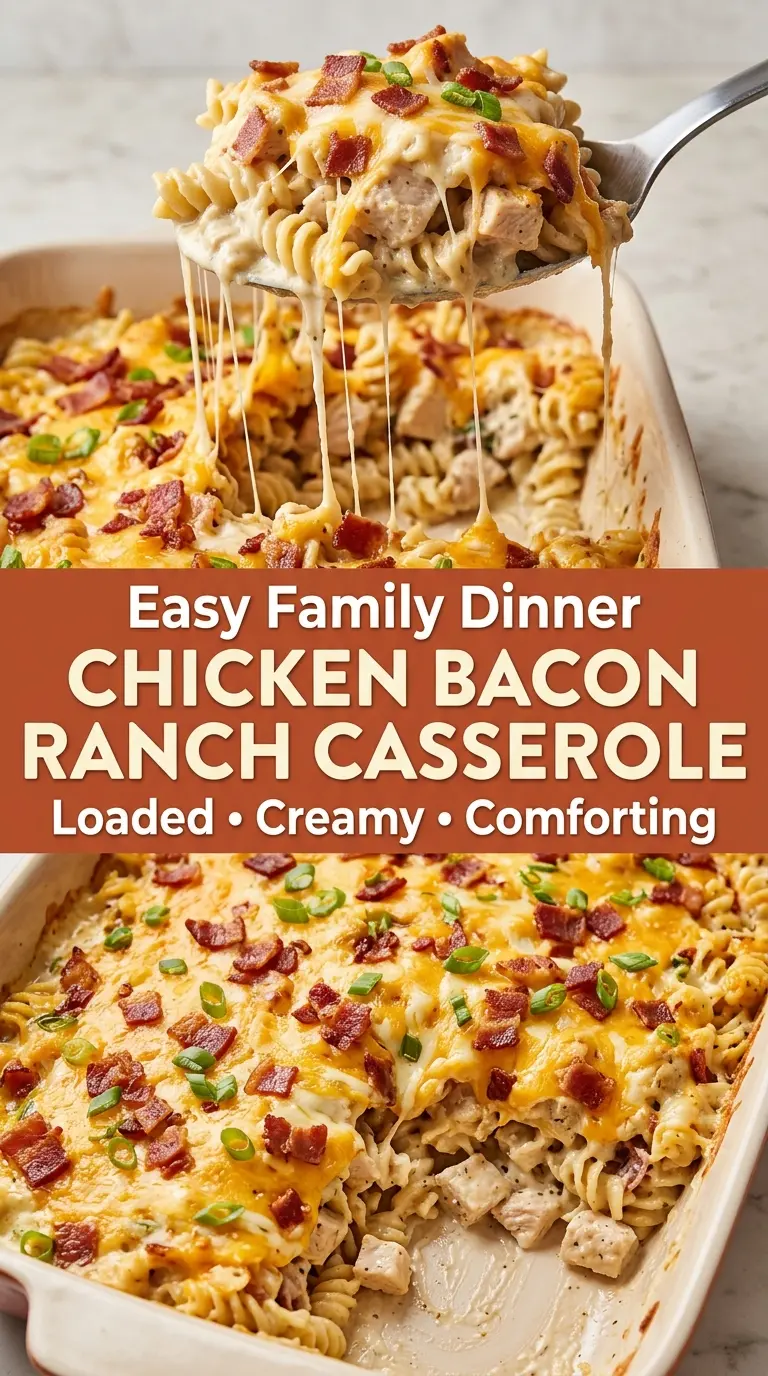
Chicken Bacon Ranch Casserole
Ingredients
Equipment
Method
- Preheat the oven to 375°F and lightly grease a 9×13-inch baking dish with a thin coating of oil or butter.
- Boil the rotini pasta for 2 minutes less than the package directions, then drain well and set aside so it finishes cooking in the casserole.
- Melt the unsalted butter in a large skillet over medium heat, then add the garlic and cook for 30 seconds until fragrant.
- Whisk in the all-purpose flour and cook for 1 minute to remove the raw flour taste.
- Gradually whisk in the whole milk and heavy cream until smooth, without lumps.
- Stir in the ranch seasoning mix and black pepper, then simmer for 3–4 minutes until the sauce slightly thickens.
- Fold in the cooked chicken breast, half of the crumbled bacon, half of the cheddar (1 cup), and the cooked rotini pasta, stirring until evenly coated.
- Transfer the mixture to the prepared baking dish.
- Sprinkle the remaining ½ cup shredded cheddar cheese, the shredded mozzarella cheese, and the remaining crumbled bacon over the top.
- Bake for 20–25 minutes at 375°F until the sauce bubbles around the edges and the cheese is completely melted and lightly golden.
- Garnish with the sliced green onions and rest for 5 minutes before serving to let the casserole set.
