
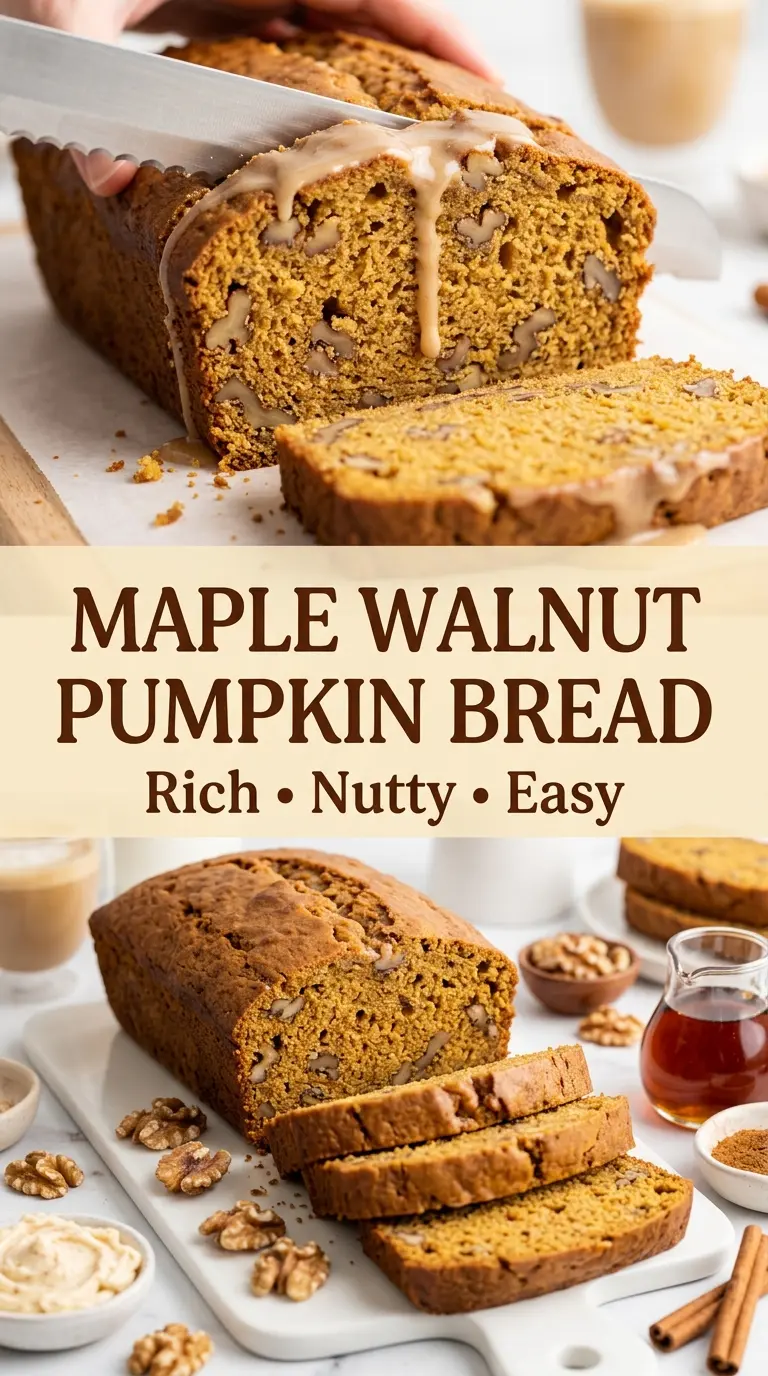
Maple Walnut Pumpkin Bread bakes up with a soft, plush crumb, a crackly sugared top, and the kind of warm spice-and-maple aroma that makes the whole kitchen feel finished before the loaf is even out of the oven. The pumpkin keeps every slice tender for days, while toasted walnuts add just enough crunch to keep the texture interesting from the first bite to the last. It’s the kind of quick bread that works at breakfast, but it doesn’t disappear quietly from a dessert table either.
What makes this version worth keeping is the balance. Pumpkin purée brings moisture, but it can also make a loaf taste flat if the sweetener and spice don’t pull their weight. Pure maple syrup solves part of that problem with deeper flavor than plain sugar alone, and sour cream gives the batter a little extra richness so the crumb stays soft instead of gummy. Toasting the walnuts first matters too. Raw walnuts can taste dusty in a quick bread, but toasted nuts bring out a buttery, almost caramel note that fits the maple perfectly.
Below, I’ve laid out the little details that keep this loaf from sinking in the center or turning dense at the bottom. If you’ve ever had pumpkin bread that baked up heavy, the process notes will help with that. The topping and glaze are optional, but they turn a good loaf into the kind of bread people slice a little thicker than they planned.
The loaf came out super moist with a clean pumpkin flavor, and the toasted walnuts on top stayed crunchy even after a day on the counter. I also liked that the center baked through without getting gummy, which has been my problem with other pumpkin breads.
Save this Maple Walnut Pumpkin Bread for a loaf that stays moist for days and bakes up with a crunchy walnut topping and deep maple flavor.
The Reason Pumpkin Bread Gets Gummy in the Middle
Most dense pumpkin breads fail for one of two reasons: the batter was overmixed, or the loaf was pulled before the center had time to set. Pumpkin purée brings a lot of moisture to the batter, which is great for tenderness, but it also means you need to handle the flour gently and bake until the middle is fully done, not just browned on top.
The other detail that matters here is balance. Maple syrup adds flavor, but it also adds liquid, so this loaf leans on both granulated and brown sugar to help structure the crumb. That mix gives you a slice that holds together cleanly without turning dry or chalky.
- Don’t beat the batter smooth. Stir until the flour disappears and stop there. A few streaks are better than a loaf that bakes up tight.
- Use toasted walnuts, not raw. Toasting brings out a deeper, buttery flavor and keeps the nuts from tasting flat in the finished bread.
- Check the center, not just the top. A toothpick should come out with only a few moist crumbs. Wet batter means the middle still needs time.
- Foil is your backup plan. If the top darkens before the center is done, tent it loosely during the last part of baking so the loaf can finish without burning.
What Each Ingredient Is Actually Doing in This Loaf
- Pumpkin purée — This is the backbone of the loaf’s moisture and color. Use plain pumpkin purée, not pumpkin pie filling, or the bread will come out too sweet and spiced before you even start.
- Pure maple syrup — Maple syrup gives the bread its signature flavor, but it also contributes liquid, so it can’t replace all the sugar. Use the real stuff if you want that deep, woodsy note that shows up in the crumb.
- Sour cream — This adds richness and helps the loaf stay tender for several days. Plain Greek yogurt works in a pinch, but the result is a little tangier and slightly less plush.
- Toasted walnuts — Chopped walnuts fold into the batter for crunch, while walnut halves on top give the loaf a finished look and a better bite. If you skip the toasting step, the nuts won’t taste nearly as full.
- Vegetable oil — Oil keeps quick bread soft in a way butter can’t quite match, especially after a day or two. Melted coconut oil can work, but it may add a faint coconut note and firms up as the bread cools.
- Pumpkin pie spice and cinnamon — This combination builds warmth without making the loaf taste like dessert-candle spice. If your pumpkin pie spice is old, add a little extra cinnamon, because stale spice flattens the whole loaf.
Building the Batter Without Losing the Tender Crumb
Start With the Dry Bowl
Whisk the flour, leaveners, spices, and salt together first so the baking soda and baking powder spread evenly through the batter. If the leaveners stay in one pocket, you’ll get uneven rising and a loaf that domes strangely or tunnels in the middle. This is one of those small steps that pays off in the final slice.
Mix the Wet Ingredients Until They Look Uniform
Stir the pumpkin, eggs, sugars, maple syrup, oil, sour cream, and vanilla until the mixture looks smooth and glossy. You’re not trying to whip in extra air here. You just want the sugars dissolved enough that they won’t leave a gritty texture behind.
Stop Stirring as Soon as the Flour Disappears
Fold the wet mixture into the dry ingredients with a light hand, then add the chopped walnuts. Overmixing develops gluten and tightens the crumb, which is how pumpkin bread turns from tender to rubbery. The batter should look thick and a little lumpy, not perfectly polished.
Bake Until the Center Springs Back
Scrape the batter into the prepared pan, top with walnut halves and sanding sugar, then bake until the center is set and a tester comes out with a few moist crumbs. If the loaf is still jiggly in the middle, give it more time even if the top looks done. Letting it cool in the pan for 15 minutes keeps it from collapsing the second you lift it out.
How to Adapt This for Different Diets and Different Moods
Dairy-Free Version
Swap the sour cream for an unsweetened dairy-free yogurt with a thick texture. The loaf still stays tender, though it loses a little of the rich tang that sour cream brings. Choose a plain version so the maple flavor stays front and center.
Gluten-Free Swap
Use a 1:1 gluten-free baking flour that already contains xanthan gum. The batter may look a little softer, but the loaf will still slice well if you let it cool completely before cutting. Avoid almond flour here; it won’t give the same structure.
Walnut-Free Option
Leave the walnuts out entirely or swap in chopped pecans for a softer, more buttery crunch. If you’re serving someone with a nut allergy, skip the topping and use coarse sugar only for finish. The bread still bakes beautifully without the nuts.
Storage and Reheating
- Refrigerator: Store tightly wrapped for up to 5 days. The crumb gets a little denser after chilling, but the maple flavor deepens.
- Freezer: This loaf freezes well. Wrap the cooled bread or individual slices in plastic, then foil, and freeze for up to 3 months.
- Reheating: Warm slices in a 300°F oven for about 8 minutes or toast lightly from frozen. Don’t microwave it too long or the crumb turns rubbery and the walnuts soften.
Answers to the Questions Worth Asking
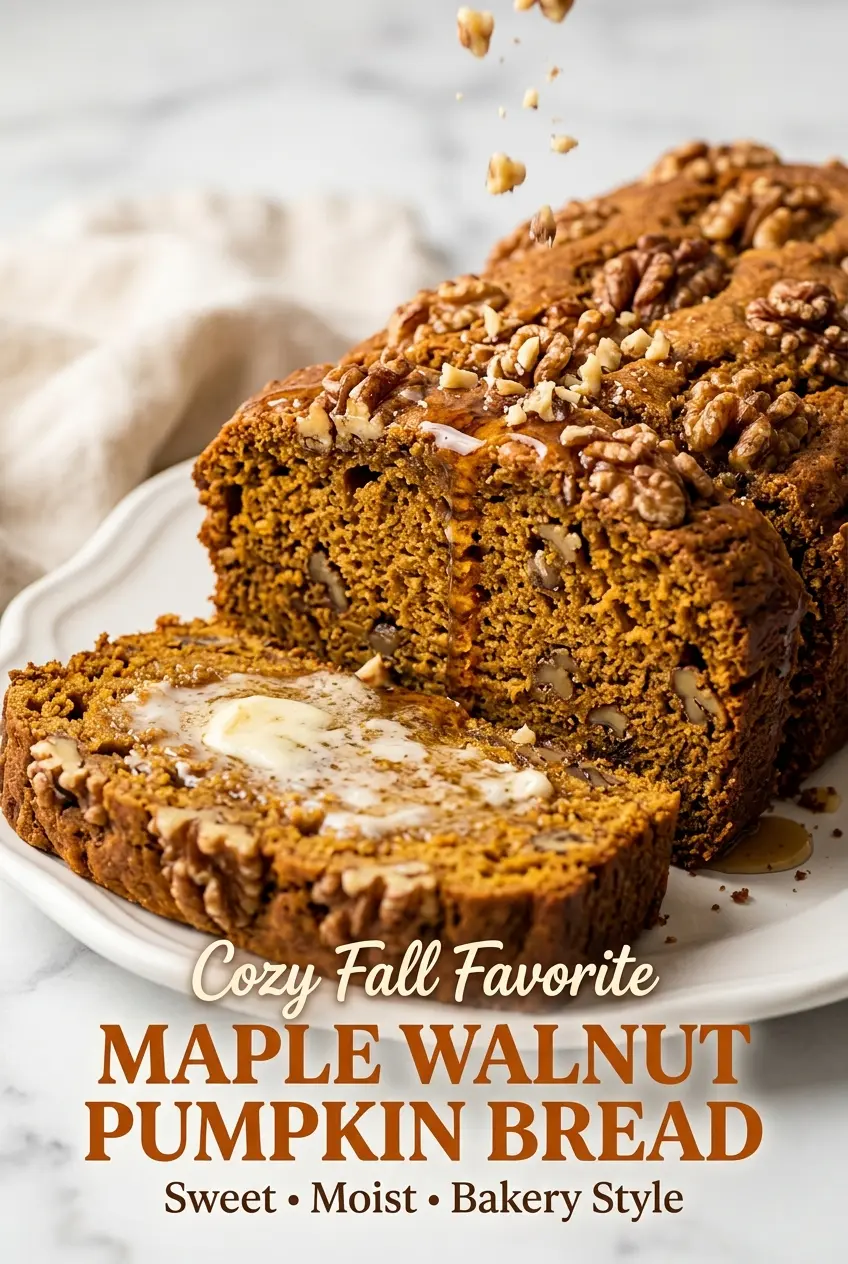
Maple Walnut Pumpkin Bread
Ingredients
Equipment
Method
- Preheat the oven to 350°F (175°C). Grease a 9×5-inch loaf pan and line it with parchment paper.
- In a large bowl, whisk together all-purpose flour, baking soda, baking powder, pumpkin pie spice, ground cinnamon, ground nutmeg, and kosher salt until evenly combined.
- In another large bowl, whisk pumpkin purée, eggs, granulated sugar, light brown sugar, pure maple syrup, vegetable oil, sour cream, and pure vanilla extract until smooth.
- Fold the wet ingredients into the dry ingredients until just combined, then gently fold in toasted walnuts; do not overmix.
- Transfer the batter to the prepared loaf pan and smooth the top, then sprinkle with toasted walnut halves and coarse sanding sugar.
- Bake for 55–65 minutes, or until a toothpick inserted into the center comes out clean or with only a few moist crumbs attached; if the top browns too quickly, loosely cover with foil during the final 15 minutes.
- Cool the bread in the pan for 15 minutes, then transfer it to a wire rack; if desired, whisk together the maple glaze ingredients and drizzle over the cooled loaf before slicing.
