
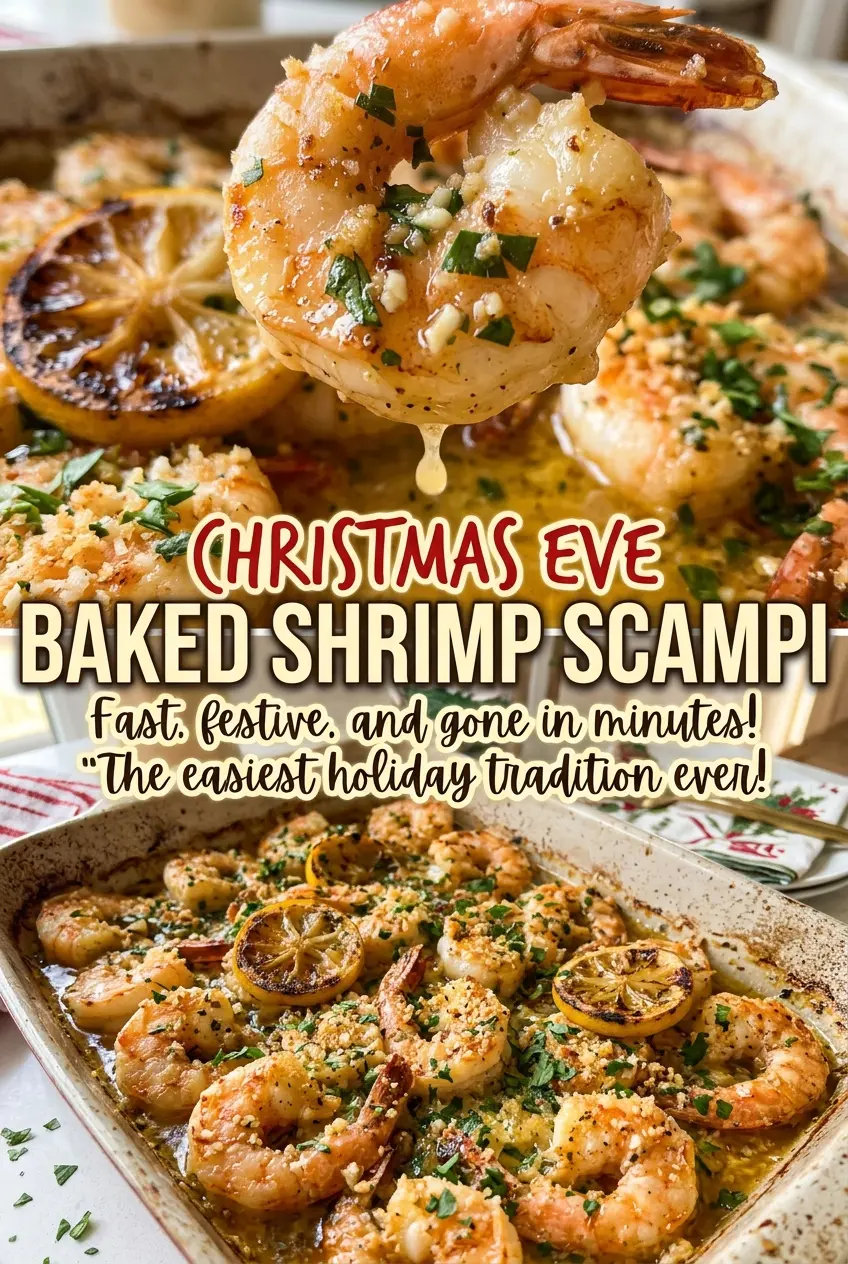
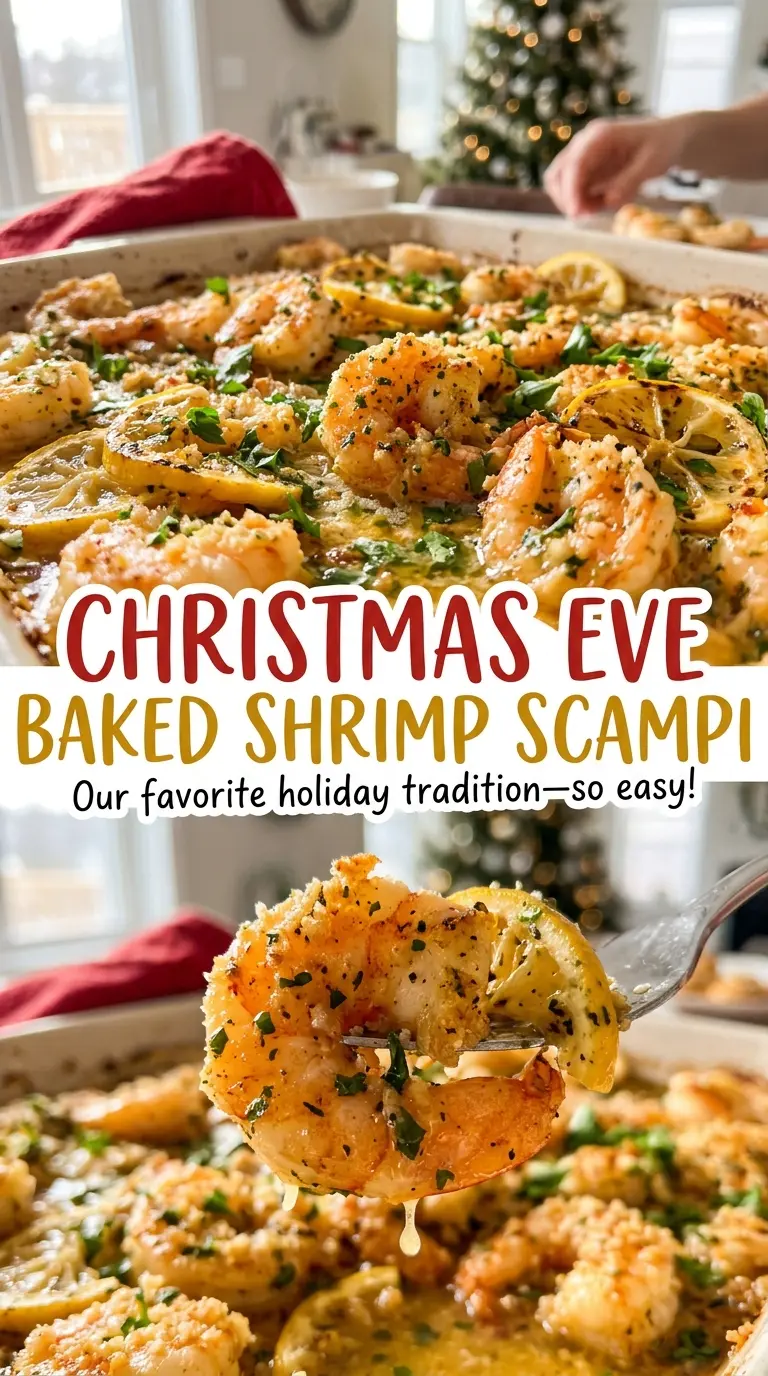
The dish that comes out of the oven should have two textures at once: plump shrimp underneath and a thin cap of toasted crumbs on top. The first time I made baked shrimp scampi, I expected a skillet-style sauce and kept looking for more liquid; this version is meant to be buttery, not soupy. Christmas Eve Baked Shrimp Scampi brings garlic, lemon, dry white wine, and a little heat together in the baking dish, so there’s no separate pan of sauce to manage.
I arrange the shrimp in one layer, pour the butter mixture over them, and add the panko topping last. The crumbs, Parmesan, parsley, and olive oil turn golden while the shrimp bake, giving you a crisp contrast without hiding the lemony butter underneath. Large shrimp are forgiving enough for this short bake, but they still need your attention near the end. Serve them while the topping is crisp and the butter sauce is warm.
Kitchen Note
Give the shrimp their full 3-minute rest before serving. That short pause lets the hot butter settle back around the shrimp, rather than running off as soon as you lift them from the dish.
Save this Christmas Eve Baked Shrimp Scampi for its buttery garlic-lemon sauce and crisp Parmesan panko topping.
Why the Panko Is More Than a Last-Minute Garnish
Baked shrimp scampi needs a little textural contrast. The shrimp and garlic butter are soft and tender, so the panko topping earns its place by adding a crisp layer rather than acting as decoration. Olive oil helps the crumbs toast, and Parmesan brings savory flavor and browned edges. The result is closer to a light, crunchy cap than a thick casserole crust.
The order matters, too. The butter mixture goes over the shrimp first, while the breadcrumb mixture stays separate until you’re ready to bake. That keeps the panko from soaking up the sauce before it reaches the oven. Once it’s scattered over the shrimp, it can toast on top as the butter and lemon season the seafood below. Spread the topping across the dish instead of leaving a bare patch in the middle; an even layer gives you a little crunch in each serving.
Why Large Shrimp and Panko Matter More Than Fancy Wine
- Large raw shrimp — Their size suits the short bake and leaves you a little more room to catch them at the tender stage. Fresh or frozen shrimp work; if you buy frozen, thaw them completely and pat them dry so extra water doesn’t thin the butter sauce. Peeled and deveined shrimp save prep time, and tails removed make the finished dish easier to serve.
- Unsalted butter — Butter carries the garlic, wine, and lemon through the dish. Unsalted butter gives you more control over the seasoning alongside the kosher salt, and a standard grocery-store butter works well here; there’s no need for a specialty brand.
- Dry white wine and lemon — A dry wine brings acidity and depth without making the sauce sweet. Use an inexpensive dry white wine rather than opening a special bottle; avoid sweet wine, which can throw off the balance. If you’re out of wine, replace it with the same amount of low-sodium chicken broth, knowing the sauce will be less bright. Fresh lemon juice gives the butter mixture its clean, sharp finish.
- Panko and Parmesan — Panko’s larger, airy crumbs make a lighter topping than fine breadcrumbs. Regular panko is fine, or use the same amount of gluten-free panko for a gluten-free version; the crumb texture may vary by brand. Finely grated Parmesan disperses through the crumbs more evenly than large shreds, and an everyday block of Parmesan is plenty.
- Parsley and red pepper flakes — Fresh parsley keeps the topping tasting bright, while the pepper flakes give the sauce a mild warmth. Chop the parsley finely so it doesn’t gather in damp clumps, and use the pepper flakes as measured if you want the gentle heat to stay in the background.
The Short Bake That Keeps the Shrimp Tender
Get the Baking Dish Ready
Heat the oven to 425°F and grease a 9×13-inch baking dish with 1 tablespoon of the butter. Pat the shrimp dry before arranging them in a single layer in the dish. Overlapping shrimp cook unevenly, so spread them out rather than piling them in the center. This is also the moment to check that the dish is large enough for the shrimp to sit mostly side by side.
Mix the Garlic-Lemon Butter
Melt the remaining 5 tablespoons of butter in a small microwave-safe bowl. Stir in the minced garlic, dry white wine, fresh lemon juice, kosher salt, red pepper flakes, and black pepper until the mixture looks evenly combined. Pour it over the shrimp so the seasoning reaches across the dish. The garlic goes into the butter mixture without a separate sauté, which keeps this step quick and avoids browning it before baking.
Make a Separate Crumb Topping
In a small bowl, stir together the panko, finely grated Parmesan, olive oil, and finely chopped parsley. Mix until the oil and parsley are distributed through the crumbs; you want the panko lightly coated, not packed into a paste. Sprinkle the topping evenly over the shrimp. If you dump it in one spot, the middle can get a thick layer while the edges have little crunch.
Bake Until the Shrimp Turn Opaque
Bake for 10 to 14 minutes, until the shrimp are opaque and firm, the topping is golden, and the thickest shrimp reaches 145°F. Start checking at the shorter end of the range, since shrimp size and oven behavior can shift the timing. If the shrimp still look translucent in the center, they need more time; if they’re curled tightly and firm, don’t keep baking them just to deepen the crumbs. Let the dish rest for 3 minutes before serving.
Three Small Changes That Suit Different Tables
The garlic-lemon butter is a good base for a few practical adjustments. Keep the shrimp and the crumb layer balanced when you make a change, so the topping still browns and the seafood stays the focus.
Make the Whole Dish Dairy-Free
Replace the butter with the same amount of dairy-free butter and use dairy-free Parmesan and panko. The topping may brown a little differently, and the sauce will have a less buttery flavor, but the lemon, garlic, and parsley still carry the scampi character.
Turn Up the Peppery Heat
Increase the red pepper flakes from 1/4 teaspoon to 1/2 teaspoon in the butter mixture. The extra flakes make the garlic-lemon sauce noticeably warmer without changing the topping or the baking method.
Add a Little More Garlic
Use 4 cloves of minced garlic instead of 3 if you want a more pronounced garlic note. Stir it into the melted butter as usual; the sauce will taste bolder, but the amount of liquid and the crumb topping stay unchanged.
Storage and Reheating
- Refrigerator: Store leftovers in an airtight container for 3 to 4 days. The panko softens as it sits.
- Freezer: Freezing isn’t ideal. The shrimp can turn rubbery after thawing, and the breadcrumb topping loses its crispness.
- Reheating: Warm the shrimp covered in a 300°F oven until the thickest piece reaches 165°F. The topping will soften, so avoid reheating longer than needed; high heat can make the shrimp tough.
Questions That Come Up Before the Dish Goes in the Oven
Christmas Eve Baked Shrimp Scampi
Ingredients
Equipment
Method
- Heat the oven to 425°F.
- Grease a 9x13-inch baking dish with 1 tablespoon of the butter.
- Melt the remaining 5 tablespoons butter in a small microwave-safe bowl.
- Stir in the garlic, wine, lemon juice, salt, red pepper flakes, and black pepper.
- Arrange the shrimp in a single layer in the prepared dish.
- Pour the butter mixture evenly over the shrimp.
- Stir the panko, Parmesan, olive oil, and parsley together in a small bowl.
- Sprinkle the topping evenly over the shrimp.
- Bake for 10 to 14 minutes, until the shrimp are opaque and firm and reach 145°F in the thickest part, and the topping is golden.
- Let the shrimp scampi rest for 3 minutes before serving.
