
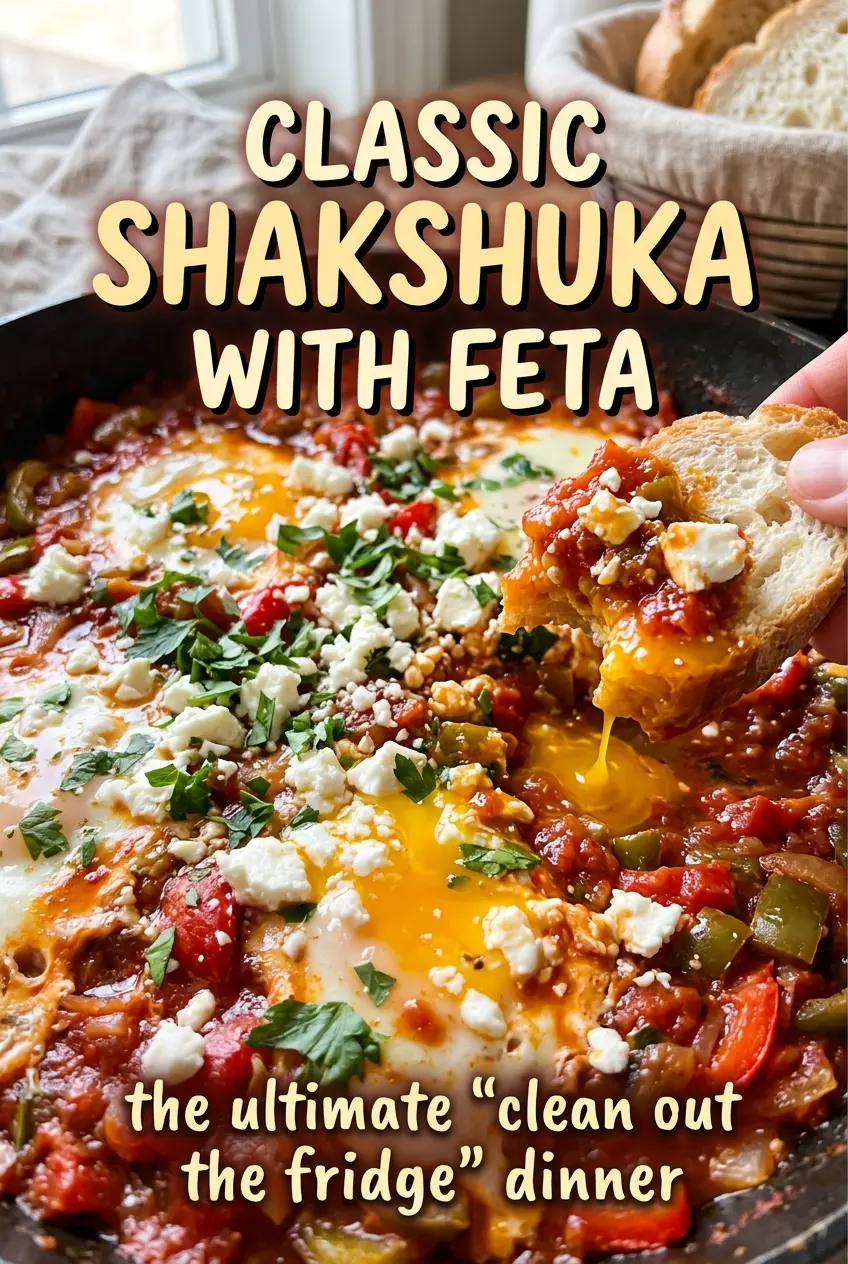
The sauce should bubble lazily, not spit across the stovetop. I let the onion and red pepper soften first, then give the spices a brief turn in the pan before the tomatoes go in; that short pause makes the whole skillet smell warm and savory without letting the garlic scorch. Classic Shakshuka with Feta is a one-pan meal for four, with six eggs nestled into a thick tomato sauce and crumbled feta tucked over the top.
What makes this version satisfying is the contrast: the tomato base is gently spiced, the feta brings a salty bite, and the eggs cook right in the sauce. I keep the sauce uncovered while it simmers so it can thicken before the eggs go in. Then the lid traps the heat needed to set the whites, while the yolks cook to 160°F. The finished skillet comes to the table hot, with parsley scattered over the top.
Kitchen Note
Once the eggs are in their wells, leave the sauce alone. Stirring can break the yolks and pull the whites out of place, so cover the skillet and let the eggs cook undisturbed.
Save this Classic Shakshuka with Feta for a cozy skillet meal: tender eggs, gently spiced tomato sauce, and salty crumbles of feta.
Why the Tomato Sauce Has to Hold Its Shape Before the Eggs Go In
Shakshuka can turn watery when the eggs are added to a loose tomato base. The whites spread into the sauce instead of staying gathered around each yolk, and the skillet is harder to serve neatly. Simmering the crushed tomatoes uncovered gives excess moisture a chance to evaporate before you make the wells.
Look for a sauce that has thickened but still moves when you stir it. When you draw a spoon through the center, the track should remain visible for a moment before the sauce flows back. If it still looks thin and soupy, keep it at a gentle simmer and stir occasionally within the sauce’s 12–15-minute cooking window. That consistency gives you a better base for six small wells, one for each egg, without turning the finished dish into a puddle.
A 12-inch skillet gives the vegetables room to soften and leaves space for all six eggs. The sauce also needs to simmer uncovered before the skillet is covered for the eggs; those two parts of the cooking process do different jobs. First the tomato base thickens, then the covered pan helps the whites set.
Why Crushed Tomatoes, Feta, and Eggs Make This Skillet Work

- Crushed tomatoes — Their even, crushed texture gives the sauce body without leaving large tomato pieces. Canned crushed tomatoes are a dependable choice here; fresh tomatoes vary in water content and would change how long the sauce needs to thicken.
- Yellow onion and red bell pepper — Dicing them gives the sauce small, tender pieces that cook through during the first stage. Keep the pieces fairly even so they soften at the same pace; the red pepper brings a mild sweetness alongside the onion.
- Garlic, paprika, cumin, and red pepper flakes — These season the tomato base. The spices need only 30 seconds in the pan before the tomatoes go in, enough time for their aroma to bloom without giving the minced garlic a chance to burn.
- Feta — Its salty, tangy crumbles cut through the richness of the tomato sauce and eggs. The recipe uses feta over the sauce before the eggs are added; leaving it out makes the dish dairy-free, though you’ll lose that briny contrast.
- Large eggs — Each egg cooks in its own small well, so the whites set while the yolks remain part of the sauce. Crack them carefully into the wells to keep the yolks intact.
- Olive oil and fresh parsley — The oil starts the vegetables, while parsley brings a fresh finish after cooking. Add the parsley at the end rather than simmering it in the sauce.
Build the Tomato Base Before You Add the Eggs
Soften the Onion and Red Pepper
Heat the olive oil in a 12-inch skillet over medium heat. Add the diced onion, diced red bell pepper, and kosher salt, then cook for 8–10 minutes, stirring occasionally, until the vegetables are softened. Keep the heat at medium so the vegetables have time to turn tender without scorching. If the bottom starts browning too quickly, stir and moderate the heat.
Bloom the Garlic and Spices
Stir in the minced garlic, paprika, cumin, and red pepper flakes. Cook for 30 seconds, just until fragrant. The short cooking time matters: the spices get a chance to warm in the oil, but the garlic stays fragrant instead of darkening. Add the tomatoes promptly after that brief bloom.
Simmer Until the Sauce Thickens
Stir in the crushed tomatoes and black pepper, then bring the mixture to a gentle simmer. Cook uncovered for 12–15 minutes, stirring occasionally, until the sauce thickens. Aim for a steady, quiet bubble rather than a hard boil, which can splatter and reduce the sauce too fast around the edges. The thickened sauce should still be spoonable.
Set the Eggs and Finish the Skillet
Sprinkle the feta over the sauce, then make six small wells and crack an egg into each one. Cover the skillet and cook for 8–12 minutes, until the whites are fully set and the yolks reach 160°F. The timing varies within that window, so judge the eggs by their doneness as well as the clock. Sprinkle with chopped fresh parsley and serve hot.
Two Simple Ways to Adapt This Shakshuka
Make It Dairy-Free by Leaving Out the Feta
Omit the feta and continue with the eggs as usual. The tomato sauce and eggs still make a hearty skillet, though the finished dish will have less salty tang and no creamy crumbles.
Keep the Sauce Milder
Leave out the red pepper flakes for a gentler tomato sauce. The paprika and cumin still bring warmth, but you’ll lose the little kick from the flakes.
Storage and Reheating
- Refrigerator: Refrigerate leftovers within 2 hours in a covered container and use them within 3–4 days. The eggs will firm up as they chill.
- Freezer: The tomato sauce freezes best before the feta and eggs are added. Freeze it airtight for up to 3 months, thaw it in the refrigerator, then reheat it before adding the feta and eggs.
- Reheating: Warm leftovers gently in a covered skillet or microwave until steaming hot throughout, reaching 165°F. The eggs will cook further, so avoid reheating longer than needed.
Questions That Come Up While Making Shakshuka
Classic Shakshuka with Feta
Ingredients
Equipment
Method
- Heat the olive oil in a 12-inch skillet over medium heat.
- Add the onion, bell pepper, and salt; cook for 8–10 minutes, stirring occasionally, until the vegetables are softened.
- Stir in the garlic, paprika, cumin, and red pepper flakes; cook for 30 seconds, until fragrant.
- Stir in the crushed tomatoes and black pepper, bring to a gentle simmer, and cook uncovered for 12–15 minutes, stirring occasionally, until the sauce thickens.
- Sprinkle the feta over the sauce.
- Make 6 small wells and crack an egg into each well.
- Cover the skillet and cook for 8–12 minutes, until the whites are fully set and the yolks reach 160°F.
- Sprinkle with parsley and serve hot.
