
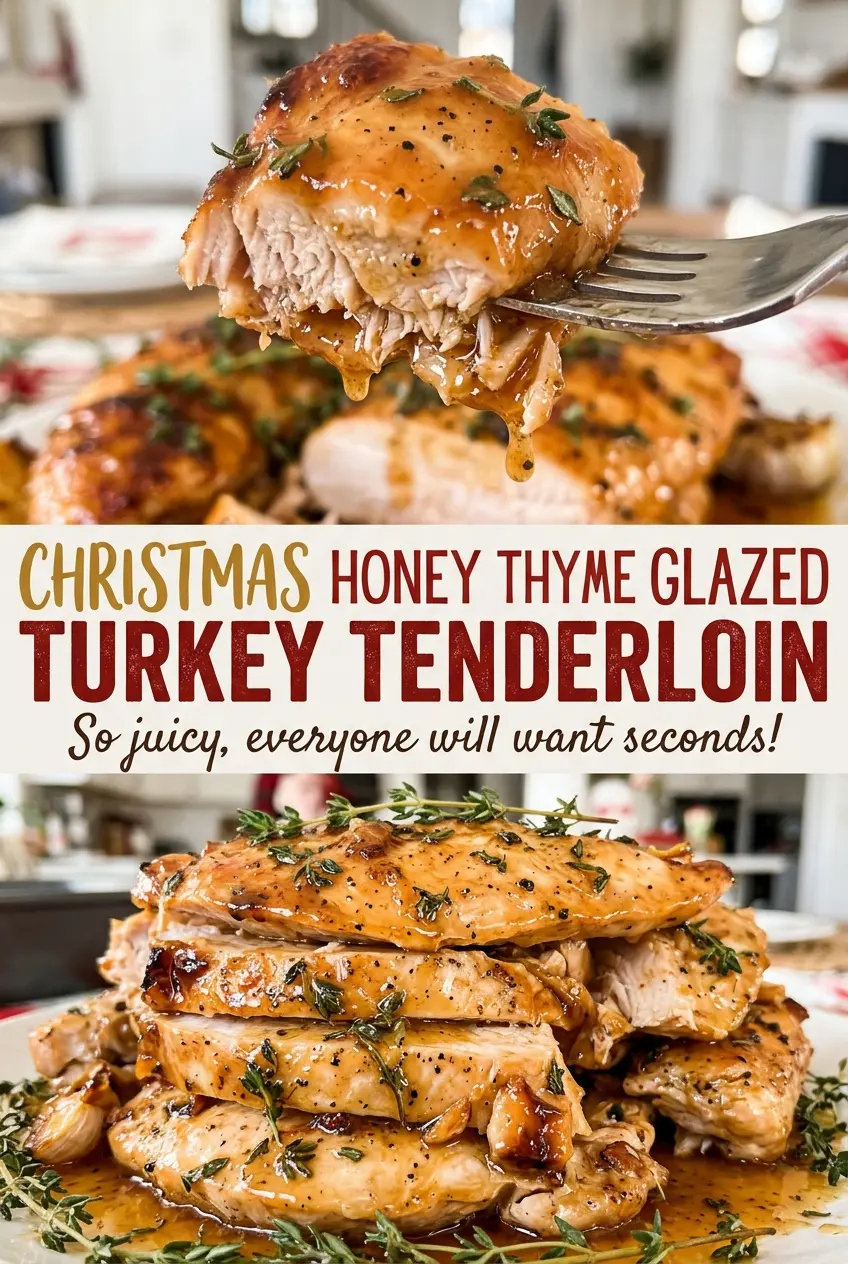
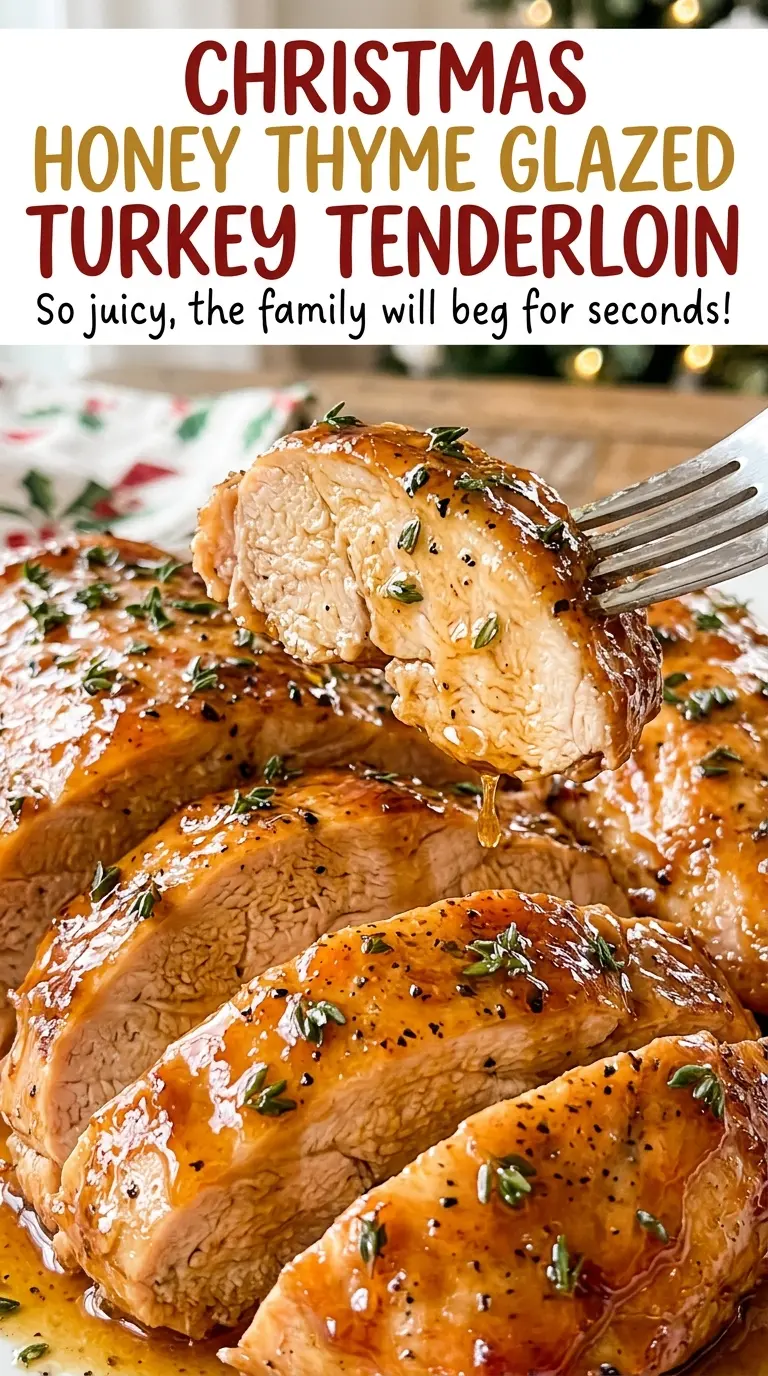
The glaze looks thin when it first comes off the stove, then turns glossy as it coats the warm turkey. I learned to judge this dish by the thickest part of the tenderloin, not by the first rosy-brown edges; two pieces can finish at different times even on the same pan. That’s what makes this Christmas Honey Thyme Glazed Turkey Tenderloin a practical centerpiece for a smaller table: it has a festive honey-and-herb finish without asking you to roast a whole bird.
The glaze brings sweetness, a little Dijon sharpness, and fresh thyme together in one small saucepan. I brush it on after the turkey has started roasting, so it gets time to cling and caramelize without spending the entire cook in the hot oven. Slice the rested tenderloins and spoon the glaze you held back over the top for a bright, savory-sweet finish.
Kitchen Note
Set aside the serving glaze before the brush touches the raw turkey. That small order-of-operations detail leaves you with a clean portion to spoon over the sliced meat at the table.
Save this Christmas Honey Thyme Glazed Turkey Tenderloin for a smaller holiday table, with a glossy honey-Dijon finish and thyme in every slice.
Why the Thickest Part, Not the Clock, Decides When Turkey Is Done
Turkey tenderloins aren’t always identical in width. A slimmer end can look browned and ready while the center of the thickest section still needs more time, which is why a fixed total roasting time is only a guide here. After the first 15 minutes, the glaze goes on and the tenderloins return to the oven; the remaining time can vary from about 10 to 20 minutes.
Use an instant-read thermometer in the thickest part of each tenderloin rather than relying on color or the timer alone. The target is 165°F. If one piece reaches that point before the other, take that piece off the pan and let the thicker one continue; pulling both by the earlier piece’s timing risks an undercooked center, while leaving both in until the slower one is done can dry out the smaller tenderloin. The short rest gives the juices time to settle before slicing.
What Honey, Dijon, and Fresh Thyme Each Bring to the Glaze
- Turkey tenderloins — These cook faster than a whole turkey and give you neat slices for serving. Choose evenly sized pieces when you can; a large difference in thickness makes them finish at different times. Keep them chilled until you’re ready to season.
- Honey — Honey gives the glaze its shine and sweetness, and it browns readily in the oven. A familiar, mild honey keeps the thyme and mustard clear; a strongly flavored honey will make its own character more noticeable.
- Dijon mustard — Dijon cuts through the honey’s sweetness and helps the glaze taste savory rather than candy-sweet. A smooth Dijon blends easily with the melted butter. A grainy mustard would leave a different texture, so smooth Dijon is the closest match.
- Unsalted butter — Butter rounds out the mustard and gives the glaze a richer finish. Unsalted butter lets the measured kosher salt on the turkey remain in control. Let the butter melt gently with the other glaze ingredients instead of browning it.
- Fresh thyme leaves — Fresh thyme has a lively, leafy fragrance that suits the honey and turkey. Strip the leaves from the stems before measuring them; woody stems won’t blend into the glaze as neatly. Dried thyme is more concentrated, so it isn’t a direct swap in the same amount.
- Garlic — One minced clove gives the glaze a quiet savory note beneath the honey. Mince it finely so the pieces distribute through the sauce instead of sitting in a few clumps on the turkey.
- Olive oil — The oil helps the salt and pepper cling to the tenderloins before roasting. Use a basic olive oil rather than a strongly flavored finishing oil; there’s no need to use an expensive bottle for this step.
The Four Stages That Keep the Honey Glaze Smooth and the Turkey Juicy
Season the Tenderloins on a Foil-Lined Pan
Heat the oven to 400°F and line a rimmed baking sheet with foil. Arrange the tenderloins on the pan, rub them with olive oil, then season all over with kosher salt and black pepper. Keep the pieces in a single layer so the hot oven can roast them rather than trap steam around them. Check that the foil covers the pan surface; the honey glaze is sticky and cleanup is easier when the pan is lined.
Stir the Glaze Until the Butter Disappears
Combine the honey, Dijon mustard, butter, fresh thyme leaves, and minced garlic in a small saucepan. Cook over medium-low heat, stirring, for about 2 minutes, until the butter has melted and the glaze looks smooth. Keep the heat moderate; a hard boil isn’t needed to bring these ingredients together. If small streaks of butter remain, continue stirring gently until the mixture is even.
Give the Turkey Its First Roast
Roast the seasoned tenderloins for 15 minutes before adding the glaze. This first stretch gives the surface time to begin cooking, so the glaze goes onto warm meat rather than raw, wet turkey. Use the time to finish stirring the glaze, but don’t leave it over the heat after it’s smooth. Honey can darken quickly once it’s exposed to the oven, so the staged brushing matters.
Glaze, Check the Center, and Rest
Set aside 2 tablespoons of glaze for serving, then brush the remaining glaze over the turkey. Roast for about 10–20 minutes more, checking the thickest part until it reaches 165°F. The surface should look glossy and lightly browned, not blackened; if the center needs more time, keep roasting and check again. Rest the tenderloins for 5 minutes, slice, and serve with the reserved glaze.
Two Simple Changes for a Different Glaze
Make the glaze dairy-free with olive oil
Replace the tablespoon of unsalted butter with a tablespoon of the olive oil already used on the turkey. The glaze will lose the butter’s rounded flavor and feel a little lighter, but honey, Dijon, thyme, and garlic still give it a cohesive sweet-savory character. Stir it well as it warms so the oil is distributed through the mixture.
Leave out the garlic for a gentler finish
Skip the minced garlic and prepare the honey, Dijon, butter, and thyme together as usual. The result is softer and more herb-forward, with less savory bite. This is an easy change if you prefer the thyme to stand out without introducing another flavor.
Storage and Reheating
- Refrigerator: Store cooked turkey in a covered container for 3–4 days. The glaze will firm up as it chills, and the meat will be less juicy than when freshly sliced.
- Freezer: Freeze sliced or whole portions in an airtight freezer container for up to 2–3 months. Thaw overnight in the refrigerator for more even reheating.
- Reheating: Warm covered portions gently in the microwave or in a covered baking dish in a low oven, spooning reserved glaze over the meat if you have some left. Avoid high heat or long reheating; both dry lean turkey out quickly.
Questions That Come Up While Making This Turkey Tenderloin
Christmas Honey Thyme Glazed Turkey Tenderloin
Ingredients
Equipment
Method
- Heat the oven to 400°F and line a rimmed baking sheet with foil.
- Arrange the turkey tenderloins on the baking sheet, rub them with olive oil, and season all over with salt and pepper.
- Combine the honey, Dijon mustard, butter, thyme, and garlic in a small saucepan; cook over medium-low heat, stirring, until the butter melts and the glaze is smooth, about 2 minutes.
- Roast the turkey for 15 minutes.
- Set aside 2 tablespoons of glaze for serving.
- Brush the remaining glaze over the turkey.
- Roast until the thickest part reaches 165°F, about 10–20 minutes more.
- Rest the turkey for 5 minutes.
- Slice and serve with the reserved glaze.
