
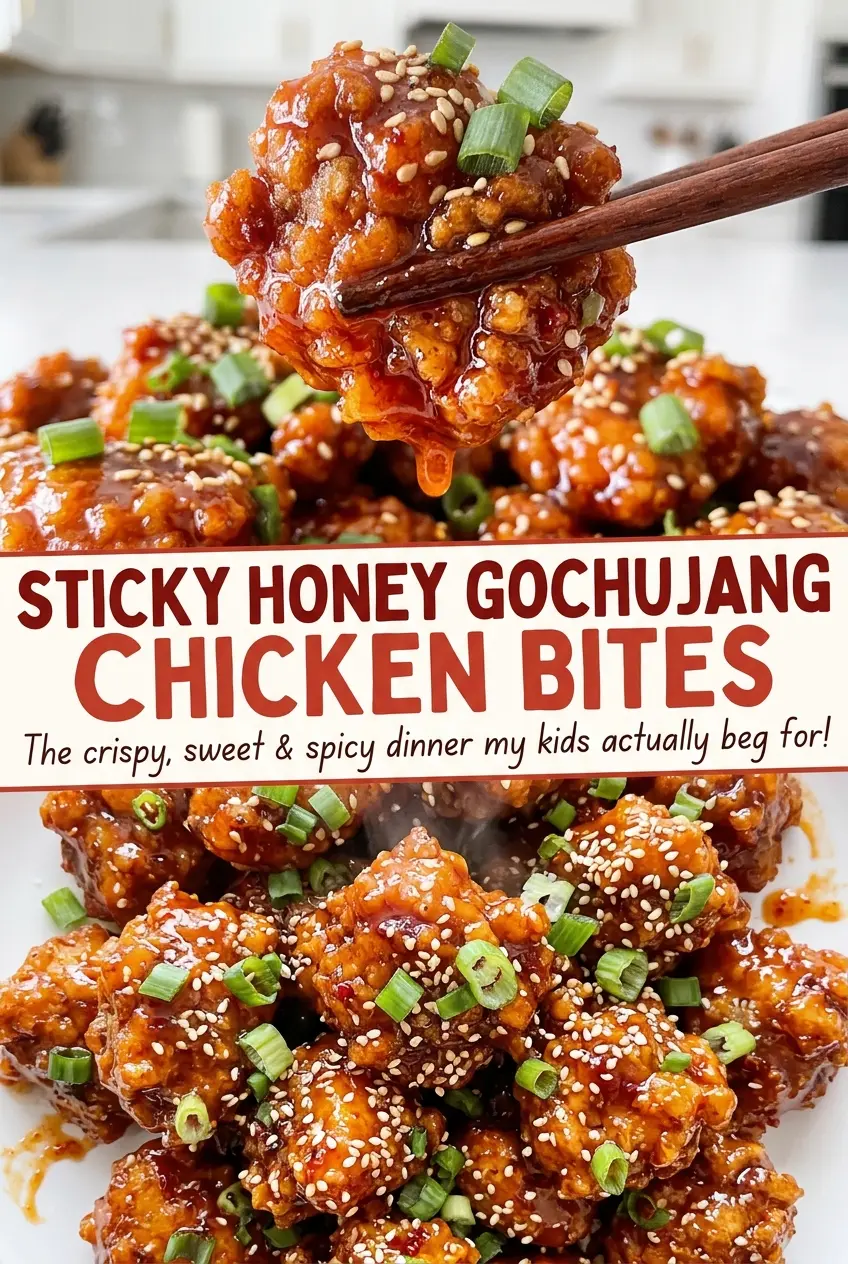
When the chicken hits a hot skillet, the cornstarch coating turns patchy and golden before the sauce ever enters the picture. That’s exactly what I want: a little browned texture on each bite so the sticky glaze has something to cling to. These Sticky Honey Gochujang Chicken Bites come together in batches, which gives the chicken room to brown instead of steaming in its own moisture.
I whisk the sauce while the chicken cooks, then let it simmer just until glossy. Honey brings sweetness, gochujang adds a savory chile kick, and rice vinegar keeps the finish from feeling heavy. The sauce thickens more as it coats the hot chicken, so there’s no need to cook it down until it’s syrupy in the pan. You’ll get tender bites with a shiny, sweet-spicy glaze and just enough tang to keep each forkful lively.
Kitchen Note
Keep the juices that collect on the plate when you transfer the chicken. They belong back in the skillet with the bites, where they loosen the glaze and carry extra chicken flavor into every piece.
Save these Sticky Honey Gochujang Chicken Bites for a quick skillet dinner with browned chicken and a glossy sweet-spicy glaze.
Why the Chicken Gets a Light Cornstarch Coat Before It Hits the Skillet
These aren’t breaded chicken nuggets, and the coating shouldn’t look thick or chalky. A light dusting of cornstarch gives the surface a better chance to brown in the skillet and helps the finished glaze cling to the chicken instead of pooling underneath it. The pieces stay tender inside, while the outside picks up a delicate, slightly crisp edge.
That thin coating also explains why the chicken needs to go into the pan evenly covered, not buried in extra starch. Toss until there are no dry clumps, then cook the pieces in batches so the skillet stays hot enough to brown them. If the pan is crowded, moisture gathers around the chicken and you’ll get pale, soft surfaces instead. Keep the pieces close to the same size, too; one-inch bites cook at a similar pace and are easier to glaze evenly. The goal is a browned exterior that still feels tender when you bite through it, not a thick crust that competes with the sauce.
What the Gochujang, Honey, and Cornstarch Each Bring to the Skillet

- Chicken thighs — Boneless, skinless thighs hold on to their tenderness through the skillet browning and final toss in the glaze. Cut the pieces to a consistent one-inch size so they finish at about the same time; uneven chunks can leave you with a mix of dry small bites and undercooked large ones.
- Cornstarch — This is a coating, not a breading. Toss the chicken until it has a fine, even layer; a heavy excess can turn gummy once it meets the sauce. There’s no need for a special brand here.
- Gochujang and honey — Gochujang gives the sauce its fermented chile depth, while honey makes it glossy and sticky. A good gochujang matters more than a particular brand because the chile paste is the sauce’s defining savory heat. Honey’s mild flavor works well here, and its thickness helps the glaze coat the chicken.
- Soy sauce and rice vinegar — Soy sauce seasons the sauce with savory depth, while rice vinegar brightens the honey and chile. Use rice vinegar rather than a sharper vinegar if you want to keep the balance close to the intended sweet-tangy finish.
- Fresh garlic and ginger — Mince the garlic finely and grate the ginger on the fine holes of a grater so both disperse through the sauce instead of leaving large bites. Fresh ginger gives the sauce a brighter aroma than dried ginger.
- Neutral oil and toasted sesame oil — Neutral oil is for browning the chicken without adding a competing flavor. Toasted sesame oil is added to the sauce for its nutty aroma, so keep the two oils in their separate roles.
How to Brown the Bites and Glaze Them Without Losing the Texture
Coat the Chicken in a Thin, Even Layer
Toss the chicken pieces with the kosher salt, black pepper, and cornstarch until each piece is lightly covered. Break up any damp clumps with your fingers or a fork so you don’t have pockets of dry starch. The coating should look fine and even, not like a thick breading. Set the bowl near the stove while you heat the skillet.
Brown in Two Batches for Golden Edges
Heat a 12-inch skillet over medium-high heat, then add one tablespoon of neutral oil for the first batch. Cook half the chicken for 6–8 minutes, turning occasionally, until the pieces are browned and the thickest ones reach 165°F. Transfer them to a plate, add the remaining tablespoon of oil, and cook the second batch the same way. If the pieces are pale, give them another turn in the pan rather than rushing straight to the sauce.
Whisk and Simmer the Sweet-Spicy Sauce
While the chicken cooks, whisk the gochujang, honey, soy sauce, rice vinegar, minced garlic, grated ginger, water, and toasted sesame oil in a small bowl. After the chicken is on the plate, reduce the skillet heat to medium-low and pour in the sauce. Stir as it simmers for 1–2 minutes. It should look glossy and slightly thickened, not dark, sticky, or reduced to a paste.
Toss Until Every Piece Shines
Return the chicken and the juices from the plate to the skillet. Toss for 1–2 minutes, turning the pieces through the sauce until each bite is coated and hot. The glaze will cling more as it meets the warm chicken, so don’t keep reducing it in search of a thick syrup before this stage. Take the skillet off the heat once the pieces are evenly glazed.
Two Smart Ways to Adapt These Gochujang Chicken Bites
Make the Sauce Gluten-Free
Use gluten-free gochujang and replace the soy sauce with the same amount of tamari. The sauce keeps its savory, sweet-spicy character, though tamari can taste a little deeper than regular soy sauce. Keep the rest of the ingredients and method unchanged.
Use Chicken Breast for Leaner Bites
Swap in boneless, skinless chicken breast cut into one-inch pieces if you prefer a leaner bite. Breast meat is less forgiving than thighs, so rely on the thickest pieces reaching 165°F rather than expecting the same timing; the texture will be firmer and less rich.
Storage and Reheating
- Refrigerator: Store the cooled chicken in an airtight container for 3–4 days. The glaze thickens as it chills, but loosens again when warmed.
- Freezer: Freeze in an airtight, freezer-safe container for up to 2–3 months. Thaw overnight in the refrigerator; the chicken may be a little softer after thawing.
- Reheating: Warm it in a skillet over medium-low heat, stirring gently until hot throughout. If the glaze has tightened, add a small splash of water to loosen it; high heat can scorch the honey before the chicken warms through.
Questions That Come Up While Cooking These Chicken Bites
Sticky Honey Gochujang Chicken Bites
Ingredients
Equipment
Method
- In a bowl, toss the chicken with the salt, pepper, and cornstarch until evenly coated.
- Heat a 12-inch skillet over medium-high heat.
- Cook the chicken in two batches, using 1 tablespoon oil per batch, for 6–8 minutes per batch, turning occasionally, until browned and the thickest pieces reach 165°F; transfer to a plate.
- In a small bowl, whisk together the gochujang, honey, soy sauce, rice vinegar, garlic, ginger, water, and sesame oil.
- Reduce the heat to medium-low and pour the sauce into the skillet.
- Simmer for 1–2 minutes, stirring, until glossy and slightly thickened.
- Return the chicken and any juices to the skillet.
- Toss for 1–2 minutes until every piece is coated and hot.
