
Soft pumpkin sponge and a thick cream cheese swirl make this pumpkin roll the kind of dessert people slice into thin pieces and then immediately reach for a second one. The cake bakes up thin on purpose, which sounds fragile until you see how a quick roll in a powdered-sugar towel trains it into shape while it’s still warm. That little step is what keeps the cake from cracking later and gives you those neat spirals after chilling.
The batter depends on whipped eggs for lift instead of a heavy leavening hand, so the cake stays flexible rather than bready. A jelly roll pan matters here because the thin layer bakes fast and stays tender; a deeper pan changes the texture and makes rolling harder. The filling is kept simple on purpose too — cream cheese, butter, powdered sugar, vanilla, and a pinch of salt — so it stays thick and smooth without turning loose at room temperature.
Below you’ll find the rolling trick that saves the cake, the one-bowl filling that spreads cleanly, and a few swaps and storage notes that help this dessert work for make-ahead entertaining.
I followed the towel roll step exactly and the cake never cracked. The filling stayed thick after chilling, and the slices came out clean with those perfect spirals everyone kept talking about.
Save this pumpkin roll for the dessert table — that crack-free swirl and thick cream cheese filling are the whole point.
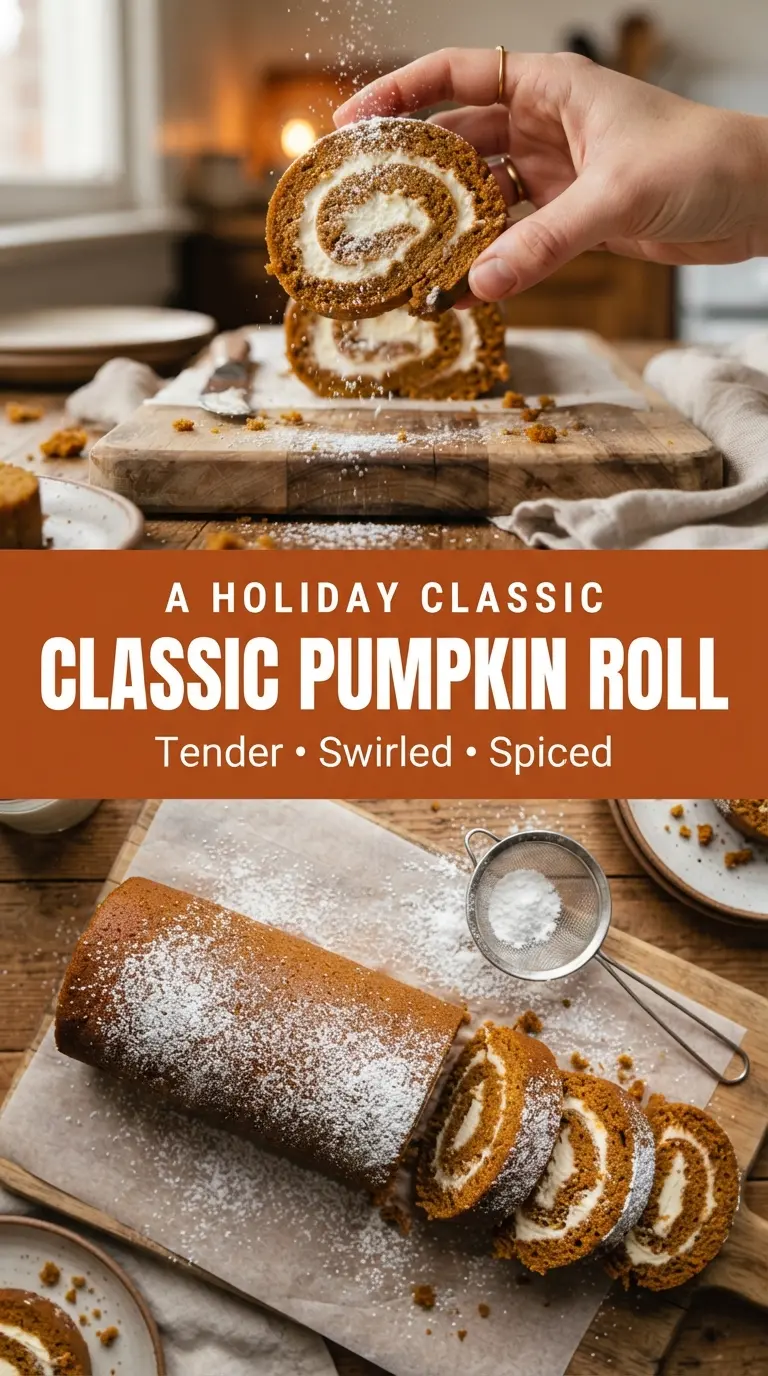
The Roll That Cracks When You Rush It
The biggest mistake with a pumpkin roll is treating it like a sheet cake and waiting too long to move it. That first flip out of the pan needs to happen while the cake is still hot, because warm sponge bends and cool sponge snaps. If the cake sits in the pan for even a few extra minutes, the edges start to dry out and the roll becomes more likely to split when you try to shape it.
The other trap is overbaking. You want the top to spring back and the edges to just begin pulling away, not a dry, browned sheet. This cake finishes setting from residual heat, so pulling it at the right moment gives you a flexible crumb that holds a spiral after chilling instead of collapsing into crumbs.
- Whipped eggs — The beaten eggs and sugar build the structure here. That ribbon stage gives the cake lift without making it stiff, which is why the roll stays pliable.
- Canned pumpkin purée — Use plain pumpkin purée, not pumpkin pie filling. Pie filling has sugar and spices already mixed in, which throws off both the texture and the seasoning.
- Warm spices — Cinnamon, ginger, nutmeg, and cloves give the cake its depth. Fresh spices matter more here than in a dense loaf because the sponge is delicate and every flavor comes through clearly.
- Cream cheese and butter — Both should be fully softened so the filling turns smooth instead of grainy. Cold dairy leaves little lumps that don’t disappear once the roll is assembled.
Rolling, Filling, and Chilling Without Breaking the Spiral
The Pan and the Towel
Line the jelly roll pan with parchment that overhangs the short sides so the cake lifts out cleanly. Dust a thin kitchen towel with powdered sugar and rub it in well; that coating keeps the warm cake from sticking as it cools in its rolled shape. Have both ready before the cake goes in the oven, because once it comes out, the clock starts immediately.
Baking to the Flexible Stage
Spread the batter into a thin, even layer all the way to the corners so it bakes uniformly. The cake is done when the top springs back under a light touch and the edges just start to pull from the pan. If the center still looks wet, give it another minute; if the top starts to turn deeply golden, you’ve gone too far and the roll will be harder to shape.
Rolling While the Cake Is Hot
Run a knife around the edges, invert the cake onto the sugared towel, and peel off the parchment right away. Roll it from a short side with the towel inside the spiral so the cake learns its shape while it cools. Don’t press hard; you’re guiding it, not flattening it. Let it cool completely before unrolling, or the filling will melt into the crumb.
Filling and Final Chill
Beat the filling until it’s fluffy and smooth, then spread it in an even layer almost to the edges. Leave a small border so the filling doesn’t squeeze out when you roll it back up. Wrap the finished log tightly and chill it for at least two hours; that cold rest firms the filling and gives you clean slices instead of a soft, messy spiral.
How to Adapt This Pumpkin Roll for Different Needs
Dairy-Free Filling That Still Slices Cleanly
Use a dairy-free cream cheese and a firm plant-based butter substitute in equal amounts. The texture will be a little softer than the classic version, so chill it fully before slicing and keep the filling layer a touch thinner to help the roll hold its shape.
Gluten-Free Pumpkin Roll
A 1:1 gluten-free flour blend can work here if it contains xanthan gum. The cake may be slightly less elastic than the original, so stop baking as soon as the center springs back and handle the warm roll gently while it cools.
Maple-Spiced Filling
Swap out 2 tablespoons of the powdered sugar for 1 to 2 tablespoons of maple syrup and add a tiny pinch more salt. The filling will taste deeper and less sweet, but it will also be softer, so chill it well before assembling.
Storage and Reheating
- Refrigerator: Keeps 4 to 5 days, tightly wrapped. The cake stays moist, and the filling firms up for cleaner slices.
- Freezer: Freezes well for up to 2 months. Wrap the whole roll tightly in plastic, then foil, and thaw overnight in the refrigerator before slicing.
- Reheating: This dessert is meant to be served chilled or just slightly cool, not warmed. If you want softer slices, let them sit at room temperature for 15 to 20 minutes; microwaving melts the filling and ruins the spiral.
Questions I Get Asked About This Pumpkin Roll
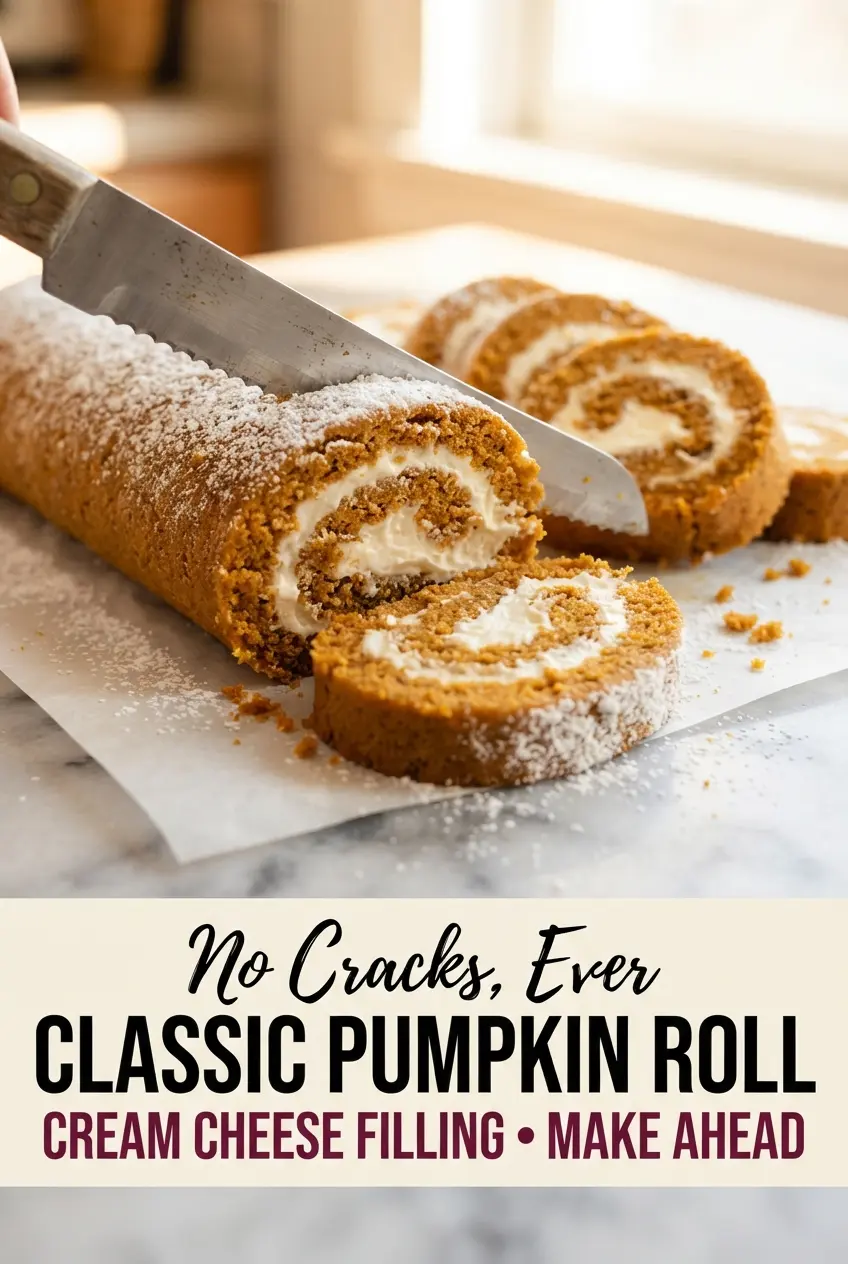
Classic Pumpkin Roll with Cream Cheese Filling
Ingredients
Equipment
Method
- Heat the oven to 375°F and line a 15x10-inch jelly roll pan with parchment that hangs over the short ends, then grease the parchment well.
- Lay a clean thin kitchen towel on the counter and dust it generously with 1/2 cup powdered sugar, rubbing it into the fibers until lightly clinging.
- Whisk the all-purpose flour, baking powder, baking soda, fine salt, ground cinnamon, ground ginger, ground nutmeg, and ground cloves together until evenly mixed.
- Beat the eggs and granulated sugar on high for 4 minutes, until thick, pale, and falling in ribbons from the beater.
- Beat in the canned pumpkin purée and vanilla extract on low just until combined, stopping as soon as streaks disappear.
- Sift the flour mixture over the top and fold gently until no dry streaks remain, keeping the batter airy.
- Spread the batter evenly into the prepared pan, filling into the corners for a thin, uniform layer.
- Bake 13–15 minutes at 375°F, until the top springs back when lightly touched and the edges pull slightly from the pan.
- Immediately run a knife around the edges and invert the hot cake onto the sugared towel, then peel off the parchment.
- Starting from a short end, roll the cake up with the towel inside it and cool completely rolled up, about 1 hour.
- Beat the cream cheese and unsalted butter together for 2 minutes, then mix in powdered sugar, vanilla extract, and fine salt until smooth and fluffy.
- Gently unroll the cooled cake, spread the filling evenly to within 1/2 inch of the edges, then re-roll without the towel.
- Wrap tightly in plastic and chill at least 2 hours so the spiral slices cleanly.
- Dust with powdered sugar and slice into 12 rounds using a warm knife, wiping the blade between cuts.
