
When broth first hits the bread, the cubes should soften at the edges without collapsing into paste. That’s the balance I want in classic Thanksgiving stuffing from scratch: tender in the middle, with a golden top and enough structure to scoop neatly. Starting with plain bread means the herbs, butter, celery, and onion get to shape the flavor instead of competing with a seasoned mix.
I dry the bread cubes in the oven before they meet the broth. It takes a little extra time, but it gives the bread room to absorb the liquid while the stuffing bakes, rather than turning soggy before it reaches the dish. The vegetables soften gently in butter, and the dried sage and thyme bloom for just 30 seconds in the warm pan. Each step has a clear job, and the finished pan tastes savory and familiar, with a crisp top over a soft, cohesive center.
Kitchen Note
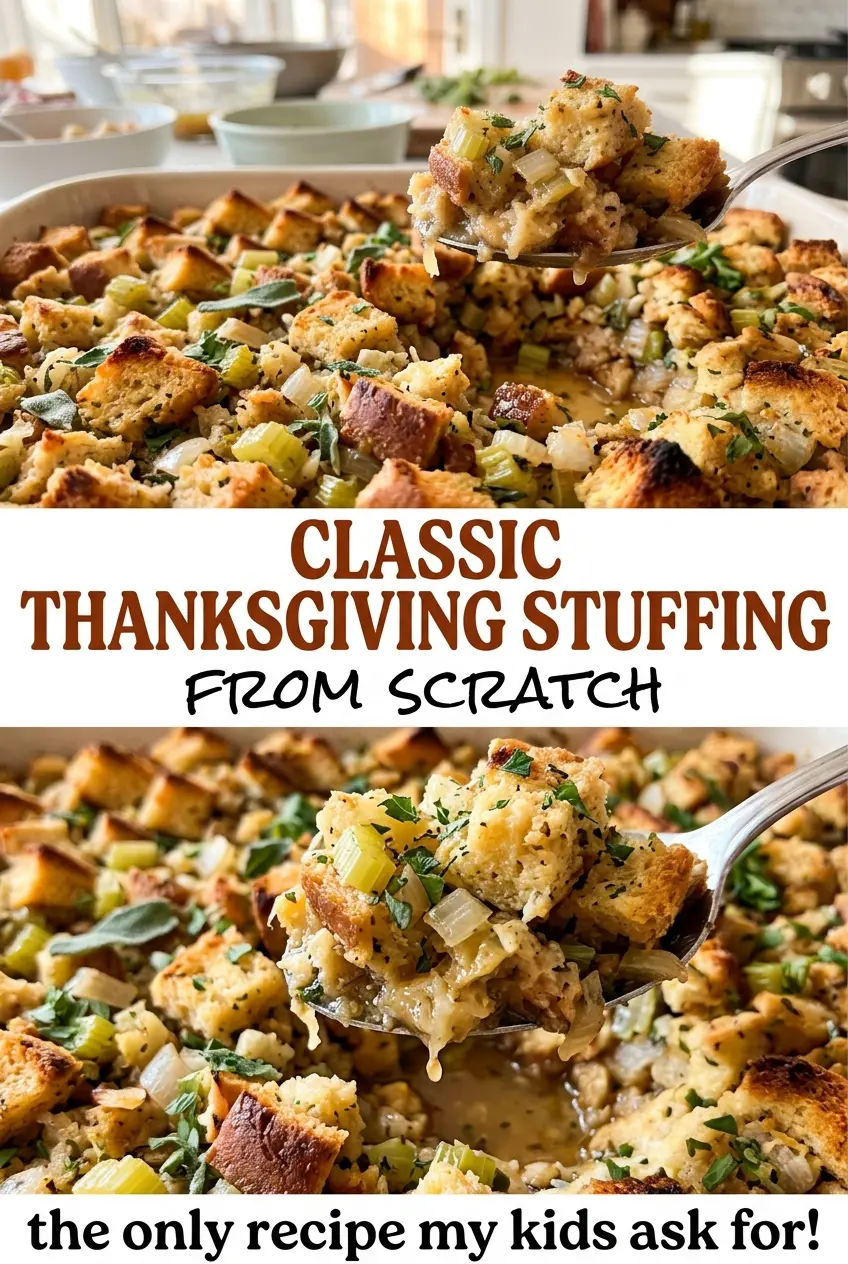
Give the baked stuffing its full 10-minute rest before you scoop it. The center settles during that pause, so it holds together instead of slumping onto the serving spoon.
Save this classic Thanksgiving stuffing from scratch for a crisp golden top, a soft center, and a from-scratch herb-and-butter flavor.
Why the Bread Has to Be Crisp Before the Broth Goes In
Fresh bread and dried bread behave differently once liquid is added. Fresh cubes have moisture of their own, so the broth has less room to soak in evenly; the outside can go soft while the middle stays dense. Dry, crisp cubes absorb the broth and egg mixture more uniformly, then soften during baking without losing all their shape. That’s what gives you a stuffing that’s moist rather than wet.
There’s a useful distinction between dry bread and toasted bread. The cubes should feel crisp, but they don’t need to turn deep brown. Keeping the oven at 300°F for the drying stage gives moisture time to leave before the bread takes on much color. Stir once so the cubes dry more evenly across the baking sheet. If the cubes still feel pliable, give them more time within the stated range; the visual and touch cue matters more than pulling them out just because the timer rang.
This is also why I don’t pour broth over fresh bread and hope the oven sorts it out. Drying first makes the liquid easier to distribute, so each portion has a similar balance of tender bread and set egg. It’s a small bit of advance work that changes the texture of the whole pan.
The Bread, Butter, and Broth That Shape Every Scoop
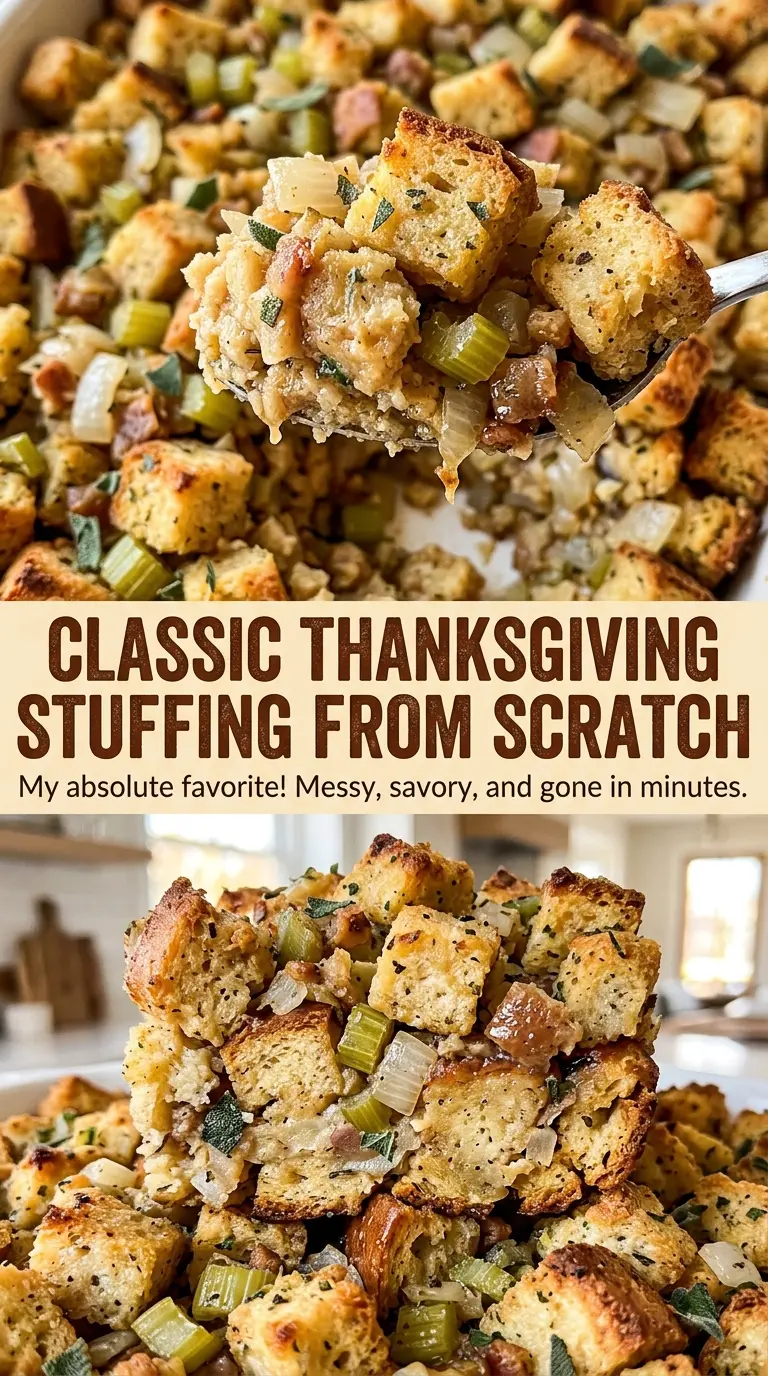
- Sturdy white bread — A loaf with enough structure to hold its shape gives you distinct cubes after baking. A very airy, delicate loaf is more likely to break down as you toss it with the broth mixture. Cut the bread into even cubes so they dry at a similar pace; the sturdy loaf is an everyday, affordable choice, and there’s no need to seek out an expensive artisan bread.
- Unsalted butter — Butter carries the flavor of the softened celery, onion, and herbs through the bread. Unsalted butter lets the kosher salt stay in control, which matters because the broth also contributes seasoning. The standard grocery-store kind works well here.
- Celery and yellow onion — These vegetables make a savory base and soften in the skillet before they’re mixed with the bread. Even dicing helps them distribute through the pan instead of leaving large, crunchy pieces in some bites. Choose firm celery and an unblemished onion; there’s no special variety required.
- Dried rubbed sage and dried thyme — These dried herbs bring the familiar stuffing flavor and release their aroma when stirred into the warm butter and vegetables. Rubbed sage has a soft, leafy texture that disperses well. Keep the herbs in a reasonably fresh, fragrant jar; if they smell faint in the container, their flavor will be muted in the finished dish.
- Fresh parsley — Chopped parsley adds a fresh, green note alongside the deeper dried herbs. Its fresh texture is part of the contrast, so dried parsley won’t give quite the same result. Wash and chop it before combining the vegetables and bread.
- Low-sodium chicken broth and eggs — The broth moistens the bread and adds savory depth, while the eggs help the baked mixture hold together. Low-sodium broth gives you more control over seasoning, and a familiar grocery-store carton is fine. Whisk the eggs thoroughly into the broth so they don’t land in one concentrated spot.
From Dry Bread Cubes to a Golden, Set Center
Dry the Cubes Until Crisp
Heat the oven to 300°F and spread the 3/4-inch bread cubes over a large rimmed baking sheet. Bake for 30 to 40 minutes, stirring once, until the cubes are dry and crisp. Watch for an even, dry feel rather than deep browning; pale cubes can be ready. If you pull them while they still bend easily, they won’t take up the broth as evenly.
Soften the Vegetables and Wake Up the Herbs
Melt the unsalted butter in a large skillet over medium heat, then add the diced celery and yellow onion. Cook for 8 to 10 minutes, until both have softened; you want tender pieces, not browned edges. Stir in the dried rubbed sage and thyme, and cook for 30 seconds. Keep the herbs moving in the butter so their aroma opens without letting them scorch.
Toss the Bread and Moisten It Evenly
Raise the oven temperature to 350°F and grease a 9×13-inch baking dish. Put the dried bread in a large bowl, add the cooked vegetables and chopped parsley, and toss to distribute them. Whisk the chicken broth with the eggs, kosher salt, and black pepper, then pour it over the bread mixture. Toss until the cubes are evenly moistened; a few gentle turns are better than crushing the bread as you mix.
Bake Covered, Then Brown the Top
Transfer the mixture to the prepared baking dish and cover it tightly with foil. Bake for 30 minutes, then uncover and bake for 15 to 20 minutes, until the top is golden and the center reaches 160°F. If you uncover it before the covered bake is finished, the surface can dry before the center sets. Let the dish rest before serving.
Two Practical Ways to Adapt This Stuffing
Make It Vegetarian With Vegetable Broth
Replace the low-sodium chicken broth with the same amount of low-sodium vegetable broth. The stuffing stays savory and cohesive, though its flavor will be a little less chicken-forward. Keep the other ingredients and the baking method the same.
Use a Sturdy Gluten-Free White Loaf
For a gluten-free version, replace the sturdy white bread with a sturdy gluten-free white loaf, keeping the same loaf weight and cube size. Gluten-free bread can be more fragile, so toss gently and check that the cubes are evenly moistened before transferring them to the dish. The finished texture may be a bit more delicate, but the herbs and buttery vegetables still carry through.
Storage and Reheating
- Refrigerator: Store leftovers covered or in an airtight container for 3 to 4 days. The crisp top softens in the refrigerator, while the center stays tender.
- Freezer: It freezes well. Cool completely, portion into airtight freezer-safe containers, and freeze for up to 3 months; thaw overnight in the refrigerator for more even reheating.
- Reheating: Cover a portion with foil and warm it in a 350°F oven until the center reaches 165°F. Uncover near the end if you want to bring back some crispness, and avoid reheating uncovered the whole time, which can dry the bread.
Questions That Come Up When Making Thanksgiving Stuffing
Classic Thanksgiving Stuffing from Scratch
Ingredients
Equipment
Method
- Heat the oven to 300°F.
- Spread the bread cubes on a large rimmed baking sheet and bake for 30 to 40 minutes, stirring once, until dry and crisp.
- Melt the butter in a large skillet over medium heat.
- Add the celery and onion and cook for 8 to 10 minutes until softened.
- Stir in the sage and thyme and cook for 30 seconds.
- Raise the oven temperature to 350°F and grease a 9x13-inch baking dish.
- Put the dried bread in a large bowl, add the cooked vegetables and parsley, and toss to combine.
- Whisk together the broth, eggs, salt, and pepper.
- Pour the broth mixture over the bread mixture and toss until evenly moistened.
- Transfer the mixture to the prepared dish and cover tightly with foil.
- Bake for 30 minutes.
- Uncover and bake for 15 to 20 minutes, until the top is golden and the center reaches 160°F.
- Let the stuffing rest for 10 minutes before serving.
