
The oven door stays shut, and the turkey keeps roasting. At the 30-minute mark, the skin has started to color; then the oven drops to a gentler temperature and the bird gets time to cook through without a stream of pan juices washing over it. I used to think skipping the baste meant giving up control, but the thermometer gives a much clearer answer than the clock or the color of the skin.
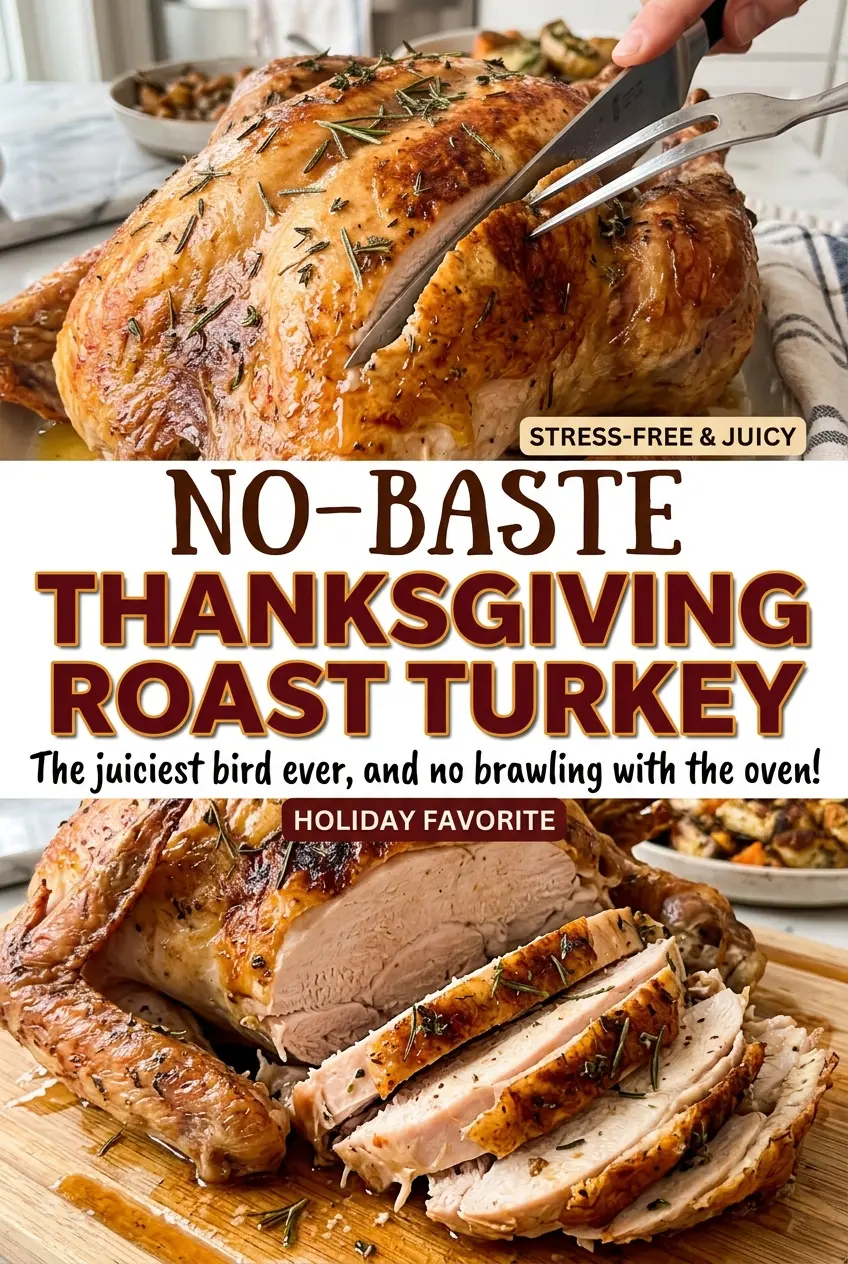
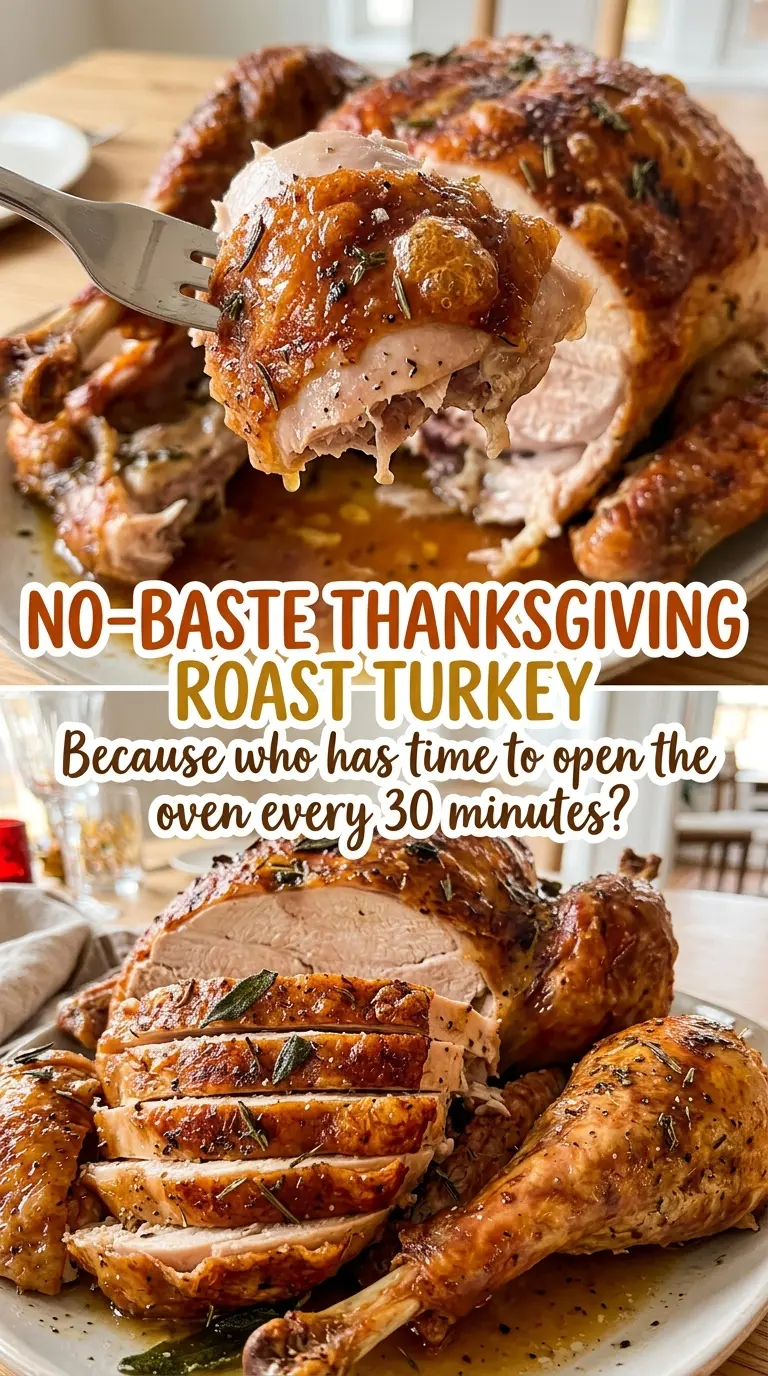
This no-baste Thanksgiving roast turkey is built around two simple moves: dry-brine the bird ahead, then let the oven do its work. The uncovered rest in the refrigerator helps the skin dry, while herb butter under and over the skin brings garlic, sage, and thyme to the meat. After a full rest on the board, the slices are tender with savory skin and no last-minute basting routine.
Kitchen Note
If the breast is browning faster than the rest of the turkey, lay foil loosely over the breast rather than wrapping the whole bird. It shields the part that needs it while keeping the rest of the skin exposed to the oven.
Save this no-baste Thanksgiving roast turkey for a calmer holiday oven schedule, with garlic-herb butter under the skin and no basting required.
Why This Roast Starts With an Unbrined Turkey
The salt has a specific job here, so the kind of turkey you buy matters. A bird that’s already been brined or injected with salt solution starts with seasoning you can’t measure, and adding the dry brine on top can leave the meat too salty. Choose a natural turkey that hasn’t been pre-brined or injected; that gives you a predictable starting point for seasoning.
Dry-brining also works differently from pouring liquid over the bird. Salt on the skin and inside the cavity has time to season the turkey while the uncovered refrigerator rest dries the outside. Drier skin has a better chance of browning in the oven, and the bird doesn’t need to sit in a bucket of brine. The 24-to-48-hour window gives you some scheduling flexibility, but it isn’t a reason to skip the uncovered rest or wrap the turkey during it.
That choice is what makes the hands-off roasting approach practical: the turkey starts with a measured amount of salt, and the oven can roast the skin without repeated trips to the door. It’s a small bit of planning before the holiday rush, not extra work on roasting day.
The Bird and Butter Choices That Set Up the Seasoning
- Natural turkey — Buy a fully thawed bird in the 12- to 14-pound range, without added salt solution. A label that says the turkey is self-basting or contains a salt solution means it isn’t the right starting point for this dry brine.
- Diamond Crystal kosher salt — Its broad, light crystals are easy to scatter over the skin and into the cavity. Salt brands vary in crystal size and density, so don’t swap another kind in by the same spoon measure and expect the same seasoning.
- Unsalted butter — Softened butter spreads under the skin and carries the garlic, sage, thyme, and pepper with it. Unsalted keeps the salt level in your hands; fresh herbs give the butter a brighter, more aromatic taste than dried herbs here.
- Yellow onion and lemon — These go loosely in the cavity to add aroma as the turkey roasts. The lemon brings a clean citrus note, while the onion turns sweet and mellow; keep the cavity loosely filled rather than packing it tightly.
- Water in the roasting pan — It goes into the bottom of the pan before roasting. Use water as written rather than assuming the turkey will produce enough drippings to take its place.
A Hot Start, Then a Hands-Off Roast
Dry-Brine the Bird on Its Rack
Check both cavities for a neck or giblets, then pat the turkey thoroughly dry with paper towels. Scatter the kosher salt evenly over the skin and inside the cavity. Set the turkey breast-side up on the rack in a 16-by-13-inch roasting pan and refrigerate it uncovered for 24 to 48 hours. Leaving it uncovered is part of the method, so don’t cover the pan during this rest.
Work the Herb Butter Under the Skin
Stir the softened butter with the minced garlic, sage, thyme, and black pepper until the mixture looks evenly speckled. Gently loosen the skin over the breast and thighs with your fingers, taking care not to tear it. Spread the butter beneath the loosened skin, then rub the remaining butter over the outside. Put the onion and lemon loosely in the cavity and pour the water into the roasting pan.
Roast at Two Temperatures
Heat the oven to 425°F with a rack positioned in the lower third. Roast the turkey for 30 minutes at that temperature, then lower the oven to 325°F and continue roasting for 2 1/2 to 3 1/4 hours without basting. If the breast browns too quickly, tent it loosely with foil. Check the thickest part of the breast and the innermost thigh with an instant-read thermometer; both spots need to reach 165°F.
Give the Turkey Time to Rest
Transfer the roasted turkey to a carving board and tent it loosely with foil. Let it rest for 30 minutes before carving. The rest gives the meat time to settle after roasting, so cutting straight away doesn’t send the juices running across the board. Use that window to finish any other parts of the meal rather than rushing the first slices.
Three Changes That Keep the Roast on Track
Make the herb butter dairy-free
Use an unsalted plant-based butter stick in place of the unsalted butter, measuring it the same way and letting it soften before mixing in the garlic and herbs. The seasoning still spreads under the skin, though the turkey won’t have quite the same buttery richness. Avoid a soft tub spread, which is harder to work under the skin.
Trade thyme for fresh rosemary
Use chopped fresh rosemary in place of the thyme in the herb butter. Rosemary is more piney and assertive, so the finished turkey will taste a little bolder; keep the sage and garlic in place to round it out.
Use orange for a sweeter citrus note
Replace the lemon with orange, halved, in the cavity. The aroma will be softer and sweeter than lemon, while keeping the same simple citrus-and-onion approach. Leave the orange in halves and place it loosely with the onion.
Storage and Reheating
- Refrigerator: Refrigerate leftover turkey within 2 hours and store it in a covered container for 3 to 4 days. The skin softens in the refrigerator, but the meat stays useful for sliced leftovers.
- Freezer: Freeze carved portions in airtight packaging for up to 3 months for best quality. Portioning before freezing makes it easier to thaw only what you need.
- Reheating: Warm sliced turkey covered in a baking dish with a small splash of water until it reaches 165°F throughout. Uncovered reheating dries the slices, so keep the dish covered and check the thickest pieces.
Questions That Come Up Before the Turkey Goes in the Oven
No-Baste Thanksgiving Roast Turkey
Ingredients
Equipment
Method
- Check the turkey cavities for any remaining giblets or neck.
- Pat the turkey very dry with paper towels.
- Sprinkle the salt evenly over the skin and inside the cavity.
- Set the turkey breast-side up on the rack in a 16x13-inch roasting pan and refrigerate uncovered for 24 to 48 hours.
- Stir together the butter, garlic, sage, thyme, and black pepper in a small bowl until evenly combined.
- Preheat the oven to 425°F and position a rack in the lower third.
- Gently loosen the skin over the breast and thighs.
- Spread the herb butter under the skin and over the outside.
- Place the onion and lemon loosely in the cavity.
- Pour the water into the roasting pan.
- Roast for 30 minutes at 425°F, then reduce the oven to 325°F and continue roasting for 2 1/2 to 3 1/4 hours without basting, tenting the breast loosely with foil if it browns too quickly; the thickest part of the breast and the innermost thigh should each reach 165°F on an instant-read thermometer.
- Transfer the turkey to a carving board and tent loosely with foil.
- Rest for 30 minutes before carving.
