
After the turkey comes out of the oven, the pan holds the browned drippings that make gravy taste like it belongs on the holiday table. I build this Classic Turkey Giblet Gravy around those drippings, but let a slow-simmered giblet broth do most of the work. That gives the gravy a deep turkey flavor without relying on pan juices alone.
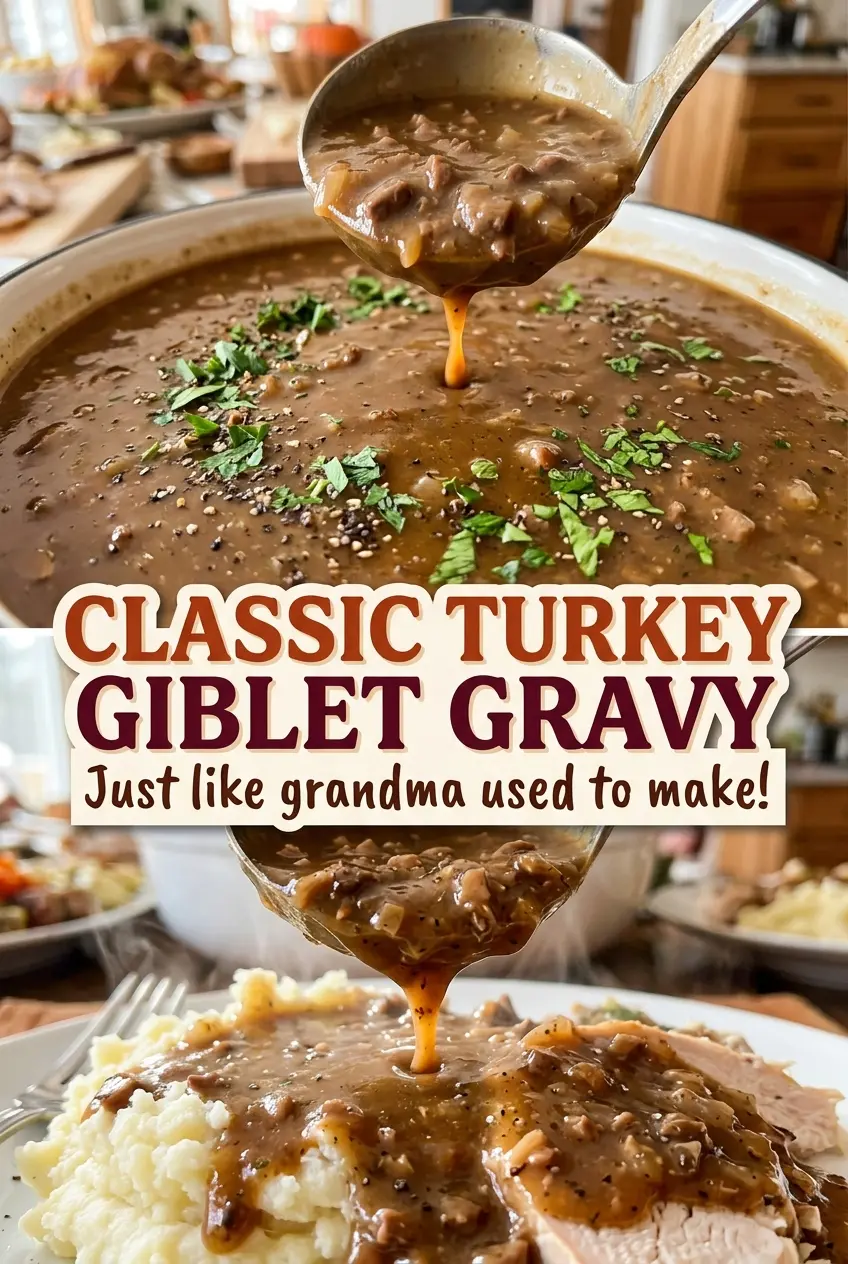
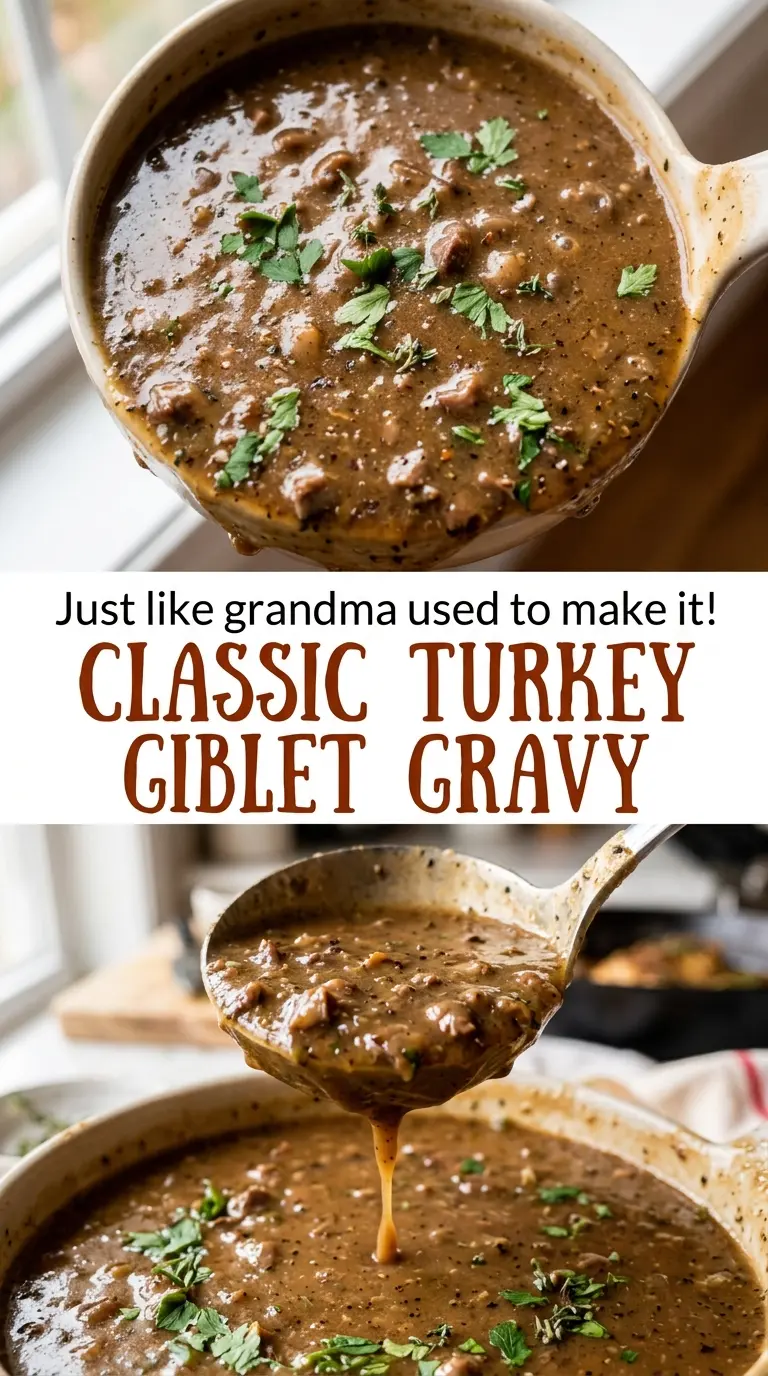
The broth starts with the neck, heart, and gizzard, plus onion, celery, carrot, and bay leaf. The liver goes in later, so it has less time to cook. Once the broth is strained, I chop the giblets and neck meat and stir them into a butter-and-flour roux loosened with broth and drippings. The finished gravy is thick enough to coat a spoon, with tender pieces of giblet and neck meat in every ladleful.
Kitchen Note
Measure the strained broth before you start the roux. If you come up short of 3 cups, add hot water until you reach that mark; guessing at the liquid makes the gravy thickness less predictable.
Save this classic turkey giblet gravy for a rich, savory finish made with homemade giblet broth and real turkey drippings.
Why This Gravy Uses Both Giblet Broth and Turkey Drippings
Giblet broth and pan drippings bring different things to the saucepan. The broth gives you enough liquid to build a full batch of gravy and carries the slow-cooked flavor of the neck, heart, and gizzard. The drippings add the browned, roasted turkey taste that plain broth can’t provide. Using both makes the gravy taste rounded rather than one-note.
There’s a practical reason to use defatted drippings, too. The butter and flour already create the base that thickens the gravy, so extra pan fat can leave a slick on top instead of adding useful body. The drippings contribute their concentrated flavor while the broth supplies most of the liquid. Whisking them into the roux together gives you one cohesive gravy, not a layer of fat sitting above a thinner sauce.
This balance also makes the recipe dependable when the amount of turkey juice in the roasting pan varies. You still have the measured broth as your foundation, and the drippings are a flavorful addition rather than the only source of liquid. The result should cling to the back of a spoon and pour smoothly from the ladle.
What Gives This Giblet Gravy Its Turkey-Deep Flavor
- Turkey neck and giblets — The neck contributes tender meat to chop into the finished gravy, while the heart and gizzard give the broth its savory backbone. Use the liver too for its distinct, rich flavor; the amount of time it cooks changes its texture.
- Onion, celery, carrot, and bay leaf — These aromatics give the broth a gentle savory-sweet base without turning it into a strongly seasoned stock. There’s no need to seek out specialty produce; fresh, ordinary vegetables are a good fit because they’ll be strained out after simmering.
- Unsalted butter and all-purpose flour — Together, they form the roux that gives the gravy its body. Unsalted butter keeps the seasoning easier to control once the turkey drippings are added, and regular all-purpose flour is the straightforward choice for a smooth, familiar texture.
- Defatted turkey pan drippings — These bring roasted turkey flavor that the broth alone won’t quite match. Use drippings from the turkey pan with the excess fat removed; their savory, browned character is more important here than using a particular brand or variety.
How to Turn the Giblets Into a Thick, Smooth Gravy
Simmer the Neck, Heart, and Gizzard
Put the turkey neck, heart, and gizzard in a 4-quart saucepan with the water, quartered onion, celery, carrot, and bay leaf. Bring everything to a boil over medium-high heat, then lower the heat until the broth holds a gentle simmer. Partially cover the pan and cook for 1 1/2 to 2 hours. Keep the simmer gentle rather than letting the broth boil hard, which can make it cloudy and evaporate more quickly.
Add the Liver Near the End
Add the liver after the first long simmer and cook for 20 minutes. The giblets need to reach 165°F, and the neck meat should be tender enough to pull from the bones. If the neck still feels firm, it hasn’t reached that tender cue yet. Keep the broth at a gentle simmer as the liver cooks.
Strain, Chop, and Measure the Broth
Pour the broth through a strainer into a large measuring cup, saving the giblets and neck. Discard the cooked vegetables and bay leaf. Lift the neck meat off the bones, then finely chop it with the giblets so the pieces are small enough to distribute through the gravy. Measure 3 cups of broth, adding hot water if the strained broth falls short.
Cook the Roux Until It Smells Nutty
Melt the butter in the same saucepan over medium heat, then whisk in the flour until there are no dry pockets. Keep whisking as it cooks for 2 minutes; the mixture should look smooth and smell lightly toasty, not scorched. A roux that catches on the bottom can give the whole batch a burnt taste, so keep it moving across the pan. Using the same saucepan carries the broth-making process straight into the gravy.
Whisk in the Liquids and Finish the Gravy
Gradually whisk in the measured broth and the turkey drippings, keeping the whisk moving so the liquid blends into the roux without lumps. Bring the gravy to a simmer and cook for 5 to 8 minutes, whisking often, until it thickens. Stir in the chopped giblets and neck meat, kosher salt, and black pepper, then simmer for 2 minutes until steaming hot. The gravy should look glossy and coat the chopped pieces rather than leave them sitting in a thin broth.
How to Adapt the Giblets, Drippings, and Flour
Leave out the liver for a gentler flavor
Skip the liver and make the broth with the neck, heart, and gizzard. The gravy will still have a deep turkey flavor, but it will lose the liver’s more pronounced, earthy note. The texture will be a little less varied, while the thickened broth and chopped neck meat still give it plenty of substance.
Make a smooth gravy without the chopped pieces
Prepare the broth and roux as usual, but leave the chopped giblets and neck meat out when you finish the gravy. You’ll keep the turkey flavor from the broth and drippings, with a smoother, more traditional sauce. The tradeoff is that you won’t have the savory pieces in each spoonful.
Use a gluten-free flour blend
For a gluten-free version, replace the all-purpose flour with the same amount of a cup-for-cup gluten-free all-purpose flour blend. Cook it with the butter for the same 2 minutes, then whisk in the broth and drippings gradually. The gravy may be a touch less silky than the wheat-flour version, but the roux still gives it a thick, spoon-coating finish.
Storage and Reheating
- Refrigerator: Store leftover gravy in a covered container for 3 to 4 days. It will thicken as it chills, so expect a firmer texture straight from the refrigerator.
- Freezer: Freeze in an airtight container for up to 2 months for the best texture. Thaw it in the refrigerator before reheating; the gravy may look slightly separated until it’s stirred smooth.
- Reheating: Warm it gently in a saucepan, stirring often, until it reaches 165°F. If it has thickened too much, whisk in a splash of hot water; avoid a hard boil, which can make the gravy reduce further.
Questions That Come Up While Making Turkey Giblet Gravy
Classic Turkey Giblet Gravy
Ingredients
Equipment
Method
- In a 4-quart saucepan, combine the turkey neck, heart, and gizzard with the water, onion, celery, carrot, and bay leaf.
- Bring to a boil over medium-high heat, then reduce to a gentle simmer.
- Partially cover and simmer for 1 1/2 to 2 hours.
- Add the liver and simmer for 20 minutes, until the giblets reach 165°F and the neck meat is tender.
- Strain the broth into a large measuring cup, reserving the giblets and neck.
- Discard the vegetables and bay leaf.
- Remove the neck meat from the bones.
- Finely chop the neck meat with the giblets.
- Measure 3 cups broth, adding hot water if needed.
- Melt the butter in the same saucepan over medium heat.
- Whisk in the flour and cook for 2 minutes, whisking constantly.
- Gradually whisk in the 3 cups broth and the pan drippings.
- Bring to a simmer and cook for 5 to 8 minutes, whisking often, until thickened.
- Stir in the chopped giblets and neck meat, salt, and pepper.
- Simmer for 2 minutes, until the gravy is steaming hot.
