
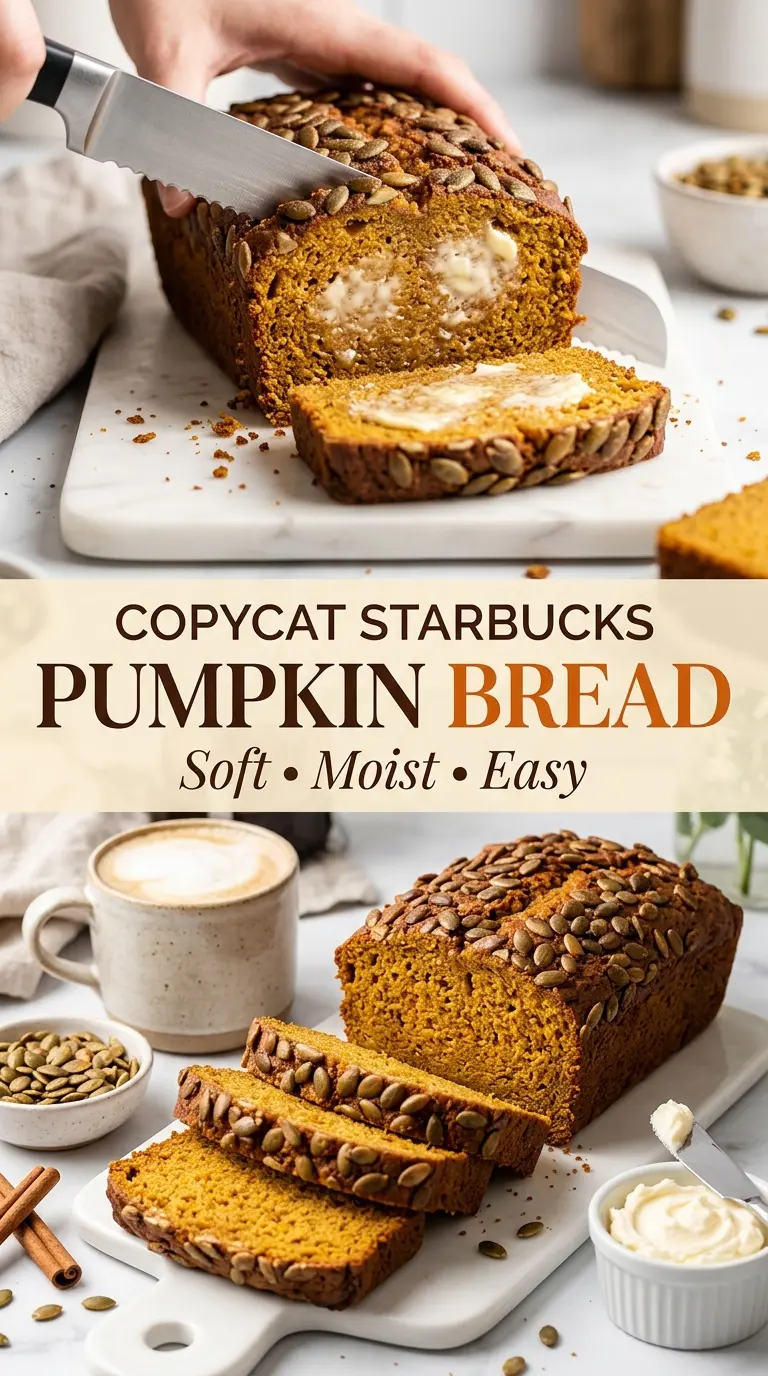
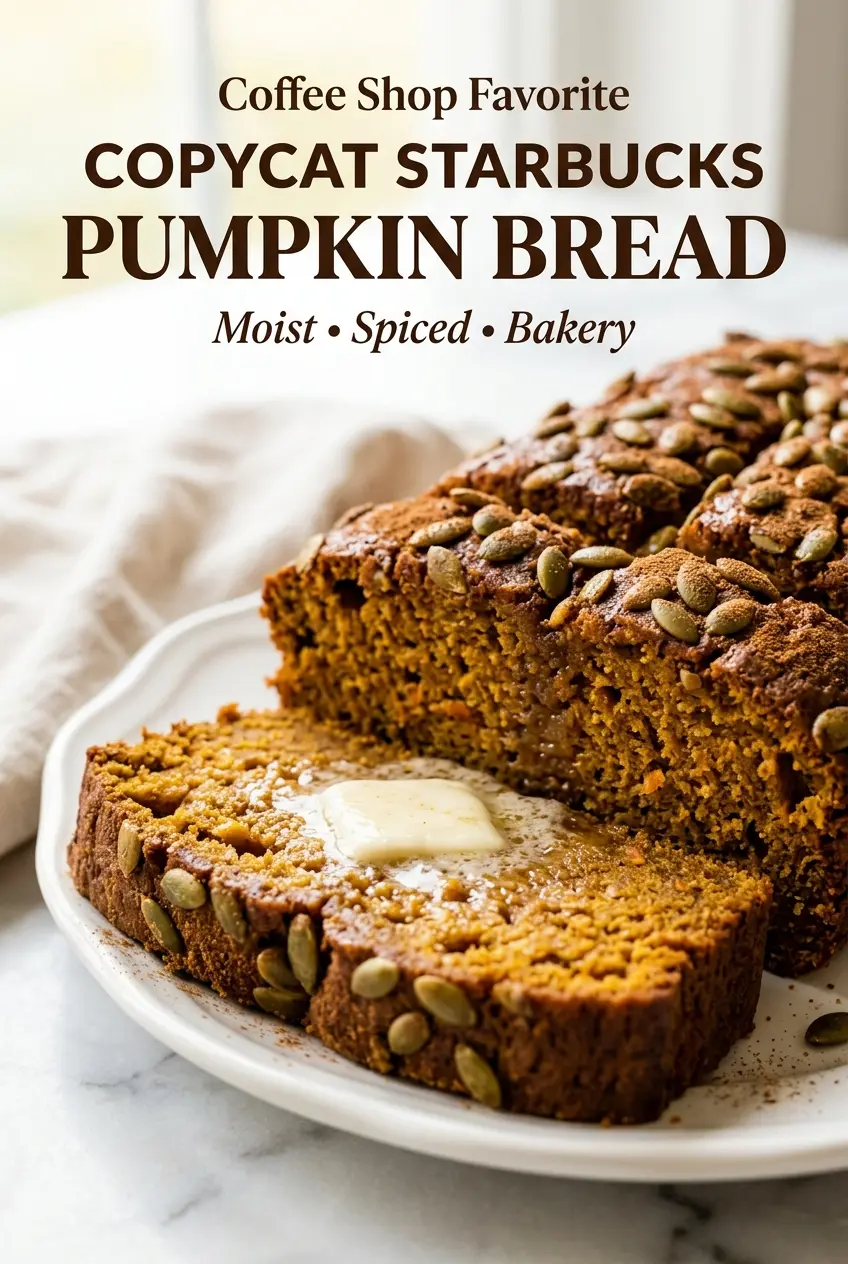
Copycat Starbucks Pumpkin Bread bakes up with the kind of soft, tender crumb that slices cleanly but still feels moist and plush on the tongue. The top gets a light crunch from pepitas, and the spice level lands right where a coffee shop loaf should: warm, fragrant, and pumpkin-forward without tasting like candle aisle pumpkin.
The trick is keeping the batter just barely mixed. Once the flour goes in, overworking it turns the loaf tight and bready instead of soft. The applesauce helps keep the crumb supple without making the bread greasy, while the combination of granulated sugar and brown sugar gives the loaf both sweetness and a little depth. It’s the same reason this one tastes so close to the original.
Below, I’m walking through the little details that matter most: how to keep the top from over-browning before the center sets, why pepitas belong on top instead of inside, and how to tweak the loaf if you want a dairy-free or lower-sugar version.
The loaf stayed incredibly moist for days and the pepitas gave the top that same Starbucks-style crunch. I was worried it would be too sweet, but the spice and pumpkin came through perfectly.
Save this Starbucks-style pumpkin bread for the days when you want a soft loaf with pepita crunch and coffee-shop spice.
The Reason This Loaf Stays Soft Instead of Dense
Pumpkin bread fails for one of two reasons: too much flour, or too much stirring. Pumpkin purée brings a lot of moisture, but it also makes the batter heavy, so the flour has to be measured carefully and mixed only until the dry streaks disappear. If you beat it like cake batter, the loaf turns tight and tunnels form through the middle.
The second thing that matters is how the sugars and oil work together. Brown sugar holds moisture and gives the loaf a deeper, slightly caramelized taste, while oil keeps the crumb tender after cooling. Applesauce adds another layer of softness without making the bread taste like apples, and that matters because the pumpkin flavor should still be the first thing you notice.
- Pumpkin purée — Use plain pumpkin purée, not pumpkin pie filling. Pie filling is already sweetened and spiced, and it throws the balance off fast.
- Vegetable oil — Oil gives this loaf its lasting moisture. Melted butter will work, but the bread will set a little firmer and lose that coffee-shop softness.
- Applesauce — Unsweetened applesauce keeps the crumb tender and lightens the oil without drying the loaf out. If you don’t have it, replace it with plain Greek yogurt for a slightly richer, tighter crumb.
- Pepitas — The pumpkin seeds on top add crunch and that familiar Starbucks look. Don’t mix them into the batter; they’re there for contrast.
What Each Ingredient Is Actually Doing in This Loaf
The flour gives the loaf its structure, but the baking soda and baking powder are doing different jobs. Baking soda reacts with the natural acidity in the pumpkin and brown sugar for lift, while baking powder adds extra insurance so the loaf rises evenly instead of sinking in the center.
Pumpkin pie spice and cinnamon overlap on purpose. The pumpkin pie spice rounds out the flavor with clove, nutmeg, and ginger, while the extra cinnamon keeps the loaf from tasting flat. Vanilla doesn’t announce itself, but it smooths the edges and makes the spice taste fuller.
If you need a swap, use a neutral 1:1 gluten-free flour blend in place of the all-purpose flour. The loaf will be a little more delicate when warm, but it still slices well once cooled. Just don’t replace the flour with almond flour alone; the batter won’t hold the same way.
Building the Batter So the Center Bakes Through
Mix the dry ingredients first
Whisk the flour, leaveners, spices, and salt together until the color looks even and there are no cinnamon clumps hiding in the bowl. This step matters more than it sounds like it should, because uneven spice pockets show up as bitter little streaks in the finished loaf. A quick whisk now gives you a more even crumb later.
Stir the wet ingredients until smooth
Whisk the pumpkin purée, eggs, sugars, oil, applesauce, and vanilla until the mixture looks glossy and completely blended. You’re looking for a thick, pourable batter base with no visible sugar lumps. If the eggs are cold and the oil looks streaky, keep whisking until the mixture loosens and turns uniform.
Fold, don’t beat, the final batter
Add the dry ingredients to the wet mixture and fold just until the flour disappears. A few small streaks are better than overmixing, because the batter keeps hydrating in the oven. Once it’s in the pan, smooth the top gently and stop there. Overhandling at this point is how the loaf gets tough.
Watch the center, not the clock
Bake until a toothpick comes out clean or with a few moist crumbs, and start checking at the 55-minute mark. If the top is getting dark before the middle sets, lay a loose sheet of foil over the loaf for the last stretch of baking. The bread is done when the edges have pulled slightly from the pan and the center springs back instead of wobbling.
How to Adapt This for Different Kitchens and Diets
Dairy-Free by Default
This loaf is already dairy-free as written, which is one reason it works so well for sharing. Just keep an eye on what you serve with it, since butter or cream cheese on the side would change that. The bread itself stays soft and rich without any dairy at all.
Make It a Little Less Sweet
Drop the granulated sugar by 1/4 cup if you want a loaf that reads more pumpkin-forward and less dessert-like. The texture will still hold, but the crumb will taste a touch less tender and the top may brown a little faster. Keep the brown sugar in place so the loaf doesn’t lose all its moisture.
Swap the Pepitas for a Different Top
If you don’t have pumpkin seeds, coarse turbinado sugar gives you a sweet crackly top instead of a nutty one. Chopped pecans also work, but they make the loaf feel more bakery-style and a little richer. Whatever you use, press it lightly into the batter so it sticks through baking.
Storage and Reheating
- Refrigerator: Store slices tightly wrapped for up to 5 days. The crumb stays moist, but the spices taste softer after day two.
- Freezer: This loaf freezes well. Wrap the cooled loaf or individual slices in plastic, then foil, and freeze for up to 3 months.
- Reheating: Warm slices in a low oven or toaster oven until just heated through. The common mistake is blasting it in the microwave, which makes the crumb gummy instead of soft.
Questions I Get Asked About This Recipe
Copycat Starbucks Pumpkin Bread
Ingredients
Equipment
Method
- Preheat the oven to 350°F (175°C). Grease and line a 9×5-inch loaf pan with parchment paper.
- In a large bowl, whisk together the all-purpose flour, baking soda, baking powder, pumpkin pie spice, ground cinnamon, and kosher salt until evenly combined.
- In another bowl, whisk together the pumpkin purée, eggs, granulated sugar, light brown sugar, packed, vegetable oil, applesauce, and vanilla extract until smooth and glossy.
- Fold the dry ingredients into the wet ingredients until just combined and no dry streaks remain; do not overmix.
- Pour the batter into the prepared loaf pan and smooth the top with a spatula for an even bake.
- Evenly sprinkle raw pumpkin seeds (pepitas) across the top and gently press them into the batter so they adhere.
- Bake for 55–65 minutes, until a toothpick inserted into the center comes out clean or with a few moist crumbs attached (visual cue: top looks set and lightly browned).
- If the loaf is browning too fast, loosely cover with foil during the final 15 minutes to prevent over-browning.
- Cool the bread in the pan for 15 minutes before transferring it to a wire rack; slice only once completely cooled for clean slices.
