
Downeast Maine Pumpkin Bread earns its keep with a soft, dense crumb that stays tender for days and a pumpkin flavor that tastes warm and rounded instead of flat. The loaf slices cleanly, holds together for breakfast or snacking, and has the kind of spice balance that makes one slice turn into two without trying. It’s the sort of quick bread that feels old-fashioned in the best way: straightforward, reliable, and worth keeping on repeat.
What makes this version work is the balance of moisture and structure. Pumpkin purée, oil, and applesauce keep the loaf plush, while the eggs and leaveners give it enough lift that it never turns heavy. The spices are layered in a way that supports the pumpkin instead of covering it up, so you get cinnamon first, then nutmeg and clove, with just enough ginger at the finish to keep the flavor lively.
Below, I’ve added the small details that matter most, like how to mix the batter without tightening it up, why the loaf pans need real lining, and how to keep the tops from over-browning before the centers finish baking.
The loaf came out unbelievably moist and the spice balance was perfect — not too clove-heavy like some pumpkin breads. I baked it in two pans and both were done right at 60 minutes with a clean crumb.
Save this Downeast Maine Pumpkin Bread for the days when you want a tender loaf with deep pumpkin flavor and a crackly sugared top.
The Trick to a Pumpkin Bread That Stays Moist Without Turning Dense
Most pumpkin breads go wrong in one of two directions: they bake up dry because the batter is overmixed, or they turn gummy because there’s too much moisture with not enough structure. This loaf avoids both by using pumpkin purée, applesauce, and oil for tenderness while still leaning on enough flour, eggs, and leaveners to keep the crumb from collapsing. The result is a bread that feels plush and bakery-style, not wet and heavy.
The other thing that matters is how you combine the batter. Once the dry ingredients hit the wet ingredients, the clock starts ticking on gluten development, and aggressive stirring makes a quick bread tough. Fold only until the flour disappears and no streaks remain. A few small lumps are fine. They disappear in the oven, and the loaf stays soft instead of springy in a way that works against the tender crumb you want.
What the Pumpkin, Applesauce, and Spices Are Actually Doing Here
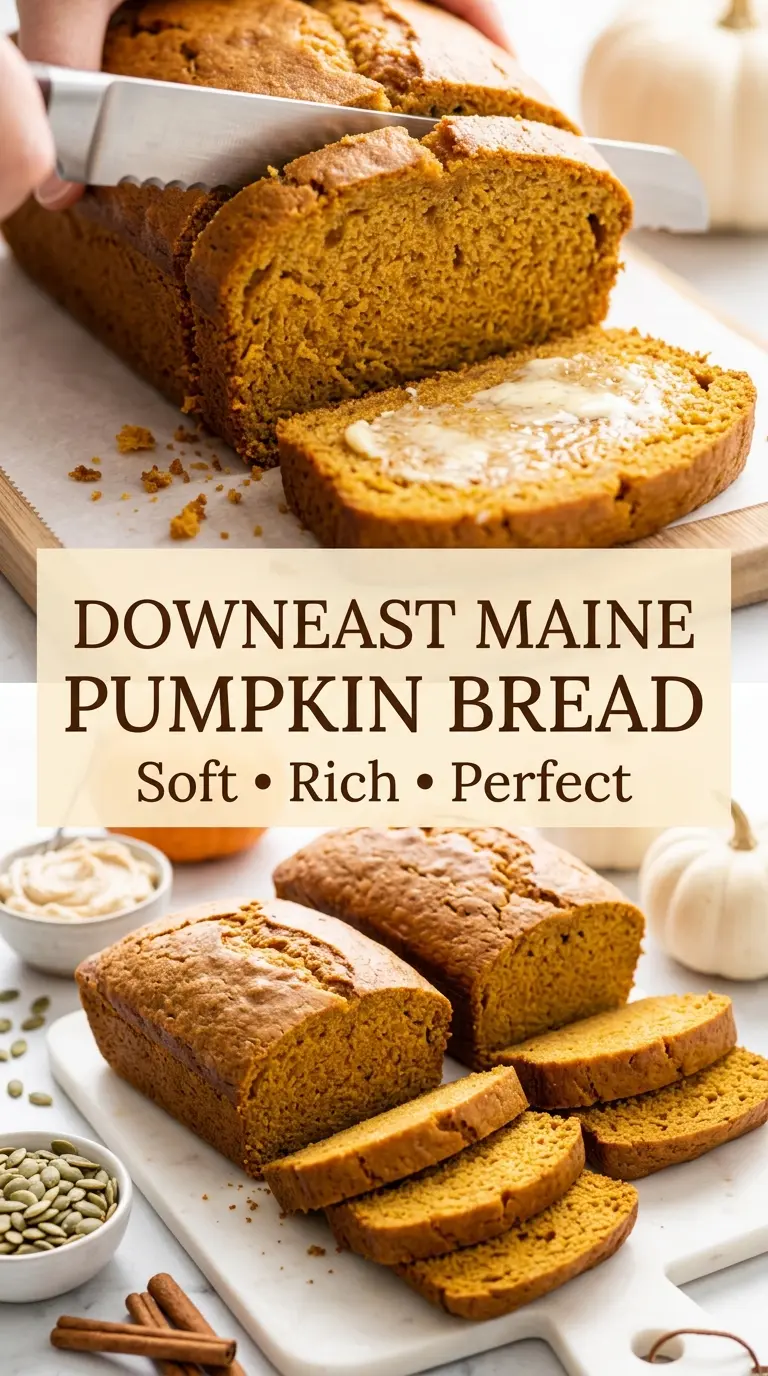
Pumpkin purée gives the bread its color, flavor, and dense, moist crumb. Use plain pumpkin purée, not pumpkin pie filling, which is already sweetened and spiced. If your purée looks watery, blot it lightly with paper towels or stir it well before measuring so the batter doesn’t loosen too much.
Applesauce adds moisture without making the loaf greasy. It also softens the finished texture in a way oil alone can’t quite match. If you don’t have applesauce, use an equal amount of plain Greek yogurt for a slightly tighter crumb, or just replace it with more pumpkin purée for a more pronounced pumpkin flavor and a slightly heavier loaf.
Brown sugar and granulated sugar work together for both sweetness and texture. The brown sugar adds a little molasses depth, while the white sugar helps the crust bake up with a delicate crackle. The spices should smell warm and rounded, not harsh. If your cloves are old, the bread will taste flat even if you follow everything else perfectly.
Building the Batter Without Beating the Life Out of It
Mix the dry ingredients first
Whisk the flour, leaveners, spices, and salt together until the color looks even and no clumps of cinnamon or baking powder remain. That step matters more than it sounds, because quick breads don’t get much mixing later. If the spices stay streaky here, they stay streaky in the finished loaf too.
Whisk the wet ingredients until smooth
Beat the pumpkin, eggs, sugars, oil, applesauce, and vanilla until the mixture looks glossy and thick. You’re not trying to whip in a ton of air. You just want the sugar to dissolve a bit and the oil to disperse so the batter bakes evenly instead of separating.
Fold, don’t stir hard
Add the dry ingredients to the wet ingredients in a few additions and fold with a spatula until the flour disappears. Stop as soon as the batter looks uniform. If you keep going, the loaf turns tight and can dome unevenly. Divide it right away between the pans so the baking time stays consistent.
Bake until the center is set
The loaves are done when a toothpick comes out clean or with a few moist crumbs, not wet batter. If the tops darken early, tent them loosely with foil for the last 15 minutes. That keeps the crust from going too dark while the middle finishes baking through.
Three Ways to Make This Pumpkin Bread Work for Your Kitchen
Make it dairy-free
This loaf is already naturally dairy-free as written, which is one reason it bakes up so tender without needing butter. If you serve it with toppings, use a dairy-free spread or skip the garnish and let the sugared top do the work.
Turn it into muffins
Divide the batter among lined muffin cups and bake at the same temperature for about 18 to 22 minutes. You’ll lose the deep, sliceable loaf texture, but you gain crisp edges and a faster bake that’s easier for grab-and-go breakfasts.
Cut the sugar a little
You can reduce the granulated sugar by up to 1/2 cup if you want a less sweet loaf, but don’t slash it farther than that. Sugar isn’t just for sweetness here — it also helps hold moisture, so reducing it too much can leave the bread dry and crumbly.
Add nuts or chocolate chips
Fold in up to 1 cup of chopped walnuts, pecans, or chocolate chips at the very end. Coat nuts lightly in flour first if you want them to stay suspended instead of sinking, and keep the add-ins modest so the loaf still tastes like pumpkin bread instead of a mix-in recipe.
Storage and Reheating
- Refrigerator: Store tightly wrapped for up to 5 days. The crumb stays moist, though the top softens a bit after day one.
- Freezer: Freezes well. Wrap the cooled loaves or slices in plastic, then foil, and freeze for up to 3 months. Thaw at room temperature while still wrapped so condensation doesn’t make the crust soggy.
- Reheating: Warm slices in a toaster oven or 300°F oven for a few minutes. Microwaving works in a pinch, but too long makes the crumb rubbery and wipes out the nice texture.
Answers to the Questions Worth Asking
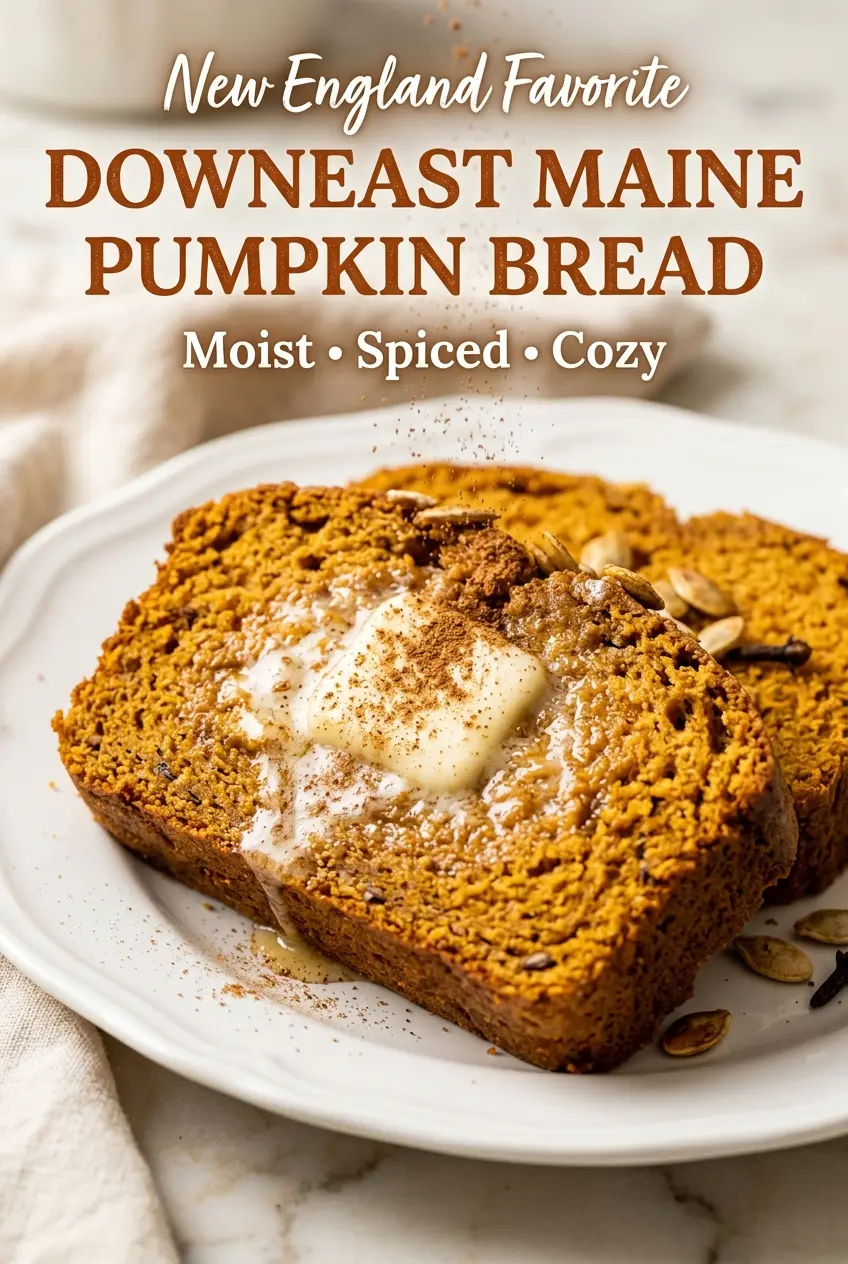
Downeast Maine Pumpkin Bread
Ingredients
Equipment
Method
- Preheat the oven to 350°F (175°C). Grease two 9×5-inch loaf pans and line them with parchment paper.
- Whisk together the all-purpose flour, baking soda, baking powder, ground cinnamon, ground nutmeg, ground cloves, ground ginger, and kosher salt until evenly combined.
- Whisk together the pumpkin purée, large eggs, granulated sugar, light brown sugar, vegetable oil, applesauce, and vanilla extract until smooth and creamy.
- Gradually fold the dry ingredients into the wet ingredients until just combined, avoiding overmixing.
- Divide the batter evenly between the prepared loaf pans, then sprinkle with pumpkin seeds and coarse sanding sugar if desired.
- Bake at 350°F (175°C) for 55–65 minutes, until a toothpick in the center comes out clean or with a few moist crumbs attached.
- If the tops brown too quickly, loosely tent with foil during the last 15 minutes of baking.
- Cool the loaves in the pans for 15 minutes, so the crumb sets without collapsing.
- Transfer to a wire rack to cool completely before slicing.
- Slice and enjoy with salted butter, maple butter, whipped cream cheese, or a drizzle of warm maple syrup.
