
Cracker Barrel hashbrown casserole has a way of disappearing fast because it lands right in that sweet spot between creamy, cheesy, and sturdy enough to scoop cleanly. The potatoes stay tender instead of turning mushy, the sauce bakes into the shreds instead of sitting on top, and the cheddar on the surface gives you those browned, salty edges that people always seem to fight over.
The part that makes this copycat work is restraint. The hash browns need to be thawed so they can mingle with the sauce instead of steaming in the oven, and the casserole needs to be spread into the pan without packing it down. That keeps the center soft and rich while the top gets a little crusty and deeply savory. A good sharp cheddar matters here too, because it has enough bite to stand up to the sour cream and soup without tasting flat.
Below you’ll find the small details that make this casserole behave the way you want it to, plus a few swaps if you’re working around what you’ve got in the fridge. The technique is straightforward, but a couple of habits separate a creamy, scoopable casserole from a dense one.
The casserole baked up creamy in the middle with a golden top, and the hash browns held their texture instead of turning gluey. I used it for Sunday brunch and there wasn’t a spoonful left.
Save this Cracker Barrel hashbrown casserole for the next brunch when you want creamy potatoes, sharp cheddar, and a golden top without a lot of fuss.
The Reason This Casserole Stays Creamy Instead of Turning Dense
Hashbrown casserole goes wrong in two places: the potatoes hold too much water, or the dish gets packed so tightly that the sauce can’t work its way through. Thawed frozen hash browns solve the first problem because they mix evenly and bake without releasing a flood of ice crystals into the pan. Leaving the mixture loose in the baking dish solves the second. You want the sauce to settle around the potatoes, not trap them under a compressed layer.
The other trap is heat. This kind of casserole doesn’t need a hard blast to cook through; it needs enough oven time for the center to bubble and the cheddar to melt into the potatoes. If the top is browning before the middle is hot, the dish needs more time, not a hotter oven. Covering it would soften the top and turn the edges bland, so bake it uncovered and let the heat do its slow work.
- Thawed hash browns — Frozen hash browns work because they’re already shredded and evenly cut, but they need to be thawed fully so they blend into the sauce. If there’s visible ice or frost, the casserole turns watery.
- Sharp cheddar — Mild cheddar melts fine, but sharp cheddar gives the casserole the bite it needs. Pre-shredded cheese works here, though freshly shredded melts a little smoother.
- Condensed cream of chicken soup — This gives the casserole body and salt without having to build a sauce from scratch. Cream of mushroom works as the closest swap if you want a vegetarian version with a different savory note.
- Sour cream — Sour cream keeps the filling tangy and creamy. Plain Greek yogurt can work in a pinch, but the final texture is a little less rich and a touch firmer.
What Each Ingredient Is Doing in the Dish
The soup and sour cream form the creamy base, but they do different jobs. The soup brings seasoning and thickness, while the sour cream adds richness and that familiar tang that keeps the casserole from tasting one-note. Melted butter loosens the mixture enough to coat every shred, and it also helps the top brown instead of drying out.
The onion matters more than people expect. Even finely diced, it gives the casserole little savory pockets that cut through the richness. Keep the dice small so it softens as the casserole bakes. If the pieces are too large, you get crunchy onion instead of a smooth, even bite.
The 20 Minutes That Decide the Final Texture
Building the Creamy Base
Start by stirring the soup, sour cream, melted butter, onion, garlic powder, salt, and pepper together until the mixture looks smooth and glossy. At this stage, the onions should be evenly suspended and the butter should be fully incorporated, not floating in streaks. If the butter is too hot when it goes in, it can make the sour cream look loose at first, but it should come together once the cheese and potatoes are mixed in.
Coating the Potatoes Without Crushing Them
Add the hash browns and fold them gently with a spatula until every shred looks coated. The goal is coverage, not compression. If you stir aggressively, the potatoes start breaking down and the casserole turns heavy. Two cups of cheese go in here, and they should be scattered through the mixture so every scoop has cheese inside, not just on top.
Baking Until the Edges Bubble
Spread the mixture into a greased 9×13-inch dish and stop once it is level. Don’t press it down. That packed surface is what gives you a dense casserole. Sprinkle the remaining cheese over the top and bake until the edges are bubbling and the top has turned deep golden in spots, about 45 to 50 minutes. If the center still looks pale and the edges aren’t moving, give it another few minutes; the casserole is done when it has a set top but still looks soft underneath.
Letting It Set Before You Scoop
Give the casserole 5 to 10 minutes on the counter before serving. That short rest lets the sauce thicken just enough to hold together on the plate. If you cut into it straight from the oven, the filling slides around and looks looser than it really is. A brief rest gives you neat scoops and keeps the texture creamy instead of soupy.
How to Adapt This for Different Tables and Different Fridges
Vegetarian Version
Swap the cream of chicken soup for cream of mushroom or cream of celery. The casserole stays creamy and bakes the same way, but the flavor leans a little earthier and less poultry-forward. That change works well if you’re serving it alongside eggs, fruit, or other breakfast dishes.
Gluten-Free Swap
Use a gluten-free condensed cream soup and check the hash browns for any added starches or seasonings if you need to keep the dish fully gluten-free. The texture stays close to the original because the soup is doing the thickening work, not flour.
Extra Cheesy Brunch Casserole
Add another 1/2 cup of cheddar into the mixture and keep the topping as written. The casserole turns a little richer and more cohesive, but too much extra cheese can make it greasy, so stop there unless you want a heavier result.
Storage and Reheating
- Refrigerator: Store covered for up to 4 days. The casserole firms up as it chills, but the flavor stays strong.
- Freezer: It freezes well. Cool completely, wrap tightly, and freeze in portions or in the full dish for up to 2 months. Thaw overnight in the fridge before reheating for the best texture.
- Reheating: Warm covered in a 325°F oven until heated through, then uncover for the last few minutes if you want the top to crisp again. The common mistake is blasting it in the microwave until the cheese separates and the potatoes go rubbery.
Answers to the Questions Worth Asking
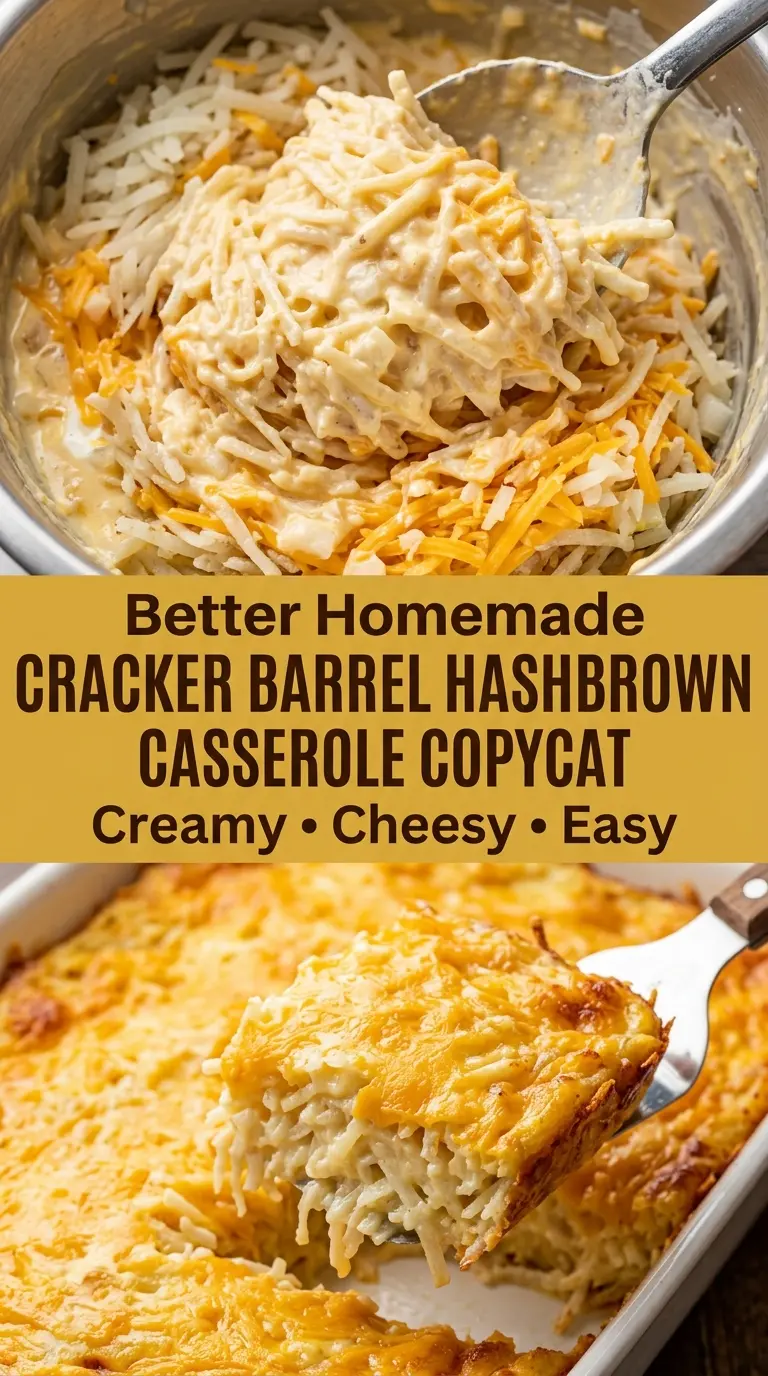
Cracker Barrel Hashbrown Casserole Copycat
Ingredients
Equipment
Method
- Preheat the oven to 350°F and lightly grease a 9×13-inch baking dish to prevent sticking.
- Thaw the frozen shredded hash browns until workable so they fold evenly through the casserole.
- Combine the cream of chicken soup, sour cream, melted butter, onion, garlic powder, salt, and black pepper in a large bowl.
- Stir in 2 cups of shredded cheddar until evenly distributed for a uniform cheesy sauce.
- Add the thawed hash browns and fold gently until the potatoes are thoroughly coated without compressing them.
- Spread the hash brown mixture evenly in the prepared baking dish and avoid pressing it down too firmly so it stays soft.
- Sprinkle the remaining 1/2 cup cheddar cheese evenly across the surface for a golden top.
- Bake uncovered for 45–50 minutes at 350°F until bubbling around the edges and golden across the top.
- Rest the casserole for 5–10 minutes before serving to help it set slightly while remaining soft inside.
