
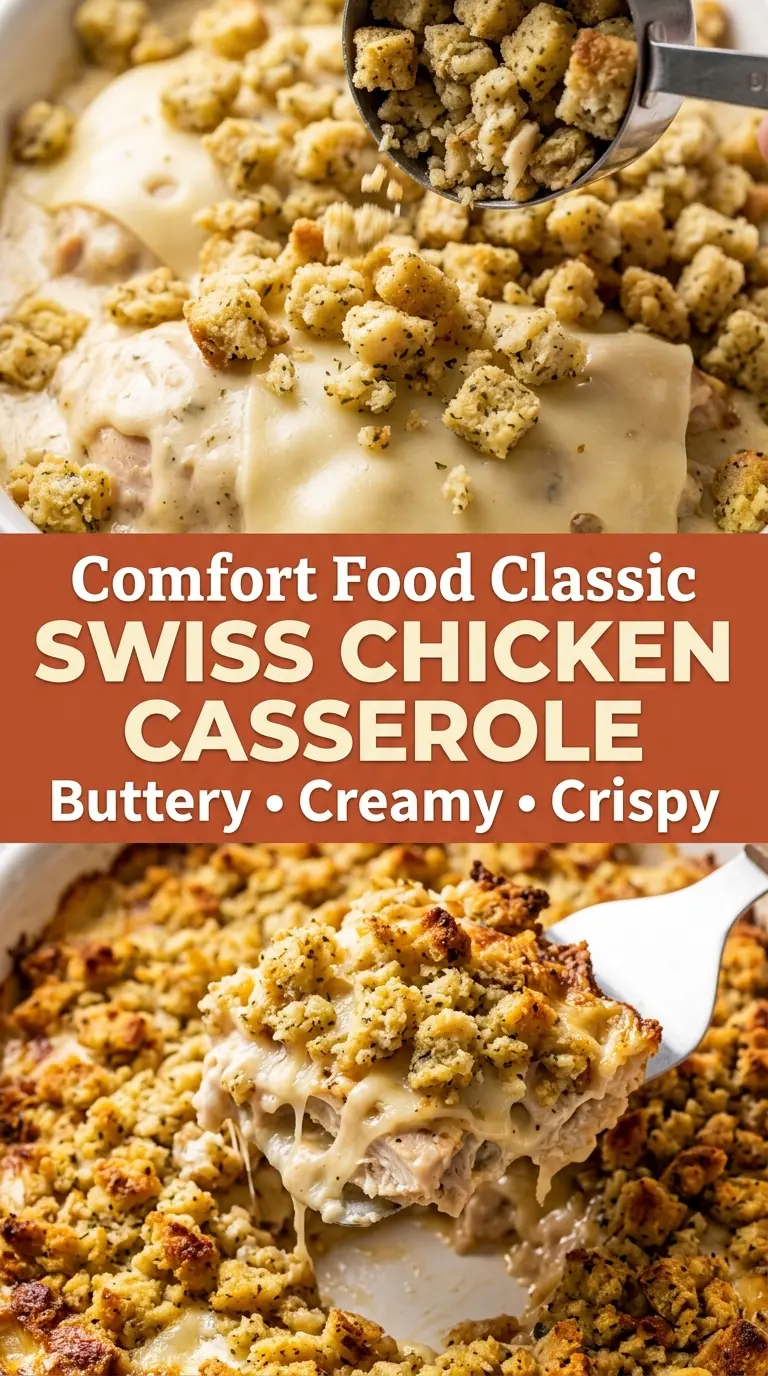
Swiss Chicken Casserole lands in that sweet spot between weeknight practical and old-school comforting: tender chicken tucked under melted Swiss, a creamy sauce that stays smooth, and a buttery stuffing topping that turns crisp and golden in the oven. The best version isn’t heavy or soggy. It gives you a clean contrast between the soft, savory filling and the toasted crumbs on top.
What makes this casserole work is the layering. The cheese sits directly on the chicken, so it melts into the meat instead of disappearing into the sauce, and the sour cream lightens the condensed soup just enough to keep the filling creamy without turning gluey. The stuffing mix goes on last with melted butter, which helps it brown instead of steaming. That little detail is what keeps the top from going pale and soft.
Below, you’ll find the timing that keeps the chicken juicy, the one texture cue that tells you the casserole is ready, and a few useful swaps if you need to work with what’s already in the pantry.
The sauce stayed creamy all the way through baking and the stuffing topping got perfectly crisp instead of soggy. I added the parsley at the end like suggested and it made the whole dish taste brighter.
Pin this Swiss Chicken Casserole for a creamy chicken dinner with a crisp stuffing topping and no fuss prep.
The Trick to Keeping the Chicken Juicy Under a Crisp Topping
Most casseroles dry out because the chicken cooks too long while the topping keeps browning. This version avoids that by using a creamy layer over the cheese, which acts like insulation and helps the chicken stay tender while the oven finishes the stuffing. The other part that matters is chicken thickness. If one breast is much thicker than the others, it will still be waiting on the thickest piece while the thinner ones go past juicy.
Slicing or pounding the breasts to a more even thickness gives you a casserole that finishes at the same time from edge to center. The goal is a casserole that reaches 165°F without the chicken turning stringy and the top turning dark before the middle is done.
What Each Layer Is Doing in This Casserole
- Swiss cheese — This gives the casserole its signature melty, nutty layer. Pre-sliced cheese is fine here, but it should cover the chicken as evenly as possible so the sauce doesn’t sit directly on bare meat.
- Condensed cream of chicken soup — This is the backbone of the sauce. It brings body and salt, and the sour cream loosens it into a smoother, richer layer. If you swap it, use another condensed cream soup rather than a thin homemade sauce, which can split or run.
- Sour cream — This adds tang and keeps the filling from tasting flat. Full-fat gives the smoothest result, but light sour cream works if that’s what you keep on hand.
- Herb-seasoned stuffing mix — This is what gives you the crisp, savory topping. Breadcrumbs can work in a pinch, but they won’t have the same seasoned flavor or the same bulky, craggy finish.
- Melted butter — Butter coats the stuffing crumbs so they bake up toasted instead of dry. If the topping looks dusty before it goes in the oven, it won’t crisp evenly.
Building the Casserole So the Top Browns and the Middle Stays Creamy
Seasoning and Arranging the Chicken
Lay the chicken in a single layer so the pieces cook evenly and the sauce can settle around them. Season the chicken before anything else goes on, because once the cheese and sauce are layered, you won’t be able to correct bland meat later. If the breasts are very thick, give them a quick pound to even them out. That cuts down on the chance of dry edges and an underdone center.
Layering the Cheese and Cream Mixture
Place the Swiss directly over the chicken so it melts into the meat as the casserole bakes. Whisk the soup, sour cream, milk, garlic powder, and onion powder until the mixture looks smooth and pourable, then spread it across the cheese without stirring it into the layers below. If the sauce seems too thick to spread, a tablespoon or two more milk will loosen it. The texture you want is creamy and spoonable, not runny.
Getting the Topping Golden
Toss the stuffing mix with melted butter until every crumb looks lightly coated. Dry patches turn pale in the oven, so this step matters. Scatter the mixture over the top instead of pressing it down; packed crumbs steam, while loose crumbs toast. Bake uncovered until the topping is deep golden and the center of the chicken reads 165°F at the thickest point. Let it rest a few minutes before serving so the sauce settles instead of spilling out immediately.
How to Adapt Swiss Chicken Casserole Without Losing the Texture
Make It Gluten-Free
Use a certified gluten-free condensed soup and swap the stuffing mix for a gluten-free seasoned breadcrumb topping. The casserole still bakes up creamy, but the topping will be a little less craggy and more crumb-like. Butter still matters here because it helps the crumbs brown instead of drying out.
Use Different Cheese
Gruyère, provolone, or mozzarella will all melt well if Swiss isn’t your favorite. Swiss gives the most classic flavor, while provolone tastes milder and mozzarella leans softer and stretchier. Pick a cheese that melts smoothly, not one that turns oily under heat.
Make It a Little Lighter
Light sour cream works, and you can use reduced-sodium soup if you want a less salty result. The casserole will still be creamy, though the sauce won’t taste quite as rich. Don’t cut the butter in the topping too far or the top will bake up dry and sandy instead of crisp.
Assemble Ahead for Tonight’s Dinner
You can assemble the casserole earlier in the day, cover it, and refrigerate it before baking. Hold the buttery stuffing topping separately until right before it goes in the oven so it stays crisp. A cold baking dish adds a few minutes to the bake time, so check the chicken at the thickest point rather than relying only on the clock.
Storage and Reheating
- Refrigerator: Store leftovers in an airtight container for up to 3 days. The stuffing topping softens as it sits, but the flavor stays good.
- Freezer: Freeze in portions for up to 2 months. The creamy layer can separate a little after thawing, so expect a softer texture, not the same oven-fresh finish.
- Reheating: Reheat covered in a 325°F oven until hot through. The microwave works in a pinch, but it turns the topping soft fast, so the oven gives you the best chance at bringing back some texture.
Questions I Get Asked About This Recipe
Swiss Chicken Casserole
Ingredients
Equipment
Method
- Preheat the oven to 375°F and lightly grease a 9×13-inch baking dish. This helps prevent sticking and starts the oven at the right temperature.
- Season the chicken breasts evenly with salt and black pepper. Ensure the seasoning is distributed across the full surface area.
- Arrange the chicken in a single layer in the prepared baking dish. Keep the pieces spaced so they bake evenly.
- Layer the Swiss cheese over the chicken, slightly overlapping the slices when necessary. Cover the chicken so the cheese melts into the top layer.
- Whisk the cream of chicken soup, sour cream, whole milk, garlic powder, and onion powder until smooth. Mix until no streaks remain for a uniform sauce.
- Spread the creamy mixture evenly over the Swiss cheese and chicken. Cover all exposed areas so the casserole bakes creamy throughout.
- Combine the herb-seasoned stuffing mix with melted butter, then toss until the crumbs are evenly coated. Make sure every crumb looks lightly buttered.
- Scatter the buttery stuffing mixture evenly across the casserole. Create an even layer for a golden, crisp top.
- Bake uncovered for 35–45 minutes at 375°F until the topping is golden and the chicken reaches 165°F in the thickest portion. Look for a deep golden crust and verify doneness with the internal temperature.
- Rest the casserole for 5 minutes before serving. This lets the sauce thicken slightly so each scoop holds together.
- Finish with chopped parsley. Sprinkle just before serving for a fresh green contrast.
