
Golden potatoes and juicy steak bites hit their stride in the same pan here, and that’s what makes this dinner worth repeating. The potatoes crisp at the edges while the steak stays tender, and the garlic-herb butter pulls everything together at the end so every bite tastes coated instead of greasy. It’s hearty without feeling fussy, and the skillet does the work of building flavor for you.
The part that makes this version dependable is the timing. The potatoes get a head start so they can turn deeply golden before the steak goes in, because steak cubes cook fast and will dry out if they’re left waiting on stubborn potatoes. Then the butter, garlic, rosemary, and thyme go in only after the heat comes down, which keeps the garlic from burning and the butter from turning bitter.
Below, I’ll walk through the searing order that keeps both components on track, plus a few swaps that still give you a good dinner when you’re working with what’s in the kitchen.
The potatoes got those crisp, browned edges I always chase, and the steak stayed tender because I didn’t crowd the pan. That garlic butter at the end tied it all together and my husband went back for seconds before I even sat down.
Save this one-pan steak and potatoes dinner for the nights when you want crisp potatoes, tender beef, and a garlicky butter finish with almost no cleanup.
The Potatoes Need the Pan First, or They Never Catch Up
Steak bites cook fast. Baby potatoes do not. That gap is the whole reason some skillet versions end up with either overcooked beef or pale, underdone potatoes. Starting the potatoes first gives them time to develop real color and tenderness before the steak enters the pan for its short, high-heat sear.
The other thing people miss is crowding. If the potatoes are packed in too tightly, they steam and turn soft instead of crisping. Give them contact with the skillet, let them sit long enough to brown on the cut sides, and don’t move them every thirty seconds. You’re looking for a deep golden crust on the outside and a knife-tender center that still holds its shape.
- Cast-iron or heavy skillet — This dish needs steady heat. A thin pan cools down the moment the potatoes go in, and that’s when browning stalls.
- Sirloin steak — Sirloin holds up well to quick searing and stays tender when cut into cubes. Ribeye works too, but there’s no need to pay for a premium cut here.
- Baby Yukon Gold potatoes — Their creamy texture and thin skin make them perfect for skillet cooking. Russets fall apart more easily, and waxy potatoes can stay a little too firm unless you give them extra time.
- Fresh garlic, rosemary, and thyme — Fresh herbs bloom into the butter and give the dish its finish. Dried herbs work in a pinch, but use less and add them earlier so they have time to soften.
Building the Skillet in the Right Order
Getting Color on the Potatoes
Heat the olive oil and the first tablespoon of butter until the butter foams, then lay the potatoes cut-side down in a single layer. The pan should sound active when they hit the surface. If they sputter weakly, the skillet is too cool and the potatoes will absorb fat instead of browning. Let them sit long enough to form a crust, then turn them occasionally until they’re golden outside and easy to pierce with a fork.
Searing the Steak Without Crowding It
Move the potatoes out, turn the heat up, and add the steak in one layer. The goal here is a fast sear, not a slow cook. If the cubes are touching too much, they’ll steam and grey out, so work in batches if needed. Leave them alone for about two minutes so the first side can brown, then turn them and cook just until they reach your preferred doneness.
Finishing With Garlic Butter
Turn the heat down before adding the remaining butter, garlic, rosemary, and thyme. That lower heat keeps the garlic fragrant instead of scorched. When the butter starts foaming, return the potatoes and toss everything for about a minute so the steak and potatoes pick up the herbs without overcooking. Finish with parsley off the heat so it stays bright instead of sinking into the butter.
How to Adapt This for Different Kitchens and Different Eaters
Dairy-Free Version That Still Tastes Rich
Swap the butter for a good dairy-free butter substitute or use all olive oil and finish with a little extra chopped parsley. You lose some of the classic richness, but the garlic and herbs still carry plenty of flavor, and the potatoes will still brown nicely.
Using a Different Cut of Beef
Ribeye gives you a softer, richer bite, while strip steak keeps a firmer chew. Tender cuts work best because they only spend a few minutes in the pan. Tougher cuts like chuck won’t have time to relax, so they’ll come out chewy instead of juicy.
Making It With Sweet Potatoes
Sweet potatoes work, but they cook faster and break down more easily than Yukon Golds. Cut them into slightly larger chunks and watch for browned edges before the centers go too soft. The finished dish will lean sweeter, which works well with the garlic and rosemary.
Storage and Reheating
- Refrigerator: Store in an airtight container for up to 3 days. The potatoes soften a bit, but the flavor holds up well.
- Freezer: Freezing isn’t ideal. The potatoes turn mealy and the steak loses some of its texture after thawing.
- Reheating: Reheat in a skillet over medium heat with a small splash of oil or a dab of butter until warmed through. The microwave works in a pinch, but it softens the potatoes and can push the steak past tender.
Answers to the Questions Worth Asking
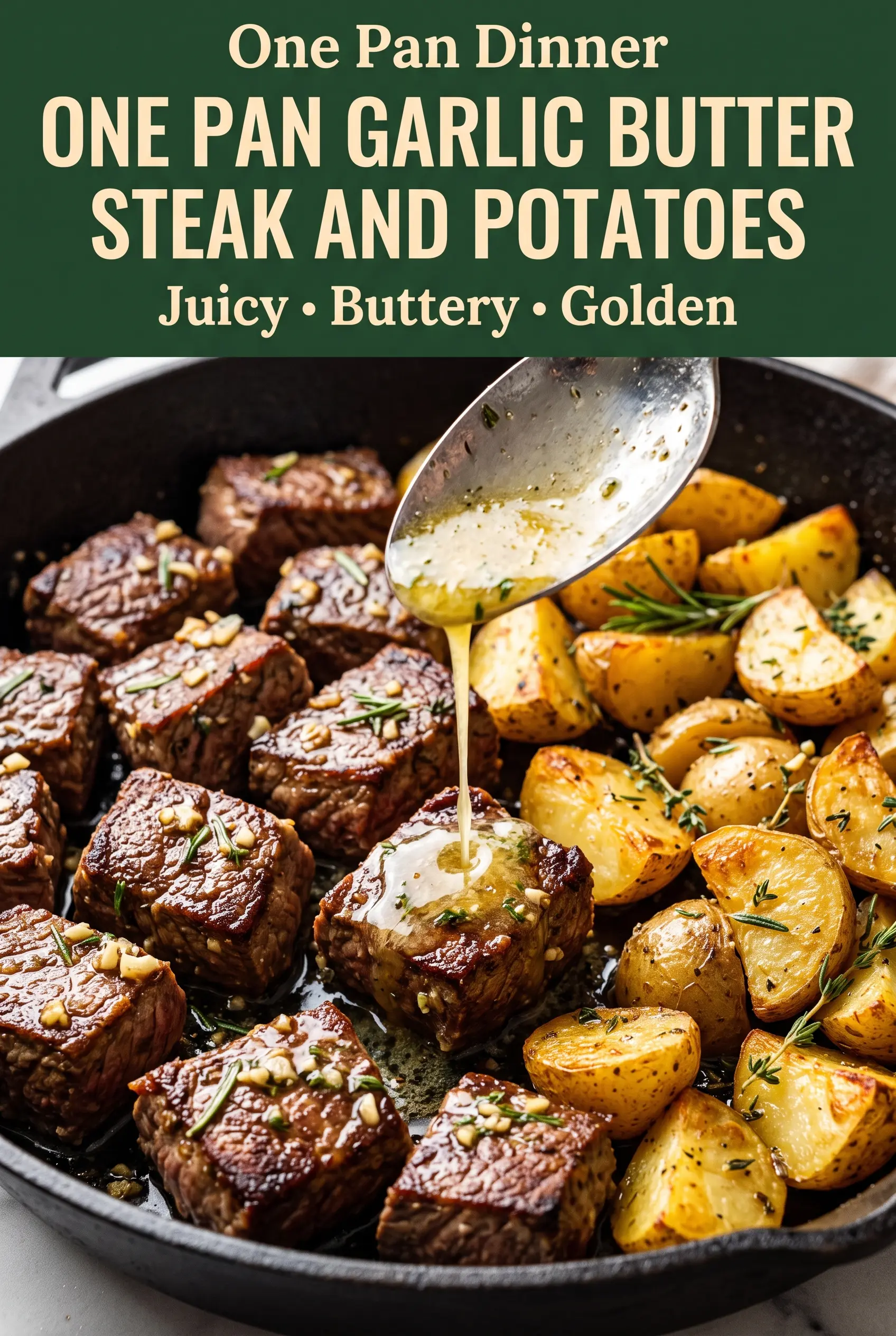
One Pan Garlic Butter Steak and Potatoes
Ingredients
Equipment
Method
- Season the steak pieces with 1/2 tsp salt, black pepper, and smoked paprika, then let them rest while you prep the potatoes.
- Heat 1 tbsp olive oil and 1 tbsp butter in a large cast-iron or heavy skillet over medium-high heat.
- Add the quartered potatoes cut-side down and season with the remaining 1/2 tsp salt and Italian seasoning.
- Cook the potatoes for 12–15 minutes, turning occasionally, until golden outside and fork-tender, then transfer them to a plate.
- Increase the heat to high, add the remaining 1 tbsp olive oil to the same skillet, and let it heat until shimmering.
- Add the steak in a single layer and sear for about 2 minutes without moving it, then turn and cook for another 1–3 minutes for your preferred doneness.
- Reduce the heat to medium-low, add the remaining 3 tbsp butter, garlic, rosemary, and thyme, and let the butter foam.
- Return the potatoes to the skillet and toss the steak and potatoes in the foaming garlic-herb butter for about 1 minute.
- Remove from the heat and rest the steak for 3–5 minutes.
- Finish with chopped parsley and spoon the garlic butter from the skillet over the steak and potatoes before serving.
