
Fork-tender beef, soft potatoes, and sweet root vegetables make this slow cooker beef stew feel like a full meal in one pot. The gravy comes out thick and savory, not watery, and the beef stays rich instead of turning dry and stringy. It’s the kind of stew that tastes like it took all day because, in a way, it did — just with almost no hands-on work.
The part that makes this version work is the browning. A slow cooker can soften beef, but it can’t build the deep, roasted flavor you get from searing the meat first. Coating the beef lightly in flour also helps the gravy thicken as it cooks, so you’re not relying on a heavy roux at the end. The tomato paste and Worcestershire don’t make it taste tomatoey or sharp; they just push the broth into deeper, rounder flavor.
Below, I’ve included the one timing detail that keeps the vegetables from going mushy, plus a few ways to adapt the stew depending on what you’ve got on hand. The whole pot is sturdy, flexible, and worth keeping in regular rotation.
The beef came out fall-apart tender and the gravy thickened up perfectly after the cornstarch went in. My husband kept going back for seconds, and the parsnips gave it such a good depth of flavor.
Slow Cooker Beef Stew with Root Vegetables is the kind of cozy dinner worth pinning for a night when you want deep flavor and fork-tender beef without babysitting the stove.
The Browning Step That Keeps the Stew from Tasting Flat
A slow cooker makes beef tender, but tenderness and flavor are not the same thing. If you skip the browning step, you lose the browned bits that cling to the pan, and those bits are the difference between broth that tastes seasoned and broth that tastes cooked. The beef only needs a few minutes per side until it gets a deep brown crust; if it looks pale and gray, it’s not ready yet.
Flouring the beef before searing does two jobs here. It helps the meat brown a little more evenly, and it gives the gravy body as the stew cooks. The trick is to keep the coating light. Too much flour turns the sauce pasty, especially after seven or eight hours in the slow cooker.
What Each Ingredient Is Actually Doing in This Stew
The ingredient list looks straightforward, but a few pieces carry most of the weight.
- Beef chuck roast — This is the cut that softens into spoon-tender pieces without falling apart into shreds. Other leaner stewing cuts can work, but they tend to dry out before they turn silky.
- Parsnips — They bring a gentle sweetness that balances the savory broth. If you don’t have them, use more carrots, but the stew will taste a little less layered.
- Tomato paste — It deepens the broth and gives the gravy a darker, richer base. Cooked into the liquid, it adds body without making the stew taste like tomato sauce.
- Worcestershire sauce — A small amount gives the stew that slow-cooked, beefy edge. There isn’t a perfect one-to-one substitute, but soy sauce plus a splash of balsamic can stand in if needed.
- Baby potatoes — Their waxy texture helps them hold shape through the long cook. If you use russets, they’ll break down more and thicken the stew, which changes the texture in a good but different way.
Building the Stew So the Vegetables Stay Hearty
Getting the Sear Right
Heat the oil until it shimmers before the beef goes in. If the pan isn’t hot enough, the meat will steam and you’ll miss the crust that gives the stew depth. Brown the beef in batches so the pieces have room around them; crowded meat releases moisture, and moisture is the enemy of browning.
Softening the Onion and Garlic
Once the beef comes out, cook the onion in the same skillet until it starts to turn translucent and pick up the color left behind from the meat. That’s where the flavor lives. Add the garlic for just 30 seconds. Any longer and it can turn harsh, especially after hours in the slow cooker.
Layering the Slow Cooker
Put the potatoes, carrots, parsnips, and celery around the beef, not buried under it. That helps them cook evenly instead of collapsing at the bottom. Pour the broth mixture over everything, then tuck in the bay leaves. Keep the lid on the whole time; every peek lets heat escape and stretches out the cooking.
Thickening at the End
Mix the cornstarch with cold water before stirring it in. If you add cornstarch straight to the hot stew, it clumps instantly and stays that way. Stir it in during the last 20 to 30 minutes and let the stew bubble gently until the broth turns glossy and coats the back of a spoon.
How to Adapt This for Different Diets and Different Kitchens
Make It Gluten-Free
Swap the all-purpose flour for a gluten-free flour blend or leave it off and rely on the cornstarch at the end for thickening. The stew will still taste rich, but the gravy will be slightly lighter in body unless you let it cook uncovered for the last 20 minutes.
Use Red Wine for a Deeper Braise
Replace 1 cup of the beef broth with dry red wine if you want a darker, more braised flavor. Let it simmer for a minute with the onion before everything goes into the slow cooker so the sharp alcohol cooks off and the sauce stays balanced.
Skip the Parsnips and Double the Carrots
If parsnips aren’t your thing, use extra carrots and add a pinch more thyme. You’ll lose a little of the earthy sweetness, but the stew will still land in the same cozy place.
Lower-Carb Version
Swap the potatoes for extra celery, mushrooms, or turnips if you want a lower-carb stew. Turnips hold up better than cauliflower in the long cook and keep the stew hearty instead of watery.
Storage and Reheating
- Refrigerator: Store in an airtight container for up to 4 days. The gravy will thicken as it chills.
- Freezer: It freezes well for up to 3 months. Cool it completely first, then freeze in portions; the potatoes may soften a little after thawing, but the stew still reheats well.
- Reheating: Warm gently on the stove over medium-low heat or in the microwave in short bursts, stirring between each one. Add a splash of broth or water if the gravy has set up too firmly. High heat can make the beef stringy and split the sauce.
The Things That Trip People Up With This Dish
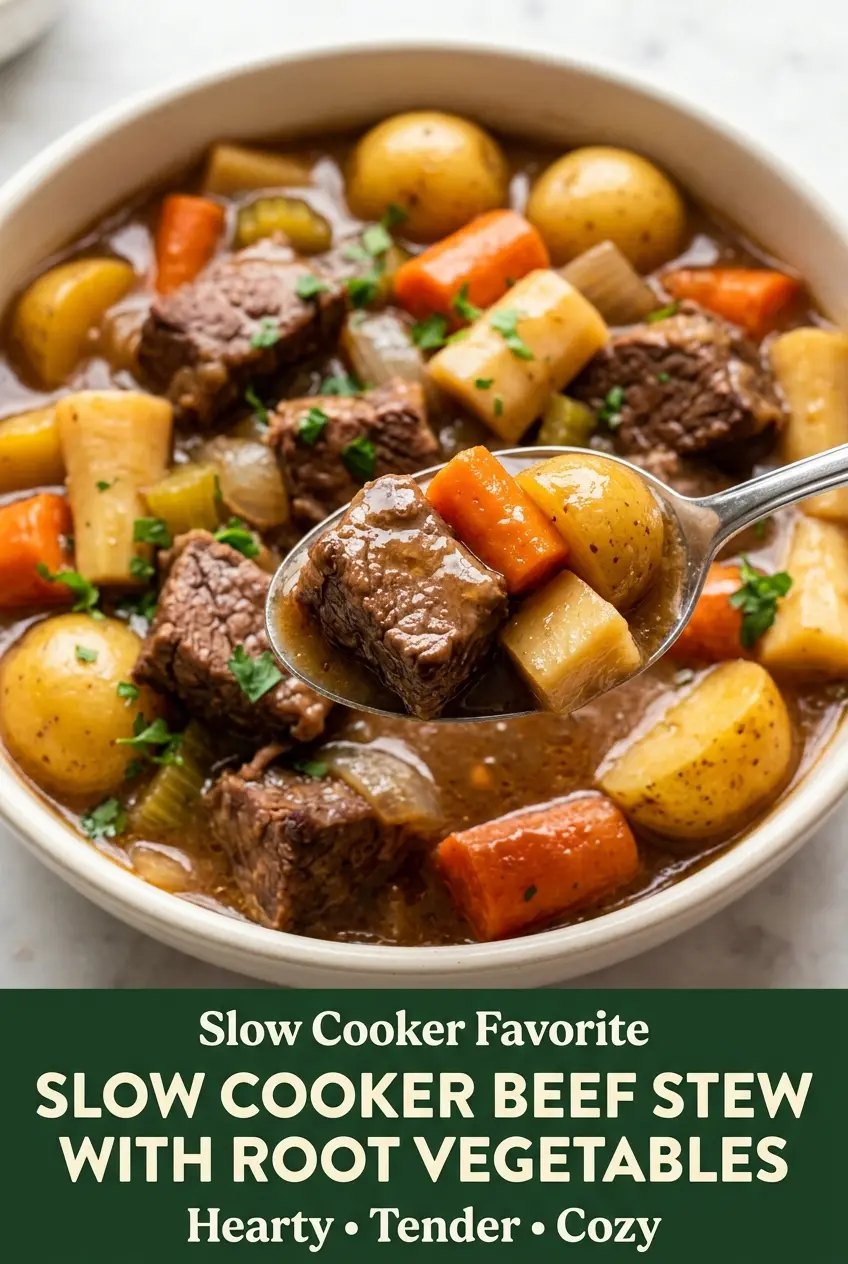
Slow Cooker Beef Stew with Root Vegetables
Ingredients
Equipment
Method
- Season the beef cubes with kosher salt and black pepper, then toss them with all-purpose flour until lightly coated.
- Set the coated beef aside while you prepare the slow cooker and aromatics.
- Heat olive oil in a large skillet over medium-high heat until shimmering.
- Brown the beef in batches for 2–3 minutes per side, then transfer the browned beef to the slow cooker.
- Add the diced onion to the same skillet and cook for 3 minutes, stirring as needed.
- Stir in the minced garlic and cook for 30 seconds, until fragrant, then transfer the onion-garlic to the slow cooker.
- Add the halved baby potatoes, thick-cut carrots, thick-cut parsnips, and sliced celery around the beef in the slow cooker.
- Whisk the low-sodium beef broth, tomato paste, Worcestershire sauce, dried thyme, dried rosemary, and bay leaves together, then pour into the slow cooker.
- Cover and cook on LOW for 7–8 hours, or HIGH for 4–5 hours, until the beef is fork-tender and the root vegetables are cooked through.
- Mix cornstarch with cold water until smooth.
- Stir the cornstarch slurry into the stew during the final 20–30 minutes of cooking.
- Remove the bay leaves, then sprinkle with chopped fresh parsley and serve hot.
