
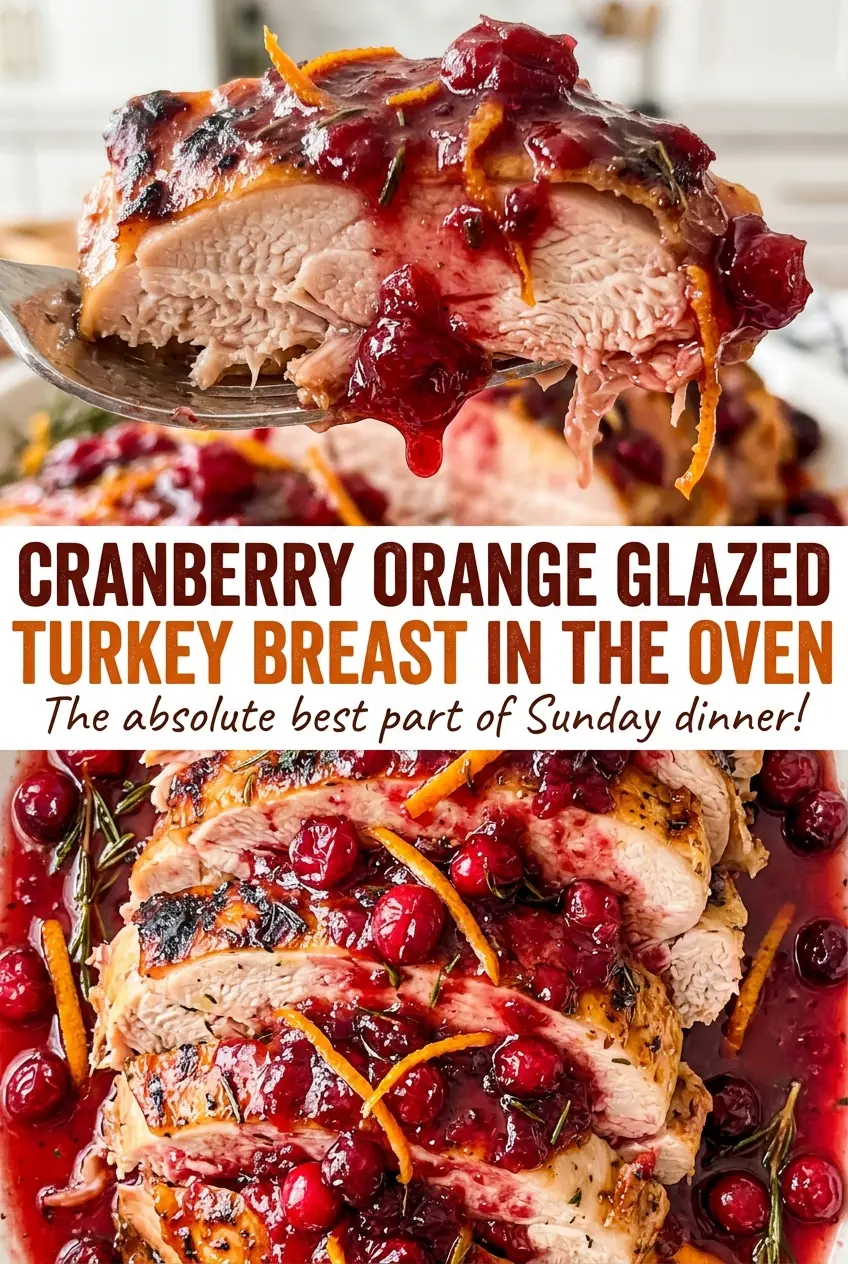
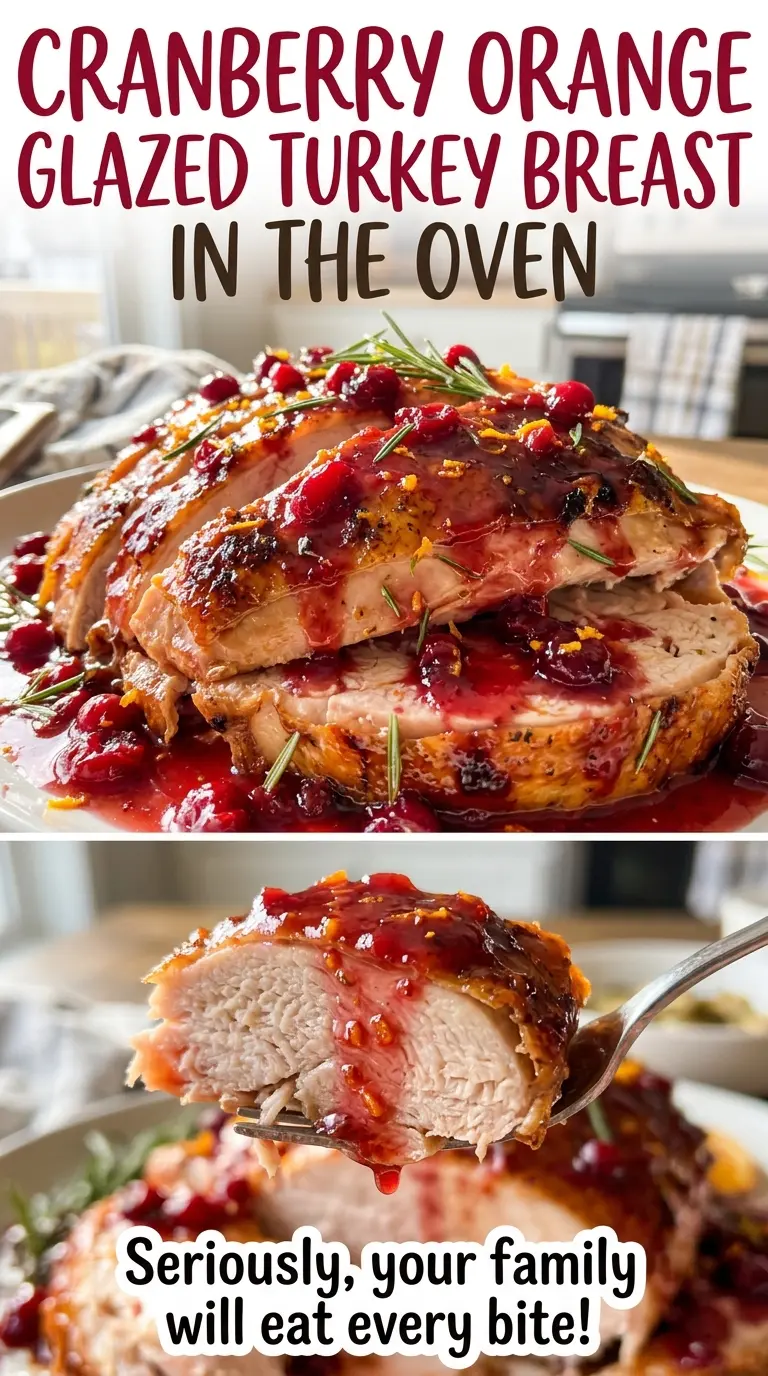
The first cranberries split in the saucepan with little pops, and the whole glaze turns a deep, glossy red. That’s when this cranberry orange glazed turkey breast starts to feel like more than a roast with a sauce on the side. The fruit cooks down around the turkey, while the reserved portion brings a bright, tart-sweet finish to each slice.
I like orange zest here because it gives the glaze a fragrant lift without making it taste like candy. Dijon adds a quiet savory edge, too, so the cranberries stay front and center. The breast is seasoned simply with thyme, salt, and pepper, leaving room for that ruby glaze to shine beside tender slices of turkey.
Kitchen Note
I set the serving glaze aside in a clean bowl before the brush goes anywhere near the turkey. That way, the portion for the table stays separate from the glaze that touches the roast.
Save this cranberry orange glazed turkey breast for a roast with tangy fruit, savory thyme, and a separate spoonful of glaze for serving.
Why the Cranberry Glaze Goes on Near the End
A sugary glaze needs a shorter turn in the oven than the turkey does. Put it on before the long, uncovered roast and the sugars can darken too far before the center of the breast is cooked. This method gives the skin time to roast first, then adds the cranberry mixture for the final stretch, when it can cling to the surface without spending the entire cook in the heat.
The timing also makes it easier to judge the finish. The breast first roasts until the thickest part reaches 140°F to 145°F; then the glaze goes on and the turkey returns to the oven until it reaches 165°F. The glaze gets glossy and concentrated in that last stage, while the thermometer—not the color of the cranberry coating—tells you when the meat is ready.
That order matters especially with a whole bone-in breast, since its shape and thickness affect how quickly the center cooks. Keep the pan uncovered as it roasts, and brush the glaze over the turkey only after the first temperature check. You’ll get a bright coating instead of a glaze that has been baking for the full roast.
What Gives This Cranberry-Orange Glaze Its Balance
- Cranberries — Fresh or frozen berries both work in the saucepan. Their natural tartness keeps the glaze from tasting flat, and the berries give it body as they burst and cook down.
- Sugar — It softens the sharp edge of the cranberries and helps the mixture thicken. Keep stirring as the fruit simmers so the sugar dissolves evenly rather than settling on the bottom of the pan.
- Orange juice and zest — The juice loosens the fruit into a spoonable glaze, while finely grated zest brings a more vivid orange aroma. Take care to grate only the colored outer peel; the white pith underneath tastes bitter.
- Dijon mustard — A spoonful gives the sweet fruit a mild savory bite. It shouldn’t make the finished glaze taste strongly of mustard; if you want a mustard-free version, leave it out and expect a fruitier, sweeter result.
- Butter — Stirring it in off the heat gives the finished glaze a smooth sheen and rounds out the tart fruit. For a dairy-free glaze, omit it; the cranberry mixture will be less glossy but still spoonable.
- Bone-in, skin-on turkey breast — The bone and skin are part of the cooking setup here, and the stated timing is for a thawed breast in this size range. Pat the skin dry before seasoning so excess surface moisture doesn’t get in the way of roasting.
- Olive oil, thyme, black pepper, and kosher salt — The oil helps the seasonings coat the surface, and dried thyme brings an earthy note that suits the fruit. Spread the seasonings evenly over the breast so the first bites and the edges aren’t left under-seasoned.
How to Roast the Breast Before the Glaze Sets
Simmer the Cranberries Until They Burst
Combine the cranberries, sugar, orange juice, orange zest, and Dijon mustard in a medium saucepan. Bring the mixture to a simmer over medium heat, stirring often, and cook for 10 to 15 minutes. You’re looking for burst berries and a thicker, spoon-coating mixture rather than a thin pool of juice. Take the pan off the heat, stir in the butter, and transfer 1/3 cup of glaze to a clean bowl before using the rest on the turkey.
Season the Thawed Breast Evenly
Heat the oven to 350°F while you prepare the turkey. Pat the thawed breast dry, rub it all over with olive oil, then season it evenly with kosher salt, black pepper, and dried thyme. Set it skin-side up in a 9×13-inch roasting pan. A level, skin-side-up position helps the surface roast evenly; don’t tuck the skin underneath the breast.
Roast First, Then Brush on the Glaze
Roast the turkey for 1 1/4 to 1 3/4 hours, checking the thickest part with an instant-read thermometer without touching bone. At this first check, the thermometer should register 140°F to 145°F. Brush all the glaze except the reserved portion over the turkey, covering the top and sides as evenly as you can. Return the pan to the oven for 20 to 30 minutes, until the thickest part registers 165°F.
Rest Before Carving
Move the turkey to a cutting board and tent it loosely with foil. Let it rest for 20 minutes before carving so the slices have time to settle rather than spilling their juices onto the board. Serve the reserved glaze alongside the carved breast, where its tart, bright flavor stands out against the roasted meat.
Two Simple Ways to Adapt the Glaze, Plus Storage
Make the glaze dairy-free
Leave out the butter when you finish the cranberry mixture. The glaze won’t have quite the same sheen or rounded richness, but the cranberries, orange, and Dijon still make a thick, tangy coating for the turkey.
Skip the Dijon for a fruitier glaze
Omit the Dijon mustard if you prefer to keep the glaze focused on cranberry and orange. You’ll lose its savory edge, so the fruit will come across sweeter and more direct.
Storage and Reheating
- Refrigerator: Store carved turkey in a covered container for 3 to 4 days. The skin will soften after chilling, but the meat stays tender when stored promptly.
- Freezer: Freeze carved portions in an airtight freezer-safe container for up to 3 months. Keep extra glaze in a separate sealed container so you can add it after reheating.
- Reheating: Cover slices and warm them in the microwave in short intervals, or heat them covered in the oven, until they reach 165°F. Avoid reheating uncovered for a long stretch, which dries out lean breast meat.
Questions That Come Up While Roasting This Turkey
Cranberry Orange Glazed Turkey Breast in the Oven
Ingredients
Equipment
Method
- Combine the cranberries, sugar, orange juice, orange zest, and Dijon mustard in a medium saucepan.
- Bring the mixture to a simmer over medium heat and cook for 10 to 15 minutes, stirring often, until the cranberries burst and the mixture thickens.
- Remove the saucepan from the heat.
- Stir in the butter.
- Transfer 1/3 cup of glaze to a clean bowl to reserve for serving.
- Preheat the oven to 350°F.
- Pat the turkey dry.
- Rub the turkey all over with the olive oil.
- Season the turkey evenly with the salt, pepper, and thyme.
- Place the turkey skin-side up in a 9x13-inch roasting pan.
- Roast for 1 1/4 to 1 3/4 hours, until an instant-read thermometer inserted into the thickest part without touching bone registers 140°F to 145°F.
- Brush all the glaze except the reserved portion over the turkey.
- Roast for 20 to 30 minutes, until the thickest part registers 165°F on an instant-read thermometer.
- Transfer the turkey to a cutting board.
- Tent the turkey loosely with foil and rest for 20 minutes before carving.
- Carve the turkey.
- Serve with the reserved glaze.
