
At the end of the first 20 minutes, the roast’s surface has begun to brown and the garlic and rosemary smell warm and savory. That initial blast gives a boneless rib roast a head start on its crust; after that, the oven temperature comes down, and the center cooks more gently. I keep an instant-read thermometer nearby because a roast can take different amounts of time depending on its shape and the oven.
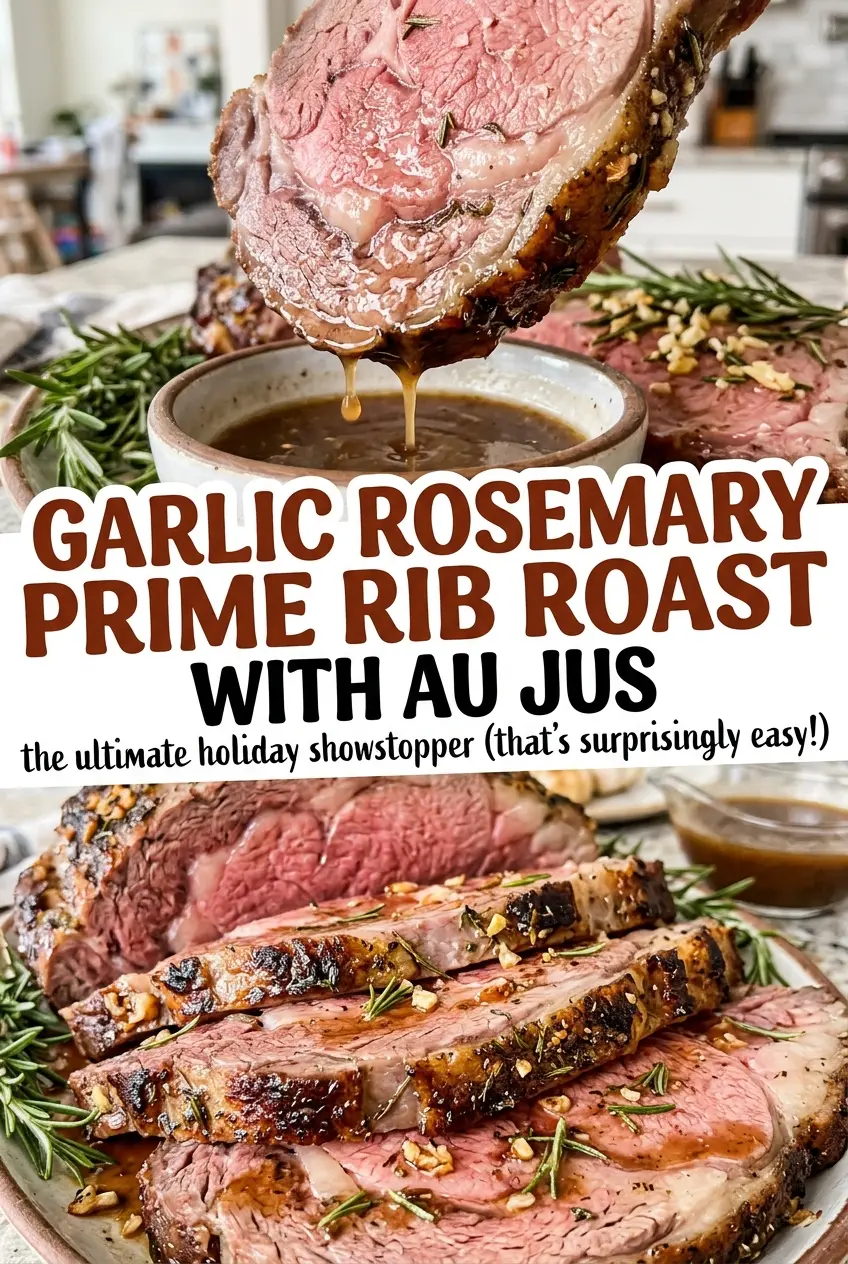
That’s the rhythm behind this garlic rosemary prime rib roast with au jus: a hot start, a steadier finish, then a full rest before slicing. The pan drippings become a quick red-wine jus with beef broth and Worcestershire, so the sauce tastes connected to the roast rather than like something poured from a carton. Rosemary and black pepper cling to the seasoned exterior, while the warm au jus brings a savory finish to each slice.
Kitchen Note
Separate the fat from the pan juices before you measure for the au jus. The sauce needs those concentrated drippings, not a spoonful of rendered fat that will leave it greasy.
Save this garlic rosemary prime rib roast for a browned herb crust and red-wine au jus made from the pan drippings.
Why the Roast Starts at 450°F, Then Drops to 325°F
A prime rib roast is thick, so the outside and center don’t cook at the same pace. The brief 450°F start gets browning underway on the exposed surface; holding that high heat for the entire roast would keep pushing the exterior while the center is still coming up to temperature. Lowering the oven after 20 minutes gives the inside time to finish without extending the high-heat stage.
That change in temperature is deliberate, not a way to make up for lost time. The roast doesn’t need a longer blast if the crust looks lighter than you expected at the end of those 20 minutes. Once the oven is lowered, let the thermometer—not the color of the outside or the clock alone—tell you when the center has reached the target. This is especially useful with a roast that’s a little wider or narrower than another five-pound roast; weight doesn’t tell the whole story about its shape.
What the Roast, Herbs, and Drippings Bring to the Table
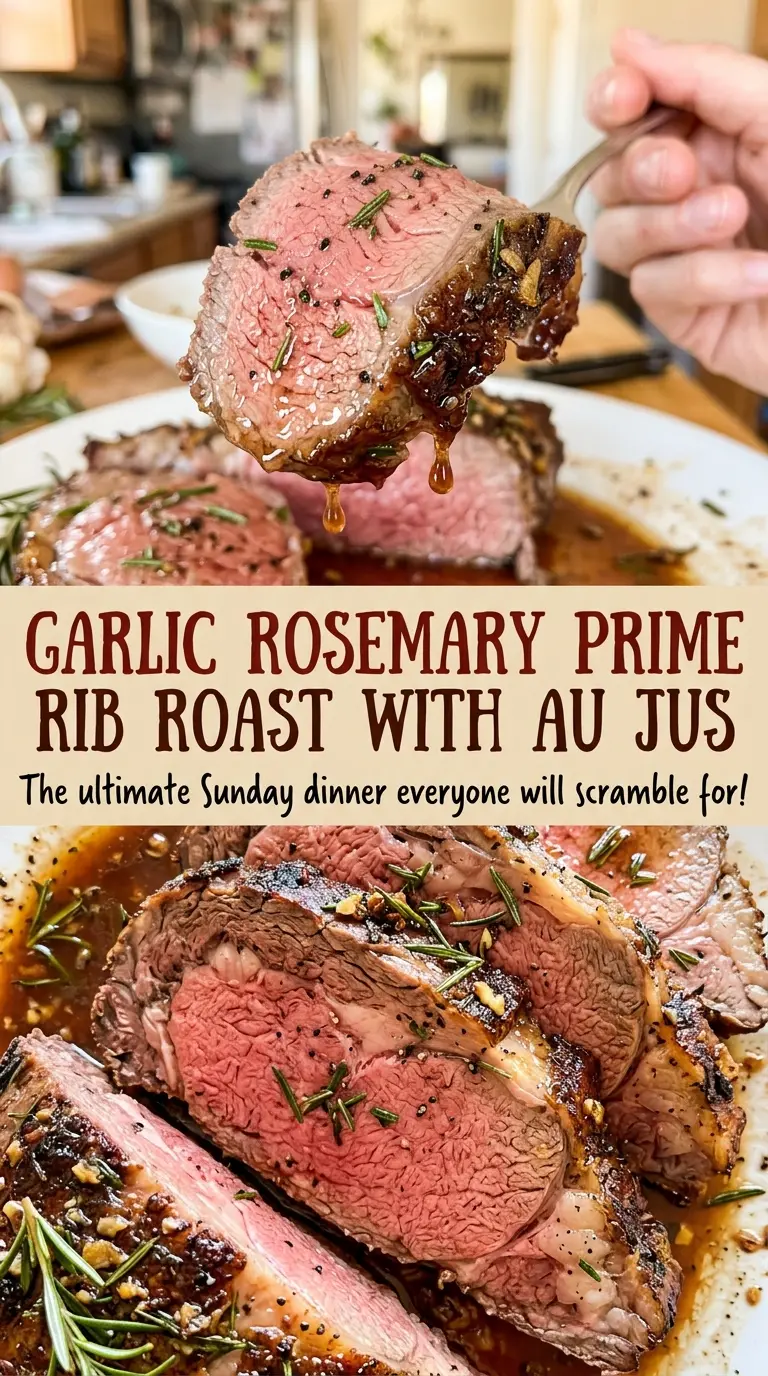
- Boneless beef rib roast — Its marbling gives the slices richness, and tying helps the roast hold a compact shape as it cooks. A leaner cut such as eye of round isn’t a direct substitute; it won’t have the same marbling or eating texture. Choose a roast with even thickness so the ends and center cook at a more similar rate.
- Garlic and fresh rosemary — Minced garlic spreads through the oil instead of sitting in a few large pieces, and chopped fresh rosemary gives the crust a lively herbal aroma. Fresh rosemary is worth using here; dried rosemary is a workable pantry swap, but crush it finely and use about one-third as much because its flavor is concentrated.
- Olive oil — The oil helps the garlic, rosemary, salt, and pepper coat the roast evenly. There’s no need for an expensive bottle; a basic olive oil works well. A neutral cooking oil can stand in if that’s what you have, though you’ll lose the faint olive aroma.
- Dry red wine — Reducing the wine before adding broth cooks off its raw edge and gives the jus depth and a little acidity. Use a dry wine you’d drink, not a sweet red; the latter can make the finished sauce taste oddly sweet.
- Low-sodium beef broth and Worcestershire — Low-sodium broth gives you better control because the drippings and Worcestershire also contribute savory, salty flavor. A standard carton is fine if that’s what you have, but taste the jus before serving rather than assuming it needs more seasoning. Worcestershire adds a tangy, savory note that plain broth alone won’t quite match.
Getting the Garlic-Rosemary Crust and Au Jus Right
Let the Roast Lose Its Chill
Take the tied roast out of the refrigerator and let it stand at room temperature for 1 hour. During that time, preheat the oven to 450°F with a rack positioned in the lower third. Stir the olive oil, minced garlic, chopped rosemary, kosher salt, and black pepper together in a small bowl. Rub the mixture over the roast, then set it fat side up on a rack in a 16×13-inch roasting pan.
Start with the Hot Roast
Roast at 450°F for 20 minutes. This first stage begins browning the outside, so keep the oven door closed as much as possible rather than letting heat escape. The garlic should be distributed through the oil and herbs, not left in thick clumps on the surface. After those 20 minutes, lower the oven temperature to 325°F.
Finish at 325°F and Rest
Continue roasting for 1 1/2 to 2 1/2 hours, until an instant-read thermometer inserted into the thickest part reads 145°F. The wide time range is why checking the center matters more than expecting the roast to finish at one exact minute. When it reaches the target, move it to a cutting board and loosely tent it with foil. Let it rest for 20 minutes before slicing.
Reduce the Wine, Then Build the Jus
Separate the fat from the pan drippings, then measure 2 tablespoons of the defatted drippings into a 2-quart saucepan. Add the dry red wine and simmer over medium heat for 3 to 5 minutes, until it has reduced by about half. Pour in the beef broth and Worcestershire, bring the mixture to a simmer, and cook for 15 to 20 minutes until slightly reduced and flavorful. Serve the warm jus alongside the sliced roast.
Simple Changes That Still Let the Roast Shine
Swap Fresh Thyme for Rosemary
Use chopped fresh thyme in place of the rosemary in the oil rub, keeping the same amount. Thyme gives the crust a softer, earthier herb flavor while the garlic and black pepper stay familiar.
Make the Au Jus Gluten-Free
Use beef broth labeled gluten-free and replace the Worcestershire with gluten-free tamari. The sauce will lean a little more savory and less tangy, but it still pairs well with the rosemary crust.
Skip the Red Wine
Replace the wine with an equal amount of low-sodium beef broth. The au jus will be less bright and won’t have the wine’s depth, but it will still pick up flavor from the pan drippings and Worcestershire.
Storage and Reheating
- Refrigerator: Refrigerate the roast and au jus in separate airtight containers within 2 hours. Use within 3 to 4 days; chilled beef will be firmer than it was freshly sliced.
- Freezer: Freeze slices tightly wrapped or in an airtight container, with the au jus in a separate freezer-safe container, for up to 2 to 3 months. The beef may be a little less juicy after thawing and reheating.
- Reheating: Warm slices gently in a covered skillet with some au jus over low heat, checking that leftovers reach 165°F. High heat dries the beef before it warms through, so avoid a hard simmer.
Questions That Come Up When Roasting Prime Rib
Garlic Rosemary Prime Rib Roast with Au Jus
Ingredients
Equipment
Method
- Remove the roast from the refrigerator and let it stand at room temperature for 1 hour.
- Preheat the oven to 450°F and position a rack in the lower third of the oven.
- Stir the olive oil, garlic, rosemary, salt, and pepper together in a small bowl.
- Rub the mixture over the roast.
- Set the roast, fat side up, on a rack in a 16x13-inch roasting pan.
- Roast for 20 minutes.
- Reduce the oven temperature to 325°F and continue roasting for 1 1/2 to 2 1/2 hours, until an instant-read thermometer inserted into the thickest part of the roast reads 145°F.
- Transfer the roast to a cutting board and loosely tent it with foil.
- Let the roast rest for 20 minutes.
- Separate the fat from the pan drippings.
- Measure 2 tablespoons of the defatted drippings into a 2-quart saucepan.
- Add the red wine and simmer over medium heat for 3 to 5 minutes, until reduced by about half.
- Add the beef broth and Worcestershire sauce.
- Bring to a simmer and cook for 15 to 20 minutes, until slightly reduced and flavorful.
- Serve with the sliced roast.
