
Pan-seared salmon and a Dijon cream sauce are a combination that never gets old, especially when the fish stays tender and the sauce turns silky instead of heavy. The salmon gets a fast seasoning with paprika and garlic powder, then a hot skillet does the rest, giving you crisp edges and a moist center without turning the fillets dry. The sauce brings sharp mustard, garlic, Parmesan, and a little lemon into balance, so every bite tastes rich but not flat.
What makes this version work is the order. The salmon cooks first and comes out of the pan before the sauce goes in, which keeps the fish from overcooking while the cream reduces. A splash of chicken broth loosens the browned bits on the bottom of the pan, and that’s where a lot of the flavor lives. Parmesan helps the sauce thicken, but the heat stays gentle so the sauce stays smooth.
Below, I’ve broken down the part that matters most: how to get the salmon seared without sticking, how to keep the sauce from turning grainy, and which swaps still hold up if you need to work with what’s already in the kitchen.
The salmon stayed flaky and the Dijon sauce thickened up beautifully without curdling. I served it over rice and my husband went back for seconds, which doesn’t happen often with fish in our house.
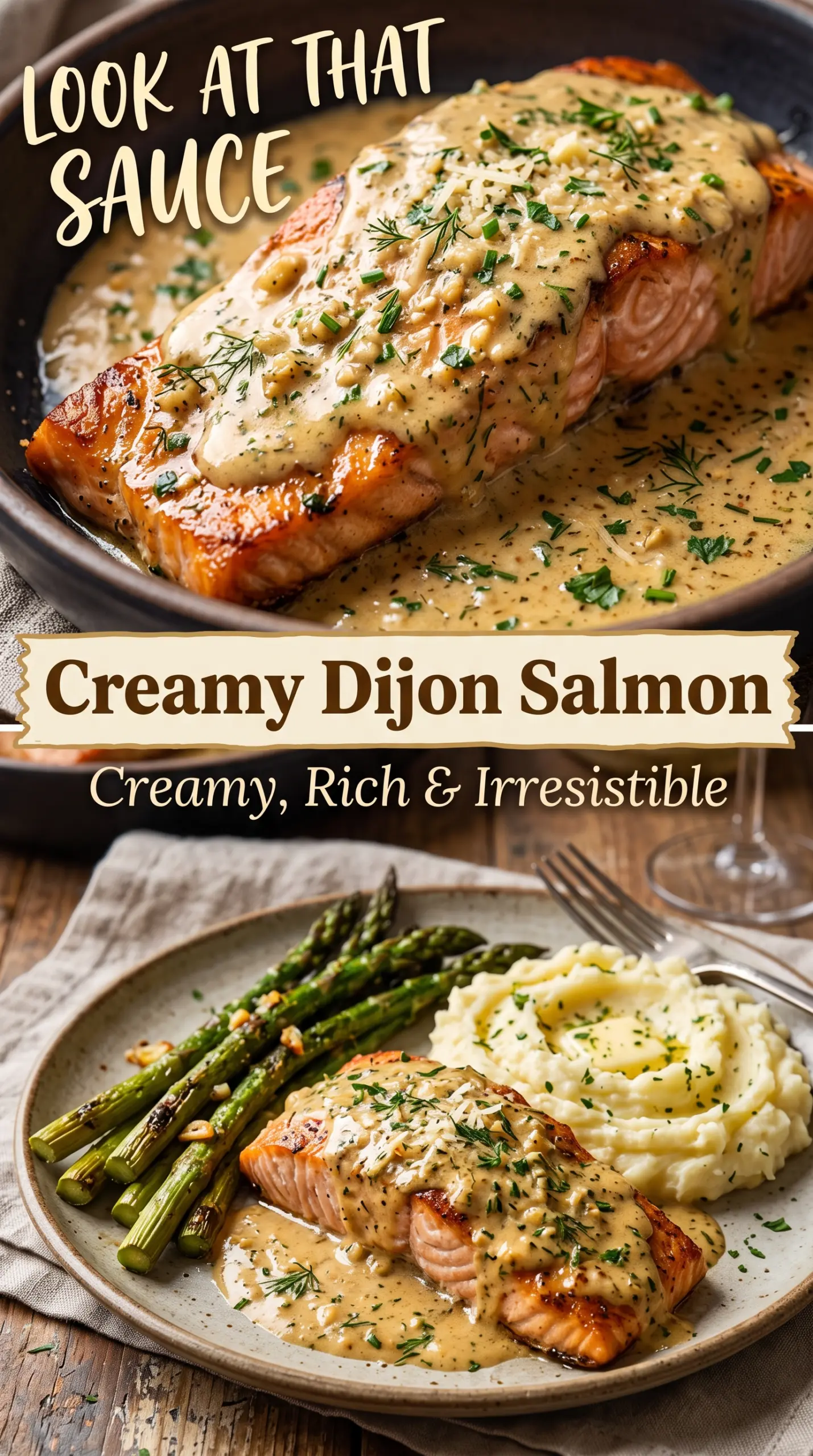
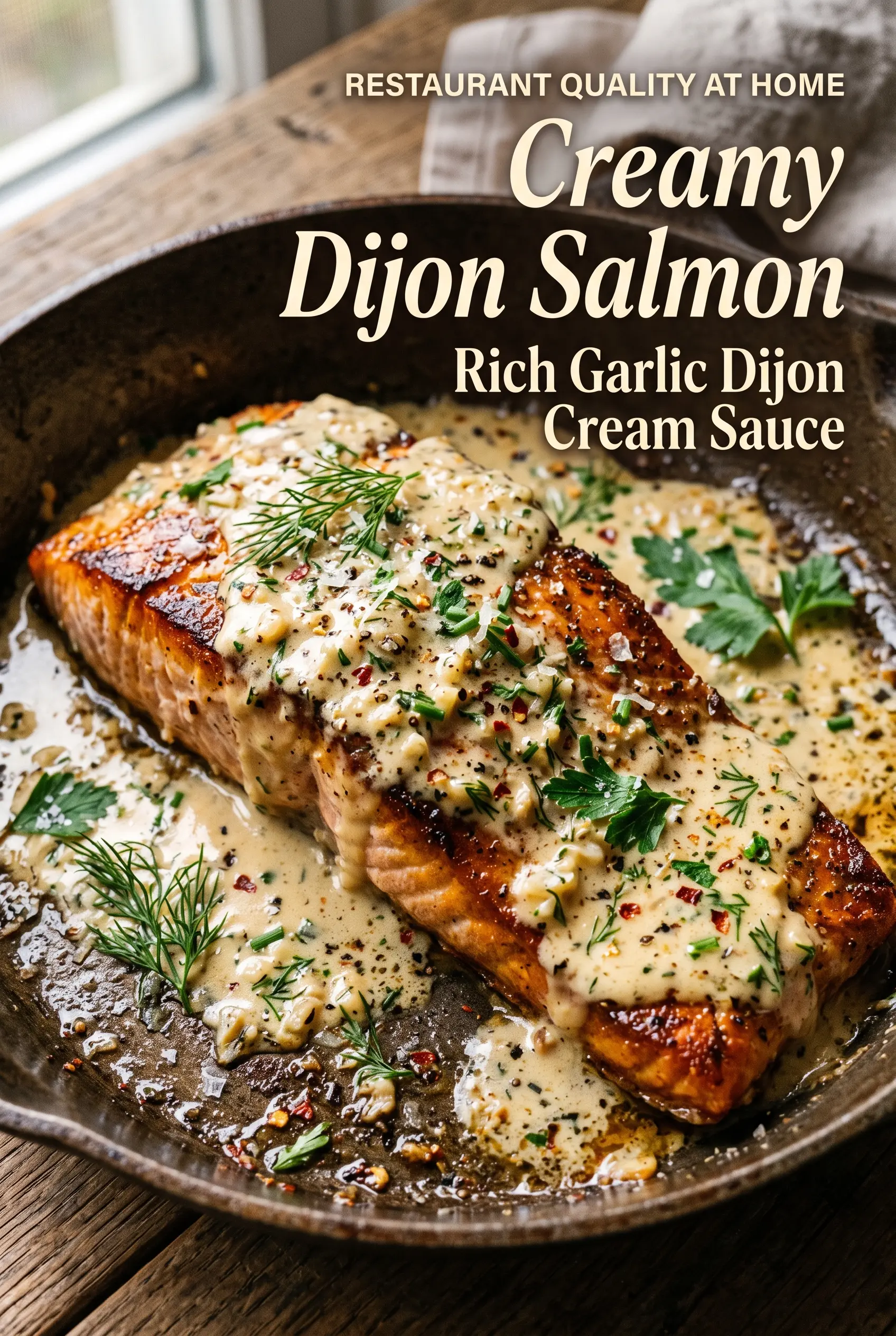
Creamy Dijon Salmon with pan-seared edges and a silky garlic-Parmesan sauce
The Reason This Salmon Stays Moist Instead of Drying Out
Salmon dries out fast when it sits in a hot pan too long, and it gets even less forgiving once cream enters the picture. The trick here is to sear it first, pull it out while the center is still slightly underdone, and let the sauce finish the last few minutes of cooking. That keeps the flesh tender and gives you a better final texture than trying to cook the salmon all the way through before the sauce is even started.
The other key move is using medium heat for the sauce. High heat will push cream toward separation and can make the Parmesan turn grainy. A gentle simmer is enough to thicken it, especially once the mustard and cheese are added.
What Each Ingredient Is Actually Doing in This Dish
- Salmon fillets — Center-cut fillets hold their shape best and cook evenly. If yours are thinner on one end, tuck the thin tail under so the whole piece finishes at the same time.
- Dijon mustard — This is the backbone of the sauce. It gives sharpness and helps the cream taste lighter, not bland. Whole-grain mustard works in a pinch, but the sauce will be a little more rustic.
- Heavy cream — This gives the sauce body and keeps it stable. Half-and-half can work, but it won’t thicken as much and is more likely to break if you boil it.
- Freshly grated Parmesan — Pre-grated cheese doesn’t melt as cleanly because of the anti-caking agents. Grating it yourself gives you a smoother sauce with fewer little specks or clumps.
- Chicken broth — This loosens the pan juices and keeps the sauce from becoming too thick before the salmon goes back in. Vegetable broth works too, but the flavor will be a little softer.
- Dill and parsley — The dill gives the sauce its clean, fresh edge, while parsley keeps it from tasting one-note. If you skip one, skip parsley before dill.
Getting the Sear, the Sauce, and the Finish in the Right Order
Seasoning the Salmon
Pat the salmon dry before anything else. Wet fish steams, and steamed fish sticks before it browns. Season both sides with paprika, garlic powder, salt, and pepper, then let it sit just long enough for the surface to lose its cold, wet sheen.
Building the Golden Crust
Heat the olive oil and butter until the butter foams and starts to settle. Lay the salmon in the pan skin-side down if it has skin, and don’t move it for the first few minutes. If it sticks, it’s not ready yet; once a crust forms, it releases on its own. Flip when the edges look opaque and the center is still slightly translucent.
Making the Dijon Cream Sauce
Lower the heat before the garlic goes in. Garlic burns fast in butter, and burnt garlic will give the whole sauce a bitter edge. Stir in the broth first and scrape the pan well, then add the cream, mustard, Parmesan, lemon juice, and seasoning. Let it bubble gently until it coats a spoon, not until it boils hard.
Bringing the Salmon Back
Return the salmon to the skillet only after the sauce has thickened a bit. Spoon the sauce over the top and let everything simmer for the last couple of minutes. The salmon should flake at the center but still look juicy; if you wait until it seems fully done in the pan before adding it back, it usually ends up overcooked by the time it reaches the plate.
Three Smart Ways to Adjust This Without Losing What Makes It Work
Dairy-Free Version
Use full-fat coconut cream instead of heavy cream and swap the butter for olive oil. The sauce will be a little softer and less tangy, but it still turns rich and spoonable. Skip the Parmesan unless you have a dairy-free version that melts well.
Lower-Carb Serving Ideas
Serve the salmon over cauliflower mash, sautéed spinach, or roasted asparagus instead of rice or potatoes. The sauce is already naturally low in carbs, so this change keeps the meal satisfying without changing the main flavor balance.
Using Frozen Salmon
Thaw it completely and pat it very dry before seasoning. Frozen salmon often holds more surface moisture, and if you skip the drying step, the crust won’t develop and the sauce won’t cling as well.
How to Make It With Chicken
Thin chicken cutlets work well with the same sauce, but they need a little longer in the pan and should reach 165°F at the thickest point. The mustard cream sauce holds up beautifully, but the dish loses the buttery, delicate texture that makes salmon feel special.
Storage and Reheating
- Refrigerator: Store leftovers in an airtight container for up to 2 days. The salmon stays tasty, but the sauce thickens as it chills.
- Freezer: I don’t recommend freezing this one. Cream sauces can separate after thawing, and the salmon texture gets a little grainy.
- Reheating: Warm it slowly in a covered skillet over low heat with a splash of broth or cream. High heat will split the sauce and overcook the salmon before the center is warmed through.
Answers to the Questions Worth Asking
Creamy Dijon Salmon
Ingredients
Equipment
Method
- Pat the salmon fillets dry and season both sides with paprika, garlic powder, salt, and black pepper.
- Heat olive oil and butter in a large skillet over medium-high heat until the butter foams.
- Sear the salmon for 4–5 minutes per side until golden and nearly cooked through, flipping once for even browning.
- Transfer the salmon to a plate and leave any browned bits in the skillet.
- Reduce the heat to medium and melt the butter.
- Add the garlic and cook for 30 seconds until fragrant.
- Pour in the chicken broth and scrape up any browned bits from the bottom of the skillet.
- Stir in the heavy cream and Dijon mustard until smooth and combined.
- Add Parmesan cheese, lemon juice, and Italian seasoning, stirring until the cheese melts.
- Simmer the sauce for 3–4 minutes until it thickens to a spoon-coating consistency, with small bubbles at the edges.
- Return the salmon to the skillet and spoon the creamy Dijon sauce over the fillets.
- Simmer for another 2–3 minutes until the salmon is fully cooked, with opaque flakes and a gentle simmer.
- Garnish with fresh dill and parsley before serving.
