
Juicy chicken meatballs and a velvety garlic Parmesan sauce make one of those dinners that disappears fast and gets requested again before the plates are even cleared. The meatballs stay tender instead of dense, the sauce clings in a glossy coat, and the whole dish lands in that sweet spot between comforting and polished enough for company.
The part that makes this version work is the balance: enough breadcrumb and egg to keep the chicken soft, but not so much that the meatballs turn pasty, and a sauce built with a quick flour roux so the cream thickens smoothly instead of feeling thin or greasy. Freshly grated Parmesan matters here because it melts into the sauce instead of sitting there grainy, and the garlic gets a short cook so it tastes round and savory, not sharp.
Below, I’ll walk you through the exact cues I look for when the meatballs are ready to flip, how to keep the sauce from turning lumpy, and a few smart swaps if you want to adjust the dish without losing the texture that makes it good.
The sauce thickened up perfectly and the meatballs stayed so tender. I served it over mashed potatoes, and my husband went back for seconds before I even sat down.
Creamy Garlic Parmesan Chicken Meatballs with that silky sauce you’ll want over pasta, potatoes, or bread
The Reason the Meatballs Stay Tender Instead of Dense
Ground chicken can go dry fast, and that’s where most meatball recipes miss the mark. This version stays soft because the breadcrumbs, egg, and Parmesan are doing different jobs: the crumbs hold onto moisture, the egg binds without tightening the mix, and the cheese adds salt and richness. The biggest mistake is overmixing. Once the mixture looks evenly combined, stop. If you keep working it, the meatballs bake up compact and bouncy instead of juicy.
Pan-browning helps here too. The goal isn’t to cook the meatballs through in the skillet the first time around; it’s to build a little color and structure so they finish gently in the sauce. That two-stage cooking keeps the center tender while still giving you a surface that can stand up to a creamy sauce.
- Ground chicken — Lean enough to stay light, but it needs the breadcrumbs and sauce to keep it from drying out. If you use turkey, choose ground turkey that isn’t ultra-lean or the texture gets a little tight.
- Italian breadcrumbs — These add seasoning and help the meatballs hold moisture. Plain breadcrumbs work if that’s what you have; add a pinch more Italian seasoning to replace what’s missing.
- Freshly grated Parmesan — This melts into the meatballs and sauce far better than the shelf-stable shaker cheese. Pre-grated Parmesan can work in a pinch, but it won’t give you the same smooth finish.
- Heavy cream — This is what gives the sauce its plush texture. Half-and-half will work, but the sauce will be a little looser and less luxurious.
Building the Sauce So It Turns Velvety, Not Grainy

The sauce starts with butter, garlic, and flour, and that flour needs a full minute in the pan before the liquid goes in. That short cook keeps the finished sauce from tasting chalky. When the broth goes in, whisk steadily and add it slowly at first so the roux loosens smoothly instead of trapping a lump in the center of the pan.
The main thing to watch is heat. Once the cream and Parmesan go in, keep the simmer gentle. A hard boil can make the sauce separate or turn the cheese gritty, especially if the pan is too hot. If the sauce looks thin at first, let it bubble lazily for a few minutes. It thickens as it reduces and settles around the meatballs.
Mixing the Meatball Base
Combine the chicken, breadcrumbs, Parmesan, egg, garlic, parsley, and seasonings just until the mixture looks even. It should feel cohesive and slightly tacky, not wet and loose. If it seems sticky, chill it for 10 minutes before shaping. That makes the meatballs easier to form and helps them hold their shape in the pan.
Getting the Browning Started
Heat the olive oil over medium heat and add the meatballs with a little space between them. Let the first side sit long enough to pick up color before turning. If they stick when you try to move them, leave them alone another minute. A good crust releases on its own; forcing them too early tears the surface.
Finishing Them in the Sauce
After the sauce thickens, return the meatballs and let them simmer until the centers are cooked through and the sauce coats the spoon. The gentle simmer finishes the chicken without drying it out. If the sauce gets too thick, splash in a little broth. If it looks thin, give it another minute uncovered before serving.
How to Adapt This for Different Diets and Different Pans
Gluten-Free Version
Use gluten-free breadcrumbs in the meatballs and swap the flour in the sauce for a 1:1 gluten-free flour blend. The texture stays close to the original, and the sauce still thickens properly as long as you whisk it in slowly.
Dairy-Free Version
The Parmesan and cream are carrying most of the flavor here, so a dairy-free version changes the dish more than a simple swap would suggest. Use unsweetened oat or cashew cream and a dairy-free Parmesan alternative, then season more assertively with garlic and black pepper to bring back some of the savory edge.
Make It a Little Lighter
Use half-and-half instead of heavy cream and cook the sauce at a very gentle simmer. It won’t be quite as lush, but it still turns silky if you keep the heat low and don’t rush the thickening.
Storage and Reheating
- Refrigerator: Store in an airtight container for up to 4 days. The sauce thickens as it chills, so it may look tighter the next day.
- Freezer: Freeze the meatballs and sauce together for up to 2 months. The cream sauce may separate slightly when thawed, but a gentle reheat and a splash of broth usually brings it back.
- Reheating: Warm it slowly over low heat on the stovetop, adding a little broth or cream if needed. Microwaving on high is the mistake that makes the sauce break and the meatballs toughen at the edges.
Answers to the Questions Worth Asking
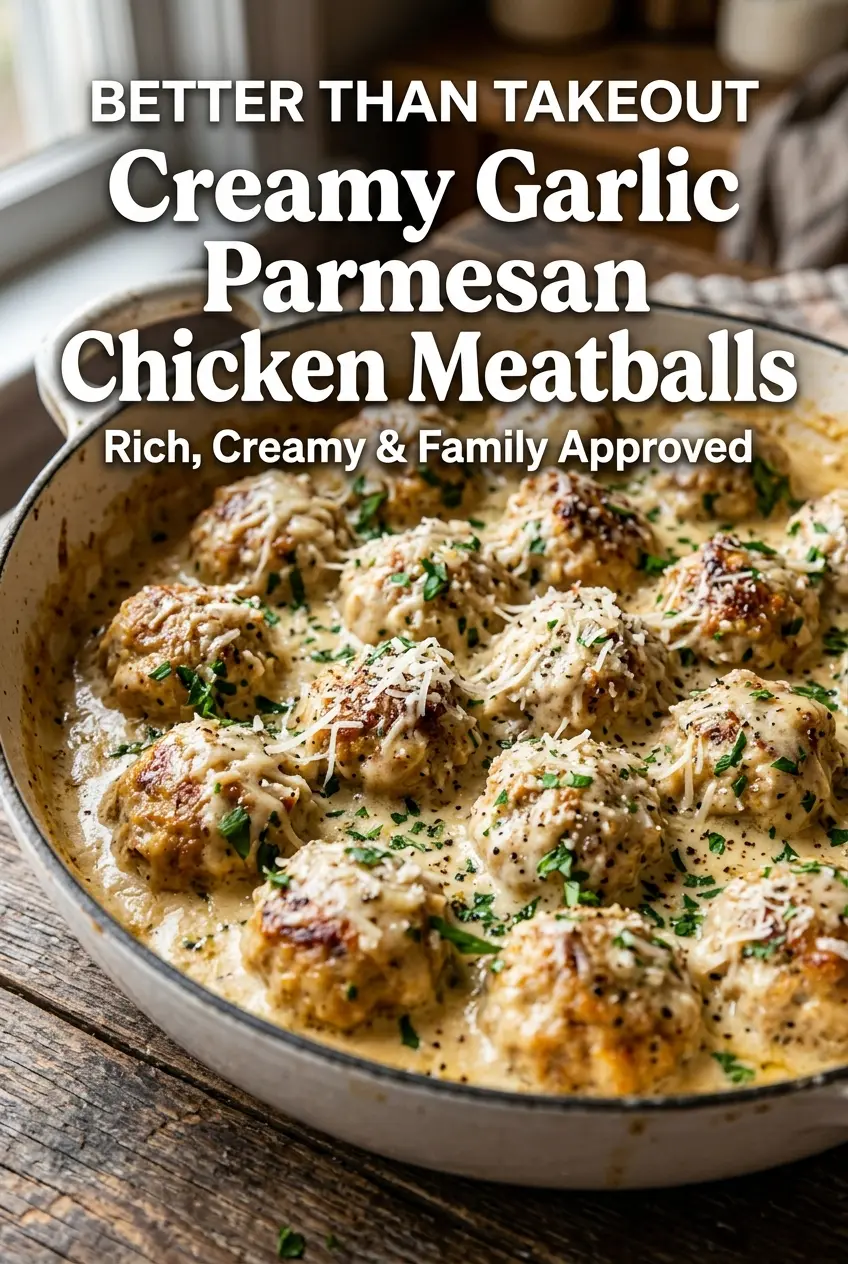
Creamy Garlic Parmesan Chicken Meatballs
Ingredients
Equipment
Method
- In a large bowl, combine ground chicken, Italian breadcrumbs, Parmesan, egg, garlic, parsley, Italian seasoning, onion powder, paprika, salt, and black pepper.
- Mix gently until just combined so the mixture stays tender and doesn’t get overworked.
- Form into 18–20 meatballs, keeping the size consistent for even cooking.
- Heat olive oil in a large skillet over medium heat until shimmering.
- Brown the meatballs for 6–8 minutes, turning frequently, until nearly cooked through.
- Transfer the meatballs to a plate and set aside while you make the sauce.
- Melt butter in the same skillet over medium heat.
- Add garlic and cook for about 30 seconds until fragrant, stirring constantly.
- Sprinkle in the flour and whisk continuously for 1 minute to remove the raw flour taste.
- Slowly whisk in chicken broth until smooth, scraping up any browned bits.
- Stir in the heavy cream.
- Add Parmesan cheese, Italian seasoning, black pepper, and crushed red pepper flakes, stirring until combined.
- Simmer for 3–5 minutes until the sauce thickens to a velvety consistency.
- Return the meatballs to the skillet and coat them in the sauce.
- Simmer another 5–7 minutes until the meatballs are fully cooked and coated.
- Garnish with fresh parsley and extra Parmesan, then serve over pasta, mashed potatoes, rice, or with crusty bread.
