
Flaky salmon, silky Alfredo sauce, and a tangle of fettuccine make this the kind of dinner that feels a little special without asking for much back. The salmon stays tender and rich against the garlic parmesan sauce, and the whole dish lands with that restaurant-style balance of creamy, savory, and fresh parsley at the end. It’s the sort of pasta that disappears fast, but not because it’s heavy — because each bite tastes complete.
What makes this version work is the way the salmon is cooked separately first, then folded in at the end instead of being stirred around until it breaks apart. That keeps the fish in big, satisfying pieces. The sauce also stays smoother because the parmesan goes into warm cream, not blazing heat. If you’ve had Alfredo turn grainy before, that usually comes from rushing the cheese or letting the pan get too hot.
Below, I’ll walk through the exact point where the sauce comes together, the pasta water trick that keeps everything glossy, and a few swaps that still keep the dish tasting like dinner, not a compromise.
The salmon stayed in nice big pieces and the sauce thickened up perfectly without getting grainy. I added a splash of pasta water at the end and it coated the noodles like a dream.
Creamy Salmon Alfredo for a rich, silky pasta night with tender salmon and no grainy sauce
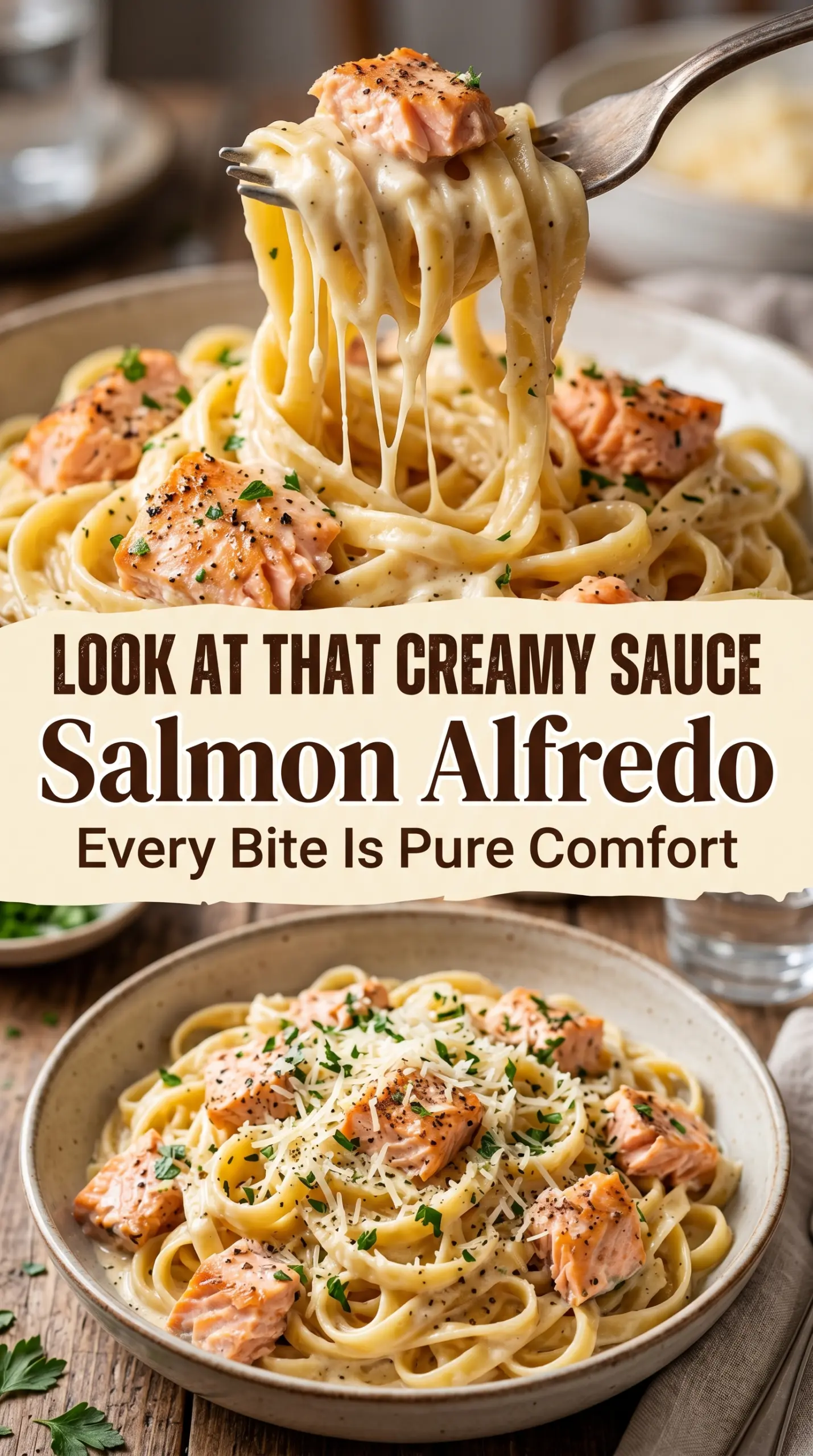
The Reason Salmon Alfredo Stays Creamy Instead of Breaking
Alfredo breaks for two reasons: the heat is too high, or the cheese goes in too fast. Parmesan wants gentle warmth and steady stirring. If the cream is boiling hard when the cheese hits the pan, the sauce can turn sandy or separate before it ever has a chance to smooth out. That’s why the heat comes down before the dairy goes in.
The salmon also matters here. A hard sear is fine, but overcooking it before it hits the pasta leaves you with dry flakes that vanish into the sauce. Pull it off when it flakes easily and still looks moist in the center. It finishes gently in the pasta, and that last toss does the work of bringing everything together without beating up the fish.
- Salmon fillets — Fresh or thawed salmon both work. Skin-on fillets give you a little more protection in the pan, but skinless is fine if that’s what you buy. Cut very thick pieces in half so they cook evenly before the exterior dries out.
- Heavy cream — This is what gives the sauce its body. Half-and-half will make a thinner sauce and needs more careful heat control, while milk usually ends up too loose for this style of Alfredo.
- Freshly grated parmesan — Use the real stuff here. Pre-grated cheese often has anti-caking starches that can make the sauce clump instead of melt cleanly. Grate it fine so it disappears into the cream instead of sitting in little specks.
- Fettuccine — The wide noodles carry the sauce well, but linguine or tagliatelle work too. Reserve the pasta water before draining; that starch is what helps the sauce cling instead of sliding off the noodles.
- Garlic — Fresh minced garlic gives the sauce its backbone. Thirty seconds in butter is enough. If it browns, it turns bitter and the whole pan tastes harsh.
How to Keep the Sauce Silk-Smooth from Pan to Plate
Searing the Salmon Without Drying It Out
Heat the olive oil until it shimmers, then lay the salmon in the skillet and leave it alone long enough to form a crust. If you move it too soon, it sticks and tears; if you cook it too long, the flakes get dry before the sauce is ready. Four to five minutes per side is a guide, but the real cue is the flesh turning opaque and giving up cleanly when nudged with a spatula.
Building the Alfredo Base
After the salmon comes out, lower the heat before the butter goes in. The garlic only needs about 30 seconds in the melted butter, just until fragrant. Then add the cream and keep it at a gentle simmer, not a boil. Boiling cream can split the sauce later, and once that happens, parmesan won’t bring it back.
Finishing with Cheese and Pasta Water
Stir in the parmesan a little at a time so it melts into the sauce instead of clumping. When the sauce looks smooth and glossy, add the pasta and toss until every strand is coated. If the sauce tightens up, splash in the reserved pasta water a spoonful at a time. That starch loosens the sauce without thinning the flavor the way plain water would.
Bringing the Salmon Back Gently
Flake the salmon into large pieces and fold it through at the very end. Don’t stir hard enough to shred it completely. You want visible pieces of fish in the bowl, not salmon dust mixed through the noodles. A final sprinkle of parsley and extra parmesan gives the dish a fresh, sharp finish that cuts through the cream.
Dairy-Free Version
Use a rich unsweetened oat or cashew cream and swap in a dairy-free parmesan-style cheese that melts well. The sauce won’t taste exactly like classic Alfredo, but you’ll still get a creamy, savory coating if you keep the heat low and add the substitute cheese gradually.
Gluten-Free Pasta Swap
Use a sturdy gluten-free fettuccine or spaghetti and cook it just until al dente. Gluten-free pasta can soften fast once it hits the sauce, so pull it a minute early and finish it in the skillet with a splash of pasta water.
Lighter Salmon Pasta
If you want a less rich version, use half-and-half instead of heavy cream and add a little extra pasta water for body. The sauce will be looser and a touch less luxurious, but it still clings well if you keep the simmer very gentle.
Storage and Reheating
- Refrigerator: Store leftovers in an airtight container for up to 3 days. The sauce will thicken as it chills.
- Freezer: I don’t recommend freezing this one. Cream sauces can separate when thawed, and the salmon texture gets grainy.
- Reheating: Warm gently in a skillet over low heat with a splash of milk or cream, stirring often. High heat is the fastest way to split the sauce and dry out the salmon.
Answers to the Questions Worth Asking
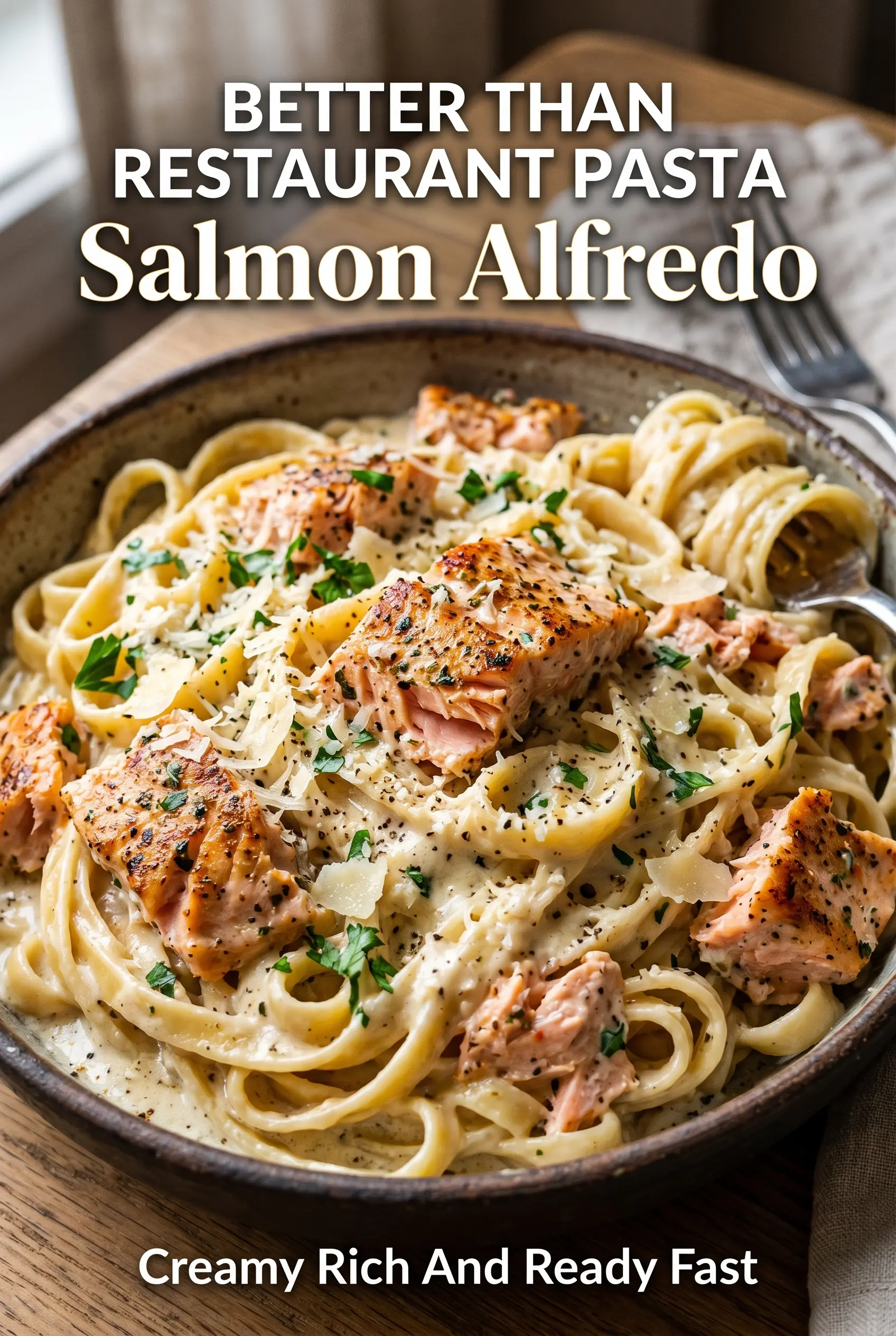
Creamy Salmon Alfredo
Ingredients
Equipment
Method
- Cook the fettuccine according to package directions until al dente. Reserve 1/2 cup pasta water and then drain the pasta.
- Season the salmon fillets with paprika, garlic powder, salt, and black pepper. Make sure both sides are evenly coated for consistent flavor.
- Heat the olive oil in a large skillet over medium-high heat until it shimmers. This is your cue the pan is hot enough to sear.
- Cook the salmon for 4–5 minutes per side until it flakes easily and is cooked through. Remove the salmon and set aside.
- Reduce the heat to medium and melt the butter in the skillet. Scrape any browned bits into the butter for extra flavor.
- Add the garlic and cook for 30 seconds. Stir until fragrant, but do not brown it.
- Pour in the heavy cream and bring it to a gentle simmer. Look for small bubbles around the edges, not a hard boil.
- Stir in the parmesan cheese and Italian seasoning until the sauce turns smooth and creamy. Keep stirring so the cheese melts evenly.
- Add the cooked fettuccine and toss to coat in the sauce. Add the reserved pasta water if needed to loosen the sauce into a silky texture.
- Flake the salmon into large pieces and gently fold it into the Alfredo pasta. Stop mixing once combined so the salmon stays tender.
- Garnish with chopped parsley and additional parmesan for serving before plating. Serve right away while the sauce is creamy.
