
Juicy peaches tucked under a buttery, golden crust make Southern peach cobbler one of those desserts that disappears fast once it hits the table. The top bakes up crisp and bronzed, while the batter underneath turns tender and cake-like where it meets the bubbling fruit. That contrast is what makes this version worth keeping on repeat.
The trick is layering the butter, batter, and peaches in the right order and not stirring once they hit the dish. As the cobbler bakes, the batter rises around the fruit and the butter helps the edges fry up into a rich, crisp shell. A little brown sugar deepens the peach flavor, and cornstarch keeps the juices from turning watery.
Below, I’ve included the small details that keep the topping from sinking, plus a few easy swaps if your peaches are extra sweet, not quite ripe, or coming from the freezer. There’s also a storage note for the leftovers, though around here that usually isn’t a problem for long.
The peaches stayed juicy, but the bottom wasn’t soupy at all. That buttery crust set up with crisp edges and the whole dish smelled like my grandma’s kitchen.
Save this Southern Peach Cobbler for the kind of dessert that bakes up with a crisp, buttery top and juicy peaches underneath.
The Reason This Cobbler Gets a Crisp Top Instead of a Soggy One
Most peach cobblers go soft on top because the fruit and batter get mixed together or the pan is loaded in the wrong order. This version avoids both problems. The melted butter sits on the bottom, the batter goes over it, and the peaches are spooned on top without stirring. That gives the topping room to rise while the butter works on the edges, where it can brown and crisp.
The other thing that matters is the peach juice. Fresh peaches can vary a lot, and if they’re extra juicy, the filling can flood the pan. Cornstarch handles that without turning the dessert thick or gummy. You want bubbling fruit around the edges and a set center that still has a little give when the pan comes out of the oven.
What Each Ingredient Is Actually Doing in This Cobbler

- Peaches — Fresh peaches give you the cleanest, brightest flavor and the best texture, but frozen peach slices work when fresh ones aren’t worth peeling. If you use frozen, thaw and drain them first so the filling doesn’t dilute the batter.
- Brown sugar — This adds depth that plain white sugar can’t. It nudges the peaches toward a caramel note and makes the filling taste rounder.
- Cornstarch — This is what keeps the peach juices from running all over the dish. Flour won’t thicken as cleanly here, and the filling can turn cloudy or pasty.
- Butter — Melted butter under the batter is what helps create those crisp, almost fried edges. Use unsalted butter so you can control the salt level in the topping.
- Whole milk — Whole milk gives the batter enough richness to bake up tender. Lower-fat milk will work, but the texture won’t be as plush.
Building the Cobbler So the Crust Rises the Way It Should
Mixing the Peach Filling
Toss the sliced peaches with both sugars, lemon juice, vanilla, cinnamon, and cornstarch until every piece is coated. The fruit should look glossy, not dry, and you should see the cornstarch disappear into the juices. If the peaches sit too long, they’ll leak more liquid, so get them into the dish once they’re coated.
Making the Batter
Whisk the flour, sugar, baking powder, and salt first, then stir in the milk until the batter is smooth. Don’t overwork it. A few tiny lumps are fine, and a heavily beaten batter can bake up dense instead of tender. The batter should pour easily but still look thick enough to hold its shape for a moment.
Layering Without Stirring
Pour the melted butter straight into the baking dish, then pour the batter over it without mixing the two. Spoon the peaches and all their juices over the top. The strange part is that it looks wrong at this stage, but that separation is exactly what creates the layered texture in the oven. Stirring now would flatten the crust and bury the butter instead of letting it do its work.
Baking Until the Center Sets
Bake until the top is deeply golden and the peach filling is bubbling around the edges. The center should look set, not wet, and the crust should spring back lightly when touched. If the top browns too fast before the center is done, lay a loose piece of foil over the dish for the last stretch of baking.
How to Adapt This for Different Peaches and Different Diets
Frozen Peaches Instead of Fresh
Thaw the peaches first and drain off the excess liquid before mixing them with the sugars. Frozen fruit can make the filling too loose if you skip that step, which keeps the crust from setting properly.
Less-Sweet Cobbler
If your peaches are very ripe, cut the granulated sugar in the filling by a few tablespoons. You’ll still get a balanced dessert because the brown sugar and vanilla carry enough weight on their own.
Dairy-Free Version
Use a neutral plant-based butter and unsweetened oat milk or almond milk in place of the dairy. The topping will still bake up soft and golden, though the buttery edge will be a little less rich.
Storage and Reheating
- Refrigerator: Store covered for up to 4 days. The topping softens as it sits, but the flavor stays good.
- Freezer: It freezes fairly well after baking. Wrap tightly and freeze for up to 2 months, then thaw in the refrigerator before reheating.
- Reheating: Warm in a 300°F oven until the filling is hot and the top starts to crisp again. The microwave works in a pinch, but it makes the crust soft and a little damp.
Answers to the Questions Worth Asking
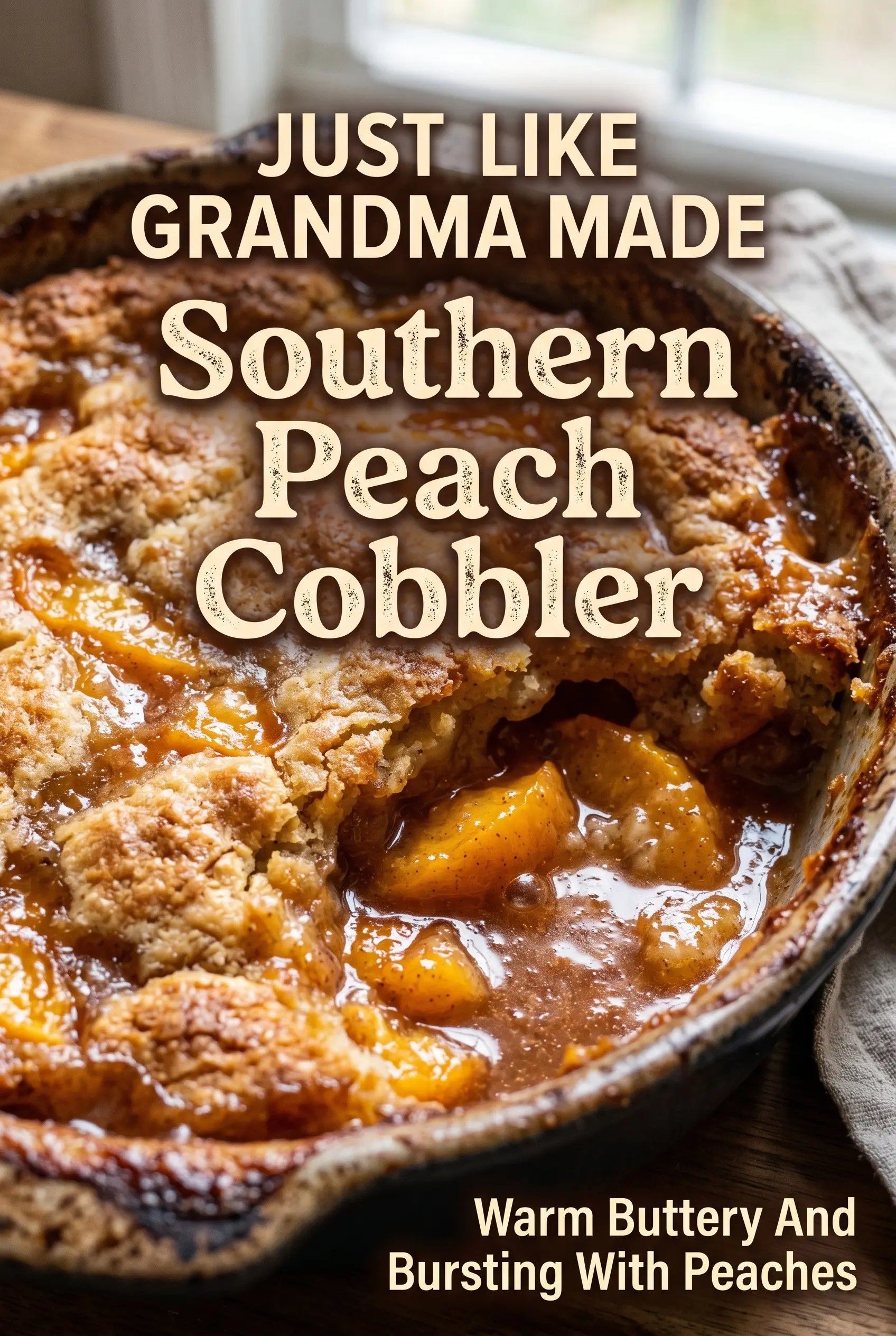
Southern Peach Cobbler
Ingredients
Equipment
Method
- Preheat oven to 350°F (175°C) and grease a 9×13-inch baking dish.
- Add peaches, granulated sugar, brown sugar, lemon juice, vanilla extract, cinnamon, and cornstarch to a large bowl.
- Toss until evenly coated, so the cornstarch is distributed throughout the peach juices.
- Pour the peach mixture into the greased 9×13-inch baking dish.
- Whisk together all-purpose flour, granulated sugar, baking powder, and salt in another bowl.
- Stir in whole milk until smooth, with no dry pockets of flour.
- Pour melted unsalted butter into the baking dish, letting it pool under the batter.
- Pour the batter evenly over the butter and do not stir.
- Spoon peaches and juices evenly over the batter so some fruit sits on top.
- Bake for 45–50 minutes at 350°F (175°C) until golden brown and bubbly.
- Cool for 10 minutes before serving.
- Serve warm with vanilla ice cream if desired.
