
Crispy salmon cakes are one of those rare pantry meals that feel far more polished than the ingredients suggest. The outside turns deeply golden and crackly in the skillet, while the center stays moist and flaky instead of pasty or dry. That contrast is what makes them worth repeating.
The trick is keeping the mixture light enough to hold together without turning heavy. Panko gives the cakes a little structure without packing them tight, and the mayonnaise in both the cakes and the sauce keeps the texture tender. A short chill before frying helps the patties set, which means you get a cleaner flip and a better crust instead of a broken mess in the pan.
Below, I’ve included the cues I use for judging the patties before they hit the skillet, plus a few ways to adapt them if you need a different breadcrumb, dairy-free sauce, or a make-ahead option for busy nights.
The patties held together beautifully after that short chill, and the lemon-dill sauce was the perfect bright contrast to the crispy edges. I used canned salmon from the pantry and still got something that tasted like a dinner I’d order out.
Save these crispy salmon cakes with lemon-dill sauce for a fast dinner with a crackly crust and a bright, tangy finish.
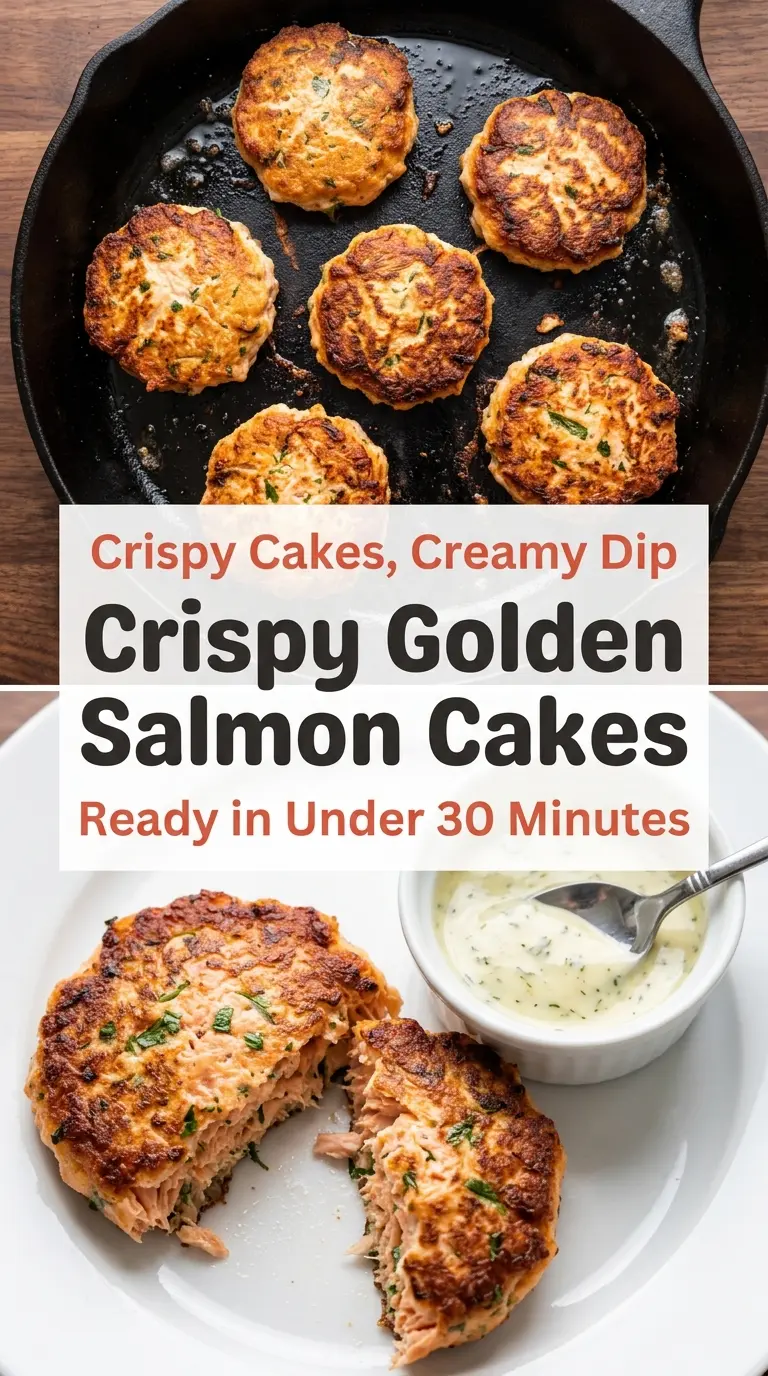
The Small Mistake That Makes Salmon Cakes Dense Instead of Crisp
The most common problem with salmon cakes is treating the mixture like meatloaf. Once you start packing it down hard or stirring it until it looks perfectly uniform, you’ve already lost some of the lightness that makes these worth frying. Canned salmon is already cooked, so the job is really about binding, not building a heavy paste.
The other place people go wrong is skipping the chill. Ten minutes in the fridge is enough to let the panko hydrate and the mixture firm up, which makes the patties easier to flip and helps the edges brown instead of slumping in the pan. If the mixture feels sticky, it’s usually because it needs that brief rest more than it needs more breadcrumbs.
- Canned salmon — This is the backbone of the recipe, and draining it well matters more than brand. Remove the skin and big bones for the best texture, but don’t obsess over every tiny bone; they soften enough to disappear once mixed and cooked.
- Panko breadcrumbs — Panko keeps the cakes lighter than regular breadcrumbs and helps the crust fry up crisp. If you need a substitute, crushed saltines or plain breadcrumbs work, but the texture will be a little tighter.
- Mayonnaise — This adds fat and moisture without making the mixture runny. It’s doing more than acting as a binder; it keeps the salmon from drying out in the skillet.
- Dijon mustard and lemon zest — These are small ingredients with a big job. Dijon brings sharpness that wakes up canned salmon, and the zest gives you bright lemon flavor without extra liquid that could loosen the patties.
- Fresh dill and green onion — Fresh herbs are worth using here because the cakes are simple enough to show them off. Dried dill can work in a pinch, but cut it down to about one-third the amount so it doesn’t taste dusty.
How to Get a Deep Golden Crust Without Breaking the Cakes
Building the Salmon Mixture
Flake the salmon first so you can see what you’re working with before anything else goes in. Add the rest of the ingredients and fold just until the mixture holds together; you should still see little bits of salmon, not a smooth mash. If it feels too wet, give it a minute before adding more breadcrumbs, because canned salmon often tightens up once the panko starts absorbing moisture.
Shaping and Chilling
Divide the mixture into six equal portions and shape them into patties about three-quarters of an inch thick. Press them enough that they hold together, but don’t compact them so hard that the centers turn dense. A short chill in the fridge makes the surface firmer, which is what keeps them from cracking when they hit the hot oil.
Frying to the Right Color
Heat the oil over medium heat until it shimmers, then lay the patties in gently. They should sizzle the second they touch the pan; if they don’t, the oil isn’t ready and the cakes will absorb grease instead of crisping. Let them cook undisturbed until the bottom is a deep golden brown, then flip once with a thin spatula and finish the second side. If you move them too early, the crust tears before it has a chance to set.
Mixing the Lemon-Dill Sauce
Whisk the sauce together while the patties chill so the flavors have a few minutes to settle. The garlic should be grated finely enough that it disappears into the sauce instead of landing in sharp little bites. This sauce wants balance, not intensity: creamy, tangy, and herb-forward, with enough lemon to cut through the fried coating.
How to Adapt These Salmon Cakes for Different Kitchens
Gluten-Free Salmon Cakes
Swap the panko for gluten-free breadcrumbs or crushed gluten-free crackers. The cakes will still hold together, though the crust may brown a little faster, so keep the heat at medium and watch the first side closely.
Dairy-Free Sauce
Replace the sour cream with a thick dairy-free yogurt or a plant-based sour cream. You’ll keep the cool tang that works against the fried crust, though the sauce may taste a little softer and less rich than the original.
Using Fresh Salmon Instead of Canned
Cook and cool about 1 pound of fresh salmon, then flake it before mixing. Fresh salmon gives a cleaner, more delicate flavor, but it needs to be fully cooled and fairly dry or the cakes won’t hold as neatly.
Storage and Reheating
- Refrigerator: Store cooked salmon cakes in an airtight container for up to 3 days. The crust softens a bit in the fridge, but the flavor stays good.
- Freezer: They freeze well. Cool completely, wrap individually, and freeze for up to 2 months. Freeze the sauce separately if you want the best texture.
- Reheating: Reheat in a 375°F oven or air fryer until hot and crisp again, usually 8 to 10 minutes. The common mistake is microwaving them, which turns the crust soft and the center dry at the same time.
The Questions People Ask Before They Make Salmon Cakes
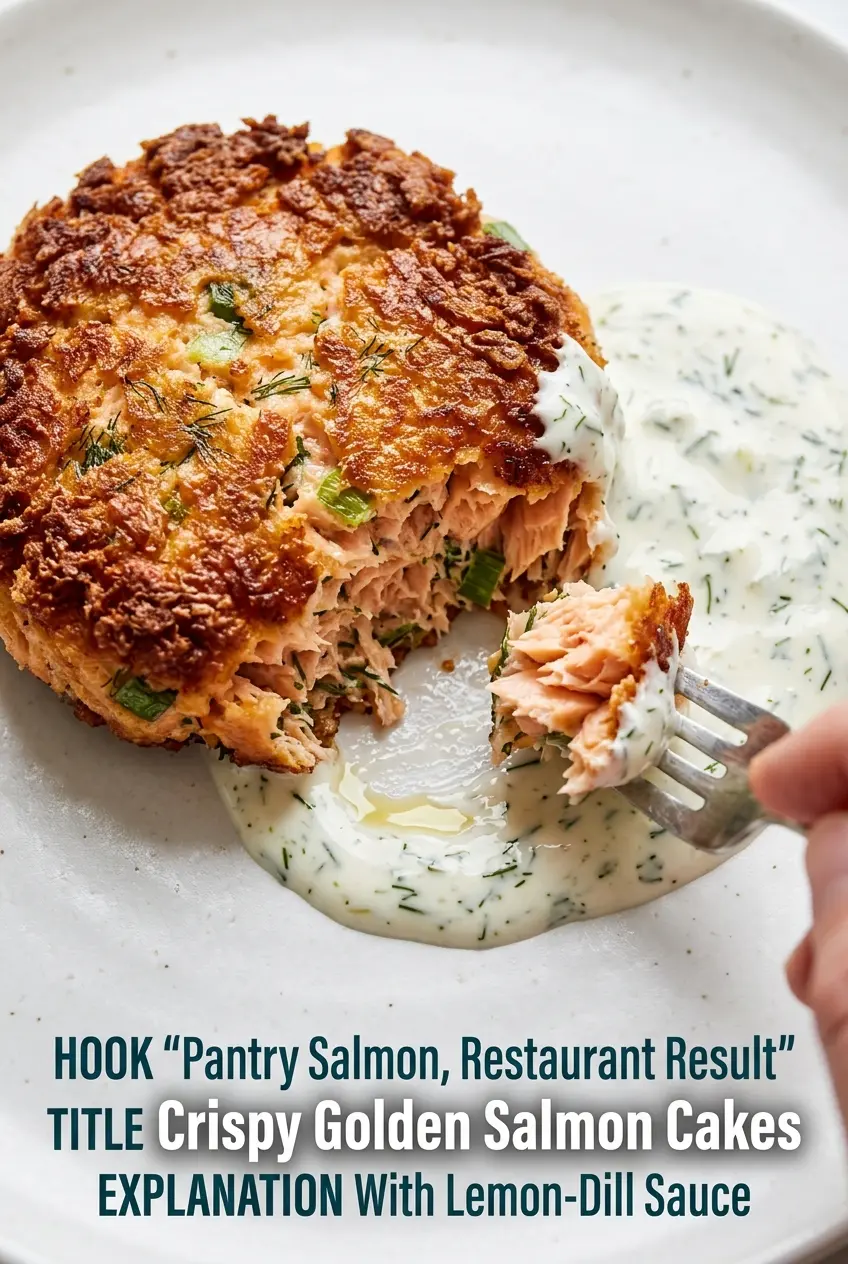
Crispy Golden Salmon Cakes with Lemon-Dill Sauce
Ingredients
Equipment
Method
- Flake the drained canned salmon in a large bowl with a fork, removing any large bones or skin pieces.
- Add panko, egg, mayonnaise, dill, green onion, Dijon mustard, lemon zest, garlic powder, smoked paprika, salt, and black pepper, then mix gently until just combined.
- Divide into 6 equal portions and form patties about 3/4-inch thick, then chill in the fridge for 10 minutes so they hold together while frying.
- Whisk together sour cream, mayonnaise, lemon juice, dill, grated garlic, and a pinch of salt, then refrigerate until ready to serve.
- Heat vegetable oil in a large nonstick skillet over medium heat until shimmering.
- Cook the patties 3-4 minutes per side, until deeply golden brown and crisp, flipping once carefully so they do not break apart.
- Transfer patties to a paper towel-lined plate and rest for 1-2 minutes to drain excess oil.
- Serve the salmon cakes with lemon-dill sauce alongside for dipping.
