
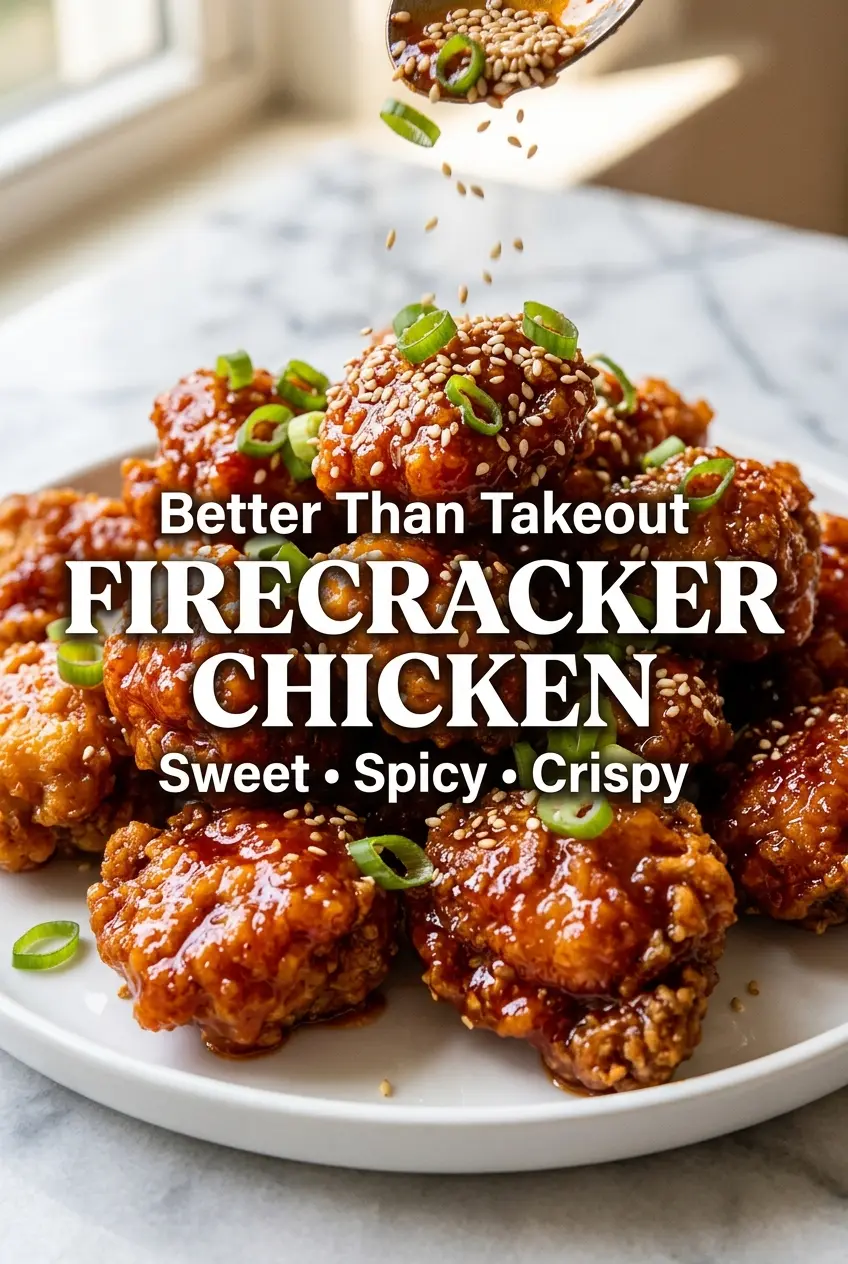
Crispy chicken bites coated in sticky firecracker sauce disappear fast because they hit every note at once: crunchy edges, juicy centers, sweet heat, and that glossy finish that clings instead of sliding off. The chicken stays tender under the crust, and the sauce lands with enough punch to wake up the whole plate without turning harsh or one-note.
The part that makes this version work is the coating-and-rest method before frying. That short rest helps the cornstarch hydrate and set, which gives you a tighter crust that stays crisp longer after the sauce goes on. The sauce also gets balanced on purpose: buffalo sauce brings the heat, brown sugar and honey bring the sticky sweetness, and a little rice vinegar keeps it from tasting flat.
Below, you’ll find the small details that keep the chicken crispy, how to adjust the heat without throwing off the sauce, and the storage note that matters if you want leftovers to hold up instead of turning soggy.
The sauce thickened up just enough to coat the chicken instead of pooling in the bowl, and the crust stayed crunchy even after we ate it with rice. My husband kept grabbing pieces straight from the serving dish.
Save this Firecracker Chicken for the nights when you want crispy chicken and sticky sweet-heat sauce without ordering takeout.
The Crust Has to Set Before the Sauce Hits
With a dish like this, the biggest mistake is rushing the transition from fryer to sauce. If the chicken goes from oil straight into a bowl of warm sauce without a brief drain, the crust softens before it ever gets a chance to hold its shape. The goal is a dry, crisp surface that can take the sauce and still keep some bite.
That resting time on a wire rack matters more than people think. It lets steam escape from the bottom of the chicken instead of getting trapped underneath, which is what turns fried coating soggy. A paper towel-lined plate sounds convenient, but it seals in moisture right where you don’t want it.
- Frying in batches keeps the oil temperature steady. Crowd the pan and the coating gets pale and greasy instead of crisp.
- Wire rack drainage preserves the crust. The air circulation keeps the bottom from steaming.
- Hot sauce only after frying gives you that sticky finish. Cold sauce won’t coat as evenly and can dull the texture.
What Each Ingredient Is Actually Doing in This Dish

- Chicken breasts stay juicy when cut into even 1-inch pieces. Thighs work too if you want a richer bite, and they handle frying well.
- Buttermilk and eggs give the coating something to cling to. If you don’t have buttermilk, mix regular milk with a spoonful of vinegar or lemon juice and let it sit for 5 minutes.
- Cornstarch is what gives this chicken its crisp shell. Flour alone won’t give the same light, crackly texture.
- Buffalo sauce, honey, and brown sugar build the sticky firecracker coating. The buffalo sauce brings heat and tang, while the sweeteners give it that glossy finish.
- Rice vinegar and soy sauce keep the sauce balanced. Vinegar sharpens the sweetness, and soy adds the salty depth that keeps the sauce from tasting like candy.
- Fresh ginger and garlic give the sauce a fresher edge than powdered substitutes. If you use dried ginger in a pinch, keep the amount small or it can taste dusty.
Building the Coating, Frying the Chicken, and Tossing It at the Right Time
Seasoning the dredge
Whisk the eggs and buttermilk until the mixture looks smooth, then combine the cornstarch with the garlic powder, onion powder, smoked paprika, salt, and pepper in a separate bowl. The seasoned dredge should look evenly speckled, not patchy, because any clumps of spice will fry up dark in spots. If the cornstarch mixture looks too dry and dusty, the coating won’t grab evenly and you’ll end up with bare patches after frying.
Coating and resting the chicken
Dip each piece into the egg mixture, then press it into the cornstarch so the coating actually sticks. A light dusting won’t give you much crunch; you want every surface covered. Set the coated chicken on a baking sheet and let it rest for 10 minutes. That pause lets the starch hydrate and cling, which helps the coating stay put in the oil instead of flaking off immediately.
Frying until the crust turns deep gold
Heat the oil to 350°F and keep it there. If the oil runs cooler, the chicken absorbs grease; if it’s too hot, the outside browns before the center cooks through. Fry in batches for 4 to 5 minutes until the pieces are a deep golden color and the thickest one reads 165°F in the center. Move them to a wire rack, not a bowl, so the crust can stay crisp while you finish the sauce.
Glazing without losing the crunch
Stir the buffalo sauce, brown sugar, honey, soy sauce, rice vinegar, garlic, red pepper flakes, ginger, and butter together over medium heat until the sauce looks glossy and lightly thickened. It should coat the back of a spoon, not turn into a heavy syrup. Add the chicken to a large bowl, pour the hot sauce over it, and toss gently just until every piece is coated. The longer the chicken sits in sauce, the faster the crust softens, so serve it right away.
Three Ways to Make This Firecracker Chicken Work for Your Table
Bake It Instead of Frying
For a lighter version, spray the coated chicken with oil and bake it on a rack set over a sheet pan at 425°F until crisp and cooked through. You won’t get quite the same shattery crust as frying, but you do get easier cleanup and a little less oil. The sauce still coats well, so this is the best swap when you want the same flavor with less mess.
Make It Gluten-Free
Use a gluten-free buffalo sauce and tamari in place of soy sauce. Cornstarch is already gluten-free, so the coating doesn’t need much else changed. The texture stays close to the original, which is why this is one of the easier versions to adapt.
Dial Back the Heat
Reduce the red pepper flakes first, then use a milder buffalo sauce if you want the flavor without the burn. Don’t cut the vinegar or soy sauce when lowering the heat, or the sauce starts tasting flat. The sweetness still carries the dish, but the finish will be gentler.
Storage and Reheating
- Refrigerator: Store leftovers in an airtight container for up to 3 days. The coating softens in the fridge because the sauce keeps working into it.
- Freezer: Fried and sauced chicken doesn’t freeze well once coated. If you want to freeze ahead, freeze the cooked plain chicken pieces and sauce them after reheating.
- Reheating: Reheat the chicken in a 375°F oven or air fryer until hot and the edges crisp back up. The microwave makes the crust limp fast, which is the main reason leftovers disappoint.
Answers to the Questions Worth Asking
Firecracker Chicken
Ingredients
Equipment
Method
- Whisk the eggs and buttermilk in a shallow bowl until smooth.
- In a separate bowl, combine the cornstarch, garlic powder, onion powder, smoked paprika, kosher salt, and black pepper.
- Dip each chicken piece into the egg mixture, letting excess drip off.
- Coat the chicken thoroughly in the seasoned cornstarch, pressing to adhere.
- Place the coated chicken on a sheet pan and rest for 10 minutes.
- Heat 2 inches of vegetable oil to 350°F in a Dutch oven.
- Fry the chicken in batches for 4–5 minutes, until golden brown and cooked through to an internal temperature of 165°F.
- Transfer the fried chicken to a wire rack to drain.
- In a saucepan over medium heat, combine the buffalo sauce, brown sugar, honey, soy sauce, rice vinegar, minced garlic, red pepper flakes, grated ginger, and butter.
- Simmer for 3–4 minutes, stirring, until glossy and slightly thickened.
- Add the fried chicken to a large bowl and pour the hot sauce over top.
- Toss gently until every piece is evenly coated with the glossy firecracker sauce.
- Transfer to a serving platter and sprinkle with green onions and sesame seeds.
- Serve immediately with steamed jasmine rice, steamed broccoli, and lime wedges if desired.
