
Chicken with buttered noodles hits that sweet spot between comforting and polished. The chicken stays juicy and well seasoned, and the noodles pick up every bit of garlic butter in the pan, so each bite tastes like more than the sum of its parts. It’s the kind of dinner that feels calm at the table because it comes together without fuss, but still tastes like you paid attention.
The trick is keeping the chicken from overcooking while the noodles finish. A quick pan sear gives the breasts a golden crust, and the pasta water turns the butter into a silky coating instead of a greasy gloss. Parmesan goes in at the end, off the hottest part of the heat, so it melts into the noodles instead of clumping.
Below, I’ve included the small timing detail that keeps the noodles from drying out, plus a few swaps that work when you’re out of egg noodles or need to stretch the dish a little farther.
The noodles turned out glossy instead of heavy, and the chicken stayed juicy even after slicing. I used the pasta water like you suggested and the sauce clung to everything perfectly.
Save this chicken with buttered noodles for a creamy, garlicky dinner that comes together fast and keeps the pasta silky.
The Trick to Keeping the Chicken Juicy While the Noodles Finish
The biggest mistake with this kind of dinner is trying to cook everything at the same pace. Chicken breasts dry out fast if they sit in the pan too long, while egg noodles lose their best texture if they hang around in the colander waiting for the sauce. The answer is to cook the pasta first, then sear the chicken, then finish the noodles in the same skillet so they pick up the browned bits without losing that tender bite.
There’s another small but important detail: the chicken should be sliced after it rests, not before. Resting keeps the juices inside the meat instead of running onto the cutting board. If your noodles ever seem flat or heavy, it usually means the butter went on without enough pasta water to loosen it into a sauce. That splash of starchy water is what gives the noodles that silky, glossy finish.
What Each Ingredient Is Actually Doing in This Dish
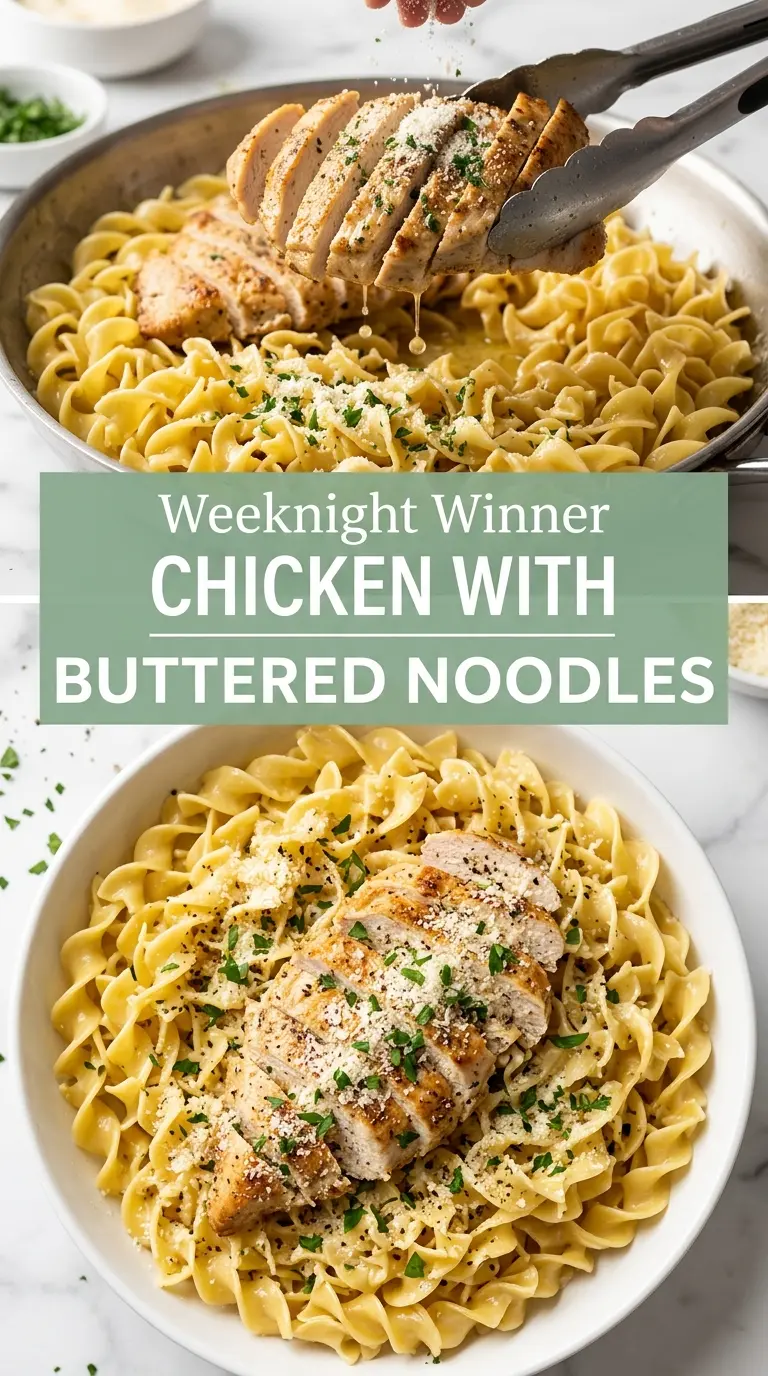
- Chicken breasts — Boneless, skinless breasts cook quickly and slice neatly over the noodles. If yours are thick in the middle, pound them to an even thickness so the outside doesn’t overcook before the center is done.
- Egg noodles — Wide egg noodles are ideal because their soft, wavy shape catches the butter and Parmesan. Substituting with another pasta works, but you’ll lose some of that classic buttery texture unless you choose something with ridges or curls.
- Butter — This is the sauce, not just a finishing touch. Unsalted butter gives you control over seasoning, and using part of it with the chicken helps build flavor in the pan from the start.
- Garlic — Fresh garlic matters here because it perfumes the butter in seconds. If it cooks too long, it turns bitter, so move fast and keep the heat moderate once the noodles go in.
- Parmesan — Fine-grated Parmesan melts into the noodles and helps the sauce cling. Pre-shredded cheese can work in a pinch, but it won’t disappear as smoothly into the butter.
- Pasta water — That reserved splash is what keeps the sauce light and cohesive. It loosens the butter just enough to coat every noodle without making the dish greasy.
Building the Noodles So They Stay Glossy, Not Greasy
Season the chicken before it ever hits the pan
Pat the chicken dry first, then season it well on both sides. Dry surface equals better browning, and that browning is what gives the finished dish more depth than plain sautéed chicken. If the chicken is damp, it will steam in the skillet and the seasoning won’t stick as evenly. Let it sit for a minute or two after seasoning so the salt starts drawing out a little moisture and the surface stays tacky enough for a good crust.
Sear for color, then stop chasing the perfect crust
Heat the oil and butter until the butter foams, then lay the chicken down and leave it alone. If you keep nudging it, the surface won’t brown cleanly and you’ll end up with pale spots instead of a proper golden exterior. Cook until the edges look opaque and the center reaches 165°F, then move the chicken to a plate immediately. That resting time matters just as much as the sear because it keeps the slices juicy.
Turn the noodles into a sauce, not just a butter bath
Lower the heat before the garlic goes in so it softens instead of scorching. Add the drained noodles, Parmesan, parsley, salt, and pepper, then toss while adding a little pasta water only if the pan looks dry. You want the noodles coated and glossy, not swimming. If the cheese starts to clump, the pan is too hot, so pull it off the burner and toss for a few seconds before returning it to low heat.
Three Ways to Make This Work for Different Nights
Dairy-Free Version That Still Tastes Rich
Use a good dairy-free butter and skip the Parmesan, then finish the noodles with extra salt, parsley, and a spoonful of pasta water. You’ll lose the savory cheese note, but the dish still comes across as buttery and satisfying if you season it well.
Gluten-Free Swap for the Noodles
Use a sturdy gluten-free egg noodle or a short gluten-free pasta with some shape to it. Cook it just to al dente and move fast when tossing it with butter, because gluten-free pasta can soften quickly once it sits in the hot pan.
How to Stretch It for More People
Add an extra half pound of noodles and another tablespoon or two of butter, plus a splash more pasta water at the end. The chicken can be sliced thinner and fanned over the top, which makes the dish look full without needing a second pan of meat.
Add More Garlic Without Throwing Off the Balance
Use a little extra garlic, but add it only after the skillet heat comes down. Garlic burns fast in butter, and once it turns bitter, the whole dish tastes harsh instead of rich.
Storage and Reheating
- Refrigerator: Store leftovers in an airtight container for up to 3 days. The noodles will absorb some of the butter as they sit, so they’ll look a little less glossy the next day.
- Freezer: The chicken freezes fine, but the noodles turn soft and a little grainy after thawing, so I don’t recommend freezing the finished dish.
- Reheating: Warm gently in a skillet over low heat with a splash of water or milk to loosen the noodles. High heat dries out the chicken and makes the Parmesan separate instead of melting back in.
Questions I Get Asked About This Recipe
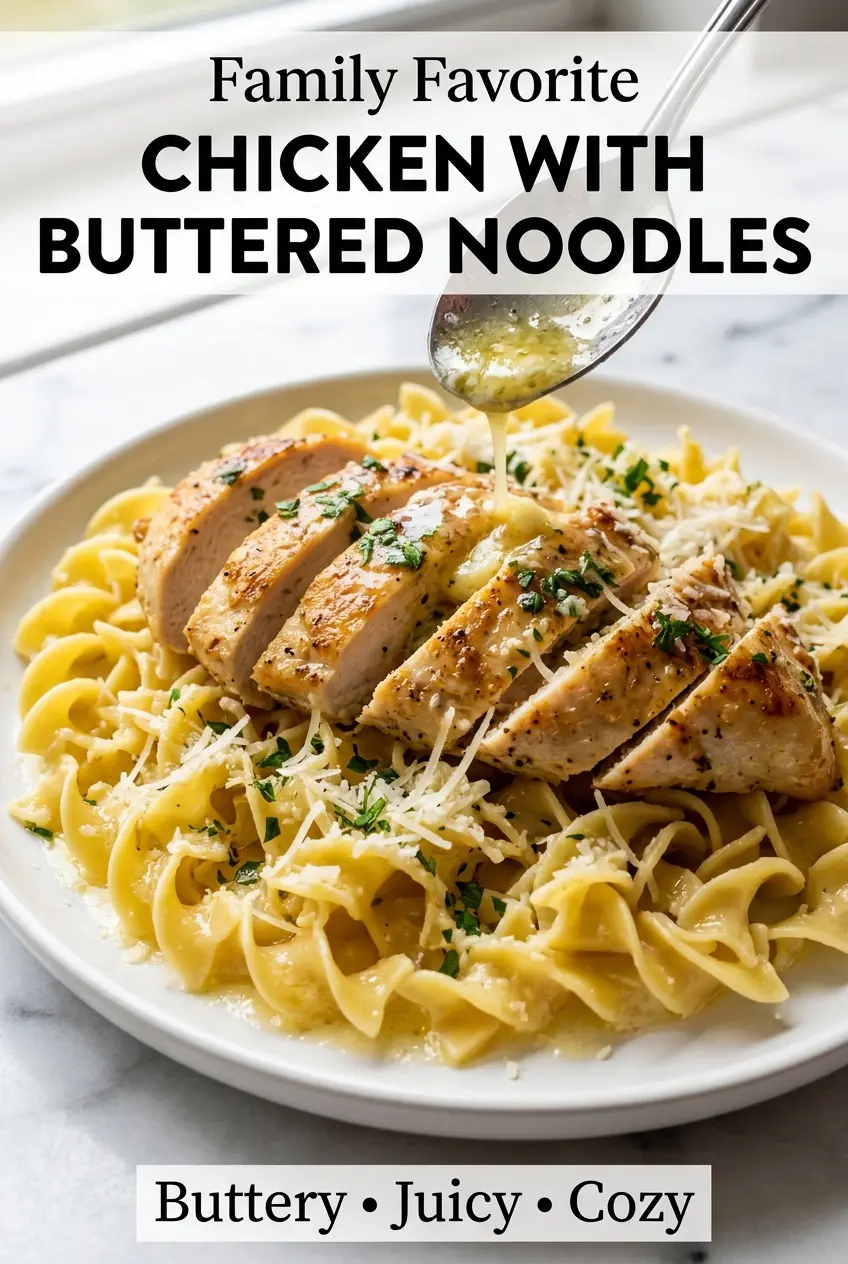
Chicken with Buttered Noodles
Ingredients
Equipment
Method
- Bring a large pot of salted water to a boil, then cook the egg noodles until al dente, about 7–9 minutes, stirring occasionally so they don’t stick.
- Drain the noodles and reserve 1/4 cup pasta water so you can loosen the sauce later if needed.
- Pat the chicken breasts dry, then season both sides evenly with garlic powder, Italian seasoning, paprika, salt, and black pepper.
- Heat olive oil with 1 tablespoon butter in a large skillet over medium-high heat until sizzling, then cook the chicken for 5–6 minutes per side until golden brown.
- Transfer the chicken to a plate and let it rest for 5 minutes, then slice for serving so the juices settle.
- Reduce the heat to medium, melt the remaining butter in the same skillet, and sauté the garlic for 30 seconds until fragrant.
- Add the cooked noodles, Parmesan cheese, parsley, salt, and black pepper, then toss gently until every noodle is coated in butter.
- Add a splash of the reserved pasta water as needed and toss again until the sauce looks silky and clings to the noodles.
- Plate the buttered noodles and top with sliced chicken so each serving gets both chicken and noodles.
- Garnish with extra Parmesan and chopped fresh parsley, and serve immediately with lemon wedges if desired.
