
Juicy chicken breasts, a garlicky tomato-basil sauce, and a blanket of melted mozzarella turn this skillet dinner into the kind of meal that gets picked up again and again. The chicken stays tender because it gets a fast sear first, then finishes gently in the sauce instead of drying out in the oven. The tomatoes cook down just enough to taste rich and savory, while the fresh basil and balsamic keep everything bright instead of heavy.
The trick is building the sauce in the same pan after the chicken comes out. Those browned bits at the bottom carry the flavor, and a little tomato paste deepens the sauce without making it taste cooked-flat. I also like adding the cheese at the very end with the pan covered, which melts it softly over the chicken without turning the whole skillet greasy.
Below, you’ll find the exact timing that keeps the chicken juicy, plus the small ingredient swaps that still give you a glossy sauce and a good melt. If you’ve ever had chicken breasts turn bland or stringy, this method fixes that.
The sauce thickened up beautifully and the basil stayed fresh-tasting instead of getting lost. I covered the skillet for the last few minutes and the mozzarella melted perfectly over the chicken without overcooking it.
Pin these Tomato Basil Chicken Breasts for a skillet dinner with juicy chicken, bright tomato sauce, and a proper mozzarella melt.
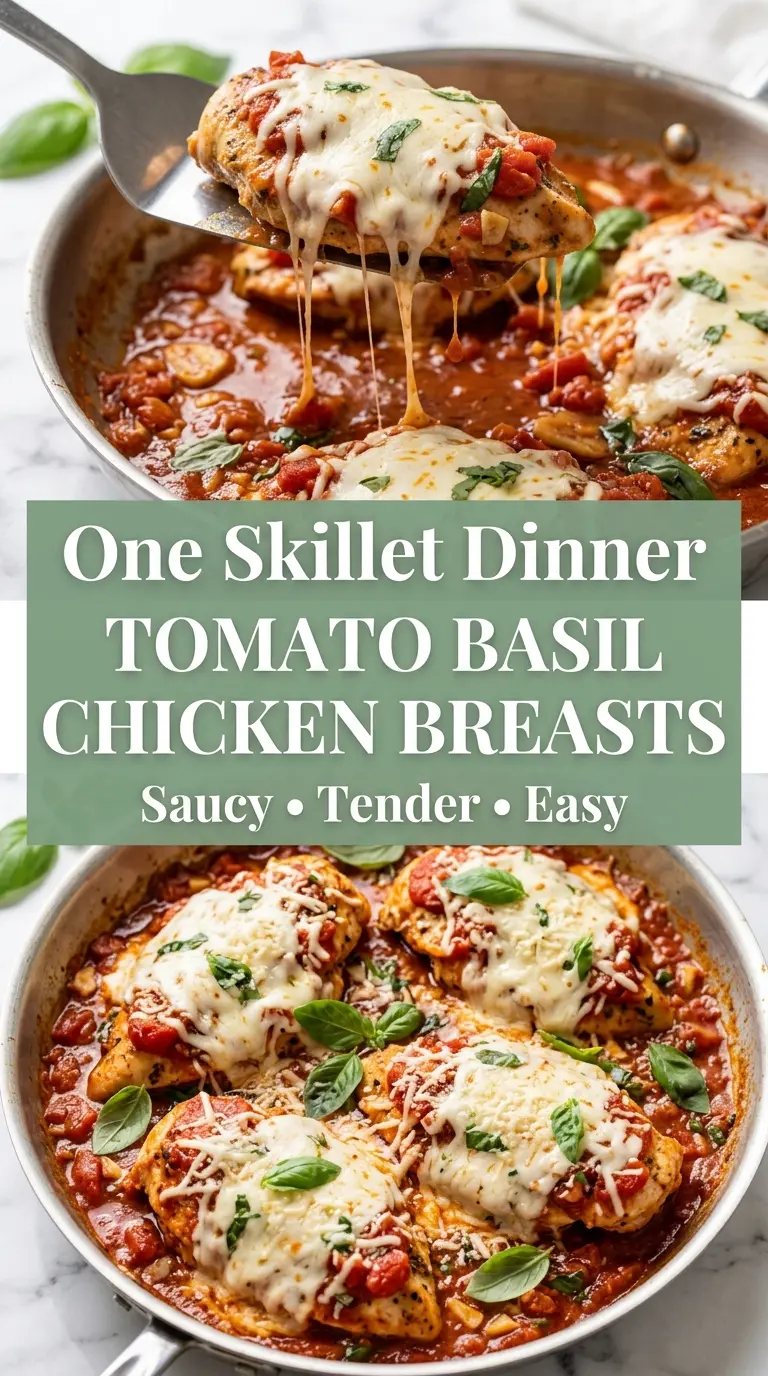
The Secret to Keeping Chicken Breasts Juicy in a Tomato Sauce
The most common way this dish goes wrong is by cooking the chicken all the way through in the skillet before the sauce is even ready. By the time the sauce simmers, the breasts have already gone from juicy to tight. A quick sear gives you color and flavor, then the gentle finish in the sauce brings the chicken to temperature without driving out every bit of moisture.
Tomato sauce can also turn sharp or flat if it never gets a chance to cook down. A spoonful of tomato paste deepens the base, and a splash of balsamic vinegar rounds out the acidity so the sauce tastes finished, not canned. The fresh basil goes in near the end so it keeps its perfume instead of disappearing into the pan.
- Chicken breasts — Pound thicker pieces lightly if one side is much larger than the other. Even thickness matters more than size here, because it keeps the sear and the final cook in sync.
- Tomato paste — This is what gives the sauce body. If you skip it, the sauce still works, but it stays thinner and tastes less concentrated.
- Fresh basil — Dried basil can’t replace the lift you get from fresh leaves. If basil is out of season or hard to find, stir in a smaller amount of fresh parsley at the end for freshness, then keep a pinch of dried basil in the sauce for background flavor.
- Mozzarella and Parmesan — Mozzarella gives the melt; Parmesan sharpens the finish. Pre-shredded mozzarella works, but freshly grated Parmesan melts cleaner and keeps the sauce from tasting dull.
Building the Sauce and Finishing the Chicken Without Drying It Out
Seasoning and Searing the Chicken
Pat the chicken dry before it hits the pan. Wet chicken steams, and steaming is how you lose that deep golden crust. Cook it over medium-high heat until the surface is browned and it releases from the skillet without fighting you, then pull it out while the center is still underdone. If the pan is crowded, the chicken will simmer in its own moisture instead of searing, so work in batches if you need to.
Cooking Down the Tomatoes
After the onion softens, add the garlic for only about 30 seconds. Garlic burns fast, and once it turns bitter the whole sauce tastes harsh. Stir in the tomatoes, sauce, paste, oregano, and balsamic, then let the mixture bubble until it loses that raw canned edge and turns glossy. You’re looking for a sauce that clings to a spoon, not one that still looks watery around the edges.
Melting the Cheese Over the Top
Return the chicken to the skillet and spoon the sauce over every piece before the cheese goes on. That keeps the top from drying out while the bottom finishes cooking in the sauce. Cover the pan so the mozzarella melts evenly and the chicken reaches 165°F without blasting it with more direct heat. If the cheese looks oily, the heat was too high; drop it to low and let the trapped steam do the work.
What to Change When You Want a Different Finish
Dairy-Free Version
Skip the mozzarella and Parmesan and finish the skillet with a drizzle of good olive oil plus extra basil. You lose the creamy melt, but the tomato sauce stays bright and the chicken still tastes complete.
Gluten-Free Dinner
This recipe is naturally gluten-free as written, which is part of why it lands so well for weeknights. Serve it with gluten-free pasta, rice, or roasted potatoes and the sauce will carry the whole plate.
Thighs Instead of Breasts
Boneless chicken thighs work well here and stay juicy even longer in the skillet. They need a little more time than breasts, but the payoff is a deeper, richer bite that holds up well under the sauce and cheese.
Storage and Reheating
- Refrigerator: Store leftovers in an airtight container for up to 4 days. The sauce thickens a bit as it chills, but the flavor stays good.
- Freezer: It freezes fine, though the cheese texture softens after thawing. Freeze in portions without the fresh basil garnish, then add fresh basil after reheating.
- Reheating: Warm it covered in a skillet over low heat with a splash of water or broth. High heat dries the chicken and can make the sauce separate, so go slow and stop as soon as the chicken is hot.
Questions I Get Asked About This Recipe
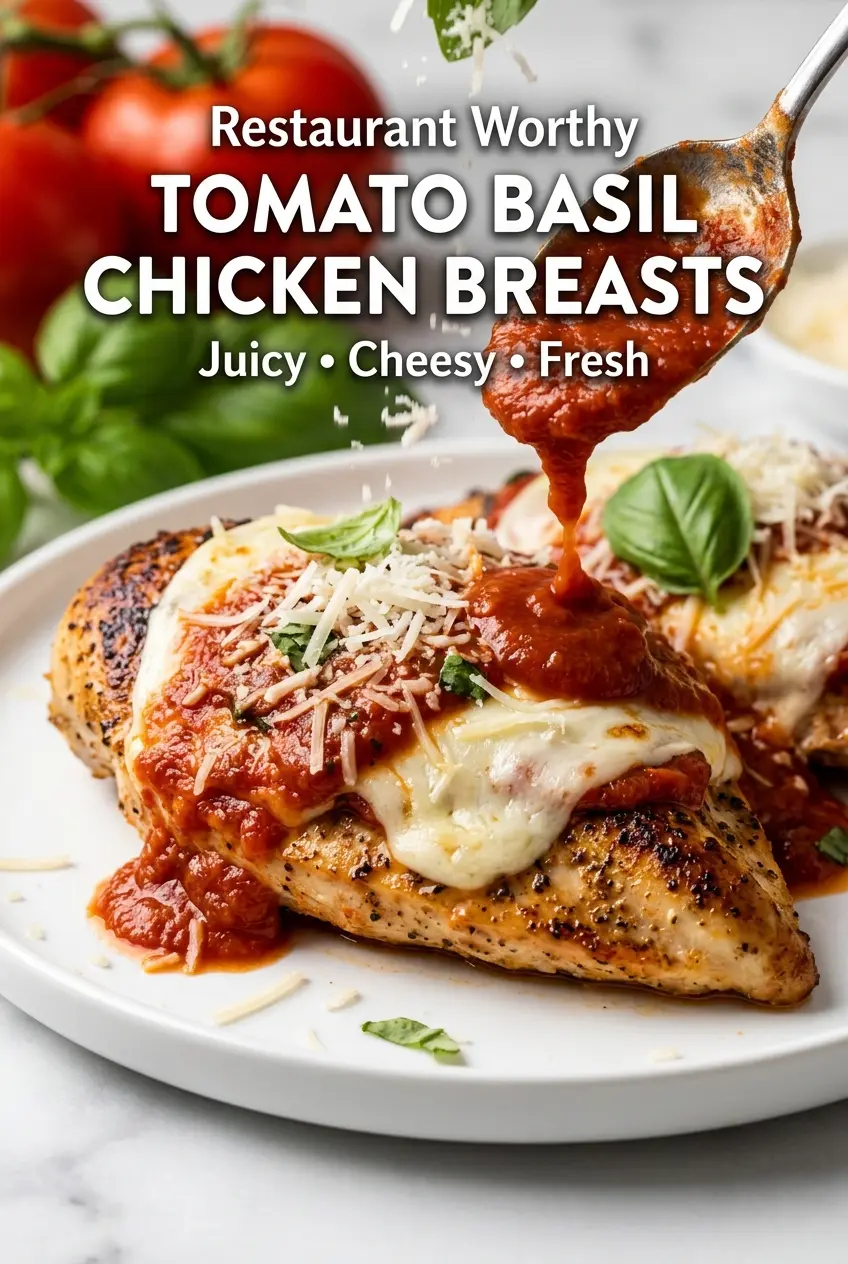
Tomato Basil Chicken Breasts
Ingredients
Equipment
Method
- Pat the chicken breasts dry with paper towels, then season both sides with garlic powder, Italian seasoning, kosher salt, black pepper, and smoked paprika.
- Heat the olive oil in a large skillet over medium-high heat, then cook the chicken for 5–6 minutes per side until golden brown.
- Transfer the chicken to a plate; it does not need to be fully cooked yet.
- Reduce heat to medium, add the diced onion, and cook for 3–4 minutes until softened.
- Stir in the garlic and cook for 30 seconds until fragrant.
- Add the diced tomatoes, tomato sauce, tomato paste, dried oregano, red pepper flakes, balsamic vinegar, and chopped basil, then simmer for 8–10 minutes until the sauce slightly thickens.
- Return the chicken breasts to the skillet and spoon the tomato basil sauce over each piece.
- Sprinkle mozzarella and Parmesan cheese over the top.
- Cover the skillet and cook for 5–7 minutes until the cheese is melted and the chicken reaches an internal temperature of 165°F.
- Garnish with fresh basil leaves and extra Parmesan, then serve.
