
Crisp cucumbers, sharp red onion, and a cool dill dressing give German cucumber salad its staying power. The best versions don’t drown the vegetables; they coat them just enough to keep every slice fresh, tangy, and lightly creamy. When the cucumbers stay snappy and the dressing clings instead of pooling, this side dish disappears fast.
The trick is treating the cucumbers like the watery vegetable they are. A short salt rest pulls out excess moisture before the dressing goes on, which keeps the salad from turning thin and soupy after ten minutes on the table. The sour cream brings body, while vinegar and lemon keep the flavor bright enough to cut through rich mains like grilled sausage, roast chicken, or anything smoky from the grill.
Below, I’ve added the one step that keeps this salad from getting diluted, plus a few smart swaps if you want to adjust the tang, the creaminess, or the herb finish without losing the character of the dish.
I always had watery cucumber salad until I tried salting the cucumbers first. The dressing stayed creamy, the onions mellowed out, and it was still crisp the next day.
Love the crisp, creamy balance of German cucumber salad? Save it to Pinterest for BBQs, potlucks, and any meal that needs a cold, tangy side dish.
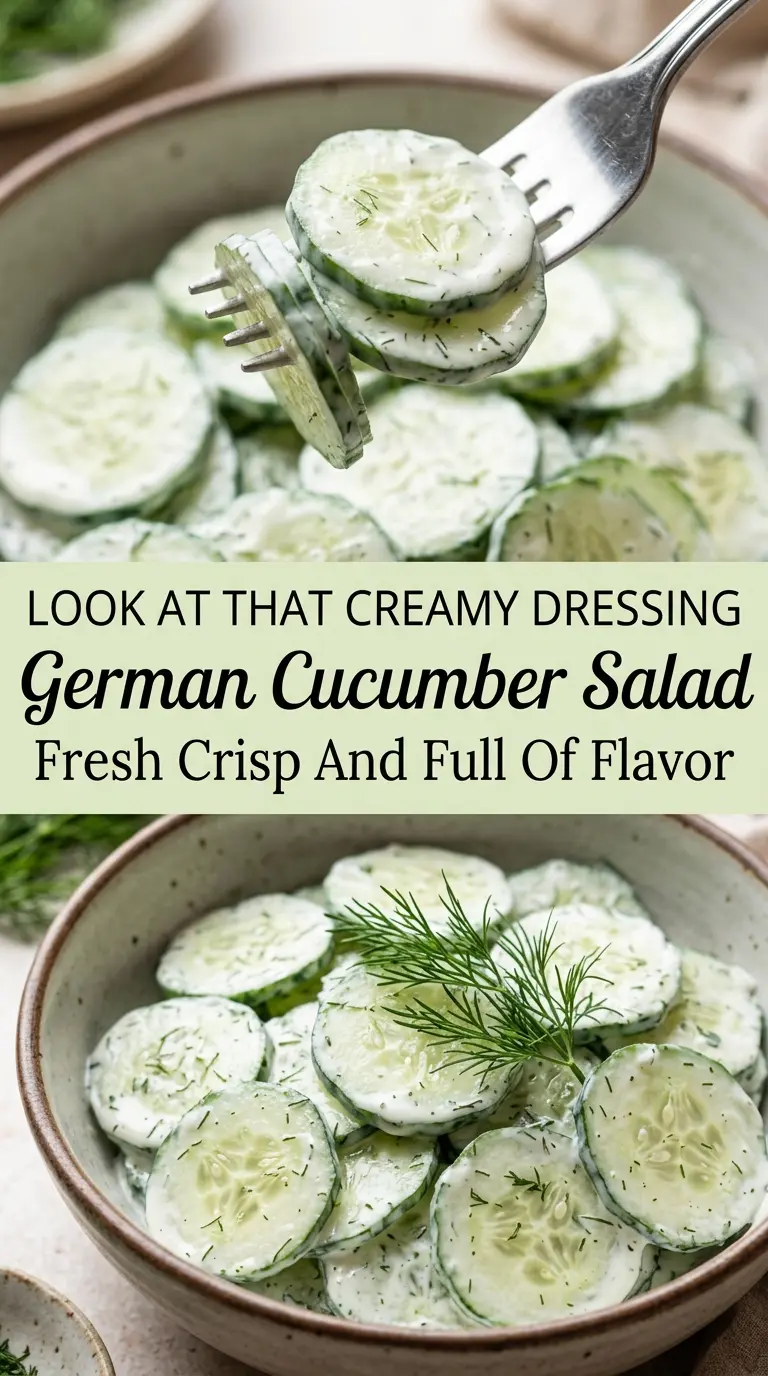
The Reason This Salad Stays Crisp Instead of Turning Watery
German cucumber salad falls apart for one simple reason: cucumbers keep leaking after they hit the bowl. If you skip the salt rest, the dressing gets diluted, the onions steam the salad instead of sharping it up, and you end up with a pale puddle at the bottom of the serving dish. Salting the slices first changes that. It pulls out enough water to protect the dressing without softening the cucumbers into limp little discs.
The other thing that matters is how long the salad sits before serving. This needs a short chill, not an overnight bath. Give it enough time for the flavors to settle in, then serve it while the cucumbers still have bite. If it rests too long, even a well-made creamy dressing will thin out as the vegetables continue to release moisture.
- English cucumbers — These are the best choice because they have thinner skins, fewer seeds, and a cleaner crunch. Regular slicing cucumbers work too, but peel them if the skin is thick and scoop out large seeds so the salad doesn’t get watery.
- Red onion — The mild bite and color both matter here. If yours tastes harsh, slice it thin and let it sit in cold water for 10 minutes, then drain well. That takes the edge off without losing the onion flavor.
- Sour cream — This gives the dressing its classic creamy body. Full-fat sour cream holds up best; lower-fat versions can work, but they tend to loosen faster once the cucumbers are added.
- Fresh dill — Dried dill won’t taste the same. Fresh dill gives the salad that clean, grassy finish that makes the whole bowl taste cooler and brighter.
- White vinegar and lemon juice — The vinegar brings the sharp tang, and the lemon rounds it out. You can use all vinegar in a pinch, but the lemon keeps the dressing from tasting flat.
The 20 Minutes That Matter Before You Toss It Together
Salt the Cucumbers First
Thinly slice the cucumbers and lay them in a colander with a light sprinkle of salt. Let them sit for about 20 minutes until they look glossy and a little damp. That moisture is what would otherwise water down the dressing. If you rush this part, the salad tastes fine right away and then gets sloppy fast.
Whisk the Dressing Until It Looks Smooth and Loose
Stir the sour cream, vinegar, lemon juice, dill, sugar, salt, and pepper together in a large bowl. The dressing should look smooth, not thick and pasty. If it seems too stiff, a small splash of vinegar or lemon juice loosens it just enough to coat the cucumbers evenly.
Toss, Then Chill Briefly
Add the dried cucumber slices and onions to the bowl and toss until everything is coated. Refrigerate for at least 30 minutes so the flavors can settle and the onions soften a little. Don’t leave it all afternoon unless you want the cucumbers to soften and release more liquid than you started with.
How to Adapt This for Different Tables and Different Diets
Dairy-Free Version
Use an unsweetened plain coconut yogurt or a thick dairy-free sour cream in place of the sour cream. The salad will still be creamy, but the flavor becomes a little softer and less tangy, so keep the vinegar and lemon in place to wake it up.
A Lighter, More Vinegary Salad
Swap half the sour cream for plain Greek yogurt if you want a sharper, lighter dressing. It adds a little more tang and a slightly thicker finish, though it won’t taste as rich as the classic version.
No Fresh Dill on Hand
Use 1 teaspoon dried dill instead of 1 tablespoon fresh. Dried dill is more muted and less delicate, so add it to the dressing early and let it sit for a few minutes before tossing with the cucumbers.
Storage and Reheating
- Refrigerator: Best within 1 day, though it will still taste good on day 2. The cucumbers release more liquid over time, so expect a thinner dressing later on.
- Freezer: Don’t freeze this salad. The cucumbers turn soft and watery once thawed, and the dressing separates.
- Reheating: No reheating needed. Serve it cold straight from the fridge, then stir it once before plating if a little liquid has settled at the bottom.
Questions I Get Asked About This Recipe

German Cucumber Salad
Ingredients
Method
- Thinly slice the English cucumbers and red onion.
- Place the cucumbers in a colander and sprinkle lightly with salt.
- Let the cucumbers sit for 20 minutes to remove excess moisture.
- Pat the cucumbers dry with paper towels to prevent watery salad.
- In a large bowl, whisk together the sour cream, white vinegar, fresh lemon juice, fresh dill, sugar, salt, and black pepper until smooth.
- Add the cucumbers and red onion to the dressing.
- Toss until the cucumbers and onions are evenly coated.
- Refrigerate the salad for at least 30 minutes before serving.
- Garnish with extra dill and serve chilled with a crisp, creamy texture.
