
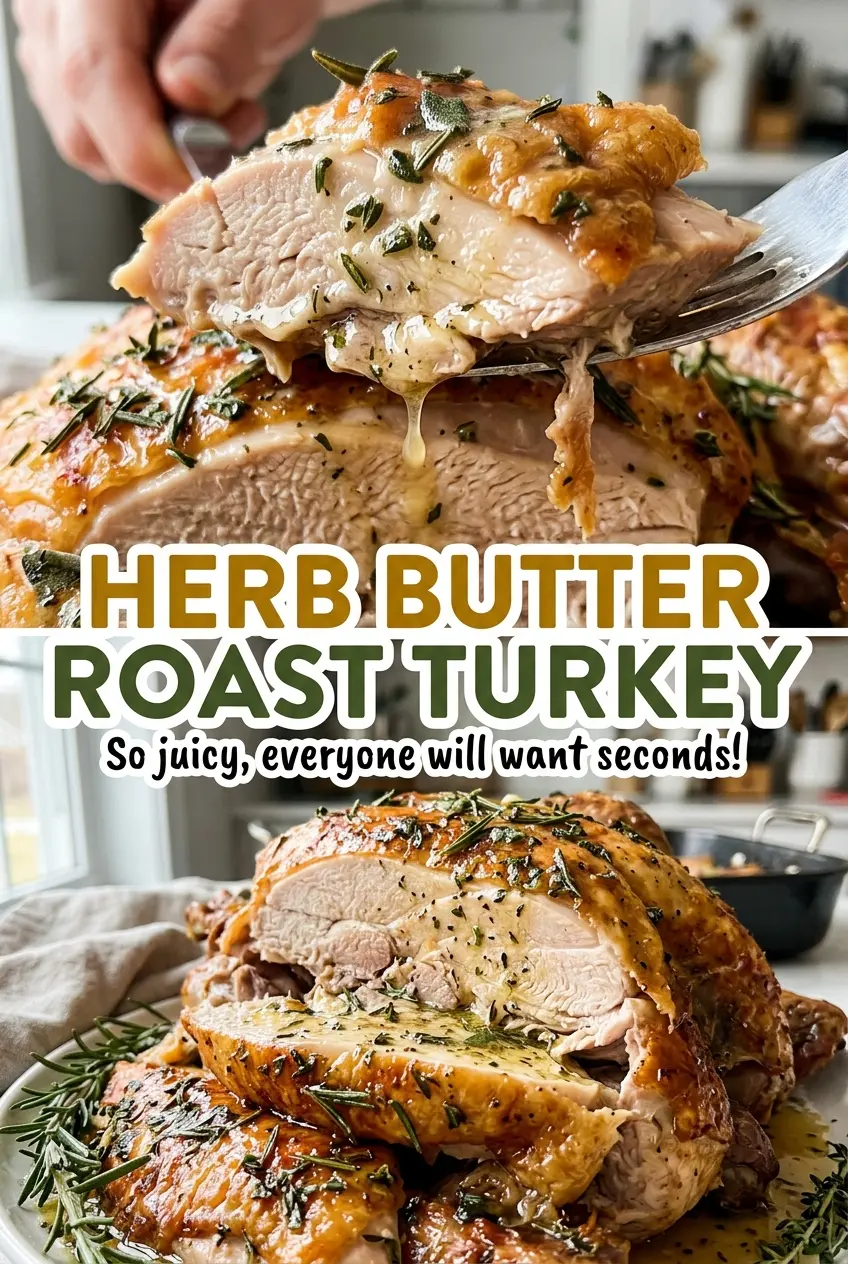
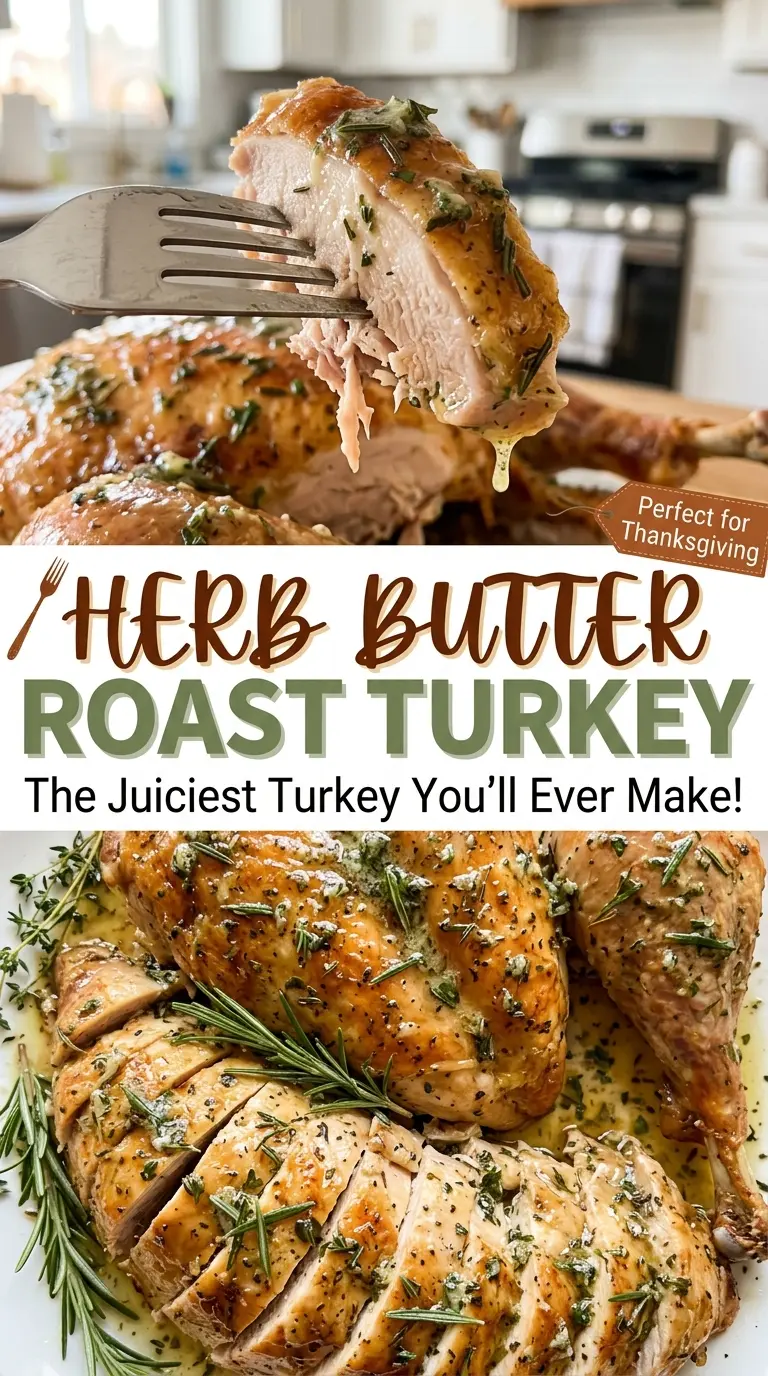
The butter starts to soften as soon as it hits the warm turkey, and those flecks of parsley and rosemary smell incredible before the pan even goes into the oven. I tuck most of the herb butter under the breast skin, where it can stay close to the meat, then spread the rest over the outside. That’s the approach I use for this herb butter roast turkey, a simple whole-bird roast with onion and lemon in the cavity.
Taking a moment to loosen the breast skin gently makes a difference: you can spread the butter across more of the meat without tearing the skin. The outside gets a coating too, and a loose foil tent is there if the breast starts browning faster than the rest of the bird. I rely on a thermometer in both the thickest part of the breast and the innermost thigh, then give the turkey a full rest before carving. The result is a fragrant, buttery roast with tender slices ready for the table.
Kitchen Note
Use a thermometer in both the thickest part of the breast and the innermost part of the thigh, keeping the probe away from bone. A single reading can miss the spot that needs more time.
Save this herb butter roast turkey for a centerpiece with fragrant herbs, garlic, and a golden buttered outside.
Why the Herb Butter Belongs Under the Breast Skin
Butter spread only across the outside has to work through the skin before it reaches the breast meat. Loosening the skin gives you a place to spread most of the herb mixture directly over the breast, while the remaining butter coats the exterior. It’s a small change in where the butter goes, but it makes the herb-and-garlic mixture part of more than just the surface.
Go slowly as you loosen the skin. Slide your fingers in gently, working from the opening without pulling hard; a tear makes it harder to keep the butter tucked beneath the skin. If the butter is soft, it spreads more easily, so you can cover the breast without pressing or scraping. The onion and lemon go in the cavity, not under the skin, keeping the preparation straightforward and leaving the butter to do its job on the breast and outside of the bird.
The turkey also needs room to roast breast-side up on a rack in a large roasting pan. That setup keeps the bird raised above the bottom of the pan while it cooks. There’s no need to fuss with extra ingredients or a complicated stuffing: this roast gets its savory, citrusy aroma from the simple ingredients already going into the cavity.
What the Fresh Herbs, Butter, and Cavity Aromatics Each Bring
- Unsalted butter — Softened butter mixes smoothly with the chopped herbs and garlic, then spreads both under the skin and over the outside. Starting with unsalted butter lets the kosher salt in the herb mixture season the bird without relying on the salt level of salted butter.
- Parsley, rosemary, and thyme — Fresh parsley gives the butter a green, herbaceous base, while rosemary and thyme add their own distinct aromas. Finely chopping the parsley and rosemary helps the herbs distribute through the butter instead of bunching up as you spread it.
- Garlic — Minced garlic disperses through the butter so you get it throughout the coating rather than in large pieces. Chop it finely for an even mixture.
- Whole turkey — Choose a fully thawed bird with the neck and giblets removed so it’s ready to dry, season, and roast. The weight range here is intended for the listed roasting window; a different-sized bird won’t follow that same timing.
- Yellow onion and lemon — Quartered onion and halved lemon sit in the cavity while the turkey roasts, bringing their aromas into the center of the bird. Keep them as the simple cavity aromatics for this version.
The Roast, From Herb Butter to Rested Carving Board
Mix a Spreadable Herb Butter
Stir the softened butter with the parsley, rosemary, thyme, minced garlic, kosher salt, and black pepper in a medium bowl. Keep mixing until the herbs and garlic are evenly distributed, with no large clumps of herbs in one spot. If the butter is still firm, it will be harder to spread without tugging at the skin. Set it aside while you prepare the turkey.
Dry and Position the Turkey
Heat the oven to 325°F and set a rack in a large roasting pan. Pat the fully thawed turkey dry with paper towels, then tuck the wing tips underneath the body so they’re held close. Set the turkey breast-side up on the rack. Drying the surface first also makes it easier to spread the butter over the skin without sliding around on moisture.
Spread the Butter and Add the Aromatics
Gently loosen the skin over the breast and spread about two-thirds of the herb butter underneath it. Work across the breast rather than pushing hard in one place, which helps avoid tearing the skin. Spread the rest of the butter over the outside of the turkey, then put the quartered onion and halved lemon in the cavity. Keep the butter distribution even so the outside has a coating and the breast has butter beneath the skin.
Roast, Check Both Spots, and Rest
Roast for 3 to 3 3/4 hours, tenting the breast loosely with foil if it browns too quickly. Check the thickest part of the breast and the innermost part of the thigh with a thermometer, avoiding bone; both readings should reach 165°F. If the breast is browning ahead of the rest of the bird, lay the foil tent loosely over it rather than wrapping the turkey tightly. Transfer the turkey to a carving board, tent loosely with foil, and rest for 30 to 45 minutes before carving.
Make-Ahead Options and Simple Adaptations for This Roast
Mix the Herb Butter Ahead
You can mix the butter, herbs, garlic, salt, and pepper ahead and refrigerate it in a covered container. Before using it, let it soften until it spreads easily; cold, firm butter is difficult to work under the breast skin without pulling at it.
Make It Dairy-Free With Plant-Based Butter
For a dairy-free adaptation, use an equal amount of stick-style dairy-free butter in place of the unsalted butter. Choose a product that softens and spreads like butter rather than a pourable oil; the herb mixture will still coat the turkey, though its browning and flavor may vary by brand.
Storage and Reheating
- Refrigerator: Refrigerate leftover turkey within 2 hours and use it within 3 to 4 days. The breast meat may firm up as it chills.
- Freezer: Freeze carved leftovers in airtight, freezer-safe packaging for 2 to 6 months for best quality. Thaw in the refrigerator before reheating.
- Reheating: Warm covered portions in a 325°F oven with a little broth or water in the dish to help keep them moist, until the turkey reaches 165°F. Avoid reheating uncovered for too long, which can dry out the slices.
Questions That Come Up Before Roasting a Whole Turkey
Herb Butter Roast Turkey
Ingredients
Equipment
Method
- In a medium bowl, mix the softened unsalted butter with the finely chopped fresh parsley, finely chopped fresh rosemary, fresh thyme leaves, minced garlic, kosher salt, and black pepper until evenly combined.
- Heat the oven to 325°F.
- Set a rack in a large roasting pan.
- Pat the turkey dry with paper towels.
- Tuck the wing tips under the body.
- Place the turkey breast-side up on the rack.
- Loosen the skin over the breast.
- Spread about two-thirds of the herb butter underneath the skin.
- Spread the remaining herb butter over the outside of the turkey.
- Put the quartered onion and halved lemon in the cavity.
- Roast for 3 to 3 3/4 hours.
- If the breast browns too quickly, tent it loosely with foil while roasting until a thermometer reads 165°F in the thickest part of the breast and the innermost part of the thigh without touching bone.
- Transfer the turkey to a carving board.
- Tent the turkey loosely with foil.
- Rest for 30 to 45 minutes before carving.
