
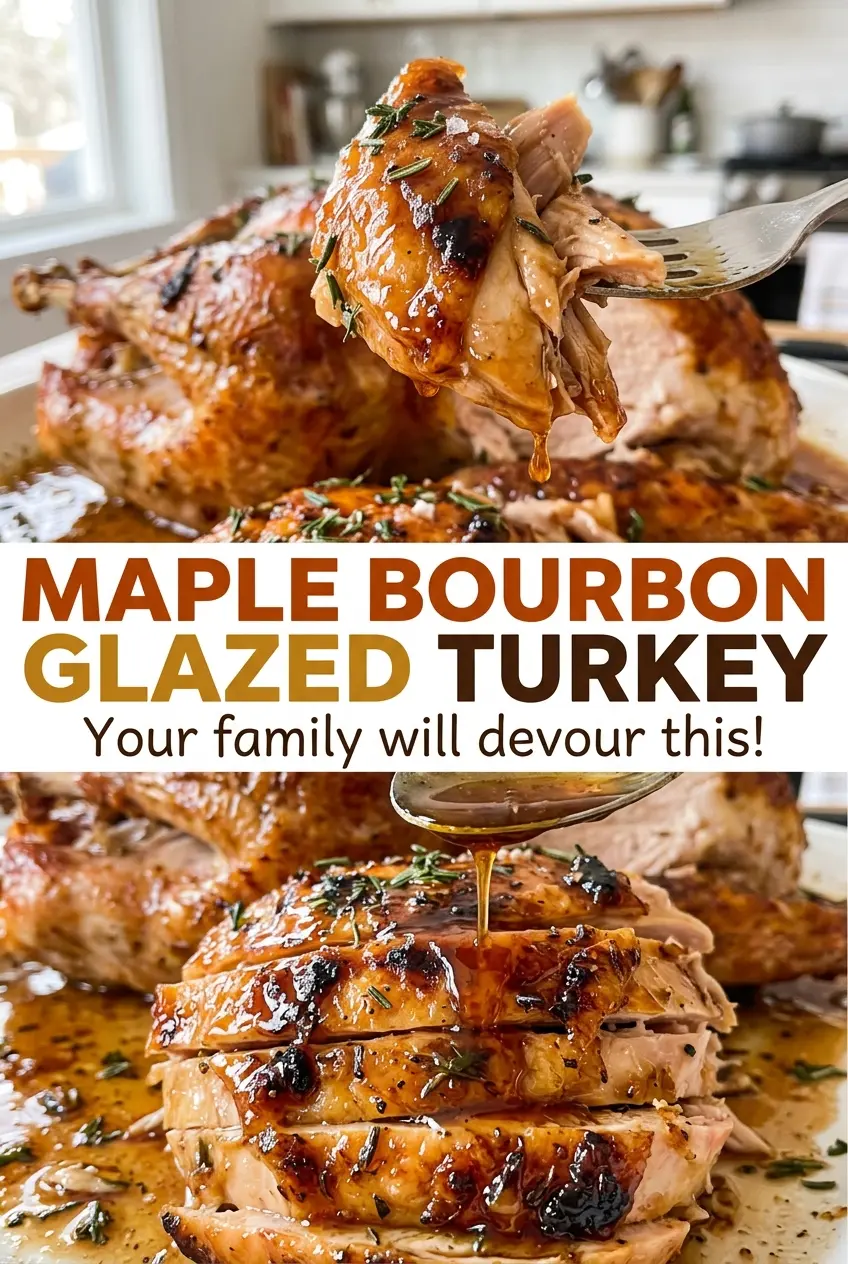
The first thing I watch when a glazed turkey goes into the oven is the skin, not the clock. Maple syrup can turn from glossy to too dark if it gets hours of heat, so this Maple Bourbon Glazed Turkey starts roasting without the glaze. That gives the bird time to cook while the sweet, tangy glaze waits on the stove.
I rub softened butter under the breast skin as well as over the outside, then fill the cavity with onion, lemon, and thyme. Later, the maple and bourbon go on in several thin coats, building a shiny finish without asking the sugars to withstand the entire roast. The result is tender turkey under a deep amber glaze, with just enough bourbon warmth to keep the sweetness in check.
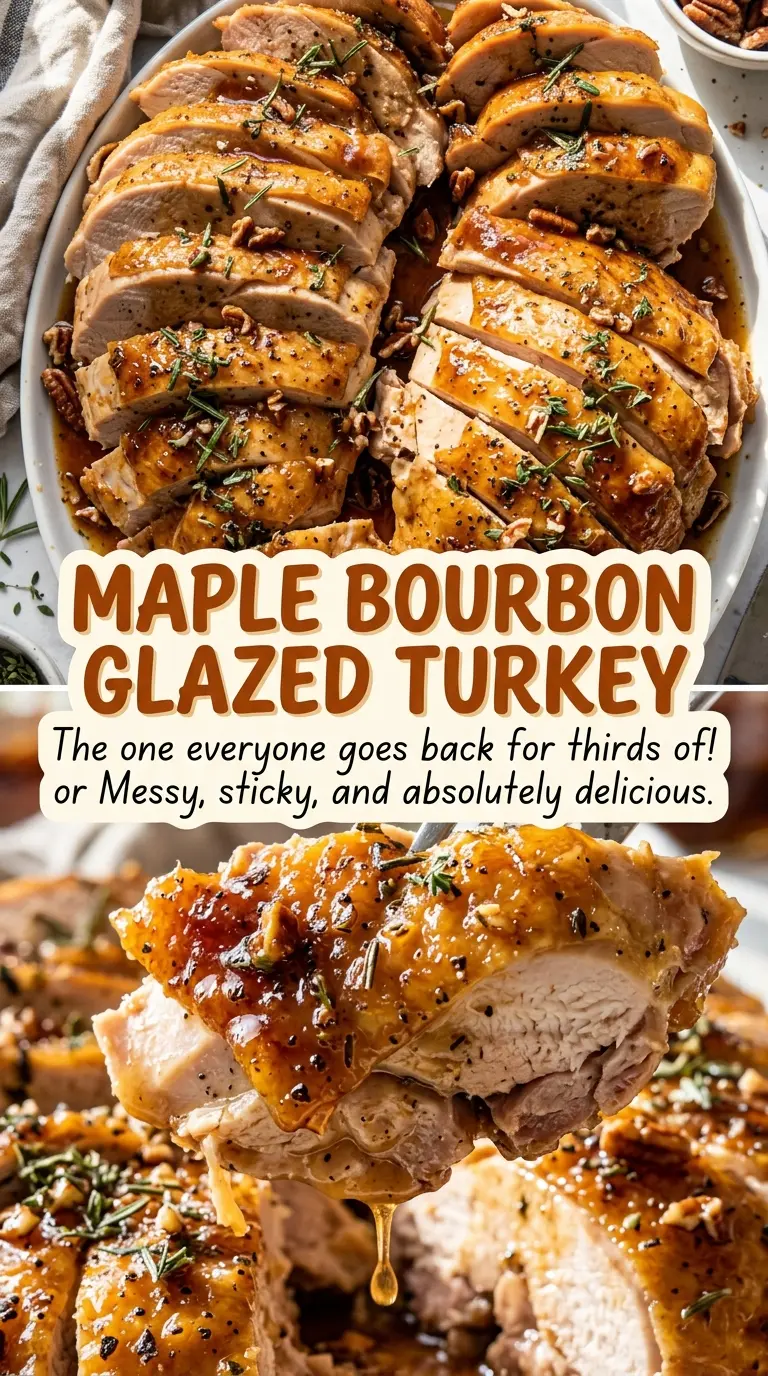
It’s a generous centerpiece, but the method is straightforward: season, roast, glaze, and give the turkey time to rest. When you carve it, the skin is burnished and sticky at the edges, and the slices stay juicy beneath it.
Kitchen Note
Keep the butter softened, not melted, when you work it under the breast skin. It’s much easier to spread in an even layer and stays where you put it.
Save this Maple Bourbon Glazed Turkey for a holiday table centerpiece with a glossy maple finish and bourbon-tangy glaze.
Why the Maple Glaze Goes on Late, Not at the Start
Maple syrup brings the glaze its shine and sweetness, but those sugars brown quickly under oven heat. If the syrup-coated skin sits in the oven for the whole roast, the surface can darken before the turkey is finished cooking. Starting with a plain, buttered bird gives the skin time to cook without exposing the glaze to hours of heat.
The glaze also benefits from being applied in layers. A first coat gives it something to cling to; the later coats add color and a tacky sheen instead of pooling in one thick layer. Dijon mustard and cider vinegar keep the maple from tasting one-note, while bourbon adds a rounded, toasty note. Watch the color as you work: a deep amber finish is lovely, but skin that’s getting too dark needs a loose foil tent, not another coat of glaze.
What Makes This Maple-Bourbon Glaze Taste Balanced
- Whole turkey — A thawed bird in the 12- to 14-pound range is the size this roasting schedule is built around. Pat the skin dry before seasoning; moisture on the surface works against browning.
- Unsalted butter — It carries seasoning over the skin and adds richness under the breast skin. Unsalted butter gives you control over the salt level, so it’s a better fit here than salted butter.
- Onion, lemon, and fresh thyme — These aromatics scent the cavity as the turkey roasts. Use a fresh lemon and fresh thyme for the clean, bright aroma; the onion and lemon are quartered so they fit easily inside.
- Pure maple syrup — Pure maple syrup gives the glaze its particular woodsy sweetness and glossy finish. Pancake syrup is a different product, so it won’t give quite the same flavor or behave exactly the same way as it simmers.
- Bourbon, Dijon, and apple cider vinegar — Bourbon brings warm oak notes, while Dijon and vinegar cut through the syrup’s sweetness. Their balance matters more than choosing an expensive bottle of bourbon; use one whose flavor you enjoy.
How to Roast the Turkey Before the Glaze Goes On
Dry the Skin and Season Underneath It
Heat the oven to 325°F and set a rack in a large roasting pan. Pat the thawed turkey dry, then gently loosen the breast skin enough to rub softened butter beneath it; spread the rest over the outside. Season all over with kosher salt and black pepper, fill the cavity with the quartered onion and lemon and thyme sprigs, tuck the wing tips under, and tie the legs loosely with kitchen twine. Keep the leg tie loose rather than cinching it tightly around the bird.
Simmer the Glaze Until It Coats a Spoon
In a small saucepan over medium heat, bring the maple syrup, bourbon, Dijon mustard, and apple cider vinegar to a simmer. Stir occasionally as it cooks for 6 to 8 minutes, until it looks slightly thickened rather than watery. Take the pan off the heat and stir in the butter until it melts. The glaze should be fluid enough to brush, with a little body that clings to the back of a spoon.
Give the Turkey Its First Roast Without Glaze
Set the turkey breast-side up on the roasting rack and pour the water into the pan. Roast for 2 1/4 hours before brushing on any glaze; this unglazed stretch lets the bird begin cooking while keeping the maple sugars away from prolonged heat. Keep the oven at 325°F and resist opening the door repeatedly during this stage. When it’s time to glaze, work quickly so the oven doesn’t lose much heat.
Brush in Coats, Check Both Thigh and Breast, Then Rest
Brush the turkey with glaze, then continue roasting and brush again every 15 minutes for the next 45 minutes. Check the thickest part of the breast and the innermost part of the thigh; both need to reach 165°F. If either spot is still below temperature, continue roasting without adding more glaze, and tent the bird loosely with foil if the skin is getting too dark. Total roasting time is usually 3 to 3 3/4 hours, but the thermometer reading—not the clock—tells you when it’s ready. Transfer the turkey to a carving board, tent it loosely with foil, and let it rest for 30 minutes before carving.
Three Ways to Adjust the Glaze Without Changing Its Character
Make the glaze more tangy
For a sharper finish, shift the balance toward Dijon mustard and apple cider vinegar and away from some of the maple syrup. The glaze will taste less sweet and more savory; keep the same ingredients and simmer until it has a brushable, slightly thickened consistency.
Turn up the maple notes
For a sweeter, more maple-forward glaze, let the syrup take a larger share of the mixture and ease back on the Dijon and vinegar. The bourbon will still add warmth, but the finished skin will read as sweeter and less tangy. Keep an eye on the color as you brush it on, since a sweeter glaze can darken quickly.
Make it dairy-free
Omit the butter from both the turkey rub and the glaze for a dairy-free version. The bird will have less buttery richness, and the glaze won’t have quite the same rounded, satiny finish, but the maple, bourbon, mustard, and vinegar still make a flavorful coating.
Storage and Reheating
- Refrigerator: Refrigerate leftover turkey within 2 hours and use it within 3 to 4 days. The skin softens in storage, though the meat stays good for slicing or adding to another meal.
- Freezer: Freeze carved turkey in airtight portions for up to 4 months for best quality. Thaw it in the refrigerator before reheating.
- Reheating: Warm slices covered in a low oven until hot throughout, or heat individual portions in the microwave. Avoid reheating uncovered at high heat, which dries the lean breast meat.
Questions That Come Up Before the Turkey Goes in the Oven
Maple Bourbon Glazed Turkey
Ingredients
Equipment
Method
- Heat the oven to 325°F.
- Set a rack in a large roasting pan.
- Pat the turkey dry.
- Rub the softened butter under the breast skin and over the outside.
- Season the turkey all over with the salt and pepper.
- Fill the cavity with the onion, lemon, and thyme.
- Tuck the wing tips under.
- Tie the legs loosely with kitchen twine.
- Bring the maple syrup, bourbon, Dijon, and vinegar to a simmer over medium heat.
- Simmer for 6 to 8 minutes, stirring occasionally, until slightly thickened.
- Remove the glaze from the heat.
- Stir in the 2 tablespoons butter until melted.
- Set the turkey breast-side up on the rack.
- Pour the water into the pan.
- Roast for 2 1/4 hours.
- Brush the turkey with glaze.
- Continue roasting, brushing again every 15 minutes for the next 45 minutes.
- If the turkey is not yet 165°F in the thickest part of the breast and the innermost part of the thigh, continue roasting without more glaze until it reaches 165°F, tenting loosely with foil if it gets too dark; the total roasting time is usually 3 to 3 3/4 hours.
- Transfer the turkey to a carving board.
- Tent loosely with foil.
- Rest for 30 minutes before carving.
