
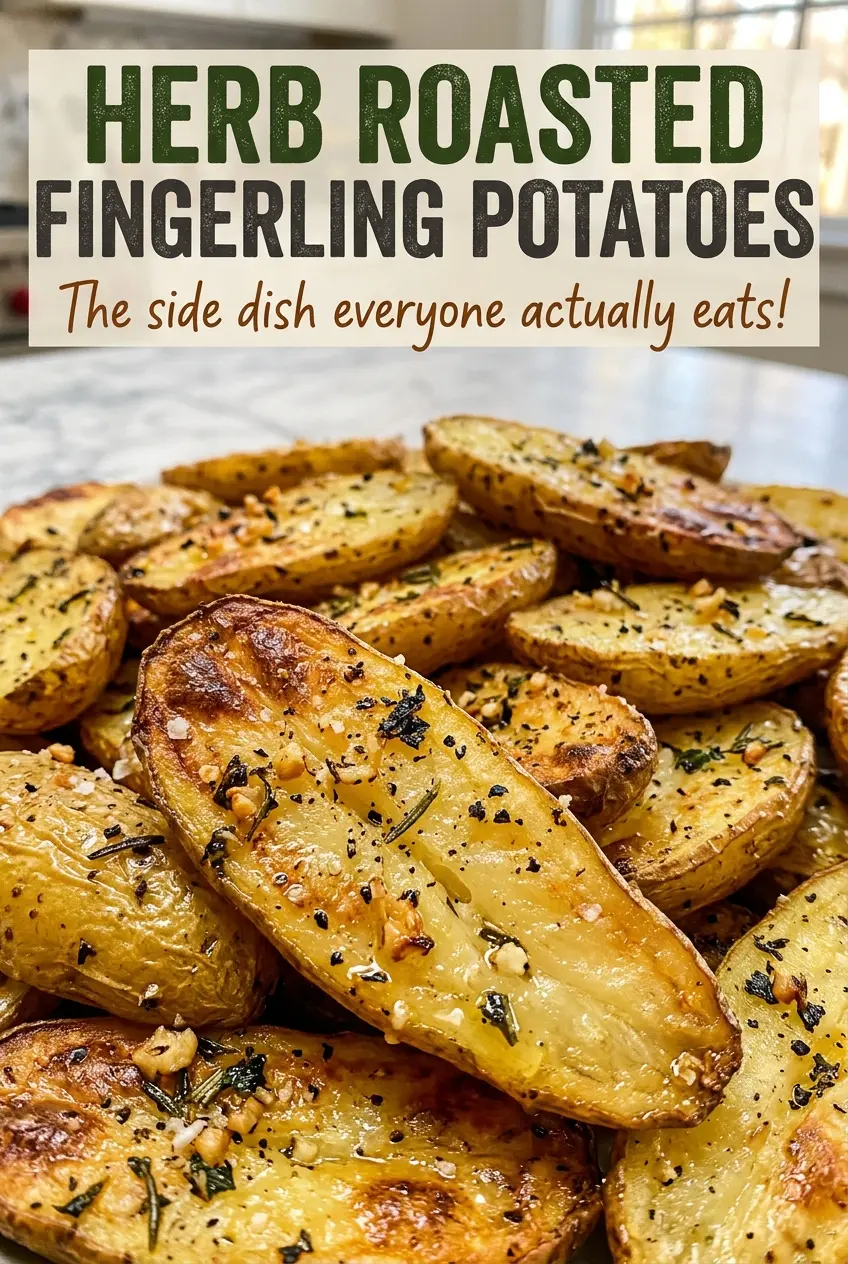
The flat cut sides are the first thing I look for when these potatoes come out of the oven: they should be deeply browned, while the centers give easily to a fork. Fingerlings are a good fit for that contrast because halving them lengthwise creates a broad surface that can brown against the pan. The skin stays on, so there’s no peeling to slow things down.
I toss the potatoes with olive oil, chopped rosemary and thyme, salt, and pepper, then spread them cut side down on a rimmed baking sheet. Turning them halfway through gives both sides time to brown, and the fresh herbs stay close to the potatoes instead of getting lost in the pan. The result is a straightforward side dish with tender centers, crisp-edged browned spots, and a savory herbal aroma.
Kitchen Note
Chop the rosemary finely so its stronger, woody pieces are spread through the bowl rather than landing in a few concentrated bites. I like the herbs evenly distributed before the potatoes go onto the pan.
Save these Herb Roasted Fingerling Potatoes for a side with browned cut faces, tender centers, and fresh rosemary and thyme.
Why the Long Cut Gives Fingerlings More Room to Brown
Halving fingerlings lengthwise isn’t just a convenient way to prepare them. It opens a broad, flat face on each potato, so there’s more surface to brown than you’d get from leaving the potatoes whole. At the same time, the pieces stay large enough to keep their tender, substantial centers.
That shape also makes the pan arrangement easier to judge. The potatoes need to sit in one layer, with the cut sides touching the baking sheet rather than tucked against their neighbors. If they’re crowded, moisture has less room to escape and the surfaces are more likely to soften than brown. Give the pieces a little space, and the exposed faces have a better chance of taking on color.
Fingerlings aren’t identical in size, so don’t judge the whole pan by the smallest potato. The visual target is browned surfaces, and the doneness check is a fork that slides into the center without resistance. Those two cues matter more than every piece looking exactly alike.
What Fingerlings, Olive Oil, and Fresh Herbs Bring to the Pan
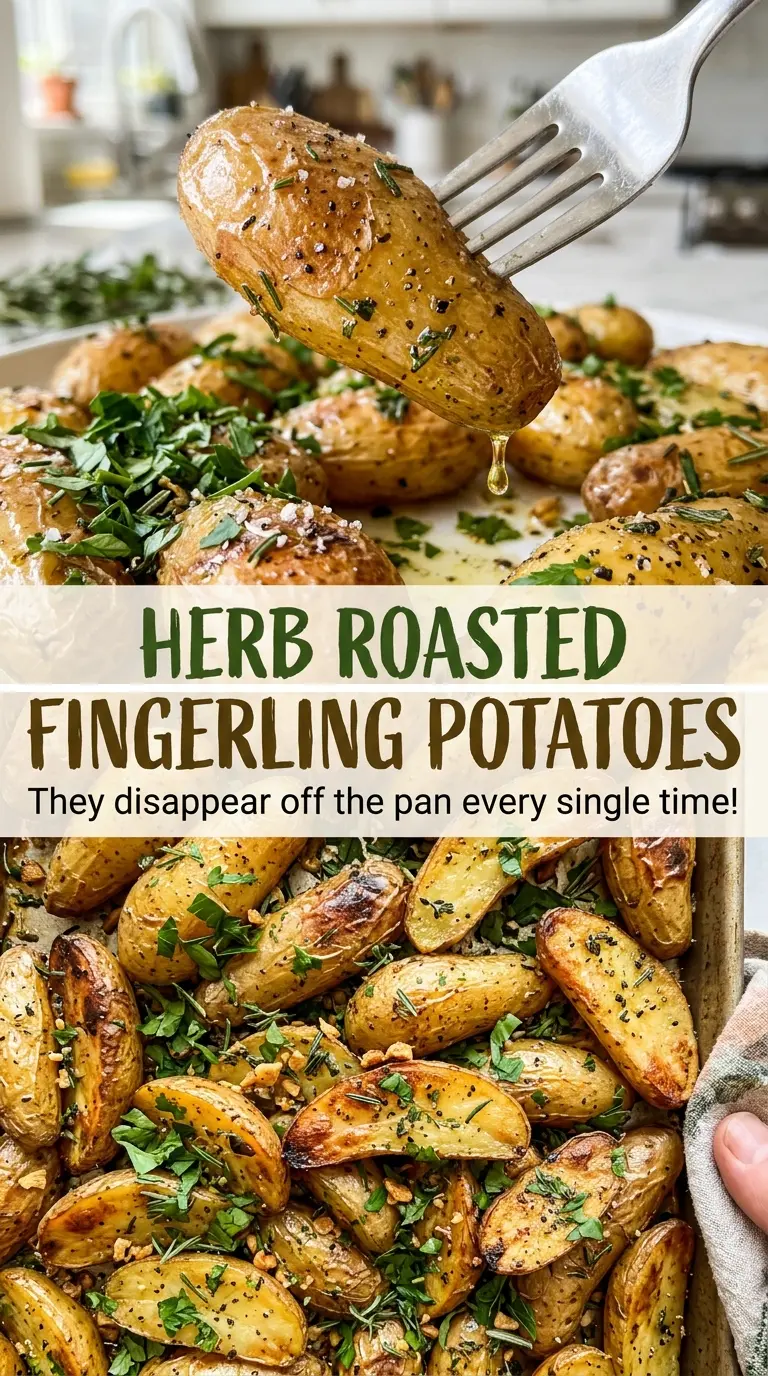
- Fingerling potatoes — Their narrow shape and firm centers suit this lengthwise cut. Scrub them well before halving; there’s no peeling step. If you can’t find fingerlings, small waxy potatoes can stand in. Choose pieces of a similar size and cut them so they’ll roast evenly, though you’ll lose the fingerlings’ long, slender shape.
- Olive oil — It helps the herbs and seasonings coat the potatoes and encourages browning on the cut surfaces. A standard olive oil is fine here; there’s no need to use a special finishing oil. A neutral cooking oil can replace it in the same quantity, but the potatoes will lose olive oil’s subtle taste.
- Fresh rosemary and thyme — Rosemary brings a bold, piney aroma, while thyme adds a softer herbal note. Fresh chopped herbs are the right choice for this version because they cling to the oiled potatoes and give a clear, fresh flavor. Dried herbs don’t behave like-for-like, so I don’t recommend swapping them in without changing the balance.
- Black pepper — It adds a gentle bite alongside the herbs. Use the amount in the recipe card; there’s no need to change the grind or add another seasoning for the potatoes to taste complete.
How to Roast the Cut Faces Until Browned and Fork-Tender
Get the Oven Ready Before the Potatoes Go In
Heat the oven to 425°F before you start roasting. Scrub the fingerlings and halve them lengthwise, keeping the pieces as similar in size as you can. The long cut gives each half a flat side that can sit against the baking sheet. If a potato is unusually large, cut it into halves that are closer in size to the rest rather than leaving one much thicker piece.
Coat Every Piece with the Herb Mixture
Put the potatoes in a large bowl and toss them with the olive oil, chopped rosemary, chopped thyme, kosher salt, and black pepper. Turn the pieces until the oil and herbs are distributed over the potatoes. Check the bottom of the bowl as you toss; loose herbs and seasoning can collect there instead of sticking to the potatoes. A thorough coating helps each bite get some of the herb mixture.
Roast, Turn Halfway, and Check the Centers
Spread the potatoes cut side down in a single layer on a rimmed baking sheet. Roast for 30 to 35 minutes, turning them halfway through. Look for browned surfaces and test a thicker piece with a fork; it should be fork-tender before you take the pan out. If the centers still feel firm, give the potatoes more time within the roasting range rather than relying on color alone.
Three Small Changes for a Rosemary-Forward, Thyme-Forward, or Lower-Salt Pan
A Rosemary-Only Version
Leave out the thyme and keep the other ingredients as listed. Rosemary’s woodsy, pronounced flavor will stand out more, so chop it finely to distribute it evenly across the potatoes.
A Milder Thyme-Only Pan
Skip the rosemary and use the listed fresh thyme. The flavor will be gentler and less piney, while the potatoes still get an herbal coating from the olive oil and thyme.
A Lower-Sodium Option
Omit the kosher salt and keep the pepper, rosemary, and thyme. The potatoes will taste less savory and salty, but the fresh herbs still give them a distinct flavor. This version is naturally plant-based and gluten-free.
Storage and Reheating
- Refrigerator: Store leftovers in a covered container for 3 to 4 days. The cut faces will soften as they sit.
- Freezer: Freeze in a single layer until firm, then transfer to an airtight container for up to 2 months. Thawed potatoes will be softer than freshly roasted ones.
- Reheating: Spread the potatoes in a single layer on a baking sheet and heat at 425°F until hot throughout, reaching 165°F. Avoid microwaving if you want the browned surfaces to regain some crispness.
Questions That Come Up While Roasting Fingerlings
Herb Roasted Fingerling Potatoes
Ingredients
Equipment
Method
- Heat the oven to 425°F.
- Toss the potatoes with the olive oil, rosemary, thyme, salt, and pepper in a large bowl.
- Spread the potatoes cut side down in a single layer on a rimmed baking sheet.
- Roast for 30 to 35 minutes, turning them halfway through, until browned and fork-tender.
