
The green beans need a head start in the oven, or they’re still firm when the pork chops are ready to come out. Giving them the first eight minutes on the sheet pan solves that timing mismatch without dirtying another pan. Once the chops join them, the whole meal finishes together, with tender-crisp beans and juicy, herb-seasoned pork.
I use a large 18×13-inch rimmed sheet pan so the vegetables and chops have their own space. The green beans roast on one half, then the pork goes on the empty side. This staggered start is what makes these Sheet Pan Garlic Herb Pork Chops and Green Beans feel straightforward instead of like a race to get two parts of dinner done at once.
Kitchen Note
Stick with boneless pork chops that are about 1 inch thick. Thinner or thicker chops won’t follow the same roasting window, so the thermometer matters more than the clock if the size is different.
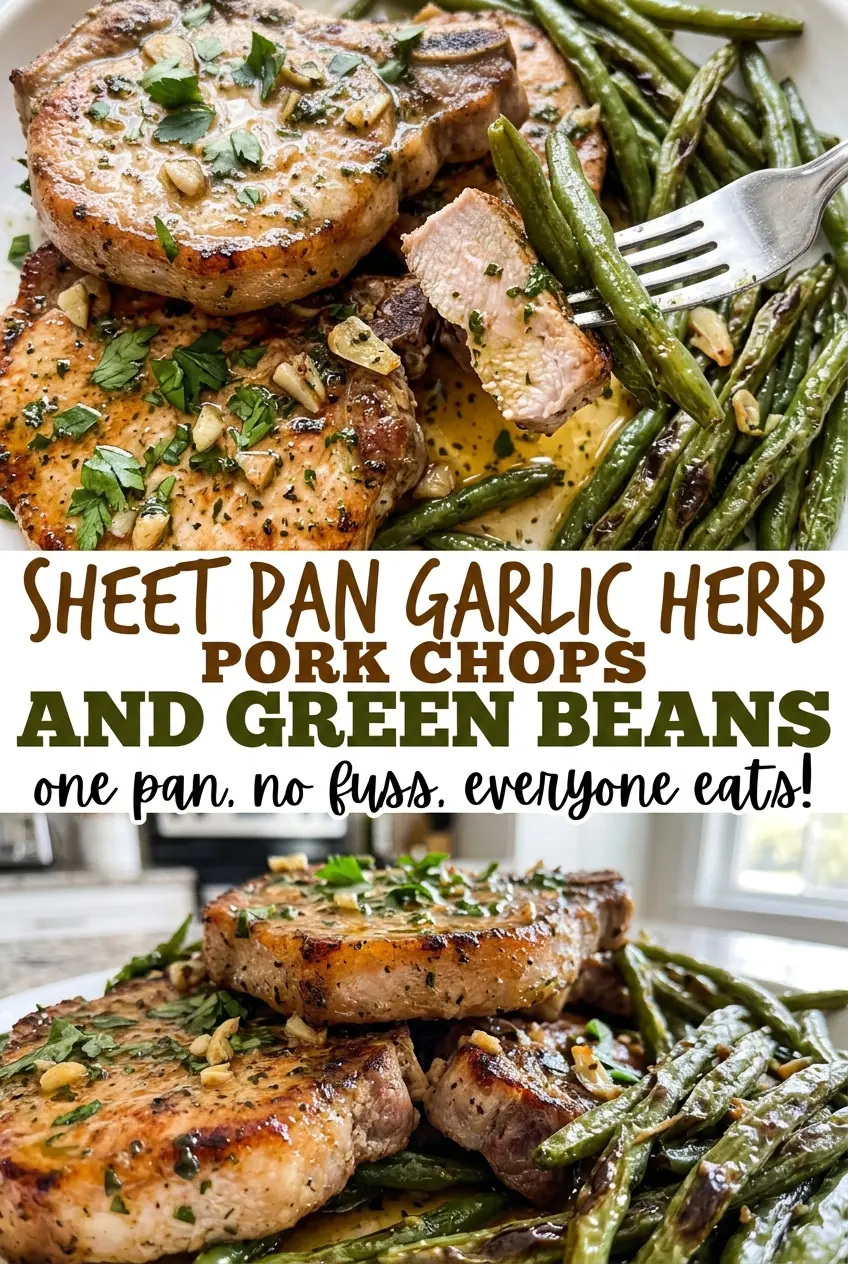
Save these sheet pan garlic herb pork chops and green beans for a dinner with juicy pork and tender-crisp vegetables, all roasted on one pan.
Why the Green Beans Go Into the Oven Before the Pork
Green beans and pork chops don’t need the same amount of roasting time. Starting them together would leave you choosing between undercooked beans and overdone pork, so the vegetables get eight minutes alone before the chops go onto the pan. That short lead-in gives the beans a chance to soften while the pork catches up.
The other part that matters is leaving room for both. Spread the beans in a single layer on one half of the 18×13-inch pan and keep the other half clear for the chops. Crowding the beans into a pile makes them cook less evenly, and a full pan can make it harder to keep the pork separate from the vegetables as they roast.
There’s also a useful built-in adjustment if the timing doesn’t line up perfectly: the pork and beans don’t have to leave the oven at the same moment. If the beans reach tender-crisp before the thickest chop reaches its target temperature, move the beans to a plate and let the pork continue. You can give the beans a brief final roast while the pork rests if they still need it.
What the Garlic, Herbs, and Oil Each Bring to the Pan

- Boneless pork chops — Chops that are 1 inch thick and weigh 5 to 6 ounces each roast in the timing range used here. Patting them dry before adding oil helps the seasoning cling evenly instead of sliding across a damp surface.
- Green beans — Fresh beans trimmed and spread in a single layer roast at the same oven temperature as the pork. Their texture is the cue to watch: tender-crisp is the goal, not limp or shriveled.
- Olive oil — Dividing the oil gives the beans and chops their own coating before they share the pan. Toss the beans until lightly coated, then rub the remaining oil over the dry pork so the seasonings cover the chops.
- Garlic powder and dried Italian seasoning — Garlic powder is split between the beans and pork, so its savory flavor runs through the whole meal. Italian seasoning goes on the chops, where the dried herbs stay in place as the pork roasts.
- Kosher salt and black pepper — Both are divided between the two components rather than added all at once. That keeps the beans seasoned on their own and gives the pork an even coating too.
The Staggered Roast That Gets Both Parts Done Together
Heat the Oven and Set Up the Pan
Preheat the oven to 425°F and set out a large rimmed 18×13-inch sheet pan. The rim helps keep the beans and their oil on the pan as you arrange everything. Give the vegetables one half and reserve the other half for the pork. Starting with the full oven temperature already established helps keep the roasting times predictable.
Give the Green Beans Their Head Start
Toss the trimmed green beans with 1 tablespoon of olive oil, 1/2 teaspoon of kosher salt, 1/2 teaspoon of garlic powder, and 1/4 teaspoon of black pepper. Spread them in a single layer on one half of the pan rather than stacking them. Roast for 8 minutes before adding the pork. The beans are only partway through cooking at this point; they’ll continue roasting alongside the chops.
Season the Chops and Roast Them Beside the Beans
While the beans roast, pat the pork chops dry and rub them with the remaining 1 tablespoon of olive oil. Season them with the remaining 1/2 teaspoon of kosher salt, 1/2 teaspoon of garlic powder, 1/4 teaspoon of black pepper, and the dried Italian seasoning. Arrange the chops on the empty half of the pan, then roast for 10–15 minutes. Check the thickest chop with an instant-read thermometer; it’s ready when it reaches 145°F.
Rest the Pork and Finish the Beans if Needed
When the pork is ready, transfer the chops to a plate and let them rest for 3 minutes. If the beans are already tender-crisp, take them off the pan with the pork. If they’re not there yet, leave them in the oven for 3–5 minutes while the pork rests. This way, you can finish each part at the right texture instead of holding the pork in the oven while the beans catch up.
Small Seasoning Shifts for a Different Balance
Put Some of the Italian Herbs on the Beans
For a more herb-forward pan, divide the teaspoon of dried Italian seasoning between the pork and green beans instead of putting it all on the chops. Keep the total amount the same. The beans pick up more of the herbal aroma, while the pork has a gentler seasoning on its surface.
Make the Pork More Peppery
If you want the pork to have a sharper black-pepper bite, put all of the divided pepper on the chops and leave it off the beans. Keep the total amount of pepper unchanged. The green beans will taste milder, and the pork will carry more of the seasoning’s warmth.
Storage and Reheating
- Refrigerator: Refrigerate leftovers within 2 hours and use them within 3–4 days. The green beans soften as they sit.
- Freezer: Freeze the pork and beans in an airtight container for up to 2–3 months. The pork holds up better than the beans, which will be softer after thawing.
- Reheating: Reheat leftovers in the microwave, checking that the pork reaches 165°F. The beans will soften further, so use short bursts and stop once the pork is hot rather than heating everything longer than needed.
Questions That Come Up While the Pan Is in the Oven
Sheet Pan Garlic Herb Pork Chops and Green Beans
Ingredients
Equipment
Method
- Preheat the oven to 425°F.
- Set out a large rimmed 18x13-inch sheet pan.
- Toss the green beans with 1 tablespoon olive oil, 1/2 teaspoon kosher salt, 1/2 teaspoon garlic powder, and 1/4 teaspoon black pepper.
- Spread the seasoned green beans in a single layer on one half of the pan.
- Roast the green beans for 8 minutes.
- While the beans roast, pat the pork chops dry.
- Rub the pork chops with the remaining 1 tablespoon olive oil.
- Season the pork chops with the remaining 1/2 teaspoon kosher salt, 1/2 teaspoon garlic powder, 1/4 teaspoon black pepper, and the Italian seasoning.
- Arrange the chops on the empty half of the pan.
- Roast for 10–15 minutes, checking the thickest chop with an instant-read thermometer; it is done at 145°F.
- If the beans are tender before the chops are ready, transfer them to a plate.
- Continue roasting the pork until it reaches 145°F.
- Transfer the pork to a plate and rest for 3 minutes.
- If the beans are not tender-crisp, roast them for 3–5 minutes more while the pork rests.
