
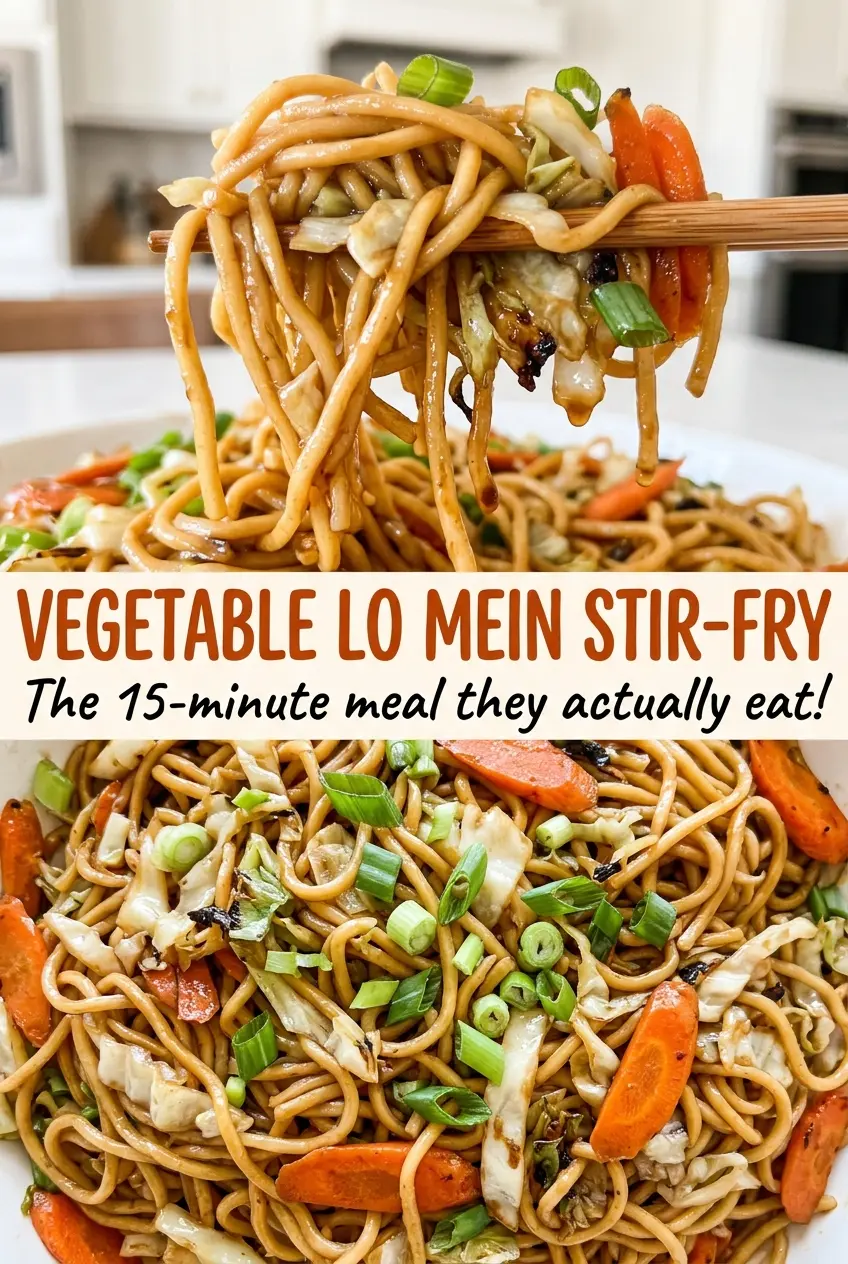
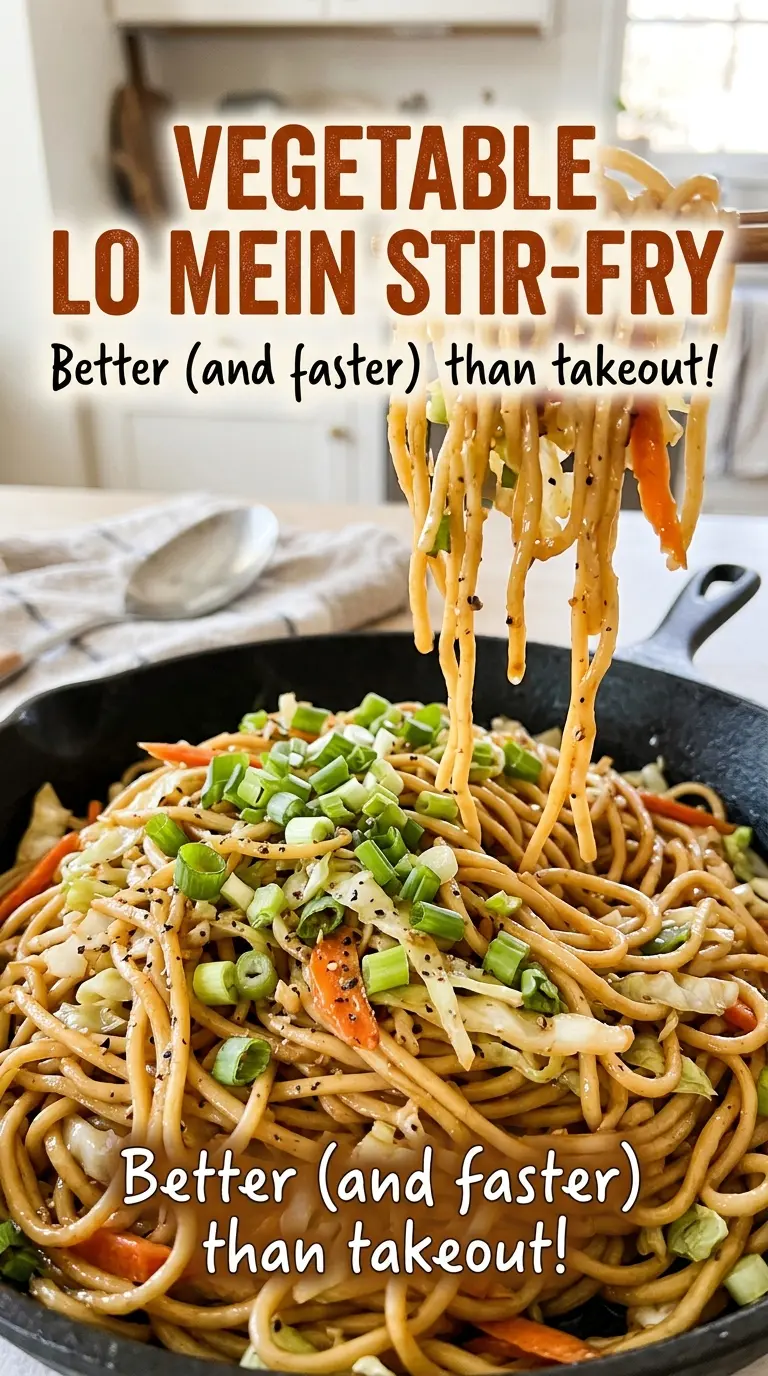
The sauce starts to cling right at the end, turning glossy as it coats the noodles instead of pooling at the bottom of the pan. That’s the moment I watch for when I make this Vegetable Lo Mein Stir-Fry. The first few seconds in the pan smell of garlic and fresh ginger, then the soy-and-hoisin sauce brings everything together without burying the vegetables.
Lo mein is quick, but the order matters. I stir-fry the vegetables in two batches so they have room to cook over high heat, then bring them back to the pan after the noodles are sauced. That keeps the cabbage and peppers crisp-tender rather than limp. The noodles get their flavor from a sauce with enough hoisin for gentle sweetness and toasted sesame oil for a nutty finish. You end up with a generous tangle of noodles, mushrooms, and vegetables that tastes balanced from the first forkful to the last.
Kitchen Note
Whisk the cornstarch into the sauce until you can’t see any little white clumps before it goes near the hot pan. It settles quickly, so give the bowl another stir just before you pour.
Save this Vegetable Lo Mein Stir-Fry for a fast, colorful noodle dinner with crisp-tender vegetables and a glossy hoisin-soy sauce.
Why the Vegetables Need Two Trips Through the Pan
A wok or skillet needs enough open surface for vegetables to meet the hot metal. Pile all the carrot, mushrooms, pepper, and cabbage in at once, and the pan cools while the vegetables release moisture. Instead of quick stir-frying, they soften in their own steam. That’s the difference between a plate with distinct, crisp-tender vegetables and one where everything tastes cooked down.
Splitting the vegetables into two rounds gives each batch breathing room. Keep the heat high and stir as they cook; after three to four minutes, the mushrooms should have softened and the cabbage should still have a little bite. Move each finished batch to a plate rather than leaving it in the wok. The vegetables return at the end, which means they warm through without spending the entire cooking time in the pan.
This also makes the timing easier to manage. The carrot matchsticks and thinly sliced pepper cook alongside the mushrooms and cabbage, while the separate batches keep the pan from being overloaded. If your skillet is smaller or your vegetables seem crowded, take that as a cue to give them even more room rather than turning down the heat and waiting for them to cook through.
What Gives the Sauce Its Lo Mein Balance
- Low-sodium soy sauce and hoisin — Soy sauce brings the savory, salty base, while hoisin adds sweetness and a deeper, rounded taste. Low-sodium soy sauce keeps the combination from becoming too salty. Hoisin has a distinct flavor, so there isn’t a perfect one-for-one replacement; leaving it out makes the sauce less sweet and less complex.
- Toasted sesame oil — A small amount gives the sauce its warm, nutty aroma. A fresh bottle matters more here than an expensive one; stale sesame oil can taste flat or bitter. If you don’t have it, neutral oil will work, but you’ll lose that toasted sesame note.
- Dried lo mein noodles — Their springy texture stands up to the final toss with sauce and vegetables. Choose a package of dried lo mein noodles when you can; ordinary dried spaghetti also works, with a slightly different chew. Cook either by its package directions and stop when the noodles are just tender.
- Fresh garlic and ginger — These go into the hot oil briefly, so fresh minced garlic and ginger give the dish its lively, fragrant base. Freshness matters more than the size of the pieces; mince them finely so they warm quickly without leaving large, sharp bites.
- Carrot, mushrooms, pepper, and cabbage — The different textures make the noodles feel like a full stir-fry rather than pasta with sauce. Use firm vegetables and slice them thinly so they cook in the short stir-fry window. Green cabbage is a good value here and holds its texture well.
Building the Stir-Fry Without Overcooking the Noodles
Whisk the Sauce Until Smooth
In a small bowl, whisk together the soy sauce, hoisin, water, cornstarch, toasted sesame oil, and sugar until the starch dissolves. The finished mixture should look uniform, without dry starch caught at the bottom. Set it within reach of the stove, then stir it again before adding it later. That quick second whisk redistributes the cornstarch.
Boil the Noodles Just Until Tender
Bring a large pot of water to a boil and cook the dried noodles according to the package directions, stopping when they’re just tender. They’ll spend another one to two minutes in the pan, so don’t leave them in the water until they’re soft. Drain them well; excess water can thin the sauce and make it harder for the noodles to pick up an even coating.
Stir-Fry the Vegetables in Two Batches
Heat a 14-inch wok or a 12-inch high-sided skillet over high heat. Add 1 1/2 teaspoons of the neutral oil and half of the carrot, mushrooms, bell pepper, and cabbage. Stir-fry for three to four minutes, until crisp-tender, then transfer the vegetables to a plate and repeat with another 1 1/2 teaspoons oil and the remaining vegetables. If the pan looks crowded, keep the batches separate rather than letting the vegetables steam.
Fragrance First, Then Sauce and Vegetables
Add the remaining tablespoon of oil to the hot wok or skillet, followed by the scallion whites, garlic, and ginger. Stir-fry for 20 to 30 seconds, just until fragrant; garlic can turn bitter if it browns. Add the drained noodles and sauce, tossing for one to two minutes as the sauce thickens and coats them. Return the vegetables and add the scallion greens, then toss for about one minute, until everything is heated through.
Simple Ways to Change Up This Vegetable Lo Mein
Make It Gluten-Free
Use dried rice noodles in place of the lo mein noodles, and choose tamari instead of soy sauce plus a gluten-free hoisin sauce. Cook the rice noodles according to their package directions and handle them gently when tossing; they’re more delicate than wheat lo mein noodles and can break if stirred roughly.
Give the Sauce a Little Heat
Whisk a little chili-garlic sauce into the lo mein sauce before cooking. It adds a savory, spicy edge that plays well with the hoisin, though it also makes the sauce bolder and can add salt, so start with a small amount and adjust to taste next time.
Storage and Reheating
- Refrigerator: Store leftovers in a covered container for 3 to 4 days. The noodles soften and the vegetables lose some of their crispness as they sit.
- Freezer: Freezing isn’t my first choice for this stir-fry; the noodles and vegetables thaw softer, so the texture is noticeably less lively.
- Reheating: Warm a portion in a skillet over medium heat with a small splash of water, tossing until hot. You can also use the microwave, stirring partway through; heat leftovers to 165°F and avoid cooking them longer than needed, which makes the noodles softer.
Questions That Come Up When Making Vegetable Lo Mein
Vegetable Lo Mein Stir-Fry
Ingredients
Equipment
Method
- Whisk the soy sauce, hoisin sauce, water, cornstarch, sesame oil, and sugar in a small bowl until the cornstarch dissolves.
- Cook the noodles in a large pot of boiling water according to the package directions until just tender, then drain well.
- Heat a 14-inch wok or 12-inch high-sided skillet over high heat; add 1 1/2 teaspoons oil and half of the carrot, mushrooms, bell pepper, and cabbage. Stir-fry for 3 to 4 minutes, until the vegetables are crisp-tender, then transfer to a plate.
- Add 1 1/2 teaspoons oil and the remaining carrot, mushrooms, bell pepper, and cabbage; stir-fry for 3 to 4 minutes until crisp-tender, then transfer to the plate.
- Add the remaining 1 tablespoon oil and the scallion whites, garlic, and ginger to the wok or skillet; stir-fry for 20 to 30 seconds, until fragrant.
- Add the drained noodles and sauce; toss for 1 to 2 minutes, until the sauce thickens and coats the noodles.
- Return the vegetables to the wok or skillet and add the scallion greens; toss for about 1 minute, until heated through.
