
Glossy, caramelized Korean beef bulgogi turns a plain bowl of rice into dinner that feels bigger than the effort it takes. The beef gets just enough time in a sweet-salty marinade to pick up flavor, then it hits a hot skillet and picks up those dark, sticky edges that make bulgogi worth craving. Piled into bowls with cool, crisp vegetables, every bite lands with a mix of savory beef, warm rice, and fresh crunch.
What makes this version work is balance. The soy sauce and brown sugar give you the classic bulgogi base, but the grated Asian pear does the quiet heavy lifting by tenderizing the beef and helping the marinade cling. Thin slicing matters too. Cut the beef against the grain, and it stays tender instead of chewing like a bad steak. Cook it in batches and you get browning instead of steaming, which is where the deep flavor comes from.
Below, I’ve included the small details that keep the beef juicy, the fastest way to get good caramelization, and a few easy swaps if you need to work with what’s already in your kitchen.
The beef browned instead of turning gray in the pan, and the pear made the sauce cling to every slice. I served it with rice and the cucumber added the perfect crunch.
Save these bulgogi bowls for the nights when you want caramelized beef, crisp vegetables, and a fast rice bowl that eats like a full meal.
The Secret to Bulgogi That Browns Instead of Steaming
The biggest mistake with bulgogi is packing too much meat into the pan. The marinade is sweet and full of moisture, which is great for flavor but terrible for browning if the skillet is crowded. When the beef sits on top of itself, the liquid collects, the temperature drops, and you end up with gray meat in a puddle instead of those lacquered edges.
Thin slices help, but the real difference is drying off the excess marinade before the beef goes into the pan. You want the meat coated, not dripping. A hot skillet and a little patience do the rest. If your pan is smoking hard before the beef even goes in, turn it down a touch; if it’s too cool, the sugars won’t caramelize and the sauce will taste flat.
What Each Ingredient Is Actually Doing in This Bowl
- Beef sirloin or ribeye — Sirloin gives you a leaner bite, while ribeye brings extra richness and stays tender even with high-heat searing. Slice it thinly against the grain so the finished beef doesn’t turn stringy.
- Asian pear — This is the ingredient that makes the marinade taste like bulgogi instead of just soy sauce and sugar. If you can’t find it, use peeled Bosc pear or kiwi in a smaller amount; both tenderize fast, so don’t leave the beef sitting in them for hours.
- Soy sauce, brown sugar, and honey — This is the savory-sweet base that gives the beef its glossy finish. Low-sodium soy sauce is worth using here because the marinade reduces on the meat and can get salty fast. The honey helps the coating cling and caramelize.
- Sesame oil, ginger, garlic, and rice vinegar — Sesame oil brings the toasted aroma, ginger gives the marinade a little lift, garlic gives it backbone, and rice vinegar keeps the sweetness from going heavy. Fresh ginger matters more than dried here because the flavor stays bright after searing.
- Short-grain rice and crisp vegetables — The rice soaks up the juices, while carrot, cucumber, and cabbage keep each bowl from feeling heavy. Use whatever crunchy vegetables you have, but keep at least one cool, fresh element in the bowl so the beef has something to contrast against.
The 20 Minutes That Matter Most
Building the Marinade
Whisk the soy sauce, sugar, honey, sesame oil, rice vinegar, garlic, ginger, grated pear, green onions, and black pepper until the sugar starts to dissolve. The pear should disappear into the mixture and make it look slightly thick and glossy. If you leave the sugar grainy, it won’t coat the beef as evenly, and the first sear can taste patchy instead of balanced.
Coating the Beef
Add the thinly sliced beef and toss until every piece is slick with marinade. The beef should look fully coated but not buried in liquid; if there’s a pool at the bottom, the slices are too wet for proper browning. Let it marinate for at least 30 minutes so the flavor gets into the surface of the meat, or up to 4 hours if you want a deeper soy-ginger finish.
Searing in Batches
Heat the skillet until a drop of marinade sizzles instantly, then add the neutral oil. Pull the beef from the marinade and let the extra drip off before it hits the pan. Lay the slices in a single layer and leave space between them. The beef should brown at the edges and turn glossy as it cooks; if it starts throwing off a lot of liquid, the pan is too crowded and you need to work in smaller batches.
Building the Bowl
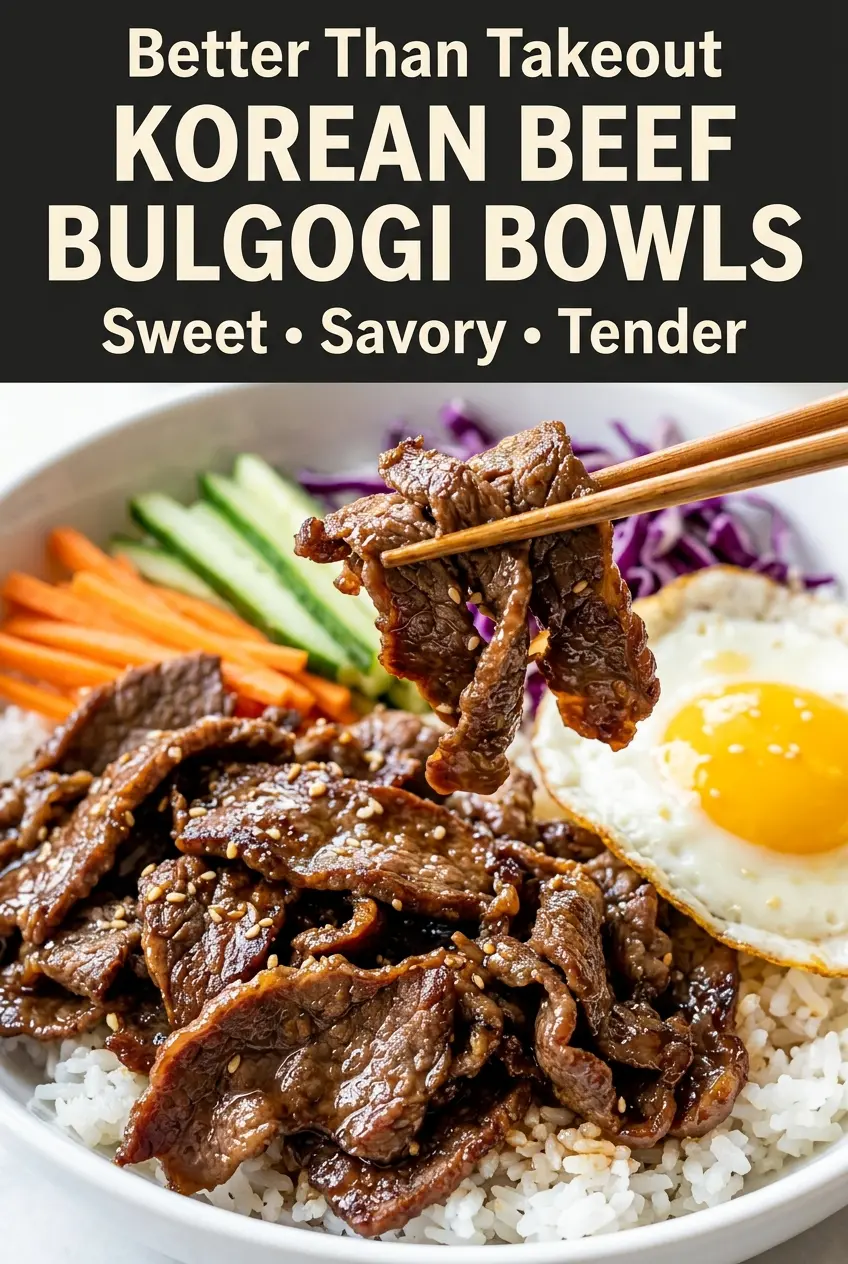
Spoon warm rice into each bowl first so the beef juices have somewhere to land. Add the bulgogi while it’s hot, then tuck the vegetables around it so their crunch stays intact. A fried egg on top brings a rich yolk that melts into the rice, but the bowls still work well without it. Finish with green onions and sesame seeds while the beef is still steaming so the garnish sticks.
How to Adapt These Bulgogi Bowls for What You Have on Hand
Gluten-Free Bulgogi Bowls
Swap the soy sauce for tamari or a certified gluten-free soy sauce in the same amount. The flavor stays close to classic bulgogi, and the rest of the marinade needs no changes.
No Asian Pear on Hand
Use peeled Bosc pear or kiwi instead. Pear gives a gentler sweetness, while kiwi tenderizes faster and can turn the beef mushy if it sits too long, so keep the marinating time closer to 30 minutes.
Lower-Sugar Version
Cut the brown sugar to 1 tablespoon and leave the honey in place, or use all sugar and skip the honey. You’ll lose a little of the glossy finish, but the beef will still brown well if you cook it hot and don’t crowd the pan.
Dairy-Free and Egg-Free Serving Option
These bowls are naturally dairy-free, and the fried egg is completely optional. Skip it and add extra cucumber or cabbage for more contrast, or top with avocado if you want a richer finish without changing the core flavor.
Storage and Reheating
- Refrigerator: Store the beef and rice in separate containers for up to 4 days. The beef stays flavorful, but the vegetables will lose their crunch, so keep those fresh if you can.
- Freezer: The cooked beef freezes well for up to 2 months. Freeze it without the vegetables, then thaw overnight in the refrigerator for the best texture.
- Reheating: Warm the beef in a skillet over medium heat with a splash of water to loosen the sauce, or microwave it in short bursts. Don’t overcook it on reheating or the slices will tighten and go dry.
Answers to the Questions Worth Asking
Korean Beef Bulgogi Bowls
Ingredients
Equipment
Method
- In a bowl, combine the low-sodium soy sauce, packed brown sugar, honey, sesame oil, rice vinegar, garlic, fresh ginger, grated Asian pear, green onions, and black pepper.
- Add the thinly sliced beef sirloin or ribeye and toss until every piece is coated with marinade.
- Refrigerate the beef for at least 30 minutes or up to 4 hours, covered.
- Heat a large skillet over medium-high heat.
- Add the neutral cooking oil and let it warm until it shimmers.
- Remove the beef from the marinade, letting excess liquid drip away.
- Cook the beef in batches to avoid overcrowding, searing for 2–3 minutes, turning occasionally, until browned, caramelized, and fully cooked.
- Divide the warm cooked short-grain white rice among four serving bowls.
- Arrange the bulgogi beef generously over the rice.
- Add the carrot, cucumber, and shredded red cabbage around the beef.
- Top with fried eggs if desired, then sprinkle with sliced green onions and toasted sesame seeds.
- Serve immediately while the beef is hot and glossy and the vegetables remain crisp.
