
The bacon needs to be crisp before it meets the pecans, and the maple coating needs time to dry before you break anything apart. Rushing either part can leave you with chewy bacon or sticky nuts instead of the crisp, snackable clusters you want. I make these maple bacon candied pecans when I want a sweet-salty snack that feels a little special but still comes together with ordinary pantry staples.
The egg white is what helps the maple syrup and brown sugar cling in a thin layer rather than pooling at the bottom of the pan. Whisk it until foamy first, then fold the pecans through until each half is coated. A low oven gives that sugary coating time to dry without scorching, and the bacon goes in near the end so its savory crunch stays noticeable. Let the pecans cool all the way on the baking sheet; the coating firms as it sits, turning into crisp little clusters.
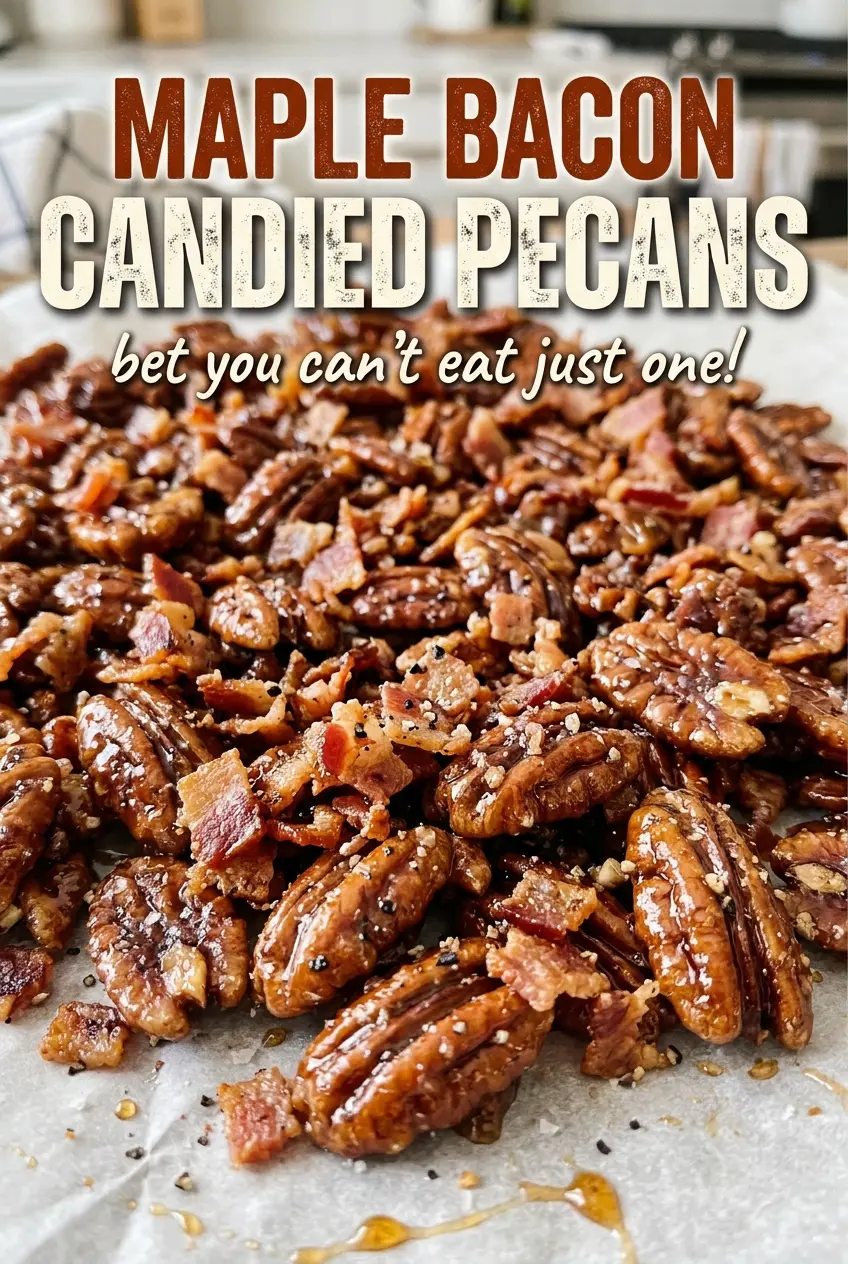
Kitchen Note
Give the pecans the full cooling time before you pull them apart. Warm clusters can seem soft, but the coating firms as it cools; breaking them too early smears that coating instead of giving you clean, crisp pieces.
Save these maple bacon candied pecans for a crisp sweet-and-salty snack, with toasted pecans, maple coating, and bits of bacon in every handful.
Why the Egg White Matters More Than a Thick Maple Glaze
Maple syrup and brown sugar taste wonderful together, but they don’t turn into a crisp coating just because they’re sweet. Syrup brings moisture, and if it sits in a thick puddle around the nuts, the pecans can bake up tacky instead of lightly glazed. The beaten egg white gives the mixture structure: once foamy, it helps spread the sweet coating over the pecan surfaces in a thin, even film.
That thin layer is the reason this method starts with a whisked egg white instead of pouring syrup straight over the nuts. Fold gently until the pecans look evenly glossed, with no dry pockets hiding in the bowl. Then spread them in one layer so moisture can escape during baking. Stirring at 15-minute intervals redistributes the coating and separates the pieces that begin to cling, helping them dry at a similar pace.
Keep the oven at 300°F rather than turning up the heat to hurry the process. A hotter oven can darken the maple and sugar before the coating has dried through. The finished pecans should look dry on the surface and smell toasted; they won’t feel fully crisp while they’re still hot. Cooling completes the set, so judge the texture after the pan has rested rather than reaching for a warm cluster.
What the Maple, Sugar, and Egg White Each Bring
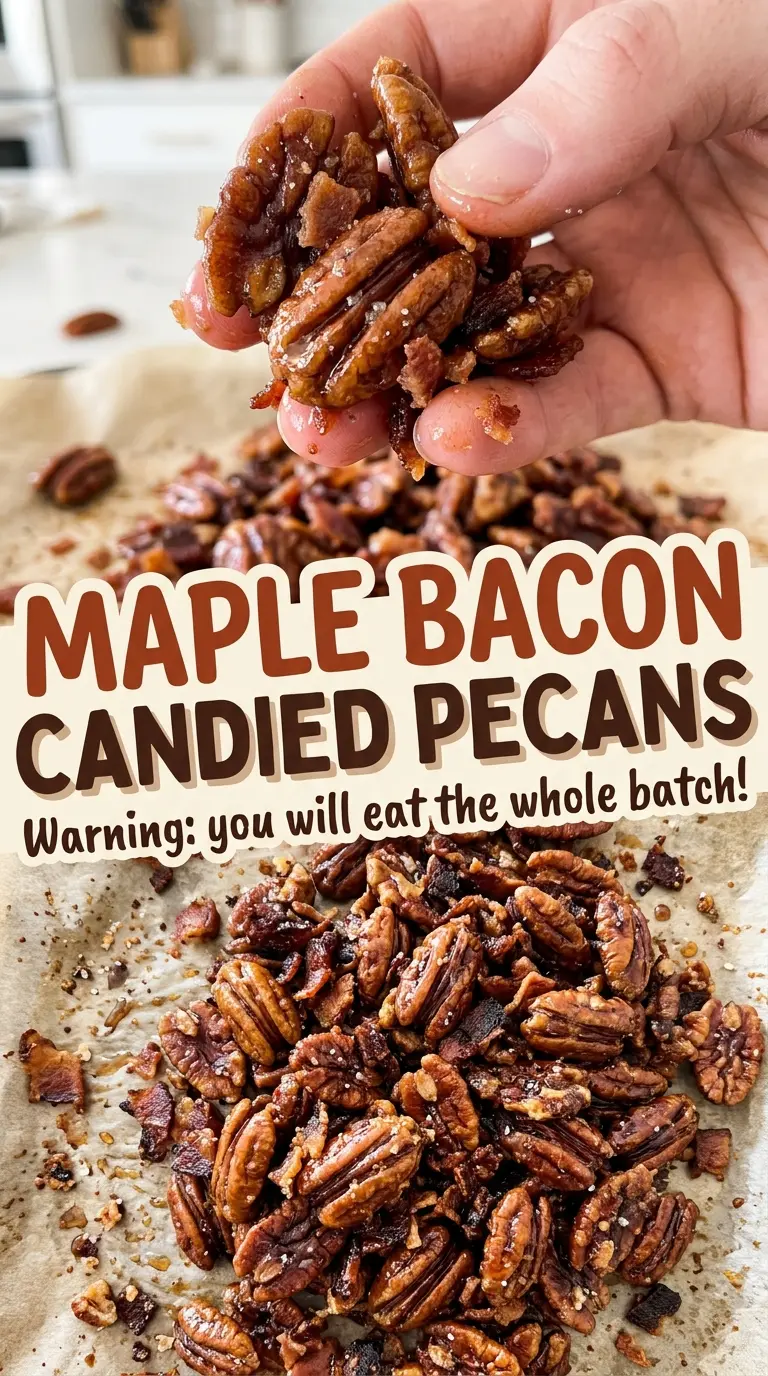
- Pecan halves — Halves give you substantial pieces with enough surface to hold the coating and bacon without disappearing into crumbs. Fresh pecans matter here: stale nuts taste flat even under the maple. Pecan pieces can work, but they’ll make smaller clusters and won’t have the same tidy, whole-nut look.
- Pure maple syrup — Its distinct maple flavor carries through the finished coating, while pancake syrup can leave a different, stickier result. Use pure maple syrup for the closest texture and taste. If the bottle has been stored cold, measure it and whisk it in as usual; no special prep is needed.
- Light brown sugar — Brown sugar adds a deeper sweetness and helps the coating bake into a dry, crisp shell. Light brown sugar keeps that flavor mellow enough for the maple to come through. Dark brown sugar is a workable swap, though its stronger molasses note will make the pecans taste less purely maple-forward.
- Egg white — The white, whisked until foamy, helps the coating cling in a fine layer. A whole egg isn’t a close substitute: the yolk adds fat, which changes how the coating sets. Separate the egg carefully so no yolk slips into the white, then whisk until you see foam across the surface.
- Bacon — Crisp bacon supplies the salty, savory contrast that keeps these from tasting like plain candied nuts. Cook it until crisp before crumbling, and drain it on paper towels so excess grease doesn’t soften the coating. Thick or thin slices both work; the cue to trust is crispness, not a particular thickness.
- Cinnamon — Ground cinnamon adds a warm background note without covering up the maple or bacon. Check that your jar smells fragrant; old cinnamon can taste dusty. Whisk it into the syrup mixture so it doesn’t collect in a single patch of nuts.
The Bake-and-Stir Rhythm That Dries the Coating
Render the bacon until crisp
Set a skillet over medium heat and cook the bacon for 8–12 minutes, turning it as needed. The slices should be crisp rather than merely browned, since soft bacon loses its bite once mixed with the coated pecans. Transfer it to paper towels to drain, then crumble it when cool enough to handle. Keep it aside while the nuts bake.
Foam the white and coat the pecans
Heat the oven to 300°F and line a rimmed baking sheet with parchment paper. In a large bowl, whisk the egg white until foamy; it should look aerated, not like a clear liquid. Whisk in the maple syrup, brown sugar, kosher salt, and cinnamon until combined. Fold in the pecan halves until their surfaces are evenly coated, scraping the bottom of the bowl so no syrup is left behind.
Bake in a single layer, stirring twice
Spread the coated pecans across the prepared sheet in one layer, leaving as little overlap as you can. Bake for 30 minutes, stirring every 15 minutes so the nuts shift through the syrupy spots and don’t set into one solid sheet. The coating will gradually look less wet, but don’t expect it to feel crisp yet. If a few pecans stick together while stirring, gently separate them with the edge of a spatula.
Add bacon, then let the clusters set
Stir in the crumbled bacon after the pecans have baked for 30 minutes, then return the pan to the oven for 5–10 minutes more. Look for a dry-looking coating and a toasted smell, not dark or scorched sugar. Take the sheet from the oven and leave the pecans on it for about 30 minutes, until completely cool. Break apart the clusters once the coating has firmed.
Two Ways to Adapt the Sweet-Salty Pecans
Make a vegetarian batch with toasted pepitas
For a meat-free version, replace the crumbled bacon with roasted pepitas and stir them in at the same point, after the pecans’ first 30 minutes in the oven. The pepitas add a savory crunch, though you’ll lose bacon’s smoky richness. Use pepitas that are already roasted so they only need to warm through during the final bake.
Turn the clusters into a loose snack
For pieces that are easy to scoop by the handful, break the cooled pecans into smaller clusters instead of leaving a few large ones. You keep the same maple-cinnamon coating and bacon in each bite, but the smaller pieces are easier to portion into snack containers. Wait until the sheet is completely cool before breaking them down so the coating stays crisp.
Storage and Reheating
- Refrigerator: Store in an airtight container for up to 1 week. The coating may lose some of its crispness in the refrigerator.
- Freezer: Freeze in an airtight container for up to 2 months. Let the closed container thaw before opening to limit condensation on the pecans.
- Reheating: They don’t need reheating. Let chilled pecans come to room temperature before serving; microwaving can make the maple coating tacky.
Questions That Come Up With Candied Pecans
Maple Bacon Candied Pecans
Ingredients
Equipment
Method
- Heat the oven to 300°F.
- Line a rimmed baking sheet with parchment paper.
- Cook the bacon in a skillet over medium heat until crisp, 8–12 minutes, turning as needed.
- Drain the bacon on paper towels.
- Crumble the bacon when cool.
- Whisk the egg white in a large bowl until foamy.
- Whisk in the maple syrup, brown sugar, salt, and cinnamon.
- Fold in the pecans until evenly coated.
- Spread the pecans in a single layer on the prepared baking sheet.
- Bake for 30 minutes, stirring every 15 minutes.
- Stir in the crumbled bacon.
- Bake for 5–10 minutes more, until the coating looks dry and the pecans smell toasted.
- Let the pecans cool completely on the baking sheet, about 30 minutes.
- Break apart any clusters.
