
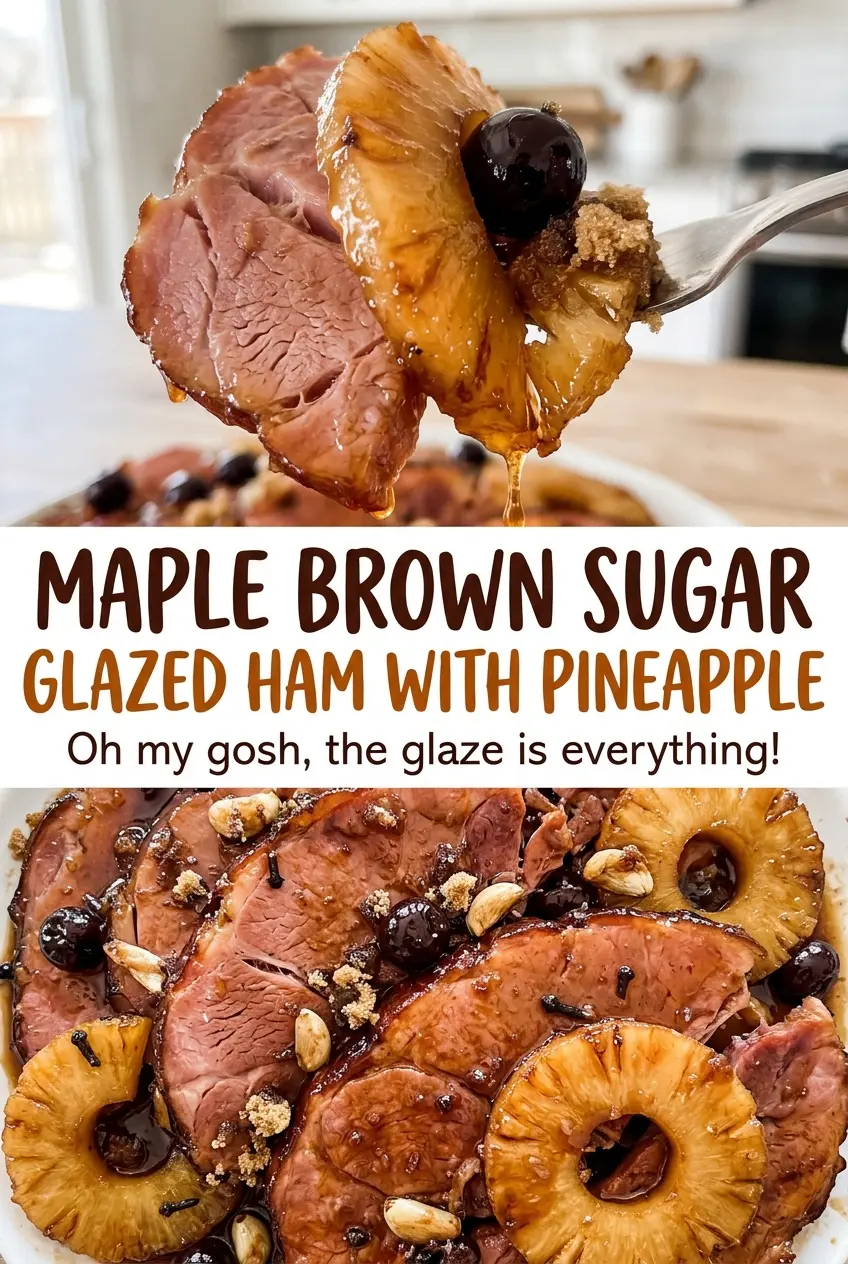
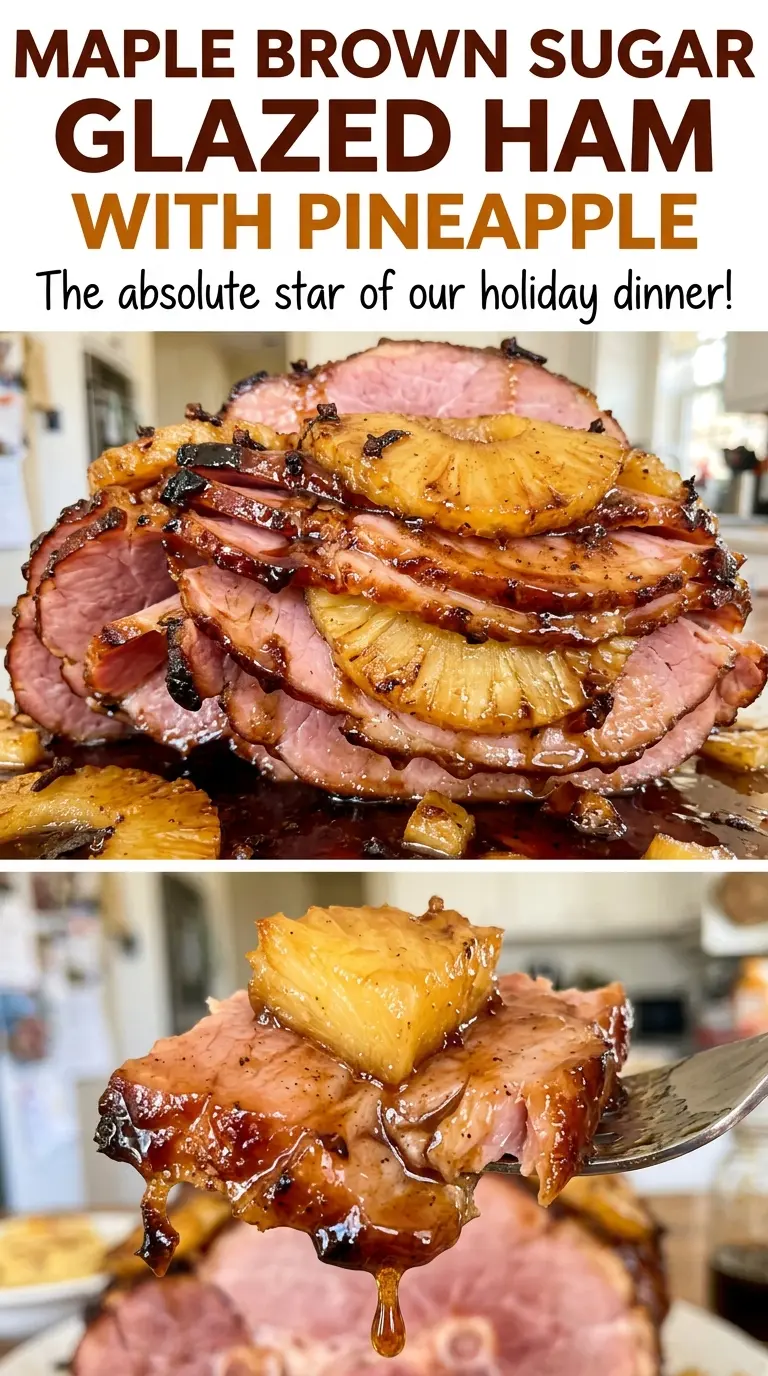
A spiral-cut ham has plenty of exposed edges, which is wonderful when the glaze gets into the slices and less wonderful if the meat spends too long uncovered in the oven. I warm this ham gently under foil first, then add the maple and brown sugar glaze near the end so it has time to turn glossy without leaving the slices dry. The pineapple rings roast alongside the ham and bring a bright, tart note to each sweet, savory bite.
I use a fully cooked, bone-in spiral-cut ham, so the oven time is about warming it through rather than cooking raw meat. Keeping the cut side down in the roasting pan and covering the ham tightly gives it a protected first stretch in the oven. Once the foil comes off, the glaze can coat the outside and the pineapple rings without sitting over the ham for the entire bake.
The glaze gets its sweetness from maple syrup and brown sugar, while Dijon keeps it from tasting flat. Pineapple juice ties those flavors together, and a little ground clove gives the glaze a warm edge. Serve the ham with the roasted rings and spoon any glaze clinging to them over the slices.
Kitchen Note
Stop simmering the glaze when the sugar has dissolved and it has thickened just a little. It should still pour easily from the spoon; cooking it down until it looks like candy syrup makes it harder to brush evenly.
Save this maple brown sugar glazed ham with pineapple for a centerpiece that pairs tender spiral slices with a bright, sticky-sweet glaze.
Why Spiral-Cut Ham Needs a Covered Start
Spiral cuts make serving easy, but they also create lots of small surfaces where moisture can escape. If the ham goes into the oven uncovered from the beginning, those edges get direct heat long before the center has warmed. The covered first stage gives the meat time to heat more gently, while placing it cut side down helps shield the sliced face against the pan.
Glazing later solves a different problem: a sugary coating needs heat to cling and turn shiny, but it doesn’t need the full hour to do that. The ham warms under foil first; then the rings and glaze go in for the uncovered finish. That shorter glazed stretch lets the surface take on color while the interior reaches serving temperature. Keep the foil sealed snugly around the pan during the first bake, and don’t pull it away early to check the surface—the ham isn’t meant to brown at that stage.
There is a useful balance here. A thick coat of glaze on cold ham won’t warm the center any faster, and baking the glaze for too long can darken the sugars before the meat is ready. Brushing in two rounds spreads the coating across the ham and pineapple while keeping the finish controlled.
What the Pineapple Juice and Maple Each Bring to the Glaze
- Spiral-cut ham — Start with a fully cooked, USDA-inspected bone-in ham. The spiral slices make portions straightforward, and the bone gives you a useful landmark when checking the temperature. This particular timing is written for an 8-pound ham, so a different size won’t warm on precisely the same schedule.
- Pineapple rings and juice — Drain the rings, but keep the reserved juice for the glaze. The juice adds acidity and pineapple flavor throughout the coating, while the rings provide tender fruit to serve with the ham. Choose rings packed in juice rather than syrup; extra syrup would change the glaze’s sweetness.
- Pure maple syrup and light brown sugar — Maple brings a woodsy, distinct sweetness, and brown sugar gives the glaze body. Use pure maple syrup rather than pancake-style syrup, which is often a blend with a different sweetness and consistency. The brown sugar can be an everyday pantry brand; packed light brown sugar is what gives this glaze its familiar caramel note.
- Dijon mustard and ground cloves — Dijon supplies a sharp, savory counterpoint to the sweet ingredients, and ground cloves add a warm, concentrated aroma. Keep the clove amount measured; it can take over quickly. These ingredients are part of the balance, so I don’t recommend improvising with a different mustard or spice if you want the same glaze.
Warm the Ham First, Then Build the Glazed Finish
Set Up the Ham for Gentle Warming
Heat the oven to 325°F and place the ham cut side down in a 12×16-inch roasting pan. Cover the pan tightly with foil so steam stays around the meat rather than escaping through loose edges. Bake for 1 hour. The ham is already fully cooked, so this covered stage is about warming it through without drying the spiral slices.
Simmer the Maple-Pineapple Glaze
While the ham warms, stir the reserved pineapple juice, maple syrup, brown sugar, Dijon mustard, and ground cloves together in a 1-quart saucepan. Bring the mixture to a simmer over medium heat and stir for 5-7 minutes. Watch for the sugar to dissolve and the liquid to thicken slightly; it should coat a spoon lightly, not turn stiff. Stir as it simmers so the sugar doesn’t settle on the bottom of the pan.
Brush on the First Coat
Remove the foil after the covered bake and arrange the pineapple rings around the ham. Brush the ham and rings with half of the glaze, reaching the outside surfaces without pulling the spiral slices apart. Put the roasting pan back in the oven uncovered. The pineapple should sit in the glaze rather than being tucked underneath the ham, where it would be harder to serve intact.
Finish, Check, and Rest
After 15 minutes of uncovered baking, brush the ham and pineapple with the remaining glaze. Continue baking for 25-40 minutes total, until an instant-read thermometer inserted into the thickest part of the ham without touching bone reads 140°F. The exact time within that range depends on how quickly your ham warms, so let the thermometer—not the glaze color—tell you when it is ready. Rest the ham for 15 minutes before serving it with the pineapple rings.
Two Small Changes That Shift the Glaze
Use Dark Brown Sugar for a Deeper Finish
Dark brown sugar works as a one-for-one replacement for the light brown sugar. Its extra molasses gives the glaze a deeper, more robust flavor and a darker color, so keep an eye on the surface as it bakes.
Skip the Pineapple Rings, Keep the Juice
For a simpler presentation, use the reserved pineapple juice in the glaze and leave the rings off the roasting pan. You’ll keep the pineapple note in the coating, but lose the soft fruit served alongside the ham.
Storage and Reheating
- Refrigerator: Refrigerate leftover ham within 2 hours and use it within 3-4 days. The glaze will set as it chills, and the slices will be firmer than when freshly warmed.
- Freezer: Freeze leftover slices tightly wrapped or in an airtight container for 1-2 months for best quality. Thaw them in the refrigerator before reheating.
- Reheating: Place slices in a covered oven-safe dish and warm at 325°F until they reach 165°F. Reheat only until hot; leaving the slices uncovered or warming them longer than needed can dry their edges.
Questions That Come Up When Warming a Spiral-Cut Ham
Maple Brown Sugar Glazed Ham with Pineapple
Ingredients
Equipment
Method
- Preheat the oven to 325°F.
- Place the ham cut side down in a 12x16-inch roasting pan and cover tightly with foil; bake for 1 hour.
- Stir the reserved pineapple juice, maple syrup, brown sugar, Dijon mustard, and ground cloves in a 1-quart saucepan; simmer over medium heat for 5-7 minutes, stirring, until the sugar dissolves and the glaze thickens slightly.
- Remove the foil and arrange the pineapple rings around the ham.
- Brush the ham and pineapple rings with half the glaze.
- Bake uncovered for 25-40 minutes, brushing with the remaining glaze after 15 minutes, until the ham reaches 140°F on an instant-read thermometer inserted into the thickest part without touching bone.
- Let the ham rest for 15 minutes before serving with the pineapple rings.
