
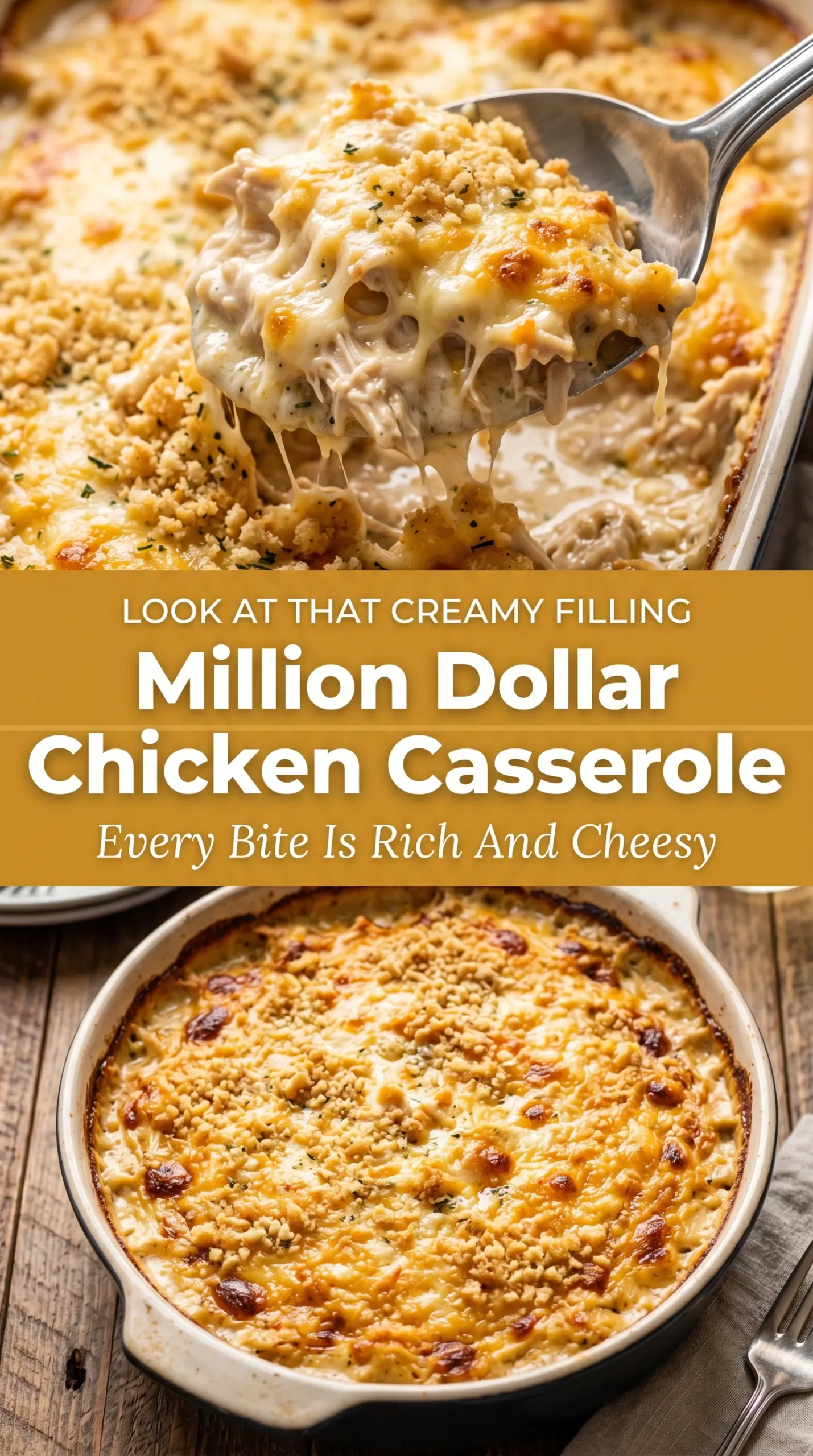
Million Dollar Chicken Casserole bakes up rich, creamy, and deeply savory, with tender shreds of chicken tucked into a thick, cheesy filling and a buttery cracker top that turns crisp at the edges. It’s the kind of casserole that disappears fast because every bite has contrast: soft and luxurious underneath, golden and crunchy on top.
What makes this version work is the balance. Cream cheese gives the filling body, sour cream keeps it from tasting heavy, and cottage cheese melts into the mix instead of standing out in curds once it’s baked. The cream of chicken soup brings salt and a little gravy-like flavor, while cheddar and parmesan add the sharp, nutty edge that keeps the dish from tasting flat. The cracker topping goes on last so it stays crunchy instead of sinking into the filling.
Below, I’ve added the small details that matter most: how to keep the filling smooth, how to keep the topping crisp, and what to change if you need to work with what’s already in your fridge.
The filling baked up thick and creamy, and the cracker topping stayed crunchy even after sitting on the table for a few minutes. I used rotisserie chicken and it came together fast, but still tasted like I had put in way more effort.
Million Dollar Chicken Casserole is the kind of creamy, crunchy comfort food worth keeping handy for busy nights.
The Reason the Filling Stays Creamy Instead of Turning Heavy
The biggest mistake with casseroles like this is overthinking the base until it turns dense and pasty. This one stays creamy because the dairy is doing different jobs instead of repeating the same one. Cream cheese gives structure, sour cream loosens the mixture just enough, and cottage cheese melts into the background so the filling bakes up rich without feeling gluey.
The other thing that matters is temperature. Softened cream cheese blends smoothly; cold cream cheese leaves tiny lumps that don’t fully disappear in the oven. If your mixture looks a little loose before baking, that’s fine. It tightens as it heats and rests, which is why slicing too soon makes the filling seem softer than it really is.
What Each Ingredient Is Actually Doing in This Dish
- Cooked shredded chicken — Rotisserie chicken is the fastest route, and it works well because the meat is already seasoned and tender. If you cook it yourself, pull it while it’s still juicy; dry chicken gets even drier once baked under all that richness.
- Cream cheese — This is the backbone of the filling. It needs to be fully softened so it blends into the sour cream and soup without leaving little white streaks.
- Cottage cheese — It melts down into the casserole and adds body without the heaviness of using all cream cheese. If you hate the curds, blend it first for a smoother texture.
- Sour cream — This keeps the casserole from eating like a brick. Plain Greek yogurt can work in a pinch, but it brings a sharper tang and a slightly leaner texture.
- Cream of chicken soup — It adds salt, seasoning, and a silky base that helps the filling hold together. Homemade white sauce can stand in, but you’ll need to season it more aggressively.
- Cheddar and parmesan — Cheddar gives the familiar melty pull, while parmesan sharpens the finish. Freshly grated parmesan melts more cleanly than the shelf-stable kind.
- Buttery crackers and melted butter — This topping is what gives the casserole its contrast. Crush the crackers to uneven crumbs so you get both sandy coverage and bigger crisp bits on top.
Building the Casserole So the Topping Stays Crisp
Mix the Filling Until It Looks Uniform
Stir the cream cheese, cottage cheese, sour cream, soup, cheeses, and seasonings until the mixture looks smooth and thick, with no obvious streaks of cream cheese left behind. A few tiny cottage cheese curds are fine; big pockets of unmixed dairy are not. Fold in the chicken at the end so it stays in shreds instead of breaking down into a paste.
Spread It, Then Leave the Surface Alone
Scrape the filling into a greased 9×13-inch dish and level it with the back of a spoon. Don’t pack it down hard, or the casserole bakes into a denser block. The top should look even but not pressed flat, because that little bit of texture helps the crackers sit on top instead of sinking in.
Finish With the Cracker Layer Right Before Baking
Mix the crushed crackers with melted butter until every crumb is coated, then scatter the topping evenly over the casserole. Add it right before the dish goes into the oven so the crackers don’t start softening in the bowl. Bake until the edges are bubbling and the top turns deep golden brown, not pale tan; that color is what gives you the toasted, buttery flavor.
Let It Rest Long Enough to Set
Five minutes off the heat makes a difference. The filling thickens as it sits, and the serving spoon goes through cleaner after a short rest. If you cut in too soon, the casserole will still taste great, but it won’t hold its shape as well on the plate.
How to Adapt This for Different Kitchens and Different Needs
Gluten-Free Version
Swap the buttery crackers for a gluten-free cracker with a similar buttery flavor. The topping will still crisp up, but some gluten-free crackers brown faster, so start checking a few minutes early.
Lighter Dairy Swap
Use reduced-fat cream cheese and sour cream if you want to trim the richness. The casserole will still hold together, but the filling tastes a little less velvety and a little more tangy.
More Vegetable Weight
Fold in steamed broccoli florets or sautéed mushrooms if you want to stretch the casserole a bit further. Keep the add-ins cooked and well-drained, or they’ll water down the filling.
Storage and Reheating
- Refrigerator: Store leftovers covered for up to 4 days. The topping softens a little, but the filling stays creamy.
- Freezer: This freezes well without the cracker topping. Freeze the baked casserole tightly wrapped, then add fresh cracker topping before reheating for the best texture.
- Reheating: Reheat in a 325°F oven, covered loosely with foil, until hot in the center. Microwaving works for a single serving, but it softens the topping and can make the edges rubbery if you heat it too long.
Questions I Get Asked About This Recipe

Million Dollar Chicken Casserole
Ingredients
Equipment
Method
- Preheat the oven to 350°F (175°C). Set out a greased 9×13-inch baking dish so the casserole is ready to bake right away.
- In a large bowl, combine cream cheese, cottage cheese, sour cream, cream of chicken soup, cheddar cheese, parmesan cheese, garlic powder, onion powder, and black pepper. Stir until smooth and well combined, with no visible cream cheese lumps.
- Fold in cooked shredded chicken. Mix just until the chicken is evenly coated with the creamy filling.
- Spread the mixture evenly into the prepared baking dish. Smooth the top so the casserole bakes uniformly.
- Mix crushed buttery crackers with melted butter. Toss until the crumbs look evenly moistened and slightly sandy.
- Sprinkle the topping evenly over the casserole. Make sure the entire surface is covered for a golden, crisp top.
- Bake at 350°F (175°C) for 35–40 minutes, until bubbly and golden brown. Watch for bubbling at the edges and a browned cracker layer in the center.
- Let the casserole rest for 5 minutes before serving. This helps the filling set so it slices or scoops cleanly.
- Garnish with fresh parsley. Finish right before serving for the best color contrast.
