
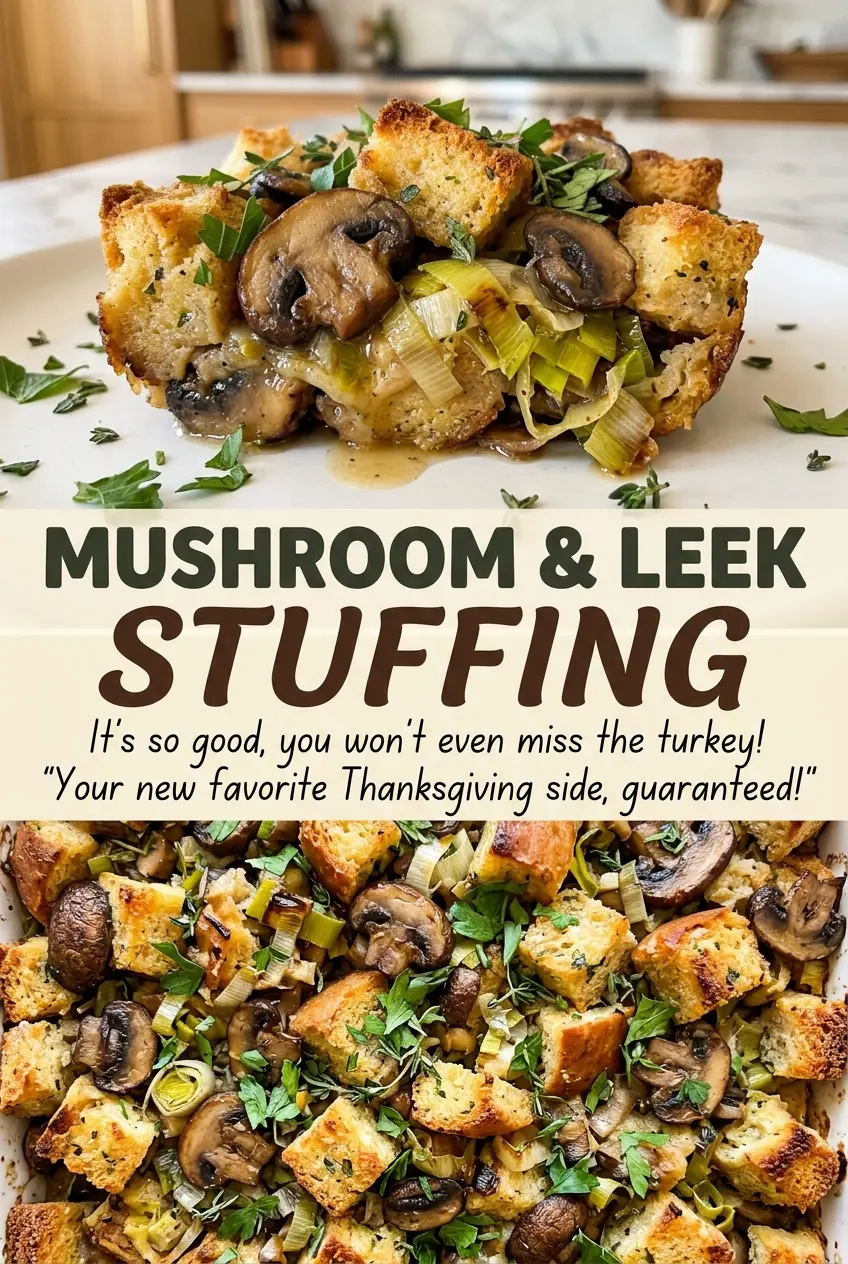
The bread cubes should feel crisp at the edges before they ever meet the broth. If they’re still soft in the middle, they soak up the egg mixture unevenly and the finished stuffing can turn heavy instead of tender. I learned to give the cubes their own time in the oven first, then let the vegetables bring the moisture and savory flavor. That’s what gives this mushroom and leek stuffing a soft center and a browned top.
Leeks cook down sweet and mellow, while the mushrooms add a deeper, earthy note. I like that the vegetables are cooked in butter before they’re mixed with the bread; the mushrooms have time to release their liquid and brown, rather than steaming once they’re tucked into the baking dish. The broth and eggs bring everything together, and the covered-then-uncovered bake gives the center time to set before the top turns golden. It’s a generous, savory pan of stuffing with crisp edges and a soft, cohesive middle.
Kitchen Note
Slice the leeks before rinsing them so water can reach between the layers where grit gets trapped. Let them drain well before they go into the skillet; gritty leeks are the one thing that can spoil an otherwise lovely bite.
Save this mushroom and leek stuffing for a holiday table or a cozy dinner—the buttery vegetables and crisp golden top make it worth keeping close.
Why the Bread Has to Be Crisp Before the Eggs Go In
Stuffing needs to absorb liquid without losing its shape. Fresh, soft bread is already holding plenty of moisture, so it can go from pleasantly tender to dense and pasty once broth and eggs are added. Drying the cubes first gives them room to take in the liquid gradually, which helps the finished dish hold together while still feeling soft in the middle.
There’s a useful distinction between dry bread and hard, stale bread here. You want cubes that feel crisp on the outside, not browned or toasted dark; they’ll continue to soften as they soak up the broth and bake. The eggs then help bind the mixture as it cooks, so the stuffing portions neatly instead of falling into loose, wet clumps. Keeping the cubes sturdy also gives the top more texture after the foil comes off, while the covered part of the bake protects the center as it sets. This balance—bread that can absorb, but not collapse—is what makes the casserole-like texture work.
What the Leeks, Mushrooms, and Eggs Each Bring
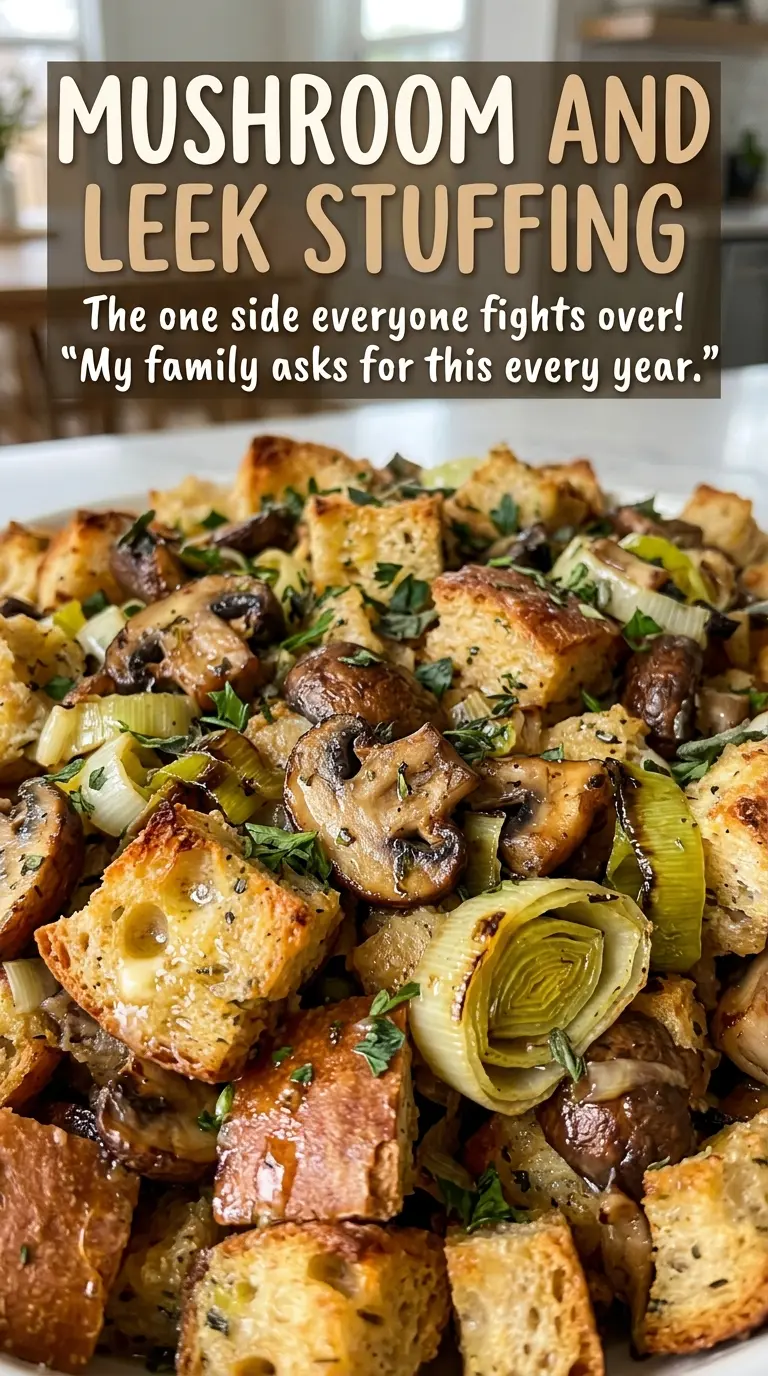
- Country bread — A sturdy loaf gives the cubes enough structure to take on broth without disappearing into a soft mass. A good crusty loaf is useful here; a soft, thin-sliced sandwich bread is more likely to produce a compact texture.
- Leeks and celery — Leeks bring a gentle, sweet onion flavor, and celery gives the vegetable mixture a fresh savory backbone. Use the white and light green leek portions, which soften well with the celery.
- Cremini mushrooms — Their earthy flavor gives the stuffing its savory depth. Choose firm mushrooms without damp, slimy spots; sliced cremini are convenient, but whole ones are fine to slice at home.
- Low-sodium chicken broth and eggs — The broth moistens the bread, while eggs help the mixture set into a sliceable stuffing. Low-sodium broth leaves more room for the measured kosher salt to season the dish without making the finished pan taste overly salty.
- Butter, dried herbs, and parsley — Butter carries the flavor of the leeks, mushrooms, sage, and thyme through the bread. Dried sage and thyme are practical pantry choices for the bake, while fresh parsley adds a clean, green finish to the cooked vegetables.
The Stages That Keep the Center Tender and the Top Crisp
Dry the Cubes Before Building the Stuffing
Heat the oven to 300°F and spread the 3/4-inch bread cubes on a rimmed baking sheet. Bake them for 25 to 30 minutes, stirring once, until they feel dry and crisp rather than soft in the center. They shouldn’t take on much color; the goal is to dry them, not make croutons. Grease a 9×13-inch baking dish with 1 tablespoon of butter, then increase the oven temperature to 350°F.
Soften the Leeks and Celery in Butter
Melt the remaining 6 tablespoons of butter in a 12-inch skillet over medium heat. Add the sliced, rinsed leeks and diced celery, and cook for 5 minutes, stirring occasionally, until both have softened. Keep the heat at medium so the butter doesn’t scorch while the vegetables are still releasing moisture. The leeks should look relaxed and glossy, not browned at the edges.
Brown the Mushrooms Before Seasoning
Add the sliced cremini mushrooms and cook for 8 to 10 minutes, stirring occasionally. At first, they release liquid and look crowded in the pan; keep cooking until that liquid has evaporated and the mushrooms have browned. Stir in the minced garlic, dried sage, dried thyme, kosher salt, and black pepper, then cook for 1 minute. Take the skillet off the heat and stir in the chopped parsley.
Moisten, Cover, and Finish the Bake
Put the toasted bread and vegetable mixture in a large bowl. Whisk the chicken broth and eggs together, pour the mixture over the bread, and toss gently until everything is evenly moistened; rough stirring can break up the cubes. Transfer the mixture to the prepared dish, cover it tightly with foil, and bake at 350°F for 30 minutes. Uncover and bake for 15 to 20 minutes more, until the top is browned and the center reaches 165°F, then let the stuffing rest for 10 minutes before serving.
Two Useful Swaps for Different Tables
Make It Vegetarian With Vegetable Broth
Replace the chicken broth with the same amount of low-sodium vegetable broth. The stuffing keeps its soft, set texture, though the savory base will taste a little less poultry-forward; the eggs and dairy remain, so this is vegetarian rather than vegan.
Use a Sturdy Gluten-Free Loaf
Swap in an equal amount of sturdy gluten-free country-style bread, cut into the same-size cubes, and follow the same drying and baking method. Choose a loaf with enough structure to hold its shape after it’s moistened; the texture may be a little more delicate than the wheat-bread version.
Storage and Reheating
- Refrigerator: Refrigerate leftovers in a covered container within 2 hours and use them within 3 to 4 days. The top softens in storage, but the stuffing stays pleasantly tender.
- Freezer: Freeze cooled portions in an airtight container for up to 1 month for best texture. Thaw them in the refrigerator before reheating; the bread may be a little softer after freezing.
- Reheating: Warm portions covered in the microwave or in a covered baking dish until hot throughout. If the stuffing seems dry, add a small splash of broth before reheating; uncover briefly at the end if you want to bring back some crispness on top.
Questions That Come Up When Making Mushroom and Leek Stuffing
Mushroom and Leek Stuffing
Ingredients
Equipment
Method
- Heat the oven to 300°F.
- Spread the bread cubes on a rimmed baking sheet and bake for 25 to 30 minutes, stirring once, until dry and crisp.
- Grease a 9x13-inch baking dish with 1 tablespoon butter.
- Increase the oven temperature to 350°F.
- Melt the remaining 6 tablespoons butter in a 12-inch skillet over medium heat.
- Add the leeks and celery and cook for 5 minutes, stirring occasionally, until softened.
- Add the mushrooms and cook for 8 to 10 minutes, stirring occasionally, until browned and their released liquid has evaporated.
- Stir in the garlic, sage, thyme, salt, and pepper and cook for 1 minute.
- Remove the skillet from the heat and stir in the parsley.
- Put the toasted bread and vegetable mixture in a large bowl.
- Whisk together the broth and eggs, then pour over the bread.
- Toss gently until evenly moistened.
- Transfer the mixture to the prepared baking dish, cover tightly with foil, and bake for 30 minutes.
- Uncover and bake for 15 to 20 minutes more, until browned on top and the center reaches 165°F.
- Let the stuffing rest for 10 minutes before serving.
